Now that you are familiar with the major concepts from our What is your Story? program – how our stories are our destinies; how everything we do, with or without our conscious knowledge, helps to shape our stories; how stories either take us where we want to go or they don’t; and the three fundamental criteria of all good storytelling.
Here is your Hero’s Journey towards a new story in six steps:
- The most important story you will ever tell is your own life story
- The center of your life story is QUEST.
Step 1. Identify ULTIMATE QUEST
Questions to help in the process:
- What makes you happy every day?
- What makes your life really worth living?
- In what areas of your life must you truly be extraordinary to fulfill your destiny
- How do you want to be remembered?
- What is the legacy you most want to leave for others?
- What is worth dying for?
Step 2. Facing the Truth.
Here you must identify and confront your dysfunctional current stories. Some questions to get you going:
- In which of the following areas of your life is your story not working? If your behavior is not aligned with your core passion, then this story cannot take you where you want to go.
- In which areas do you need or want to be more engaged to fulfill your Ultimate Quest?
Step 3. Select a Story to Work on First
Because almost all of the core stories in our lives need at least some editing, here are some questions to help you with the selection process.
- Which of your stories causes you the most concern and grief?
- Which of your stories causes the most disruption in your life?
- Which of your stories creates the greatest misalignment with your ultime quest in life?
- Which of these stories would you most like to work on right now?
The story you have chosen to edit is your first Hero’s Quest. If you are to enjoy genuine transformation, then you must commit to work on this story for the next ninety days.
Step 4. Write the story you have been telling yourself that has allowed the misalignment to occur.
This means including the faulty thinking and strange logic that helped to form the story you now wish to edit. Write in as much detail and with as much specificity as you can. Your task is to unearth completely your current dysfunctional story.
& In what way(s) does the story yourself allow you to ignore that it is not taking you where you ultimately want to go in life – is not on passion?
& What logic do you use in the story to justify that your story does not reflect the truth?
& In what way(s) does the story not inspire you to take action to make this part of your life better?
Before you finish your Old Story, take a few dives into your subconscious world. Ask yourself these questions:
- What hidden influences might be behind some of your faulty thinking and beliefs that helped to create your current story?
- Do you get very defensive about your faulty story? If you do, then what are you protecting? Specifically, in what parts of this story are you most fragile and vulnerable? What are you most afraid of here? If you follow the fear, where does it take you?
- The story you currently tell yourself that you wish to edit clearly has not inspired you to make a change. What is the logic and rationale you have used to keep this faulty story alive in your life for so long?
- Is this really your story you are telling or someone else’s? Whose voice is it?
Step 5. Write a New Story
Write a new story that
- Is fully aligned with your ultimate quest and your passion
- Reflects the truth
- Inspires you to take hope – filled action
To help you articulate your new story, some suggestions:
- Start with the words ‘The Truth is…. ” Describe as vividly as possible what will likely happen if you continue with the Old Story you have got. Face reality head on by connecting the dots.
- Don’t labor over every word. You will edit it later. Just get your initial thoughts on paper, quickly.
- Because your New Story packs a cannonshot of reality it will necessarily stir a lot of emotion (the more powerful the better)
- Your New Story should clearly reflect and connect with your Ultimate Quest in life. Anyone reading your New Story Should have no trouble connecting it with what you care most about.
- Your New Story should be inspirational for you when you read it. It must move you powerfully: move you emotionally and move you to take action.
- Your New Story should contain a strong message of optimism and hope that the change you seek will indeed happen if you remain dedicated and persistent.
- Make sure that this is your story, no one else’s! Be sure this is what you really want!
- If possible craft your New Story in the context of a major turning point in your life. This change you seek should be characterized as a breakthrough.
- Work hard to summon your voice of sincerity. Your inner voice must be able to express the message, content, and direction of your New Story completely and unambivalently.
- In your story aim forward your best voice of passion. These voice can’t come forward without your encouragement.
Step 6. Design Explicit Rituals that ensure your New Story becomes reality
- Rituals are consciously acquired habits of behavior that enhance energy management in service of a mission
- Rituals represent the vehicle by which your New Story receives the investment of passionate energy
- Link the ritual to one or more values
- Invest energy in it for thirty to ninety days
- Acquire no more than a few rituals at a time
- Create a supportive environment
- A particularly valuable ritual is to begin every day of your ninety day mission by reading your new story
That’s OK. I didn’t expect thanks. — Tom Ripley, wiping spit from his face
Tom Ripley is fascinating in the sense that a snake is fascinating. He can kill you, but he will not take it personally and neither should you. He is well-educated, has good taste, is a connoisseur of art, music, food, wine and architecture, can give a woman good reason to love him, and commits crimes and gets away with them. “I don’t worry about being caught,” he says, “because I don’t believe anyone is watching.” By “anyone,” he means cops, witnesses, God, whoever.
Ripley is at the center of five novels written by Patricia Highsmith between 1955 and 1991, which have inspired as many movies: Rene Clement’s “Purple Noon” (1960), Wim Wenders’ “The American Friend” (1977), Anthony Minghella’s “The Talented Mr. Ripley” (1999), Liliana Cavani’s “Ripley’s Game” (2002), and Roger Spottiswoode’s “Ripley Under Ground” (2004); Ripley was played successively by Alain Delon, Dennis Hopper, Matt Damon, John Malkovich and Barry Pepper.
The first four are splendid movies (based on only two of the novels; the Wenders and the Cavani on Ripley’s Game and the Clement and the Minghella on The Talented Mr. Ripley). The fifth I haven’t seen. “Ripley’s Game” is without question the best of the four, and John Malkovich is precisely the Tom Ripley I imagine when I read the novels. Malkovich is skilled at depicting the private amusement of sordid characters, but there is no amusement in his Ripley, nor should there be; Ripley has a psychopath’s detachment from ordinary human values. Malkovich (and Highsmith) allow him one humanizing touch, a curiosity about why people behave as they do. At the end of the film, when a man saves his life, Ripley can think of only one thing to say to him: “Why did you do that?”
Malkovich has the face for Tom Ripley. For the movie he has lost weight and is lighted and photographed to show the skull beneath the skin. Ripley’s eyes when he is angry are cold and dead, as in an early scene where he is insulted by the host at a party. When he is not angry they are simply objective, although sometimes, even during intense action, Ripley will allow his eyes to glance aside for a second. He is like an actor glancing offstage, reminded that there is life outside his performance. When he gives pleasure, for example by taking his wife Luisa (Chiara Caselli) to buy an antique harpsichord, he regards her in an unsettling way, not sharing the pleasure but calculating its effect. Very rarely he permits himself a childlike grin, as when remembering the triumph on the face of a dying man. When involved in violence, he has a way of baring his teeth, and you can sense the animal nature beneath the cool facade.
Tom Ripley has always been an enigma in the crime fiction genre, because a thief and murderer does not usually get away with his crimes in novel after novel, and seem on most days like a considerate lover and a good neighbor. Malkovich’s philosophical Ripley is closest to Highsmith’s character in the way he objectifies his actions. Why is he requested to kill a man? “Because I can.” He arranges for the man who insulted him, a family man dying of leukemia, to be offered $100,000 to commit murder. The man asks him why he did that. “Partly because you could. Partly because you insulted me. But mostly because that’s how the game is played.”
It is unwise to insult Ripley. Consider. He walks into a party being given by his neighbor Trevanny (Dougray Scott). He hears himself being insulted: He is an American who has purchased a superb Palladian villa near Venice and ruined it with “too much money and no taste.” Trevanny realizes he has been overheard. No matter what he says to squirm out of his rudeness, Ripley replies with one word: “Meaning?” Their verbal duel leaves Trevanny silenced and shaken. Ripley was involved three years earlier in a profitable art theft and con game in Germany. Now his hapless British partner Reeves (Ray Winstone) has been threatened by their victims; he tracks Ripley to Italy and is trembling with fear. “Do you want to tell me what you want,” Ripley asks him, “or do you want a truffling pig to find you dead in a month or two?”
Reeves wants a murder to take place. The payment is $50,000. Ripley doubles the money, and says he thinks he may have the man for the job. He has Trevanny in mind. There is a twisted logic in his reasoning: He has reason to know that Trevanny is dying, and so has less to lose, and every reason to want money to provide for his wife and child. If he is forced to commit murder for money, he will no longer be able to talk with much conviction about Ripley’s wealth or bad taste.
The murders take place on a train, and play with a precision just one gruesome step this side of slapstick. “Hold my watch,” Ripley tells Trevanny before the killing starts, “because if it breaks I’ll kill everyone on this train.” At one point there are five people, three apparently dead, in the same train toilet. We are poised between a massacre and the Marx Brothers. “It never used to be so crowded in first class,” Ripley observes. Although the murders seem to be successful, Reeves and violence follow Ripley back to Italy, and in a masterful sequence using the vast lawns and interiors of the villa, Ripley prepares to greet any visitors. He is not usually capable of being surprised, but watch his eyes when Trevanny turns up to help out.
Women are an enigma in Ripley’s world. He treats his wife with studious but not passionate regard, sends her out of the way when danger threatens, has apparently found a woman who never wonders how he makes his money. About Trevanny’s wife, Sarah (Lena Headey) he is — well, considerate, to a degree. Sarah doesn’t like or trust Ripley. When she walks in on a bloodbath, it’s curiously touching the way Trevanny tells her, “It’s not what you think!”
The pairing of Ripley and Trevanny joins a man capable of killing and another who doesn’t think of himself in those terms. It resembles the pairing in Highsmith’s first novel, Strangers on a Train, which inspired the 1951 Hitchcock masterpiece. In both cases, the dominant character has someone he wishes dead and wants to involve the unwilling second man in the killing. “Strangers on a Train” reflected one of Hitchcock’s favorite themes, The Innocent Man Wrongly Accused. By the end of “Ripley’s Game,” Trevanny is accused of nothing but has lost his innocence. Lost it, and seems almost grateful, as if proud to have passed the test Ripley set for him.
Ripley’s Game is one of Malkovich’s most brilliant and insidious performances; a study in evil that teases the delicate line between heartlessness and the faintest glimmers of feeling. When Ripley smiles in the last shot, he hasn’t lost his credentials as a psychopath, but he has at last found something in human nature capable of surprising and even (can it be?) delighting him.
The Power of Your Story Seminar
Amsterdam 17 April
You will examine with Peter de Kuster, founder of The Power of Your Story the way we tell stories about ourselves to ourselves — and, most important, the way we can change those stories to transform our business and personal lives.
“Your story is your life,” says Peter. As human beings, we continually tell ourselves stories — of success or failure; of power or victimhood; stories that endure for an hour, or a day, or an entire lifetime. We have stories about ourselves, our creative business, our customers ; about what we want and what we’re capable of achieving. Yet, while our stories profoundly affect how others see us and we see ourselves, too few of us even recognize that we’re telling stories, or what they are, or that we can change them — and, in turn, transform our very destinies.
Telling ourselves stories provides structure and direction as we navigate life’s challenges and opportunities, and helps us interpret our goals and skills. Stories make sense of chaos; they organize our many divergent experiences into a coherent thread; they shape our entire reality. And far too many of our stories, says Peter, are dysfunctional, in need of serious editing. First, he asks you to answer the question, “In which areas of my life is it clear that I cannot achieve my goals with the story I’ve got?” He then shows you how to create new, reality-based stories that inspire you to action, and take you where you want to go both in your work and personal life.
Our capacity to tell stories is one of our profoundest gifts. Peter’s approach to creating deeply engaging stories will give you the tools to wield the power of storytelling and forever change your business and personal life.
About Peter de Kuster
Peter de Kuster is the founder of The Heroine’s Journey & Hero’s Journey project, a storytelling firm which helps creative professionals to create careers and lives based on whatever story is most integral to their lifes and careers (values, traits, skills and experiences). Peter’s approach combines in-depth storytelling and marketing expertise, and for over 20 years clients have found it effective with a wide range of creative business issues.
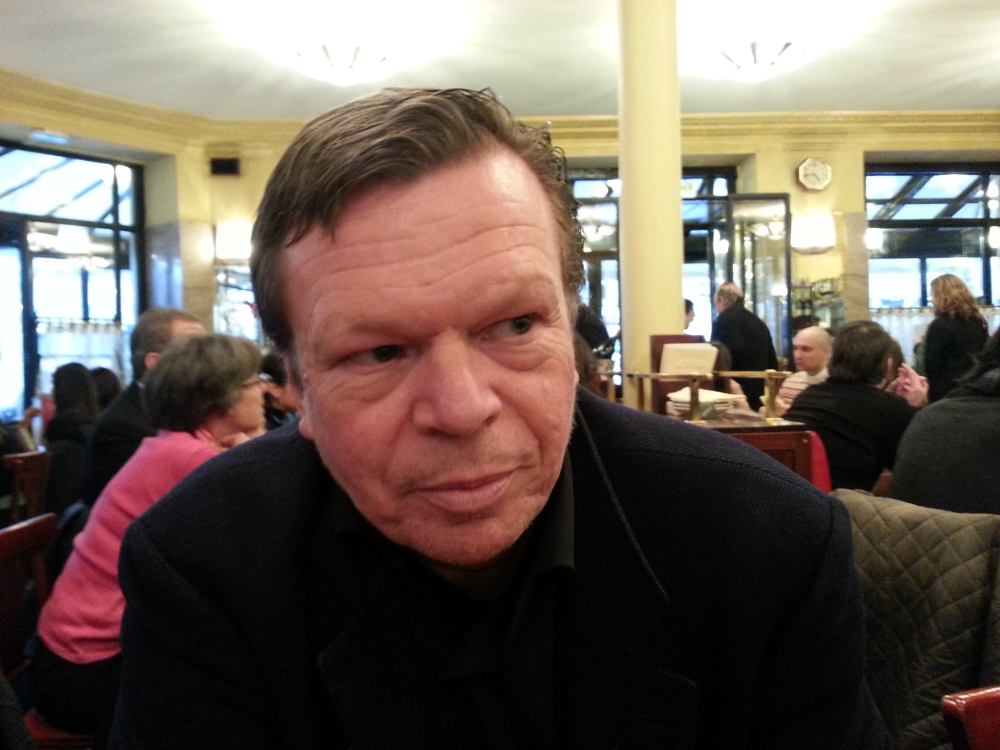
Peter is writer of the series The Heroine’s Journey and Hero’s Journey books, he has an MBA in Marketing, MBA in Financial Economics and graduated at university in Sociology and Communication Sciences.
Become a Great Storyteller in One Day
That’s why I set up The Power of your Story journey in the great cities of the world. A new way to use the power of your story. To guide you to life-changing, eye-opening movies, art, literature that truly have the power to enchant, enrich and inspire.
In this journey with Peter de Kuster you’ll explore your relationship with stories so far and your unique story identity will be sketched. You will be guided to movies, art, literature, myths that can put their finger on what you want to rewrite in your story, the feelings that you may often have had but perhaps never understood so clearly before; movies that open new perspectives and re-enchant the world for you.
You will be asked to complete a questionnaire in advance of your session and you’ll be given an instant story advice and movies to see to take away. Your full story advice and movies to see list will follow within a couple of days.
Practical Info
The price of this one day storytelling seminar is Euro 995 excluding VAT per person. There are special prices when you want to attend with three or more people.
You can reach Peter for questions about dates and the program by mailing him at peterdekuster@hotmail.nl
TIMETABLE
09.40 Tea & Coffee on arrival
10.00 Morning Session
13.00 Lunch Break
14.00 Afternoon Session
18.00 Drinks
Read on for a detailed breakdown of the Power of your Story itinerary.
What Can I Expect?
Here’s an outline of the THE POWER OF YOUR STORY journey.
Journey Outline
OLD STORIES
- What is your Story?
- Are you even trying to tell a Story?
- Old Stories (stories about you, your art, your clients, your money, your self promotion, your happiness, your health)
- Tell your current Story
- Is this Really Your Story?
YOUR NEW STORY
- The Premise of your Story. The Purpose of your Life and Art
- The words on your tombstone
- You ultimate mission, out loud
- The Seven Great Plots
- The Twelve Archetypal Heroines
- The One Great Story
- Purpose is Never Forgettable
- Questioning the Premise
- Lining up
- Flawed Alignment, Tragic Ending
- The Three Rules in Storytelling
- Write Your New Story
TURNING STORY INTO ACTION
- Turning your story into action
- The Story Effect
- Story Ritualizing
- The Storyteller and the art of story
- The Power of Your Story
- Storyboarding your creative process
- They Created and Lived Happily Ever After
 The Power of Your Story