Without proper exercise, nutrition and rest, the body slowly begins to break. You are operating at a perpetual deficit. You are always exhausted. You are seriously disengaged. Your body is now in survival mode. Your stories change. To rationalize how and why this happened requires that, at some fork in the road, smart people must become suddenly stupid; pragmatics, illogical; straightshooters. There are other, totally defensible stories that bring us to this overtaxed point of course – lots of responsibility, good intentions, aging, ambition, sudden change in circumstance – but they are almost never the whole of the story.
You tell yourself things you cannot possibly believe. In an impoverished physical condition, how can you hope to live a good story? How can you hope to have the energy even to figure out what that story is?
Our physical state influences the stories we tell
Do you think the story you tell changes if one or more of the following conditions is true?
- You are tired or fatigued
- You have low blood sugar
- You have a headache
- You are ill
- You are in pain
Of course it does! When your physical story changes as by a sudden drop in blood sugar – then your whole story changes.
Many of us know that losing weight on a traditional diet is terribly difficult. One reason for this is that the story most people are telling themselves – lose weight and look better – is frankly not exactly a narrative for the ages. As a life goal for far too many people the objective of losing twenty or forty or even one hundred pounds simply to look better is just not compelling enough. Many who fail at losing weight that way have lost it when their motivation changes to something more urgent, powerful and transcendent – lose weight to be around for your grandchildren; lose weight so you will not be wheel-chair bound the last portion of your life; lose weight to improve your changes of making great journeys in world cities :). By finding motivation from a higher, passionate source or mission, you can affect your physical energy too.
The body we start out with is capable of wonderful things. But if we wish to achieve something truly extraordinary in our lives – be it athletic, intellectual, social, artistic, professional – we must build on this ‘standard – edition’ body and invest it with extraordinary energy.
Clint Eastwood’s “Unforgiven” takes place at that moment when the old West was becoming new. Professional gunfighters have become such an endangered species that journalists follow them for stories. Men who slept under the stars are now building themselves houses. William Munny, “a known thief and a murderer,” supports himself with hog farming. The violent West of legend lives on in the memories of men who are by 1880 joining the middle class. Within a few decades, Wyatt Earp would be hanging around Hollywood studios, offering advice.
The film reflects a passing era even in its visual style. The opening shot is of a house, a tree, and a man at a graveside. The sun is setting, on this man and the era he represents. Many of the film’s exteriors are widescreen compositions showing the vastness of the land. The daytime interiors, on the other hand, are always strongly backlit, the bright sun pouring in through windows so that the figures inside are dark and sometimes hard to see. Living indoors in a civilized style has made these people distinct.
William Munny is not much of a hog farmer. At one point he chases a hog, lands face down in the mud, and stays there for a moment, defeated. He has two young children to raise after the death of his beloved Claudia. There is not enough money. A rider named the Schofield Kid (Jaimz Woolvett) appears with an offer of cash money for bounty hunting. The Kid had heard that Munny was “cold as snow and don’t have no weak nerve, nor fear.” Munny says, “I ain’t like that anymore, Kid. It was whiskey done it as much as anythin’ else. I ain’t had a drop in over 10 years. My wife, she cured me of that, cured me of drink and wickedness.”
William Munny is a chastened man, a killer and outlaw who was civilized by marriage. Thus “Unforgiven” internalizes the classic Western theme in which violent men are “civilized” by schoolmarms, preachers and judges. When he talks about his wife, Munny sounds like a contrite little boy, determined not to be bad anymore.
The Schofield Kid has named himself, he says, after his Schofield model Smith & Wesson revolver. In an earlier day men were nicknamed by others. Now they create their own monikers, almost as marketing tools. He tells William Munny the story of two drunken cowboys who savagely attacked a prostitute in Wyoming: “They cut up her face, cut her eyes out, cut her ears off, hell, they even cut her teats. … A thousand dollars reward, Will. Five hundred apiece.”
The hog farmer needs the money. But a running theme of the movie is the incompetence of the bounty hunters. The Kid is blind as a bat, and can’t hit anything with his trademark revolver. When William Munny prepares to saddle up, he finds to his humiliation that he can hardly mount a horse anymore. (“This old horse is getting even with me for the sins of my youth,” he tells his children. “Before I met your dear departed Ma, I used to be weak and given to mistreatin’ animals.”)
Munny initially turns down the Kid’s offer, but reflects on it, and eventually rides off to recruit an old partner, Ned Logan (Morgan Freeman). They will catch up with the Kid and share the bounty. This progression is intercut with life in Big Whiskey, Wyo., where Sheriff Little Bill Daggett (Gene Hackman) rules with an iron fist. His law says: No guns inside the city limits. He enforces it with fearful, sadistic beatings, and then returns to the riverside where he is building himself a house.
The story then works itself out in classic Western terms, with the corrupt sheriff and the righteous outlaw facing each other. The story becomes less about the bounty than about their personal, mutual, need for settlement, made all the sharper because they have met in the past. And eventually we see the younger William Munny emerging from his shell of age: He turns again into a fearsome man.
This process takes place against a full sense of the town’s life. The screenwriter, David Webb Peoples, ignores the recent tradition in which the expensive star dominates every scene, and creates a rich gallery of supporting roles. Here his models are the Western masters like John Ford, who populated their movies with communities. Richard Harris plays English Bob, a famous gunfighter who now lives off his publicity and is followed everywhere by W. W. Beauchamp (Saul Rubinek), a writer for pulp Western magazines; after Munny is in a gun battle, Beauchamp scribbles furious notes, and wants to know, “who’d you kill first?”
Also important in the town is the madam, Strawberry Alice (Frances Fisher), who has raised the bounty and wants revenge for the mutilation of her girl Delilah (Anna Thomson). Skinny Dubois (Anthony James), owner of the bar and brothel, has more practical concerns: He paid good money for Delilah, and wants compensation; in the half-tamed West, some men now appeal to the law instead of settling things themselves.
The long final act of the movie involves William Munny’s desire to avenge the death and public humiliation of his friend Ned, whose corpse has been put on display in a box outside the saloon. Here we see Eastwood as the master of the kind of sustained action sequence he learned from Leone and Siegel: Not a boring montage of quick cuts and meaningless violence, but a story told through deliberate strategy, in which events may not be possible, but are somehow plausible. William Munny, the hapless hog farmer who couldn’t even saddle his own horse, has been transformed into the efficient, omniscient figure of vengeance we know from Eastwood’s earlier roles. The old pro still remembers the moves.
The title of the movie is intriguing. Does Munny still seek forgiveness from his dead wife, and the others he wronged? There is a sense that he is still haunted by guilt: He has reformed, but has not made amends. Munny tells Logan: “Ned, you remember that drover I shot through the mouth and his teeth came out the back of his head? I think about him now and again. He didn’t do anything to deserve to get shot, at least nothin’ I could remember when I sobered up.”
His friend says “You ain’t like that no more.” Munny says, “That’s right. I’m just a fella now. I ain’t no different than anyone else no more.” But his voice lacks conviction, and we sense unfinished business in the air. Munny says he needs the bounty money to support his kids, but the kids would be better served if the old man didn’t ride off to risk his life against fresher gunfighters.
“Unforgiven,” uses a genre as a way to study human nature.
There is one exchange in the movie that has long stayed with me. After he is fatally wounded, Little Bill says, “I don’t deserve this. To die like this. I was building a house.” And Munny says, “Deserve’s got nothin’ to do with it.” Actually, deserve has everything to do with it, and although Ned Logan and Delilah do not get what they deserve, William Munny sees that the others do. That implacable moral balance, in which good eventually silences evil, is at the heart of the Western, and Eastwood is not shy about saying so.
The Power of Your Story Seminar
Amsterdam 17 April
You will examine with Peter de Kuster, founder of The Power of Your Story the way we tell stories about ourselves to ourselves — and, most important, the way we can change those stories to transform our business and personal lives.
“Your story is your life,” says Peter. As human beings, we continually tell ourselves stories — of success or failure; of power or victimhood; stories that endure for an hour, or a day, or an entire lifetime. We have stories about ourselves, our creative business, our customers ; about what we want and what we’re capable of achieving. Yet, while our stories profoundly affect how others see us and we see ourselves, too few of us even recognize that we’re telling stories, or what they are, or that we can change them — and, in turn, transform our very destinies.
Telling ourselves stories provides structure and direction as we navigate life’s challenges and opportunities, and helps us interpret our goals and skills. Stories make sense of chaos; they organize our many divergent experiences into a coherent thread; they shape our entire reality. And far too many of our stories, says Peter, are dysfunctional, in need of serious editing. First, he asks you to answer the question, “In which areas of my life is it clear that I cannot achieve my goals with the story I’ve got?” He then shows you how to create new, reality-based stories that inspire you to action, and take you where you want to go both in your work and personal life.
Our capacity to tell stories is one of our profoundest gifts. Peter’s approach to creating deeply engaging stories will give you the tools to wield the power of storytelling and forever change your business and personal life.
About Peter de Kuster
Peter de Kuster is the founder of The Heroine’s Journey & Hero’s Journey project, a storytelling firm which helps creative professionals to create careers and lives based on whatever story is most integral to their lifes and careers (values, traits, skills and experiences). Peter’s approach combines in-depth storytelling and marketing expertise, and for over 20 years clients have found it effective with a wide range of creative business issues.
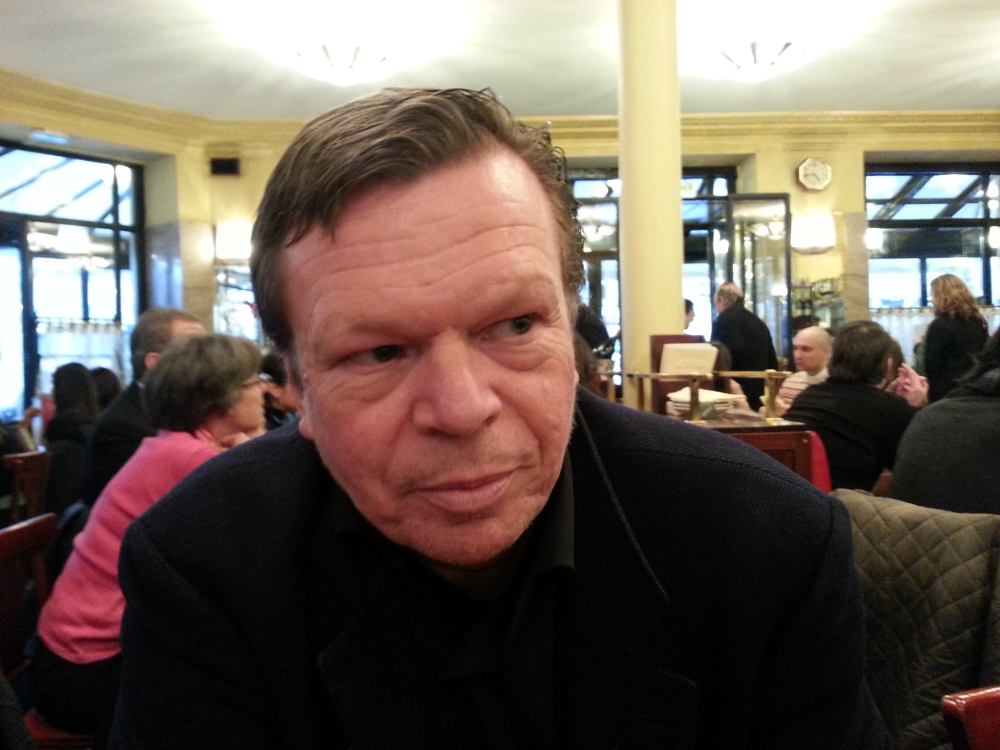
Peter is writer of the series The Heroine’s Journey and Hero’s Journey books, he has an MBA in Marketing, MBA in Financial Economics and graduated at university in Sociology and Communication Sciences.
Become a Great Storyteller in One Day
That’s why I set up The Power of your Story journey in the great cities of the world. A new way to use the power of your story. To guide you to life-changing, eye-opening movies, art, literature that truly have the power to enchant, enrich and inspire.
In this journey with Peter de Kuster you’ll explore your relationship with stories so far and your unique story identity will be sketched. You will be guided to movies, art, literature, myths that can put their finger on what you want to rewrite in your story, the feelings that you may often have had but perhaps never understood so clearly before; movies that open new perspectives and re-enchant the world for you.
You will be asked to complete a questionnaire in advance of your session and you’ll be given an instant story advice and movies to see to take away. Your full story advice and movies to see list will follow within a couple of days.
Practical Info
The price of this one day storytelling seminar is Euro 995 excluding VAT per person. There are special prices when you want to attend with three or more people.
You can reach Peter for questions about dates and the program by mailing him at peterdekuster@hotmail.nl
TIMETABLE
09.40 Tea & Coffee on arrival
10.00 Morning Session
13.00 Lunch Break
14.00 Afternoon Session
18.00 Drinks
Read on for a detailed breakdown of the Power of your Story itinerary.
What Can I Expect?
Here’s an outline of the THE POWER OF YOUR STORY journey.
Journey Outline
OLD STORIES
- What is your Story?
- Are you even trying to tell a Story?
- Old Stories (stories about you, your art, your clients, your money, your self promotion, your happiness, your health)
- Tell your current Story
- Is this Really Your Story?
YOUR NEW STORY
- The Premise of your Story. The Purpose of your Life and Art
- The words on your tombstone
- You ultimate mission, out loud
- The Seven Great Plots
- The Twelve Archetypal Heroines
- The One Great Story
- Purpose is Never Forgettable
- Questioning the Premise
- Lining up
- Flawed Alignment, Tragic Ending
- The Three Rules in Storytelling
- Write Your New Story
TURNING STORY INTO ACTION
- Turning your story into action
- The Story Effect
- Story Ritualizing
- The Storyteller and the art of story
- The Power of Your Story
- Storyboarding your creative process
- They Created and Lived Happily Ever After
 The Power of Your Story