How do you live happily ever after?
I identify the three things I want to get finished that day – never more than three. At the end of my day I use my 10 – 6 – 1 scale to rate myself. Now I am giving myself 10’s all the time. I found that I actually got more accomplished more completed – and at a higher level – than when I was doing lots of things. I stopped multitasking at meetings and suddenly they became shorter, crisper. The effectiveness of conversations improved threefold. Plus, it has been more enjoyable.
Learning to invest your full and best energy in whatever you are doing at that moment in full engagement is what i call The Hero’s Journey or The Heroine’s Journey. A story i have developed over more than two decades, which posits at its core that life is enriched, flow occurs, happiness is felt because of the commitment, passion, and focus we give it, not the time we give it. These fully – engaged – in the present moments – I call ‘Moments of Bliss’ – created me more ‘Moments of Bliss’ and ‘Days of Bliss’ in two weeks than I had in the five years before, or than I probably would have in the next five years had my life and business continued the way it was going.
One of the exciting discoveries I have made is the almost perfect correlation between engagement, on one hand, and happiness, on the other. Engagement is an acquired skill that allows us to be in the present; it is where people feel happiest. (The happiness we feel about an upcoming event is really not future-oriented, but rather present-oriented happiness in the anticipation). The more engaged we are in something, the more alive we tend to feel; the more alive we feel, the happier we feel. Becoming fully engaged in our hero’s journey that deeply matters brings a rich sense of meaning, depth and dimension to our lives. Disengagement as the opposite, tragic effect. It pulls us from the core of life – characterized by intensity, passion and meaning – to its boundaries, characterized by safety, protection and disassociation.
By being engaged we experience true happiness and joy in our lives. We ignite our talents and skills.
There is no movie musical more fun than “Singin’ in the Rain,” and few that remain as fresh over the years. Its originality is all the more startling if you reflect that only one of its songs was written new for the film, that the producers plundered MGM’s storage vaults for sets and props, and that the movie was originally ranked below “An American in Paris,” which won a best picture Oscar. The verdict of the years knows better than Oscar: “Singin’ in the Rain” is a transcendent experience, and no one who loves movies can afford to miss it.
The film is above all lighthearted and happy. The three stars–Gene Kelly, DonaldO’Connor and 19-year-old Debbie Reynolds–must have rehearsed endlessly for their dance numbers, which involve alarming acrobatics, but in performance they’re giddy with joy. Kelly’s soaking-wet “Singin’ in the Rain” dance number is “the single most memorable dance number on film,” Peter Wollen.
Kelly and O’Connor were established stars when the film was made in 1952. Debbie Reynolds was a newcomer with five previous smaller roles, and this was her big break. She has to keep up with two veteran hoofers, and does; note the determination on her pert little face as she takes giant strides when they all march toward a couch in the “Good Morning” number.
“Singin’ in the Rain” pulses with life; in a movie about making movies, you can sense the joy they had making this one. It was co-directed by Stanley Donen, then only 28, and Kelly, who supervised the choreography. Donen got an honorary Oscar in 1998, and stole the show by singing “Cheek to Cheek” while dancing with his statuette. He started in movies at 17, in 1941, as an assistant to Kelly, and they collaborated on “On the Town” (1949) when he was only 25. His other credits include “Funny Face” and “Seven Brides for Seven Brothers.”
One of this movie’s pleasures is that it’s really about something. Of course it’s about romance, as most musicals are, but it’s also about the film industry in a period of dangerous transition. The movie simplifies the changeover from silents to talkies, but doesn’t falsify it. Yes, cameras were housed in soundproof booths, and microphones were hidden almost in plain view. And, yes, preview audiences did laugh when they first heard the voices of some famous stars;
Garbo Talks!” the ads promised, but her co-star, John Gilbert, would have been better off keeping his mouth shut. The movie opens and closes at sneak previews, has sequences on sound stages and in dubbing studios, and kids the way the studios manufactured romances between their stars.
When producer Arthur Freed and writers Betty Comdon and Adolph Green were assigned to the project at MGM, their instructions were to recycle a group of songs the studio already owned, most of them written by Freed himself, with Nacio Herb Brown. Comdon and Green noted that the songs came from the period when silent films were giving way to sound, and they decided to make a musical about the birth of the talkies. That led to the character of Lina Lamont (Jean Hagen), the blond bombshell with the voice like fingernails on a blackboard.
Hagen in fact had a perfectly acceptable voice, which everyone in Hollywood knew; maybe that helped her win an Oscar nomination for best supporting actress. (“Singin’ “ was also nominated for its score, but won neither Oscar–a slow start for a film that placed 10th on the American Film Institute list of 100 great films, and was voted the fourth greatest film of all time in the Sight & Sound poll.) She plays a caricatured dumb blond, who believes she’s in love with her leading man, Don Lockwood (Kelly), because she read it in a fan magazine. She gets some of the funniest lines (“What do they think I am? Dumb or something? Why, I make more money than Calvin Coolidge put together!”).
Kelly and O’Connor had dancing styles that were more robust and acrobatic than the grandmaster, Fred Astaire. O’Connor’s “Make ’em Laugh” number remains one of the most amazing dance sequences ever filmed — a lot of it in longer takes. He wrestles with a dummy, runs up walls and does backflips, tosses his body around like a rag doll, turns cartwheels on the floor, runs into a brick wall and a lumber plank, and crashes through a backdrop.
Kelly was the mastermind behind the final form of the “Singin’ in the Rain” number. He and young Kathy Selden (Reynolds) realize they’re falling in love. That explains the dance: He doesn’t mind getting wet, because he’s besotted with romance. Kelly liked to design dances that grew out of the props and locations at hand. He dances with the umbrella, swings from a lamppost, has one foot on the curb and the other in the gutter, and in the scene’s high point, simply jumps up and down in a rain puddle.
Other dance numbers also use real props. Kelly and O’Connor, taking elocution lessons from a voice teacher, do “Moses Supposes” while balancing on tabletops and chairs (it was the only song written specifically for the movie). “Good Morning” uses the kitchen and living areas of Lockwood’s house (ironically, a set built for a John Gilbert movie). Early in the film, Kelly climbs a trolley and leaps into Kathy’s convertible. Outtakes of the leap show Kelly missing the car on one attempt and landing in the street.
The story line is suspended at the two-thirds mark for the movie’s set piece, “Broadway Ballet,” an elaborate fantasy dance number starring Kelly and Cyd Charisse. It’s explained as a number Kelly is pitching to the studio, about a gawky kid who arrives on Broadway with a big dream (“Gotta Dance!”), and clashes with a gangster’s leggy girlfriend. MGM musicals liked to stop the show for big production numbers, but it’s possible to enjoy “Broadway Ballet” and still wonder if it’s really needed; it stops the headlong energy dead in its tracks for something more formal and considered.
The climax ingeniously uses strategies that the movie has already planted, to shoot down the dim Lina and celebrate fresh-faced Kathy. After a preview audience cheers Lina’s new film (her voice dubbed by Kathy), she’s trapped into singing onstage. Kathy reluctantly agrees to sing into a backstage mike while Lina mouths the words, and then her two friends join the studio boss in raising the curtain so the audience sees the trick. Kathy flees down the aisle–but then, in one of the great romantic moments in the movies, she’s held in foreground closeup while Lockwood, onstage, cries out, “Ladies and gentlemen, stop that girl! That girl running up the aisle! That’s the girl whose voice you heard and loved tonight! She’s the real star of the picture–Kathy Selden!” It’s corny, but it’s perfect.
The magic of “Singin’ in the Rain” lives on. It remains one of the few movies to live up to its advertising. “What a glorious feeling!” the posters said. It was the simple truth.
The Power of Your Story Seminar
Amsterdam 17 April
You will examine with Peter de Kuster, founder of The Power of Your Story the way we tell stories about ourselves to ourselves — and, most important, the way we can change those stories to transform our business and personal lives.
“Your story is your life,” says Peter. As human beings, we continually tell ourselves stories — of success or failure; of power or victimhood; stories that endure for an hour, or a day, or an entire lifetime. We have stories about ourselves, our creative business, our customers ; about what we want and what we’re capable of achieving. Yet, while our stories profoundly affect how others see us and we see ourselves, too few of us even recognize that we’re telling stories, or what they are, or that we can change them — and, in turn, transform our very destinies.
Telling ourselves stories provides structure and direction as we navigate life’s challenges and opportunities, and helps us interpret our goals and skills. Stories make sense of chaos; they organize our many divergent experiences into a coherent thread; they shape our entire reality. And far too many of our stories, says Peter, are dysfunctional, in need of serious editing. First, he asks you to answer the question, “In which areas of my life is it clear that I cannot achieve my goals with the story I’ve got?” He then shows you how to create new, reality-based stories that inspire you to action, and take you where you want to go both in your work and personal life.
Our capacity to tell stories is one of our profoundest gifts. Peter’s approach to creating deeply engaging stories will give you the tools to wield the power of storytelling and forever change your business and personal life.
About Peter de Kuster
Peter de Kuster is the founder of The Heroine’s Journey & Hero’s Journey project, a storytelling firm which helps creative professionals to create careers and lives based on whatever story is most integral to their lifes and careers (values, traits, skills and experiences). Peter’s approach combines in-depth storytelling and marketing expertise, and for over 20 years clients have found it effective with a wide range of creative business issues.
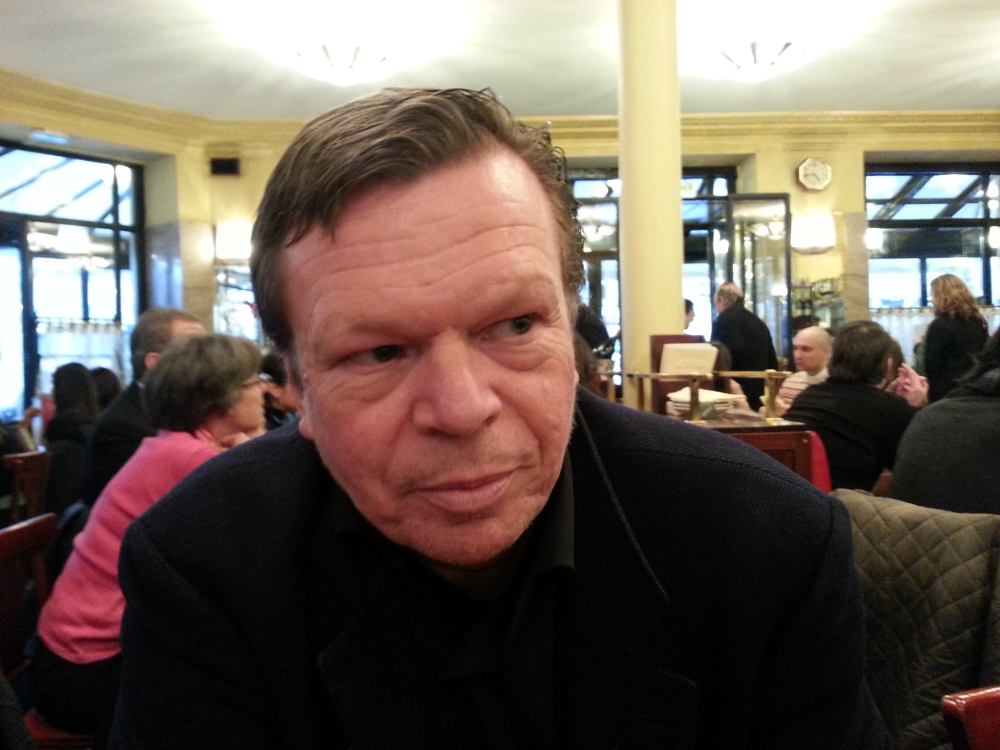
Peter is writer of the series The Heroine’s Journey and Hero’s Journey books, he has an MBA in Marketing, MBA in Financial Economics and graduated at university in Sociology and Communication Sciences.
Become a Great Storyteller in One Day
That’s why I set up The Power of your Story journey in the great cities of the world. A new way to use the power of your story. To guide you to life-changing, eye-opening movies, art, literature that truly have the power to enchant, enrich and inspire.
In this journey with Peter de Kuster you’ll explore your relationship with stories so far and your unique story identity will be sketched. You will be guided to movies, art, literature, myths that can put their finger on what you want to rewrite in your story, the feelings that you may often have had but perhaps never understood so clearly before; movies that open new perspectives and re-enchant the world for you.
You will be asked to complete a questionnaire in advance of your session and you’ll be given an instant story advice and movies to see to take away. Your full story advice and movies to see list will follow within a couple of days.
Practical Info
The price of this one day storytelling seminar is Euro 995 excluding VAT per person. There are special prices when you want to attend with three or more people.
You can reach Peter for questions about dates and the program by mailing him at peterdekuster@hotmail.nl
TIMETABLE
09.40 Tea & Coffee on arrival
10.00 Morning Session
13.00 Lunch Break
14.00 Afternoon Session
18.00 Drinks
Read on for a detailed breakdown of the Power of your Story itinerary.
What Can I Expect?
Here’s an outline of the THE POWER OF YOUR STORY journey.
Journey Outline
OLD STORIES
- What is your Story?
- Are you even trying to tell a Story?
- Old Stories (stories about you, your art, your clients, your money, your self promotion, your happiness, your health)
- Tell your current Story
- Is this Really Your Story?
YOUR NEW STORY
- The Premise of your Story. The Purpose of your Life and Art
- The words on your tombstone
- You ultimate mission, out loud
- The Seven Great Plots
- The Twelve Archetypal Heroines
- The One Great Story
- Purpose is Never Forgettable
- Questioning the Premise
- Lining up
- Flawed Alignment, Tragic Ending
- The Three Rules in Storytelling
- Write Your New Story
TURNING STORY INTO ACTION
- Turning your story into action
- The Story Effect
- Story Ritualizing
- The Storyteller and the art of story
- The Power of Your Story
- Storyboarding your creative process
- They Created and Lived Happily Ever After
 The Power of Your Story