Let’s get back to the iceberg, the deepest part. Stored here is all the nonconscious material that clearly affects our beliefs, our attitudes, our view of the world, our story. Stored here are subconscious forces (wants, needs) that may be in direct conflict with conscious aspirations, intentions, values. Stored here are our most frightening and potentially destructive memories. The depth and concealment of this material, of these memories does nothing to diminish their potential influence on our stories; indeed there’s likely to be a strong link between the stories we tell and the vast content stored below the waterline of our iceberg mind.
Fortunately it is not a prerequisite of meaningful personal change that one connect one’s current story with something specific from the past; even if that were possible, it is hardly a lock that one could undo the damage easily. Very often we can move forward and make positive changes with little or no clue as to how or why our convoluted story got formed that way.
Like a great iron Sphinx on the ocean floor, the Titanic faces still toward the West, interrupted forever on its only voyage. We see it in the opening shots of “Titanic,” encrusted with the silt of 85 years; a remote-controlled TV camera snakes its way inside, down corridors and through doorways, showing us staterooms built for millionaires and inherited by crustaceans.
These shots strike precisely the right note; the ship calls from its grave for its story to be told, and if the story is made of showbiz and hype, smoke and mirrors–well, so was the Titanic. She was “the largest moving work of man in all history,” a character boasts, neatly dismissing the Pyramids and the Great Wall. There is a shot of her, early in the film, sweeping majestically beneath the camera from bow to stern, nearly 900 feet long and “unsinkable,” it was claimed, until an iceberg made an irrefutable reply.
We know before the movie begins that certain things must happen. We must see the Titanic sail and sink, and be convinced we are looking at a real ship. There must be a human story–probably a romance–involving a few of the passengers. There must be vignettes involving some of the rest and a subplot involving the arrogance and pride of the ship’s builders–and perhaps also their courage and dignity. And there must be a reenactment of the ship’s terrible death throes; it took two and a half hours to sink, so that everyone aboard had time to know what was happening, and to consider their actions.
The human story involves an 17-year-old woman named Rose DeWitt Bukater (Kate Winslet) who is sailing to what she sees as her own personal doom: She has been forced by her penniless mother to become engaged to marry a rich, supercilious snob named Cal Hockley (Billy Zane), and so bitterly does she hate this prospect that she tries to kill herself by jumping from the ship. She is saved by Jack Dawson (Leonardo DiCaprio), a brash kid from steerage, and of course they will fall in love during the brief time left to them.
The screenplay tells their story in a way that unobtrusively shows off the ship. Jack is invited to join Rose’s party at dinner in the first class dining room, and later, fleeing from Cal’s manservant, Lovejoy (David Warner), they find themselves first in the awesome engine room, with pistons as tall as churches, and then at a rousing Irish dance in the crowded steerage. (At one point Rose gives Lovejoy the finger; did young ladies do that in 1912?) Their exploration is intercut with scenes from the command deck, where the captain (Bernard Hill) consults with Andrews (Victor Garber), the ship’s designer and Ismay (Jonathan Hyde), the White Star Line’s managing director.
Ismay wants the ship to break the trans-Atlantic speed record. He is warned that icebergs may have floated into the hazardous northern crossing but is scornful of danger. The Titanic can easily break the speed record but is too massive to turn quickly at high speed; there is an agonizing sequence that almost seems to play in slow motion, as the ship strains and shudders to turn away from an iceberg in its path–and fails.
We understand exactly what is happening at that moment because of an ingenious story technique by Cameron, who frames and explains the entire voyage in a modern story. The opening shots of the real Titanic, we are told, are obtained during an expedition led by Brock Lovett (Bill Paxton), an undersea explorer. He seeks precious jewels but finds a nude drawing of a young girl. Meanwhile, an ancient woman sees the drawing on TV and recognizes herself. This is Rose (Gloria Stuart), still alive at 101. She visits Paxton and shares her memories (“I can still smell the fresh paint”). And he shows her video scenes from his explorations, including a computer simulation of the Titanic’s last hours–which doubles as a briefing for the audience. By the time the ship sinks, we already know what is happening and why, and the story can focus on the characters while we effortlessly follow the stages of the Titanic’s sinking.
The Power of Your Story Seminar
Amsterdam 17 April
You will examine with Peter de Kuster, founder of The Power of Your Story the way we tell stories about ourselves to ourselves — and, most important, the way we can change those stories to transform our business and personal lives.
“Your story is your life,” says Peter. As human beings, we continually tell ourselves stories — of success or failure; of power or victimhood; stories that endure for an hour, or a day, or an entire lifetime. We have stories about ourselves, our creative business, our customers ; about what we want and what we’re capable of achieving. Yet, while our stories profoundly affect how others see us and we see ourselves, too few of us even recognize that we’re telling stories, or what they are, or that we can change them — and, in turn, transform our very destinies.
Telling ourselves stories provides structure and direction as we navigate life’s challenges and opportunities, and helps us interpret our goals and skills. Stories make sense of chaos; they organize our many divergent experiences into a coherent thread; they shape our entire reality. And far too many of our stories, says Peter, are dysfunctional, in need of serious editing. First, he asks you to answer the question, “In which areas of my life is it clear that I cannot achieve my goals with the story I’ve got?” He then shows you how to create new, reality-based stories that inspire you to action, and take you where you want to go both in your work and personal life.
Our capacity to tell stories is one of our profoundest gifts. Peter’s approach to creating deeply engaging stories will give you the tools to wield the power of storytelling and forever change your business and personal life.
About Peter de Kuster
Peter de Kuster is the founder of The Heroine’s Journey & Hero’s Journey project, a storytelling firm which helps creative professionals to create careers and lives based on whatever story is most integral to their lifes and careers (values, traits, skills and experiences). Peter’s approach combines in-depth storytelling and marketing expertise, and for over 20 years clients have found it effective with a wide range of creative business issues.
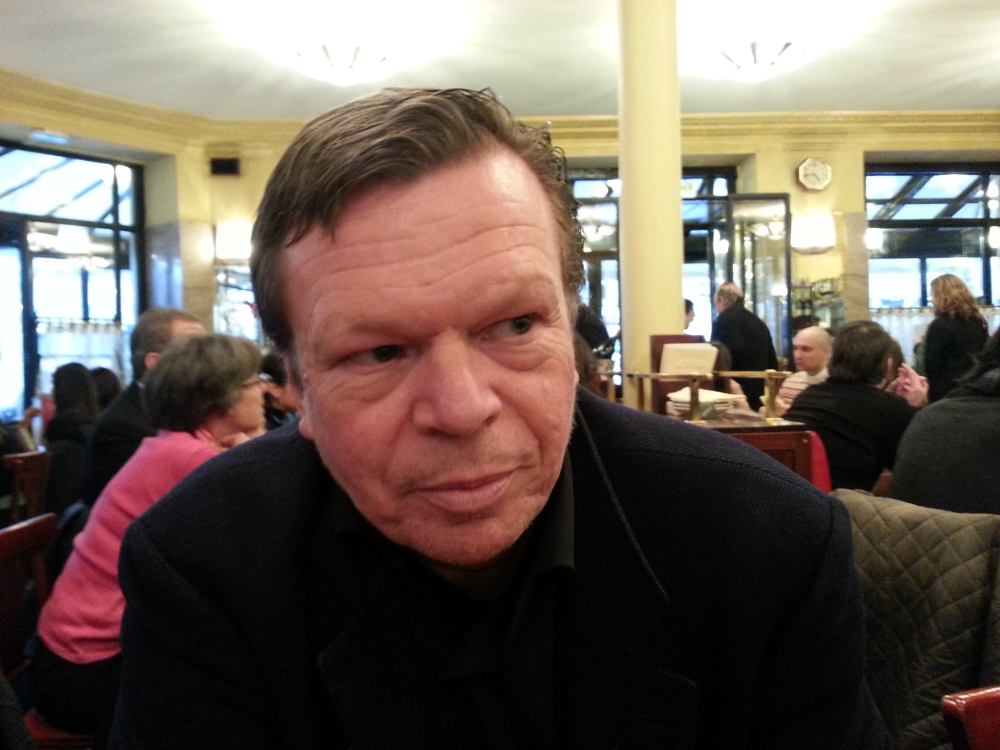
Peter is writer of the series The Heroine’s Journey and Hero’s Journey books, he has an MBA in Marketing, MBA in Financial Economics and graduated at university in Sociology and Communication Sciences.
Become a Great Storyteller in One Day
That’s why I set up The Power of your Story journey in the great cities of the world. A new way to use the power of your story. To guide you to life-changing, eye-opening movies, art, literature that truly have the power to enchant, enrich and inspire.
In this journey with Peter de Kuster you’ll explore your relationship with stories so far and your unique story identity will be sketched. You will be guided to movies, art, literature, myths that can put their finger on what you want to rewrite in your story, the feelings that you may often have had but perhaps never understood so clearly before; movies that open new perspectives and re-enchant the world for you.
You will be asked to complete a questionnaire in advance of your session and you’ll be given an instant story advice and movies to see to take away. Your full story advice and movies to see list will follow within a couple of days.
Practical Info
The price of this one day storytelling seminar is Euro 995 excluding VAT per person. There are special prices when you want to attend with three or more people.
You can reach Peter for questions about dates and the program by mailing him at peterdekuster@hotmail.nl
TIMETABLE
09.40 Tea & Coffee on arrival
10.00 Morning Session
13.00 Lunch Break
14.00 Afternoon Session
18.00 Drinks
Read on for a detailed breakdown of the Power of your Story itinerary.
What Can I Expect?
Here’s an outline of the THE POWER OF YOUR STORY journey.
Journey Outline
OLD STORIES
- What is your Story?
- Are you even trying to tell a Story?
- Old Stories (stories about you, your art, your clients, your money, your self promotion, your happiness, your health)
- Tell your current Story
- Is this Really Your Story?
YOUR NEW STORY
- The Premise of your Story. The Purpose of your Life and Art
- The words on your tombstone
- You ultimate mission, out loud
- The Seven Great Plots
- The Twelve Archetypal Heroines
- The One Great Story
- Purpose is Never Forgettable
- Questioning the Premise
- Lining up
- Flawed Alignment, Tragic Ending
- The Three Rules in Storytelling
- Write Your New Story
TURNING STORY INTO ACTION
- Turning your story into action
- The Story Effect
- Story Ritualizing
- The Storyteller and the art of story
- The Power of Your Story
- Storyboarding your creative process
- They Created and Lived Happily Ever After
 The Power of Your Story