Only 5 % or less of the mind should be classified as the ‘conscious story’ – controlled by self – regulatory, willful acts – while an astonishing 95% is nonconscious, automatic, instinctive.
Residing in your subconscious is most of the hidden matter that influences our stories – all the instinctual urges coded in genes (governing autonomic responses like fight-or-flight, for example), all the conditioning that took place during childhood, all the indoctrination that has occured since the first day of life. All the conflicts and challenges beneath the surface, waging a constant battle between our wants and needs.
It is this subconscious story that is hardest to retrieve and bring to the surface, to full awareness. Yet it is the mortar that goes a very long way in determining who we are and the shape our life story has taken.
Many people find it hard to accept that our lives are ruled by habitual stories rather than moment – to – moment acts of conscious stories. They don’t want to acknowledge that our stories might acutally be so profoundl influenced by factors outside our normal state of awareness. After all, once we acknowledge the extent to which our behavior is governed by subconscious forces, how daunting is it to exercise full responsibility (whatever the means) for our life when but a paltry 5% of that life is really under control?
Rather than being troubled by the percentages, and the perception that they may give rise to, I see them as a glorious challenge. Forget that so much, percentage-wise, of what we do is out of control. The part that does matters – the part that makes the real difference – is the part that we control. It is this capacity that separates us from all other life forms. This evolutionary masterpiece is the only hope we have for making course corrections in our life story.
Any attempt to describe “Forrest Gump” will risk making the movie seem more conventional than it is, but let me try. It’s a comedy, I guess. Or maybe a drama. Or a dream. The screenplay by Eric Roth has the complexity of modern fiction, not the formulas of modern movies. Its hero, played by Tom Hanks, is a thoroughly decent man with an IQ of 75, who manages between the 1950s and the 1980s to become involved in every major event in American history. And he survives them all with only honesty and niceness as his shields.
And yet this is not a heartwarming story about a mentally retarded man. That cubbyhole is much too small and limiting for Forrest Gump. The movie is more of a meditation on our times, as seen through the eyes of a man who lacks cynicism and takes things for exactly what they are. Watch him carefully and you will understand why some people are criticized for being “too clever by half.” Forrest is clever by just exactly enough.
Tom Hanks may be the only actor who could have played the role. I can’t think of anyone else as Gump, after seeing how Hanks makes him into a person so dignified, so straight-ahead. The performance is a breathtaking balancing act between comedy and sadness, in a story rich in big laughs and quiet truths.
Forrest is born to an Alabama boardinghouse owner (Sally Field) who tries to correct his posture by making him wear braces, but who never criticizes his mind. When Forrest is called “stupid,” his mother tells him, “Stupid is as stupid does,” and Forrest turns out to be incapable of doing anything less than profound. Also, when the braces finally fall from his legs, it turns out he can run like the wind.
That’s how he gets a college football scholarship, in a life story that eventually becomes a running gag about his good luck. Gump the football hero becomes Gump the Medal of Honor winner in Vietnam, and then Gump the Ping-Pong champion, Gump the shrimp boat captain, Gump the millionaire stockholder (he gets shares in a new “fruit company” named Apple Computer), and Gump the man who runs across America and then retraces his steps.
It could be argued that with his IQ of 75 Forrest does not quite understand everything that happens to him. Not so. He understands everything he needs to know, and the rest, the movie suggests, is just surplus. He even understands everything that’s important about love, although Jenny, the girl he falls in love with in grade school and never falls out of love with, tells him, “Forrest, you don’t know what love is.” She is a stripper by that time.
The movie is ingenious in taking Forrest on his tour of recent American history. The director, Robert Zemeckis, is experienced with the magic that special effects can do (his credits include the “Back To The Future” movies and “Who Framed Roger Rabbit”), and here he uses computerized visual legerdemain to place Gump in historic situations with actual people.
Forrest stands next to the schoolhouse door with George Wallace, he teaches Elvis how to swivel his hips, he visits the White House three times, he’s on the Dick Cavett show with John Lennon, and in a sequence that will have you rubbing your eyes with its realism, he addresses a Vietnam-era peace rally on the Mall in Washington. Special effects are also used in creating the character of Forrest’s Vietnam friend Lt. Dan (Gary Sinise), a Ron Kovic type who quite convincingly loses his legs.
Using carefully selected TV clips and dubbed voices, Zemeckis is able to create some hilarious moments, as when LBJ examines the wound in what Forrest describes as “my butt-ox.” And the biggest laugh in the movie comes after Nixon inquires where Forrest is staying in Washington, and then recommends the Watergate. (That’s not the laugh, just the setup.) As Forrest’s life becomes a guided tour of straight-arrow America, Jenny (played by Robin Wright) goes on a parallel tour of the counterculture. She goes to California, of course, and drops out, tunes in, and turns on. She’s into psychedelics and flower power, antiwar rallies and love-ins, drugs and needles. Eventually it becomes clear that between them Forrest and Jenny have covered all of the landmarks of our recent cultural history, and the accommodation they arrive at in the end is like a dream of reconciliation for our society. What a magical movie.
The Power of Your Story Seminar
Amsterdam 17 April
You will examine with Peter de Kuster, founder of The Power of Your Story the way we tell stories about ourselves to ourselves — and, most important, the way we can change those stories to transform our business and personal lives.
“Your story is your life,” says Peter. As human beings, we continually tell ourselves stories — of success or failure; of power or victimhood; stories that endure for an hour, or a day, or an entire lifetime. We have stories about ourselves, our creative business, our customers ; about what we want and what we’re capable of achieving. Yet, while our stories profoundly affect how others see us and we see ourselves, too few of us even recognize that we’re telling stories, or what they are, or that we can change them — and, in turn, transform our very destinies.
Telling ourselves stories provides structure and direction as we navigate life’s challenges and opportunities, and helps us interpret our goals and skills. Stories make sense of chaos; they organize our many divergent experiences into a coherent thread; they shape our entire reality. And far too many of our stories, says Peter, are dysfunctional, in need of serious editing. First, he asks you to answer the question, “In which areas of my life is it clear that I cannot achieve my goals with the story I’ve got?” He then shows you how to create new, reality-based stories that inspire you to action, and take you where you want to go both in your work and personal life.
Our capacity to tell stories is one of our profoundest gifts. Peter’s approach to creating deeply engaging stories will give you the tools to wield the power of storytelling and forever change your business and personal life.
About Peter de Kuster
Peter de Kuster is the founder of The Heroine’s Journey & Hero’s Journey project, a storytelling firm which helps creative professionals to create careers and lives based on whatever story is most integral to their lifes and careers (values, traits, skills and experiences). Peter’s approach combines in-depth storytelling and marketing expertise, and for over 20 years clients have found it effective with a wide range of creative business issues.
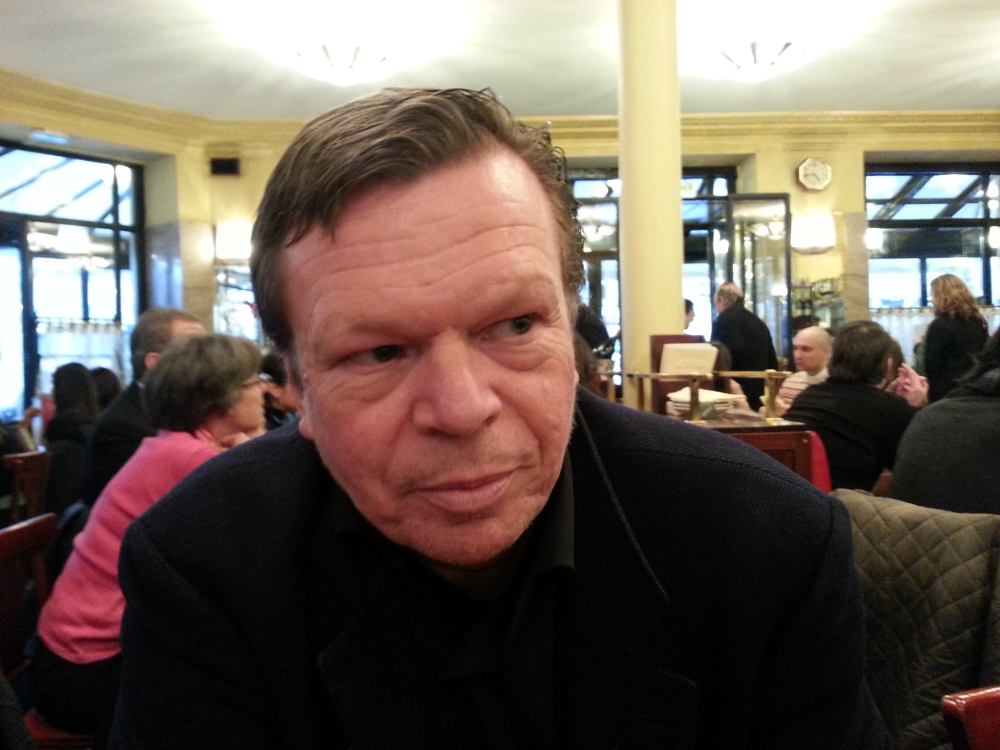
Peter is writer of the series The Heroine’s Journey and Hero’s Journey books, he has an MBA in Marketing, MBA in Financial Economics and graduated at university in Sociology and Communication Sciences.
Become a Great Storyteller in One Day
That’s why I set up The Power of your Story journey in the great cities of the world. A new way to use the power of your story. To guide you to life-changing, eye-opening movies, art, literature that truly have the power to enchant, enrich and inspire.
In this journey with Peter de Kuster you’ll explore your relationship with stories so far and your unique story identity will be sketched. You will be guided to movies, art, literature, myths that can put their finger on what you want to rewrite in your story, the feelings that you may often have had but perhaps never understood so clearly before; movies that open new perspectives and re-enchant the world for you.
You will be asked to complete a questionnaire in advance of your session and you’ll be given an instant story advice and movies to see to take away. Your full story advice and movies to see list will follow within a couple of days.
Practical Info
The price of this one day storytelling seminar is Euro 995 excluding VAT per person. There are special prices when you want to attend with three or more people.
You can reach Peter for questions about dates and the program by mailing him at peterdekuster@hotmail.nl
TIMETABLE
09.40 Tea & Coffee on arrival
10.00 Morning Session
13.00 Lunch Break
14.00 Afternoon Session
18.00 Drinks
Read on for a detailed breakdown of the Power of your Story itinerary.
What Can I Expect?
Here’s an outline of the THE POWER OF YOUR STORY journey.
Journey Outline
OLD STORIES
- What is your Story?
- Are you even trying to tell a Story?
- Old Stories (stories about you, your art, your clients, your money, your self promotion, your happiness, your health)
- Tell your current Story
- Is this Really Your Story?
YOUR NEW STORY
- The Premise of your Story. The Purpose of your Life and Art
- The words on your tombstone
- You ultimate mission, out loud
- The Seven Great Plots
- The Twelve Archetypal Heroines
- The One Great Story
- Purpose is Never Forgettable
- Questioning the Premise
- Lining up
- Flawed Alignment, Tragic Ending
- The Three Rules in Storytelling
- Write Your New Story
TURNING STORY INTO ACTION
- Turning your story into action
- The Story Effect
- Story Ritualizing
- The Storyteller and the art of story
- The Power of Your Story
- Storyboarding your creative process
- They Created and Lived Happily Ever After
 The Power of Your Story