All good stories hinge on dramatic moments, truth … and turning points. All life stories have turning points. Turning points can be positive or negative. It should be said also that one person’s negative turning point is another one’s positive after the fact. Many people have described a near death experience as ‘the best thing that ever happened to me’.
A turning point is simply an event or circumstance that precipates a significant change in the story, a change in how we think or feel about something important in our lives. Turning points can alter, suddenly, our day to day circumstances, our self – confidence, our perception, even our values and beliefs. Turning points usually entail powerful emotion. They can force us to face the truth as nothing else can. Here is the thing about turning points though; they are not always obvious. Many turning points are subtle, recognizable only in hindsight; they tend to be much more obvious in the telling than in the living. A turning point can be the tail end of something gradual and cumulative – more accurately described as a tipping point than a turning point.
How then, does a person find the will to reassert control over life, to rediscover purpose, to tell a story that restores energy, fulfillment and productivity where before there were fatigue, boredom and despair?
By taking control over your story. You must be ready, if necessary, to rewrite it and rewrite it and rewrite it. You may need, at least at first – before you get the hang of it, before you have ritualized new habits until you can stop thinking about them – to do it every day, even several times a day, if your story is to engage you every day. Your story has to move, it has to move you and it has to move, period.
We must learn how to turn our life story into a living thing, something we know how to grow, repair and maintain.
Werner Herzog’s “Fitzcarraldo” is one of the great visions of the cinema, and one of the great follies. One would not have been possible without the other. This is a movie about an opera-loving madman who is determined to drag a boat overland from one river system to another. In making the film, Herzog was determined to actually do that, which is more than can be said for Brian Sweeney Fitzgerald, the Irishman whose story inspired him.
“Fitzcarraldo” (1982) is one of those brave and epic films, like “Apocalypse Now” or “2001,” where we are always aware both of the film, and of the making of the film. Herzog could have used special effects for his scenes of the 360-ton boat being hauled up a muddy 40-degree slope in the jungle, but he believed we could tell the difference: “This is not a plastic boat.” Watching the film, watching Fitzcarraldo (Klaus Kinski) raving in the jungle in his white suit and floppy panama hat, watching Indians operating a block-and-tackle system to drag the boat out of the muck, we’re struck by the fact that this is actually happening, that this huge boat is inching its way onto land — as Fitzcarraldo (who got his name because the locals could not pronounce “Fitzgerald”) serenades the jungle with his scratchy old Caruso recordings.
“Fitzcarraldo” opens on the note of madness, which it will sustain. Out of the dark void of the Amazon comes a boat, its motor dead, the shock-haired Kinski furiously rowing at the prow, while his mistress (Claudia Cardinale) watches anxiously behind him. They are late for the opera. He has made some money with an ice-making machine, she is a madam whose bordello services wealthy rubber traders, and as they talk their way into an opera house, Fitzcarraldo knows his mission in life: He will become rich, build an opera house in the jungle, and hire Caruso to sing in it.
Fortunes in this district are built on rubber. He obtains the rights to 400 square miles that are thought to be useless because a deadly rapids prevents a boat from reaching them. But if he could bring a boat from another river, his dream could come true. The real Fitzgerald only moved a 32-ton boat between rivers, and he disassembled it first. Hearing the story, Herzog was struck by the image of a boat moving up a hillside, and the rest of the screenplay followed.
His production can be described as a series of emergencies. A border war between Peru and Ecuador prevented him from using his first location. He found another location and shot for four months with Jason Robards playing Fitzcarraldo and Mick Jagger playing his loony sidekick. Then Robards contracted amoebic dysentery and flew home, forbidden by his doctors to return, and Jagger dropped out. Herzog turned to Klaus Kinski, the legendary wild man who had starred in his “Aguirre, the Wrath of God” (1972) and “Nosferatu” (1979). Kinski was a better choice for the role than Robards, for the same reason a real boat was better than a model: Robards would have been playing a madman, but to see Kinski is to be convinced of his ruling angers and demons.
Herzog has always been more fascinated by image than story, and here he sears his images into the film. He worked with indigenous Amazonian Indians, whose faces become one of the important elements of the work. An early scene shows Fitzcarraldo awakened from sleep to find his bed surrounded by children. There is a scene where Indians gaze impassively at the river, not even noticing Fitzcarraldo as he ranges up and down their line, peering wildly into their faces. There is another scene where he and his boat crew eat dinner while Indians crowd into the mess room and stare at them. And scenes simply of faces, watchful, judgmental, trying to divine what drives the man in the white suit.
The movie is imperfect, but transcendent; this story could not have been filmed on this location in this way and been perfect without being less of a film. The conclusion, the scene with the cigar, for example, is an anticlimax; but then everything must be an anticlimax after the boat goes up the hill. What is crucial is that Herzog does not hurry his story along; he seeks not the progress of the plot, but the resonance of the images. Consider a sequence where the boat actually bangs and crashes its way through the deadly Pongo das Mortes, the Rapids of Death. Another director might have made this a routine action scene, with quick cuts and lots of noise; Herzog makes it a slow and frightful procession down real currents in a real ship, with a phonograph playing Caruso until he needle is knocked loose. It looks more horrifying to see the huge ship slowly floating to its destiny.
At the darkest hour in “Fitzcarraldo,” when Robards fell sick and he had to abandon four months of shooting, Herzog returned to get more backing from investors. They had heard he was finding it impossible to get the ship up the mountain, and asked if it would not be wiser to take his losses and quit. His reply: “How can you ask this question? If I abandon this project, I will be a man without dreams, and I don’t want to live like that. I live my life or I end my life with this project.” With Herzog, that has often been the case.
The Power of Your Story Seminar
Amsterdam 17 April
You will examine with Peter de Kuster, founder of The Power of Your Story the way we tell stories about ourselves to ourselves — and, most important, the way we can change those stories to transform our business and personal lives.
“Your story is your life,” says Peter. As human beings, we continually tell ourselves stories — of success or failure; of power or victimhood; stories that endure for an hour, or a day, or an entire lifetime. We have stories about ourselves, our creative business, our customers ; about what we want and what we’re capable of achieving. Yet, while our stories profoundly affect how others see us and we see ourselves, too few of us even recognize that we’re telling stories, or what they are, or that we can change them — and, in turn, transform our very destinies.
Telling ourselves stories provides structure and direction as we navigate life’s challenges and opportunities, and helps us interpret our goals and skills. Stories make sense of chaos; they organize our many divergent experiences into a coherent thread; they shape our entire reality. And far too many of our stories, says Peter, are dysfunctional, in need of serious editing. First, he asks you to answer the question, “In which areas of my life is it clear that I cannot achieve my goals with the story I’ve got?” He then shows you how to create new, reality-based stories that inspire you to action, and take you where you want to go both in your work and personal life.
Our capacity to tell stories is one of our profoundest gifts. Peter’s approach to creating deeply engaging stories will give you the tools to wield the power of storytelling and forever change your business and personal life.
About Peter de Kuster
Peter de Kuster is the founder of The Heroine’s Journey & Hero’s Journey project, a storytelling firm which helps creative professionals to create careers and lives based on whatever story is most integral to their lifes and careers (values, traits, skills and experiences). Peter’s approach combines in-depth storytelling and marketing expertise, and for over 20 years clients have found it effective with a wide range of creative business issues.
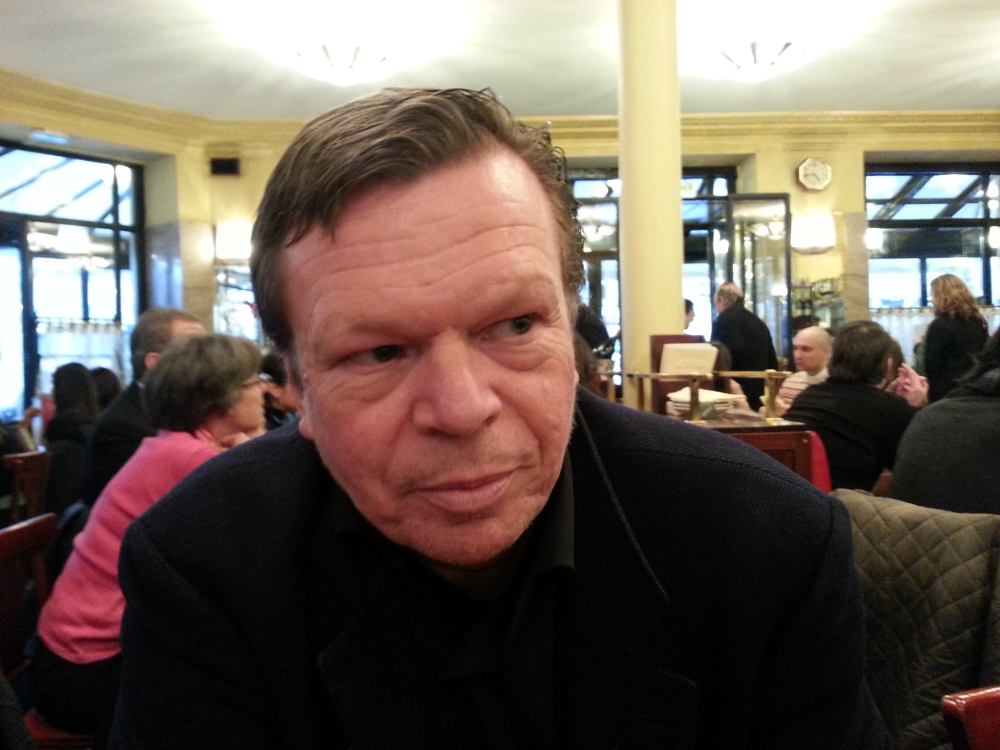
Peter is writer of the series The Heroine’s Journey and Hero’s Journey books, he has an MBA in Marketing, MBA in Financial Economics and graduated at university in Sociology and Communication Sciences.
Become a Great Storyteller in One Day
That’s why I set up The Power of your Story journey in the great cities of the world. A new way to use the power of your story. To guide you to life-changing, eye-opening movies, art, literature that truly have the power to enchant, enrich and inspire.
In this journey with Peter de Kuster you’ll explore your relationship with stories so far and your unique story identity will be sketched. You will be guided to movies, art, literature, myths that can put their finger on what you want to rewrite in your story, the feelings that you may often have had but perhaps never understood so clearly before; movies that open new perspectives and re-enchant the world for you.
You will be asked to complete a questionnaire in advance of your session and you’ll be given an instant story advice and movies to see to take away. Your full story advice and movies to see list will follow within a couple of days.
Practical Info
The price of this one day storytelling seminar is Euro 995 excluding VAT per person. There are special prices when you want to attend with three or more people.
You can reach Peter for questions about dates and the program by mailing him at peterdekuster@hotmail.nl
TIMETABLE
09.40 Tea & Coffee on arrival
10.00 Morning Session
13.00 Lunch Break
14.00 Afternoon Session
18.00 Drinks
Read on for a detailed breakdown of the Power of your Story itinerary.
What Can I Expect?
Here’s an outline of the THE POWER OF YOUR STORY journey.
Journey Outline
OLD STORIES
- What is your Story?
- Are you even trying to tell a Story?
- Old Stories (stories about you, your art, your clients, your money, your self promotion, your happiness, your health)
- Tell your current Story
- Is this Really Your Story?
YOUR NEW STORY
- The Premise of your Story. The Purpose of your Life and Art
- The words on your tombstone
- You ultimate mission, out loud
- The Seven Great Plots
- The Twelve Archetypal Heroines
- The One Great Story
- Purpose is Never Forgettable
- Questioning the Premise
- Lining up
- Flawed Alignment, Tragic Ending
- The Three Rules in Storytelling
- Write Your New Story
TURNING STORY INTO ACTION
- Turning your story into action
- The Story Effect
- Story Ritualizing
- The Storyteller and the art of story
- The Power of Your Story
- Storyboarding your creative process
- They Created and Lived Happily Ever After
 The Power of Your Story