Asked what it takes to be a great writer, Ernest Hemingway replied ‘a built in shock proof crap detector.
We all have a crap detector – some better than others, some exquisitely on the mark, some tragically deficient. It is our evaluative inner voice, an absolutely viral instrument that enables us – privately at least to see things for what they are, to know if something deep down is good or bad for us.
Just being able to detect crap, however, is not enough; if it were then we’d all be doing the right thing for ourselves, all the time. There are people all over who, while capable of detecting crap, do nothing about it (for example people who stay in dead end jobs, who take no concrete steps to pursue lifelong dreams). Theirs might be called an ‘underactive’ crap detector: It exists, it’s even turned on, but it doesn’t trigger meaningful action, and thus does its owner little good.
An underactive crap detector also makes us vulnerable to all kinds of deceptive influences. We need the crap detector to filter, to protect us from all kinds of destructive input.
On the other hand, we don’t want a an ‘overactive’ crap detector either – an inner voice that, metaphorically speaking guards us so tightly against external input that nothing new is allowed in, even if new, constructive data or perspectives are precisely what we need to improve our story.
If positive change doesn’t happen with an underactive crap detector, with an overactive one, change can’t happen. Yet change might be exactly what you need: by giving up your own long held stories about what hasn’t worked you would have a real shot at turning your dysfunctional story into a constructive one. But your crap detector is having none of it. An overactive crap detector won’t allow any changes in your stories to occur; it perceives everything as threatening or irrelevant.
You need a built in shockproof crap detector to help you, but not just to know when to let in the good external influences and keep out the bad. It’s also valuable in allowing you to distinguish between two things very much within you: your public voice and your pivate voice – the latter, the very force that provides a running narrative of your life and, in many ways, determines its success.
When Peter Bogdanovich needed a movie to play as the final feature in the doomed small-town theater in “The Last Picture Show,” he chose Howard Hawks’ “Red River” (1948). He selected the scene where John Wayne tells Montgomery Clift, “Take ’em to Missouri, Matt!” And then there is Hawks’ famous montage of weathered cowboy faces in closeup and exaltation, as they cry “Hee-yaw!” and wave their hats in the air.
The moment is as quintessentially Western as any ever filmed, capturing the exhilaration of being on a horse under the big sky with a job to do and a paycheck at the other end. And “Red River” is one of the greatest of all Westerns when it stays with its central story about an older man and a younger one, and the first cattle drive down the Chisholm Trail.
The film’s hero and villain is Tom Dunson (Wayne), who heads West with a wagon train in 1851 and then peels off for Texas to start a cattle ranch. He takes along only his wagon driver, Groot Nadine (Walter Brennan). Dunson’s sweetheart, Fen (Coleen Gray), wants to join them, but he rejects her almost absentmindedly, promising to send for her later. Later, from miles away, Tom and Groot see smoke rising: Indians have destroyed the wagon train. Groot, a grizzled codger, fulminates about how Indians “always want to be burning up good wagons,” and Tom observes that it would take them too long to go back and try to help. Their manner is surprisingly distant, considering that Dunson has just lost the woman he loved.
Soon after, the men encounter a boy who survived the Indian attack. This is Matt Garth, who is adopted by Dunson and brought up as the eventual heir to his ranch. Played as an adult by Montgomery Clift (his first screen role), Matt goes away to school, but returns in 1866 just as Dunson is preparing an epic drive to take 9,000 head of cattle north to Missouri.
I mentioned that Dunson is both hero and villain. It’s a sign of the movie’s complexity that John Wayne, often typecast, is given a tortured, conflicted character to play. He starts with “a boy with a cow and a man with a bull,” and builds up a great herd. But then he faces ruin; he must drive the cattle north or go bankrupt.
He’s a stubborn man; all through the movie people tell him he’s wrong, and usually they’re right. They’re especially right in wanting to take the cattle to Abilene, which is closer and reportedly has a railroad line, instead of on the longer trek to Missouri. As the cattle drive grows grueling, Dunson grows irascible, and finally whiskey and lack of sleep drive him a little mad; there are attempted mutinies before Matt finally rebels and takes the cattle to Abilene.
Also established, but never really developed, is a rivalry between young Matt and a tough cowboy named Cherry Valance (John Ireland), who signs up for the cattle drive and becomes Matt’s rival. There’s gonna be trouble between those two, old Groot predicts, but the film never delivers, leaving them stranded in the middle of a peculiar ambivalence that drew the attention of “The Celluloid Closet,” a documentary about hidden homosexuality in the movies. (“You know,” Cherry says, handling Matt’s gun, “there are only two things more beautiful than a good gun: a Swiss watch or a woman from anywhere. You ever had a Swiss watch?”)
The shifting emotional attachments are tracked by a silver bracelet, which Dunson gives to Fen before leaving her. It later turns up on the wrist of an Indian he kills, and Dunson then gives it to Matt, who later gives it to Tess Millay (Joanne Dru), a woman he rescues and falls in love with. The three scenes with Tess are the movie’s low points, in part because of her prattle (listen to how she chats distractingly with Matt during an Indian attack), in part because she is all too obviously the deus ex machina the plot needs to avoid an unhappy ending. The final scene is the weakest in the film, and Borden Chase reportedly hated it, with good reason: Two men act out a fierce psychological rivalry for two hours, only to cave in instantly to a female’s glib tongue-lashing.
What we remember with “Red River” is the setup and the majestic central portions. The tragic rivalry is so well established that somehow it keeps its weight and dignity in our memories, even though the ending undercuts it.
Just as memorable are the scenes of the cattle drive itself, as a handful of men control a herd so large it takes all night to ford a river. Russell Harlan’s cinematography finds classical compositions in the drive, arrangements of men, sky and trees, and then in the famous stampede scene he shows a river of cattle flowing down a hill. It is an outdoor movie (we never go inside the ranch house Dunson must have built), and when young Matt steps inside the cattle buyer’s office in Abilene, he ducks, observing how long it’s been since he was under a roof.
Hawks is wonderful at setting moods. Notice the ominous atmosphere he brews on the night of the stampede–the silence, the restlessness of the cattle, the lowered voices. Notice Matt’s nervousness during a night of thick fog, when every shadow may be Tom, come to kill him. And the tension earlier, when Dunson holds a kangaroo court.
And watch the subtle way Hawks modulates Tom Dunson’s gradual collapse. John Wayne is tall and steady at the beginning of the picture, but by the end his hair is gray and lank, and his eyes are haunted; the transition is so gradual we might not even notice he wears a white hat at the outset but a black one at the end. Wayne is sometimes considered more of a natural force than an actor, but here his understated acting is right on the money; the critic Joseph McBride says John Ford, who had directed Wayne many times, saw “Red River” and told Hawks, “I never knew the big son of a bitch could act.”
Between Wayne and Clift there is a clear tension, not only between an older man and a younger one, but between an actor who started in 1929 and another who represented the leading edge of the Method. It’s almost as if Wayne, who could go over a flamboyant actor, was trying to go under a quiet one: He meets the challenge, and matches it.
The theme of “Red River” is from classical tragedy: the need of the son to slay the father, literally or symbolically, in order to clear the way for his own ascendancy. And the father’s desire to gain immortality through a child (the one moment with a woman that does work is when Dunson asks Tess to bear a son for him). The majesty of the cattle drive, and all of its expert details about “taking the point” and keeping the cowhands fed and happy, is atmosphere surrounding these themes.
Underlying everything else is an attitude that must have been invisible to the filmmakers at the time: the unstated assumption that it is the white man’s right to take what he wants. Dunson shoots a Mexican who comes to tell him “Don Diego” owns the land. Told the land had been granted to Diego by the king of Spain, Dunson says, “You mean he took it away from whoever was here before–Indians, maybe. Well, I’m takin’ it away from him.” In throwaway dialogue, we learn of seven more men Dunson has killed for his ranch, and there’s a grimly humorous motif as he shoots people and then “reads over ’em” from the Bible.
Dunson is a law of his own, until Matt stops a hanging and ends his reign. If all Westerns are about the inevitable encroachment of civilization, this is one where it seems like a pretty good idea.
The Power of Your Story Seminar
Amsterdam 17 April
You will examine with Peter de Kuster, founder of The Power of Your Story the way we tell stories about ourselves to ourselves — and, most important, the way we can change those stories to transform our business and personal lives.
“Your story is your life,” says Peter. As human beings, we continually tell ourselves stories — of success or failure; of power or victimhood; stories that endure for an hour, or a day, or an entire lifetime. We have stories about ourselves, our creative business, our customers ; about what we want and what we’re capable of achieving. Yet, while our stories profoundly affect how others see us and we see ourselves, too few of us even recognize that we’re telling stories, or what they are, or that we can change them — and, in turn, transform our very destinies.
Telling ourselves stories provides structure and direction as we navigate life’s challenges and opportunities, and helps us interpret our goals and skills. Stories make sense of chaos; they organize our many divergent experiences into a coherent thread; they shape our entire reality. And far too many of our stories, says Peter, are dysfunctional, in need of serious editing. First, he asks you to answer the question, “In which areas of my life is it clear that I cannot achieve my goals with the story I’ve got?” He then shows you how to create new, reality-based stories that inspire you to action, and take you where you want to go both in your work and personal life.
Our capacity to tell stories is one of our profoundest gifts. Peter’s approach to creating deeply engaging stories will give you the tools to wield the power of storytelling and forever change your business and personal life.
About Peter de Kuster
Peter de Kuster is the founder of The Heroine’s Journey & Hero’s Journey project, a storytelling firm which helps creative professionals to create careers and lives based on whatever story is most integral to their lifes and careers (values, traits, skills and experiences). Peter’s approach combines in-depth storytelling and marketing expertise, and for over 20 years clients have found it effective with a wide range of creative business issues.
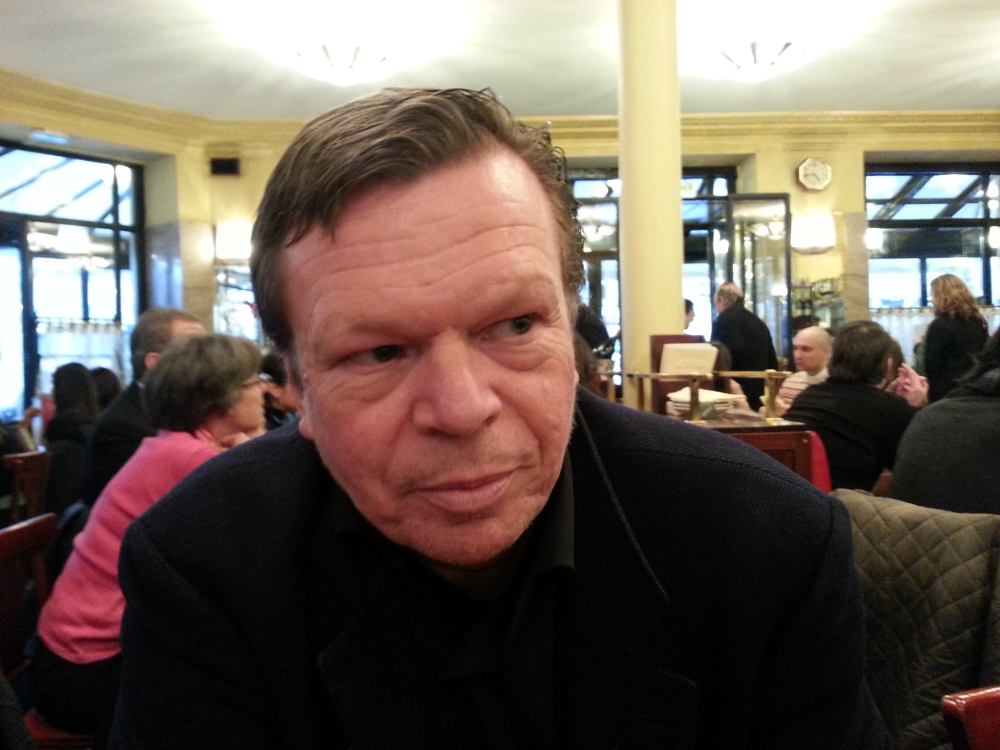
Peter is writer of the series The Heroine’s Journey and Hero’s Journey books, he has an MBA in Marketing, MBA in Financial Economics and graduated at university in Sociology and Communication Sciences.
Become a Great Storyteller in One Day
That’s why I set up The Power of your Story journey in the great cities of the world. A new way to use the power of your story. To guide you to life-changing, eye-opening movies, art, literature that truly have the power to enchant, enrich and inspire.
In this journey with Peter de Kuster you’ll explore your relationship with stories so far and your unique story identity will be sketched. You will be guided to movies, art, literature, myths that can put their finger on what you want to rewrite in your story, the feelings that you may often have had but perhaps never understood so clearly before; movies that open new perspectives and re-enchant the world for you.
You will be asked to complete a questionnaire in advance of your session and you’ll be given an instant story advice and movies to see to take away. Your full story advice and movies to see list will follow within a couple of days.
Practical Info
The price of this one day storytelling seminar is Euro 995 excluding VAT per person. There are special prices when you want to attend with three or more people.
You can reach Peter for questions about dates and the program by mailing him at peterdekuster@hotmail.nl
TIMETABLE
09.40 Tea & Coffee on arrival
10.00 Morning Session
13.00 Lunch Break
14.00 Afternoon Session
18.00 Drinks
Read on for a detailed breakdown of the Power of your Story itinerary.
What Can I Expect?
Here’s an outline of the THE POWER OF YOUR STORY journey.
Journey Outline
OLD STORIES
- What is your Story?
- Are you even trying to tell a Story?
- Old Stories (stories about you, your art, your clients, your money, your self promotion, your happiness, your health)
- Tell your current Story
- Is this Really Your Story?
YOUR NEW STORY
- The Premise of your Story. The Purpose of your Life and Art
- The words on your tombstone
- You ultimate mission, out loud
- The Seven Great Plots
- The Twelve Archetypal Heroines
- The One Great Story
- Purpose is Never Forgettable
- Questioning the Premise
- Lining up
- Flawed Alignment, Tragic Ending
- The Three Rules in Storytelling
- Write Your New Story
TURNING STORY INTO ACTION
- Turning your story into action
- The Story Effect
- Story Ritualizing
- The Storyteller and the art of story
- The Power of Your Story
- Storyboarding your creative process
- They Created and Lived Happily Ever After
 The Power of Your Story