Optimists should watch out, too
The majority of studies support the power of positive thinking. I’m sure you can think of dozens of examples from life – those around you and, one hopes, your own, in which optimism and belief (positive assumption) led to the achievement of great things. There are two popular definitions of optimism. One called ‘dispositional optimism’ is a global expectatioin that good things will be plentiful in the future and bad things scarce. In this definition optimism is largely objective, the inescapable respons to a world of bounty and virtuous elements. The second definition is that optimism represents a constructive way to partly neutralize bad events. This kind of optimism can be a surprisingly destructive force, once it strays far enough from reality. It becomes obvious that the balance between truth and optimism is a delicate one. An optimistic bias, if it departs sufficiently from reality, the optimism that ushered us there deserves a new name: denial.
As an author of our own story we determine not only content but tone. To undo old, bad stories we must move toward a positive framework, yet maintain a capacity to confront our stories with dispassionate eyes and ears: to detect lies and manipulations; to recognize our tendency to make assumptions, and often false ones, at that to appreciate our predilection for optimism or pessimism, which may skew the tone of our stories. Easy to say, harder to do. The problem to accomplishing that evenhandedness? It is often hard to know if the story we are telling is even, in fact, our story.
“Dead Poets Society” is about an inspirational, unconventional English teacher and his students at “the best prep school in America” and how he challenges them to question conventional views by such techniques as standing on their desks. It is, of course, inevitable that the brilliant teacher will eventually be fired from the school, and when his students stood on their desks to protest his dismissal.
The key conflict in the movie is between Neil (Robert Sean Leonard), a student who dreams of being an actor, and his father (Kurtwood Smith), who orders his son to become a doctor and forbids him to go onstage. The father is a strict, unyielding taskmaster, and the son, lacking the will to defy him, kills himself.
The society was founded by Keating when he was an undergraduate, but in its reincarnate form it never generates any sense of mystery, rebellion or daring. The society’s meetings have been badly written and are dramatically shapeless, featuring a dance line to Lindsay’s “The Congo” and various attempts to impress girls with random lines of poetry.
One scene in particular indicates the distance between the movie’s manipulative instincts and what it claims to be about. When Keating is being railroaded by the school administration (which makes him the scapegoat for his student’s suicide), one of the students acts as a fink and tells the old fogies what they want to hear. Later, confronted by his peers, he makes a hateful speech of which not one word is plausible except as an awkward attempt to supply him with a villain’s dialogue. Then one of the other boys hits him in the jaw, to great applause from the audience.
Here is one of my favorite sentences from Thoreau’s Walden, ” . . . instead of studying how to make it worth men’s while to buy my baskets, I studied rather how to avoid the necessity of selling them.”
https://www.youtube.com/watch?v=j64SctPKmqk&t=6s
The Power of Your Story Seminar
Amsterdam 17 April
You will examine with Peter de Kuster, founder of The Power of Your Story the way we tell stories about ourselves to ourselves — and, most important, the way we can change those stories to transform our business and personal lives.
“Your story is your life,” says Peter. As human beings, we continually tell ourselves stories — of success or failure; of power or victimhood; stories that endure for an hour, or a day, or an entire lifetime. We have stories about ourselves, our creative business, our customers ; about what we want and what we’re capable of achieving. Yet, while our stories profoundly affect how others see us and we see ourselves, too few of us even recognize that we’re telling stories, or what they are, or that we can change them — and, in turn, transform our very destinies.
Telling ourselves stories provides structure and direction as we navigate life’s challenges and opportunities, and helps us interpret our goals and skills. Stories make sense of chaos; they organize our many divergent experiences into a coherent thread; they shape our entire reality. And far too many of our stories, says Peter, are dysfunctional, in need of serious editing. First, he asks you to answer the question, “In which areas of my life is it clear that I cannot achieve my goals with the story I’ve got?” He then shows you how to create new, reality-based stories that inspire you to action, and take you where you want to go both in your work and personal life.
Our capacity to tell stories is one of our profoundest gifts. Peter’s approach to creating deeply engaging stories will give you the tools to wield the power of storytelling and forever change your business and personal life.
About Peter de Kuster
Peter de Kuster is the founder of The Heroine’s Journey & Hero’s Journey project, a storytelling firm which helps creative professionals to create careers and lives based on whatever story is most integral to their lifes and careers (values, traits, skills and experiences). Peter’s approach combines in-depth storytelling and marketing expertise, and for over 20 years clients have found it effective with a wide range of creative business issues.
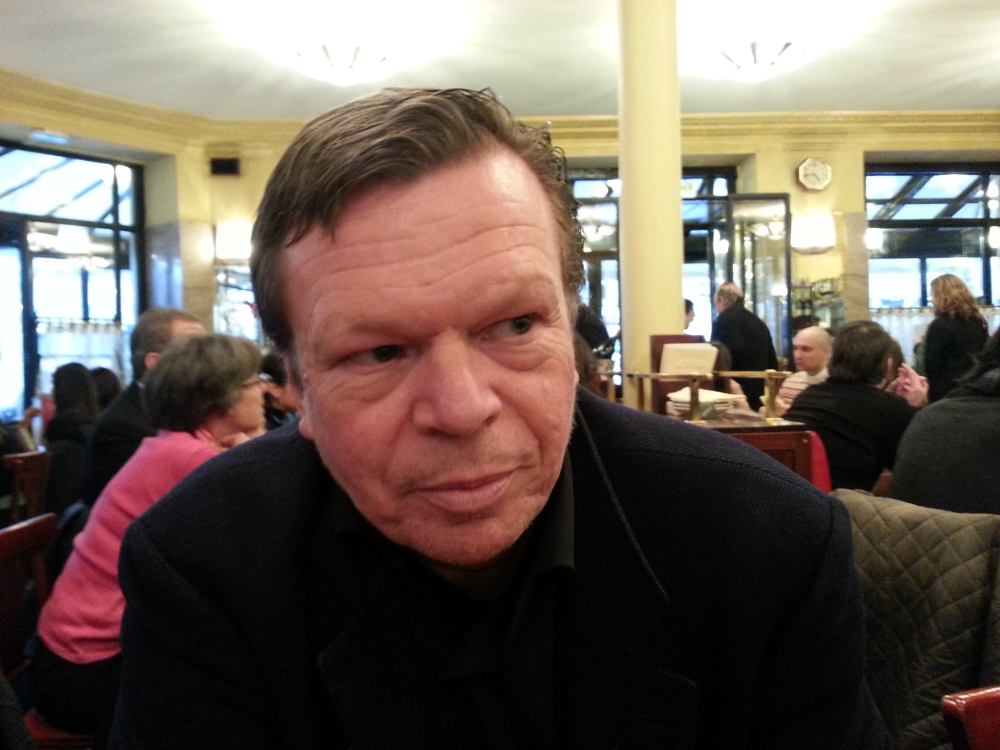
Peter is writer of the series The Heroine’s Journey and Hero’s Journey books, he has an MBA in Marketing, MBA in Financial Economics and graduated at university in Sociology and Communication Sciences.
Become a Great Storyteller in One Day
That’s why I set up The Power of your Story journey in the great cities of the world. A new way to use the power of your story. To guide you to life-changing, eye-opening movies, art, literature that truly have the power to enchant, enrich and inspire.
In this journey with Peter de Kuster you’ll explore your relationship with stories so far and your unique story identity will be sketched. You will be guided to movies, art, literature, myths that can put their finger on what you want to rewrite in your story, the feelings that you may often have had but perhaps never understood so clearly before; movies that open new perspectives and re-enchant the world for you.
You will be asked to complete a questionnaire in advance of your session and you’ll be given an instant story advice and movies to see to take away. Your full story advice and movies to see list will follow within a couple of days.
Practical Info
The price of this one day storytelling seminar is Euro 995 excluding VAT per person. There are special prices when you want to attend with three or more people.
You can reach Peter for questions about dates and the program by mailing him at peterdekuster@hotmail.nl
TIMETABLE
09.40 Tea & Coffee on arrival
10.00 Morning Session
13.00 Lunch Break
14.00 Afternoon Session
18.00 Drinks
Read on for a detailed breakdown of the Power of your Story itinerary.
What Can I Expect?
Here’s an outline of the THE POWER OF YOUR STORY journey.
Journey Outline
OLD STORIES
- What is your Story?
- Are you even trying to tell a Story?
- Old Stories (stories about you, your art, your clients, your money, your self promotion, your happiness, your health)
- Tell your current Story
- Is this Really Your Story?
YOUR NEW STORY
- The Premise of your Story. The Purpose of your Life and Art
- The words on your tombstone
- You ultimate mission, out loud
- The Seven Great Plots
- The Twelve Archetypal Heroines
- The One Great Story
- Purpose is Never Forgettable
- Questioning the Premise
- Lining up
- Flawed Alignment, Tragic Ending
- The Three Rules in Storytelling
- Write Your New Story
TURNING STORY INTO ACTION
- Turning your story into action
- The Story Effect
- Story Ritualizing
- The Storyteller and the art of story
- The Power of Your Story
- Storyboarding your creative process
- They Created and Lived Happily Ever After
 The Power of Your Story