I ask people a number of questions to get them to portray their life in terms of story terms: Describe the theme of your life story; Describe your character role in it; Describe the tone of it; Describe the trajectory. For example, one question asks:
Which is your story?
a. A good past has led to a good present
b. A good past has led to a bad present
c. A bad past has led to a good present
d. A bad past has led to a bad present
While it may, at first, seem artificial or simplistic to ask people to reduce their entire, quite complicated, endlessly nuanced history to one of four rather blunt scenario’s (elsewhere I ask is your story a Comedy? a Tragedy? a Overcoming the Monster? a Quest?) I treat this as a first step. It gets one thinking. It enables you to see structure where perhaps you did not before; to recognize that there is an end toward which every life, like every story is driving. And because one’s life is obviously more complicated than broad descriptions like ‘good’ and ‘bad’ (and ‘past’ and ‘present’ for that matter) can ever portray, simple questions like these tend to promote elaboration).
Perhaps there’s something presumptuous about asking questions like the multiple choice earlier and making people comment to the ‘best possible answer’ to describe their incredible stories. But another useful reason to paint it, initially, in such broad terms is that people are pretty adept at describing the mood of their failing story. Only then can they start to pick apart the potentially false, toxic details that have made it so.
If we identify strongly with the characters in some movies, then it is no mystery that “Casablanca” is one of the most popular films ever made. It is about a man and a woman who are in love, and who sacrifice love for a higher purpose. This is immensely appealing; the viewer is not only able to imagine winning the love of Humphrey Bogart or Ingrid Bergman, but unselfishly renouncing it, as a contribution to the great cause of defeating the Nazis.
Humphrey Bogart played strong heroic leads in his career, but he was usually better as the disappointed, wounded, resentful hero. Remember him in “The Treasure of the Sierra Madre,” convinced the others were plotting to steal his gold. In “Casablanca,” he plays Rick Blaine, the hard-drinking American running a nightclub in Casablanca when Morocco was a crossroads for spies, traitors, Nazis and the French Resistance.
The opening scenes dance with comedy; the dialogue combines the cynical with the weary; wisecracks with epigrams. We see that Rick moves easily in a corrupt world. “What is your nationality?” the German Strasser asks him, and he replies, “I’m a drunkard.” His personal code: “I stick my neck out for nobody.”
Then “of all the gin joints in all the towns in all the world, she walks into mine.” It is Ilsa Lund (Bergman), the woman Rick loved years earlier in Paris. Under the shadow of the German occupation, he arranged their escape, and believes she abandoned him–left him waiting in the rain at a train station with their tickets to freedom. Now she is with Victor Laszlo (Henreid), a legendary hero of the French Resistance.
All this is handled with great economy in a handful of shots that still, after many viewings, have the power to move me emotionally as few scenes ever have. The bar’s piano player, Sam (Wilson), a friend of theirs in Paris, is startled to see her. She asks him to play the song that she and Rick made their own, “As Time Goes By.” He is reluctant, but he does, and Rick comes striding angrily out of the back room (“I thought I told you never to play that song!”). Then he sees Ilsa, a dramatic musical chord marks their closeups, and the scene plays out in resentment, regret and the memory of a love that was real.
The plot, a trifle to hang the emotions on, involves letters of passage that will allow two people to leave Casablanca for Portugal and freedom. Rick obtained the letters from the wheedling little black-marketeer Ugarte (Peter Lorre). The sudden reappearance of Ilsa reopens all of his old wounds, and breaks his carefully cultivated veneer of neutrality and indifference. When he hears her story, he realizes she has always loved him. But now she is with Laszlo. Rick wants to use the letters to escape with Ilsa, but then, in a sustained sequence that combines suspense, romance and comedy as they have rarely been brought together on the screen, he contrives a situation in which Ilsa and Laszlo escape together, while he and his friend the police chief (Claude Rains) get away with murder. (“Round up the usual suspects.”)
What is intriguing is that none of the major characters is bad. Some are cynical, some lie, some kill, but all are redeemed. If you think it was easy for Rick to renounce his love for Ilsa–to place a higher value on Laszlo’s fight against Nazism–remember Forster’s famous comment, “If I were forced to choose between my country and my friend, I hope I would be brave enough to choose my friend.”
From a modern perspective, the film reveals interesting assumptions. Ilsa Lund’s role is basically that of a lover and helpmate to a great man; the movie’s real question is, which great man should she be sleeping with? There is actually no reason why Laszlo cannot get on the plane alone, leaving Ilsa in Casablanca with Rick, and indeed that is one of the endings that was briefly considered. But that would be all wrong; the “happy” ending would be tarnished by self-interest, while the ending we have allows Rick to be larger, to approach nobility (“it doesn’t take much to see that the problems of three little people don’t amount to a hill of beans in this crazy world”). And it allows us, vicariously experiencing all of these things in the theater, to warm in the glow of his heroism.
In her closeups during this scene, Bergman’s face reflects confusing emotions. And well she might have been confused, since neither she nor anyone else on the film knew for sure until the final day who would get on the plane. Bergman played the whole movie without knowing how it would end, and this had the subtle effect of making all of her scenes more emotionally convincing; she could not tilt in the direction she knew the wind was blowing.
Seeing the film over and over again, year after year, I find it never grows over-familiar. It plays like a favorite musical album; the more I know it, the more I like it. The black-and-white cinematography has not aged as color would. The dialogue is so spare and cynical it has not grown old-fashioned.
The Power of Your Story Seminar
Amsterdam 17 April
You will examine with Peter de Kuster, founder of The Power of Your Story the way we tell stories about ourselves to ourselves — and, most important, the way we can change those stories to transform our business and personal lives.
“Your story is your life,” says Peter. As human beings, we continually tell ourselves stories — of success or failure; of power or victimhood; stories that endure for an hour, or a day, or an entire lifetime. We have stories about ourselves, our creative business, our customers ; about what we want and what we’re capable of achieving. Yet, while our stories profoundly affect how others see us and we see ourselves, too few of us even recognize that we’re telling stories, or what they are, or that we can change them — and, in turn, transform our very destinies.
Telling ourselves stories provides structure and direction as we navigate life’s challenges and opportunities, and helps us interpret our goals and skills. Stories make sense of chaos; they organize our many divergent experiences into a coherent thread; they shape our entire reality. And far too many of our stories, says Peter, are dysfunctional, in need of serious editing. First, he asks you to answer the question, “In which areas of my life is it clear that I cannot achieve my goals with the story I’ve got?” He then shows you how to create new, reality-based stories that inspire you to action, and take you where you want to go both in your work and personal life.
Our capacity to tell stories is one of our profoundest gifts. Peter’s approach to creating deeply engaging stories will give you the tools to wield the power of storytelling and forever change your business and personal life.
About Peter de Kuster
Peter de Kuster is the founder of The Heroine’s Journey & Hero’s Journey project, a storytelling firm which helps creative professionals to create careers and lives based on whatever story is most integral to their lifes and careers (values, traits, skills and experiences). Peter’s approach combines in-depth storytelling and marketing expertise, and for over 20 years clients have found it effective with a wide range of creative business issues.
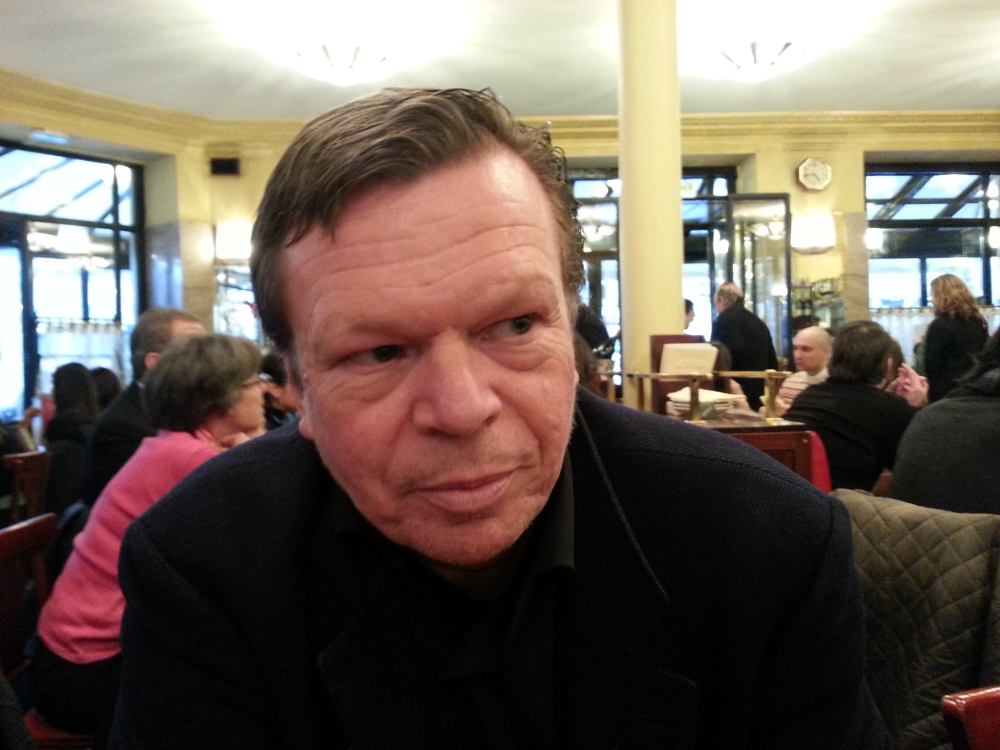
Peter is writer of the series The Heroine’s Journey and Hero’s Journey books, he has an MBA in Marketing, MBA in Financial Economics and graduated at university in Sociology and Communication Sciences.
Become a Great Storyteller in One Day
That’s why I set up The Power of your Story journey in the great cities of the world. A new way to use the power of your story. To guide you to life-changing, eye-opening movies, art, literature that truly have the power to enchant, enrich and inspire.
In this journey with Peter de Kuster you’ll explore your relationship with stories so far and your unique story identity will be sketched. You will be guided to movies, art, literature, myths that can put their finger on what you want to rewrite in your story, the feelings that you may often have had but perhaps never understood so clearly before; movies that open new perspectives and re-enchant the world for you.
You will be asked to complete a questionnaire in advance of your session and you’ll be given an instant story advice and movies to see to take away. Your full story advice and movies to see list will follow within a couple of days.
Practical Info
The price of this one day storytelling seminar is Euro 995 excluding VAT per person. There are special prices when you want to attend with three or more people.
You can reach Peter for questions about dates and the program by mailing him at peterdekuster@hotmail.nl
TIMETABLE
09.40 Tea & Coffee on arrival
10.00 Morning Session
13.00 Lunch Break
14.00 Afternoon Session
18.00 Drinks
Read on for a detailed breakdown of the Power of your Story itinerary.
What Can I Expect?
Here’s an outline of the THE POWER OF YOUR STORY journey.
Journey Outline
OLD STORIES
- What is your Story?
- Are you even trying to tell a Story?
- Old Stories (stories about you, your art, your clients, your money, your self promotion, your happiness, your health)
- Tell your current Story
- Is this Really Your Story?
YOUR NEW STORY
- The Premise of your Story. The Purpose of your Life and Art
- The words on your tombstone
- You ultimate mission, out loud
- The Seven Great Plots
- The Twelve Archetypal Heroines
- The One Great Story
- Purpose is Never Forgettable
- Questioning the Premise
- Lining up
- Flawed Alignment, Tragic Ending
- The Three Rules in Storytelling
- Write Your New Story
TURNING STORY INTO ACTION
- Turning your story into action
- The Story Effect
- Story Ritualizing
- The Storyteller and the art of story
- The Power of Your Story
- Storyboarding your creative process
- They Created and Lived Happily Ever After
 The Power of Your Story