We have talked about how a faulty purpose always leads to a bad ending. But you may have a good quest and yet suffer from a monstrous misalignment between your quest and your day to day actions. It is imperative to consider whether your actions and quest are aligned. “Suit the action to the word, the word to the action” Shakespeare wrote in Hamlet. It is a fact that the ramifications of such misalignment will make their appearance – divorce, heart attack, estrangement, shame, maybe prison. Perhaps they are dormant now, or in shadow, but they will emerge at some point – a year, ten years, who knows.
Without examining and resolving this misalignment, no hiding, no pretending, no denial, no wishful thinking on your part can derail these unfortunate happenings from finally paying a visit. If you consider yourself a moral person and let your willingness to compromise is only growing fuzzier, what do you think the ending of that story will be? Is it one you want for yourself or those you care most about? If you continue no to work out and eat and sleep terribly, can you make a reasonable guess about what the ending will be? Is that an ending you can live with?
Without courageously confronting whether your quest and your actions are aligned (are truthful and mutually supportive) in every aspect of your life, in every mini-story, your story around your work, your friends, your health, etcera you risk flawed, senseless endings to every one of them.
Backward into memory, forward into loss and desire, “The English Patient” searches for answers that will answer nothing. This poetic, evocative film version of the famous novel by Michael Ondaatje circles down through layers of mystery until all of the puzzles in the story have been solved, and only the great wound of a doomed love remains. It is the kind of movie you can see twice–first for the questions, the second time for the answers.
The film opens with a pre-war biplane flying above the desert, carrying two passengers in its open cockpits. The film will tell us who these passengers are, why they are in the plane, and what happens next. All of the rest of the story is prologue and epilogue to the reasons for this flight. It is told with the sweep and visual richness of a film by David Lean, with an attention to fragments of memory that evoke feelings even before we understand what they mean.
The “present” action takes place in Italy, during the last days of World War II. A horribly burned man, the “English patient” of the title, is part of a hospital convoy. When he grows too ill to be moved, a nurse named Hana (Juliette Binoche) offers to stay behind to care for him in the ruins of an old monastery. Here she sets up a makeshift hospital, and soon she is joined by two bomb-disposal experts and a mysterious visitor named Caravaggio (Willem Dafoe).
The patient’s skin is so badly burned it looks like tortured leather. His face is a mask. He can remember nothing. Hana cares for him tenderly, perhaps because he reminds her of other men she has loved and lost during the war. (“I must be a curse. Anybody who loves me–who gets close to me–is killed.”) Caravaggio, who has an interest in the morphine Hana dispenses to her patient, is more cynical: “Ask your saint who he’s killed. I don’t think he’s forgotten anything.” The nurse is attracted to one of the bomb disposal men, a handsome, cheerful Sikh officer named Kip (Naveen Andrews). But as she watches him risk his life to disarm land mines, she fears her curse will doom him; if they fall in love, he will die. Meanwhile, the patient’s memories start to return in flashes of detail, spurred by the book that was found with his charred body–an old leather-bound volume of the histories of Herodotus, with drawings, notes and poems pasted or folded inside.
I will not disclose the crucial details of what he remembers. I will simply supply the outlines that become clear early on. He is not English, for one thing. He is a Hungarian count, named Laszlo de Almasy (Ralph Fiennes), who in Egypt before the war was attached to the Royal Geographic Society as a pilot who flew over the desert, making maps that could be used for their research–which was the cover story–but also used by English troops in case of war.
In the frantic social life of Cairo, where everyone is aware that war is coming, Almasy meets a newly married woman at a dance. She is Katharine Clifton (Kristin Scott Thomas). Her husband Geoffrey (Colin Firth) is a disappointment to her. Almasy follows her home one night, and she confronts him and says, “Why follow me? Escort me, by all means, but to follow me . . .” It is clear to both of them that they are in love. Eventually they find themselves in the desert, part of an expedition, and when Geoffrey is called away (for reasons which later are revealed as good ones), they draw closer together. In a stunning sequence, their camp is all but buried in a sandstorm, and their relief at surviving leads to a great romantic sequence.
These are the two people–the count and the British woman–who were in the plane in the first shot. But under what conditions that flight was taken remains a mystery until the closing scenes of the movie, as do a lot of other things, including actions by the count that Caravaggio, the strange visitor, may suspect. Actions that may have led to Caravaggio having his thumbs cut off by the Nazis.
All of this back-story (there is much more) is pieced together gradually by the dying man in the bed, while the nurse tends to him, sometimes kisses him, bathes his rotting skin, and tries to heal her own wounds from the long war. There are moments of great effect: One in which she plays hopscotch by herself. A scene involving the nurse, the Sikh, and a piano. Talks at dusk with the patient, and with Caravaggio. All at last becomes clear.
The performances are of great clarity, which is a help to us in finding our way through the story. Binoche is a woman whose heart has been so pounded by war that she seems drawn to its wounded, as a distraction from her own hurts. Fiennes, in what is essentially a dual role, plays a man who conceals as much as he can–at first because that is his nature, later because his injuries force him to. Thomas is one of those bright, energetic British women who seem perfectly groomed even in a sandstorm, and whose core is steel and courage.
Dafoe’s character must remain murkier, along with his motives, but it is clear he shelters a great anger. And Andrews, as the bomb-disposal man, lives the closest to daily death and seems the most grateful for life.
Ondaatje’s novel has become one of the most widely read and loved of recent years. Some of its readers may be disappointed that more is not made of the Andrews character; the love between the Sikh and the nurse could provide a balance to the doomed loves elsewhere. But the novel is so labyrinthine that it’s a miracle it was filmed at all, and the writer-director, Anthony Minghella, has done a creative job of finding visual ways to show how the rich language slowly unveils layers of the past.
The Power of Your Story Seminar
Amsterdam 17 April
You will examine with Peter de Kuster, founder of The Power of Your Story the way we tell stories about ourselves to ourselves — and, most important, the way we can change those stories to transform our business and personal lives.
“Your story is your life,” says Peter. As human beings, we continually tell ourselves stories — of success or failure; of power or victimhood; stories that endure for an hour, or a day, or an entire lifetime. We have stories about ourselves, our creative business, our customers ; about what we want and what we’re capable of achieving. Yet, while our stories profoundly affect how others see us and we see ourselves, too few of us even recognize that we’re telling stories, or what they are, or that we can change them — and, in turn, transform our very destinies.
Telling ourselves stories provides structure and direction as we navigate life’s challenges and opportunities, and helps us interpret our goals and skills. Stories make sense of chaos; they organize our many divergent experiences into a coherent thread; they shape our entire reality. And far too many of our stories, says Peter, are dysfunctional, in need of serious editing. First, he asks you to answer the question, “In which areas of my life is it clear that I cannot achieve my goals with the story I’ve got?” He then shows you how to create new, reality-based stories that inspire you to action, and take you where you want to go both in your work and personal life.
Our capacity to tell stories is one of our profoundest gifts. Peter’s approach to creating deeply engaging stories will give you the tools to wield the power of storytelling and forever change your business and personal life.
About Peter de Kuster
Peter de Kuster is the founder of The Heroine’s Journey & Hero’s Journey project, a storytelling firm which helps creative professionals to create careers and lives based on whatever story is most integral to their lifes and careers (values, traits, skills and experiences). Peter’s approach combines in-depth storytelling and marketing expertise, and for over 20 years clients have found it effective with a wide range of creative business issues.
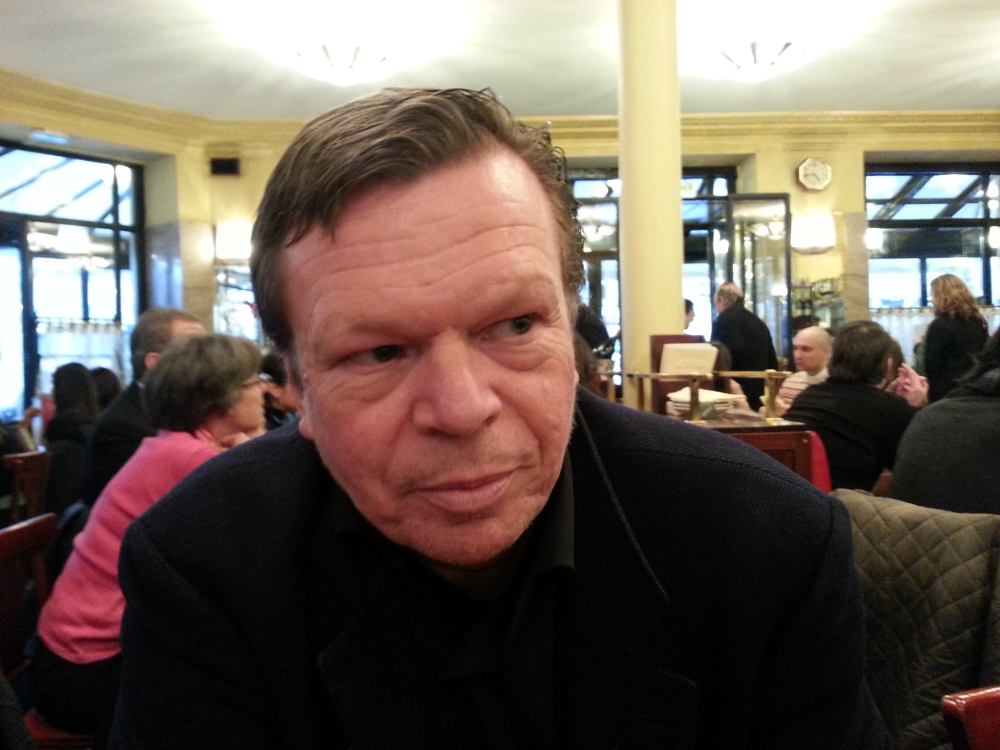
Peter is writer of the series The Heroine’s Journey and Hero’s Journey books, he has an MBA in Marketing, MBA in Financial Economics and graduated at university in Sociology and Communication Sciences.
Become a Great Storyteller in One Day
That’s why I set up The Power of your Story journey in the great cities of the world. A new way to use the power of your story. To guide you to life-changing, eye-opening movies, art, literature that truly have the power to enchant, enrich and inspire.
In this journey with Peter de Kuster you’ll explore your relationship with stories so far and your unique story identity will be sketched. You will be guided to movies, art, literature, myths that can put their finger on what you want to rewrite in your story, the feelings that you may often have had but perhaps never understood so clearly before; movies that open new perspectives and re-enchant the world for you.
You will be asked to complete a questionnaire in advance of your session and you’ll be given an instant story advice and movies to see to take away. Your full story advice and movies to see list will follow within a couple of days.
Practical Info
The price of this one day storytelling seminar is Euro 995 excluding VAT per person. There are special prices when you want to attend with three or more people.
You can reach Peter for questions about dates and the program by mailing him at peterdekuster@hotmail.nl
TIMETABLE
09.40 Tea & Coffee on arrival
10.00 Morning Session
13.00 Lunch Break
14.00 Afternoon Session
18.00 Drinks
Read on for a detailed breakdown of the Power of your Story itinerary.
What Can I Expect?
Here’s an outline of the THE POWER OF YOUR STORY journey.
Journey Outline
OLD STORIES
- What is your Story?
- Are you even trying to tell a Story?
- Old Stories (stories about you, your art, your clients, your money, your self promotion, your happiness, your health)
- Tell your current Story
- Is this Really Your Story?
YOUR NEW STORY
- The Premise of your Story. The Purpose of your Life and Art
- The words on your tombstone
- You ultimate mission, out loud
- The Seven Great Plots
- The Twelve Archetypal Heroines
- The One Great Story
- Purpose is Never Forgettable
- Questioning the Premise
- Lining up
- Flawed Alignment, Tragic Ending
- The Three Rules in Storytelling
- Write Your New Story
TURNING STORY INTO ACTION
- Turning your story into action
- The Story Effect
- Story Ritualizing
- The Storyteller and the art of story
- The Power of Your Story
- Storyboarding your creative process
- They Created and Lived Happily Ever After
 The Power of Your Story