In brief, motivational theory can be condensed into a focus on four major human drives positioned along two axes: Belonging/People versus Independence/Self-Actualization, and Stability/Control versus Risk/Mastery.
In everyday human terms, this means that most of us want very much to be liked an to belong to a group. At the same time, we also want to be individuals and go our own way. Both of these desires are deep and profound human urges, yet they pull us in opposite directions. The desire to belong makes us want to please others and conform, at least to some degree. The desire to individuate causes us to spend time alone and make decisions or act in ways that those close to us may not understand.
Similarly, most people have a deep need for security and stability. Such desires are fulfilled by routine, comfort and staying with the tried and true. We are responding to them when we buy insurance, stay in a job for the pension plan, or religiously take our vitamins. Yet, however much people want safety, most also are energized by their ambition and the desire to exert mastery. If we want the exhilaration of accomplishment, we must take risks. So, motivated by the wish to leave a thumbprint on the world, we take a controversial stand, start a business, or try other new and risky ventures.
Life requires constant negotiation along these poles. When we sacrifice one end of these continua to the other end, there is a tendency in the psyche to seek balance. That is one of the reasons some people experience midlife crises; they have gotten out of balance, and some part of them that has been supressed for too long seeks expression.
Archetypes mediate between what you and your company is offering and customer motivation by providing an intangible experience of meaning. You can see here the archetypes most important to the fulfillment of the four basic human needs.
Archetypes and Motivation
Stability & Control Creator Caregiver Ruler Feel Safe
Belonging & Enjoyment Jester Regular Guy Lover Have Love
Risk & Mastery Warrior Outlaw Magician Achieve
Independence & Fulfillment Dreamer Explorer Sage Find Happiness
The Power of your Story shows how archetypal theory provides a sound, proven methodology for establishing a memorable and compelling story for you and your business, one that can withstand the test of time, cross lifestyle and cultural boundaries, and translate into success that endures.
“Are you alone?” the private eye is asked in Roman Polanski’s “Chinatown.” “Isn’t everybody?” he replies. That loneliness is central to a lot of noir heroes, who plunder other people’s secrets while running from their own. The tone was set by Dashiel Hammett, and its greatest practitioner was Raymond Chandler. To observe Humphrey Bogart in Hammett’s “The Maltese Falcon” and Chandler’s “The Big Sleep” (1946) is to see a fundamental type of movie character being born — a kind of man who occupies human tragedy for a living.
Yet the Bogart character is never merely cold. His detachment masks romanticism, which is why he’s able to idealize bad women. His characters have more education and sensitivity than they need for their line of work. He wrote the rules; later actors were able to slip into the role of noir detective like pulling on a comfortable sweater. But great actors don’t follow rules, they illustrate them. Jack Nicholson’s character J.J. Gittes, who is in every scene of “Chinatown” (1974), takes the Bogart line and gentles it down. He plays a nice, sad man.
We remember the famous bandage plastered on Nicholson’s nose (after the Polanski character slices him), and think of him as a hard-boiled tough guy. Not at all. In one scene he beats a man almost to death, but during his working day he projects a courtly passivity. “I’m in matrimonial work,” he says, and adds, “it’s my metier.” His metier? What’s he doing with a word like that? And why does he answer the telephone so politely, instead of barking “Gittes!” into it? He can be raw, he can tell dirty jokes, he can accuse people of base motives, but all the time there’s a certain detached underlevel that makes his character sympathetic: Like all private eyes, he mud wrestles with pigs, but unlike most of them, he doesn’t like it.
Nicholson can be sharp-edged, menacing, aggressive. He knows how to go over the top (see “One Flew Over the Cuckoo’s Nest” and his Joker in “Batman”). His performance is key in keeping “Chinatown” from becoming just a genre crime picture — that, and a Robert Towne screenplay that evokes an older Los Angeles, a small city in a large desert. The crimes in “Chinatown” include incest and murder, but the biggest crime is against the city’s own future, by men who see that to control the water is to control the wealth. At one point Gittes asks millionaire Noah Cross (John Huston) why he needs to be richer: “How much better can you eat? What can you buy that you can’t already afford?” Cross replies: “The future, Mr. Gitts, the future.” (He never does get Gittes’ name right.)
Gittes’ involvement begins with an adultery case. He’s visited by a woman who claims to be the wife of a man named Mulwray. She says her husband is cheating on her. Gittes’ investigation leads him to Mulwray (Darrell Zwerling), to city hearings, to dried river beds and eventually to Mulwray’s drowned body and to the real Mrs. Mulwray (Faye Dunaway). Stumbling across murders, lies and adulteries, he senses some larger reality beneath everything, some conspiracy involving people and motives unknown.
This crime is eventually revealed as an attempt to buy up the San Fernando Valley cheaply by diverting water so that its orange growers go broke. Then that water and more water, obtained through bribery and corruption, will turn the valley green and create wealth. The valley has long been seen as a key to California fortunes: I remember Joel McCrea telling me that on his first day as a movie actor, Will Rogers offered two words of advice: “Buy land.” McCrea bought in the valley and died a rich man, but he was in the second wave of speculation.
The original valley grab was the Owne River Valley scandal of 1908, mirrored in the 1930s by Towne. In the preface to his Oscar-winning screenplay, he recalls: “My wife, Julie, returned to the hotel one afternoon with two quilts and a public library copy of Carey McWilliams’ Southern California Country, an Island on the Land –and with it the crime that formed the basis of Chinatown.” McWilliams, for decades the editor of the Nation, presented Towne not only with information about the original land and water grab, but also evoked the old Los Angeles, a city born in a desert where no city logically should be found. The screenplay explains, “Either you bring the water to L.A. or you bring L.A. to the water.” John A. Alonzo’s cinematography, which got one of the movie’s 11 Oscar nominations, evokes the L.A. you can glimpse in the backgrounds of old movies, where the sun beats down on streets that are too wide, and buildings seem more defiant than proud. (Notice the shot where the bright sun falls on the fedoras of Gittes and two cops, casting their eyes into shadows like black masks.)
Gittes becomes a man who just wants to get to the bottom of things. He’s tired of people’s lies. And where does he stand with Evelyn Mulwray, played by Dunaway as a cool, elegant woman who sometimes–especially when her father is mentioned — seems fragile as china? First he’s deceived by the fake Evelyn Mulwray, and then by the real one. Then he thinks he loves her. Then he thinks he’s deceived again. Then he thinks she’s hiding her husband’s mistress. Then she says it’s her sister. Then she says it’s her daughter. He doesn’t like being jerked around.
Her father the millionaire is played by Huston with treacly charm and mean little eyes. There is a luncheon where he serves Gittes a fish with the head still on, the eyes regarding the man about to eat it. “Just as long as you don’t serve the chicken that way,” Gittes says. In life and on the screen, Huston (who directed “The Maltese Falcon”) could turn on disarming charm by admitting to his failings: “Of course I’m respectable. I’m old. Politicians, ugly buildings and whores all get respectable if they last long enough.”
Like most noir stories, “Chinatown” ends in a flurry of revelation. All is explained, relationships are redefined, and justice is done — or not. Towne writes of “my eventual conflict with Roman and enduring disappointment over the literal and ghoulishly bleak climax” of the movie. Certainly the wrong people are alive (and dead) at the end of the film, but I am not sure Polanski was wrong. He made the movie just five years after his wife, Sharon Tate, was one of the victims of the Manson gang, and can be excused for tilting toward despair. If the film had been made 10 years later, the studio might have insisted on an upbeat ending, but it was produced during that brief window when Robert Evans oversaw a series of Paramount’s best films, including “The Godfather”
For Polanski, born in 1933 in Paris, reared in Poland, “Chinatown” was intended as a fresh start in Hollywood. After several brilliant thrillers made in Europe in the early 1960s (“Knife in the Water,” “Repulsion”), he came to California and had an enormous success (“Rosemary’s Baby,” 1968). Then came the Manson murders, and he fled to Europe, making the curious “Macbeth” (1971), with its parallels to the cult killings. After “Chinatown” came charges of sex with an under-age girl, and exile in Europe. “Chinatown” shows he might have developed into a major Hollywood player, instead of scurrying to finance bizarre projects such as “Pirates” (1986).
For Nicholson, the role had enormous importance. After a decade’s slumming in exploitation films, he made an indelible impression in “Easy Rider” and followed it with strong performances in “Five Easy Pieces” (1970), “Carnal Knowledge” (1971) and “The Last Detail” (1973). But with Jake Gittes he stepped into Bogart’s shoes as a man attractive to audiences because he suggests both comfort and danger. Men see him as a pal; wise women find weary experience more attractive than untrained lust. From Gittes forward, Nicholson created the persona of a man who had seen it all and was still capable of being wickedly amused. He could sit in the front row at a basketball game and grin at the TV camera as if he expected the players to commit lascivious deeds right there on the floor.
“Chinatown” was seen as a neo-noir when it was released — an update on an old genre. Now years have passed and film history blurs a little, and it seems to settle easily beside the original noirs. That is a compliment.
The Power of Your Story Seminar
You will examine with Peter de Kuster, founder of The Power of Your Story the way we tell stories about ourselves to ourselves — and, most important, the way we can change those stories to transform our business and personal lives.
“Your story is your life,” says Peter. As human beings, we continually tell ourselves stories — of success or failure; of power or victimhood; stories that endure for an hour, or a day, or an entire lifetime. We have stories about ourselves, our creative business, our customers ; about what we want and what we’re capable of achieving. Yet, while our stories profoundly affect how others see us and we see ourselves, too few of us even recognize that we’re telling stories, or what they are, or that we can change them — and, in turn, transform our very destinies.
Telling ourselves stories provides structure and direction as we navigate life’s challenges and opportunities, and helps us interpret our goals and skills. Stories make sense of chaos; they organize our many divergent experiences into a coherent thread; they shape our entire reality. And far too many of our stories, says Peter, are dysfunctional, in need of serious editing. First, he asks you to answer the question, “In which areas of my life is it clear that I cannot achieve my goals with the story I’ve got?” He then shows you how to create new, reality-based stories that inspire you to action, and take you where you want to go both in your work and personal life.
Our capacity to tell stories is one of our profoundest gifts. Peter’s approach to creating deeply engaging stories will give you the tools to wield the power of storytelling and forever change your business and personal life.
About Peter de Kuster
Peter de Kuster is the founder of The Heroine’s Journey & Hero’s Journey project, a storytelling firm which helps creative professionals to create careers and lives based on whatever story is most integral to their lifes and careers (values, traits, skills and experiences). Peter’s approach combines in-depth storytelling and marketing expertise, and for over 20 years clients have found it effective with a wide range of creative business issues.
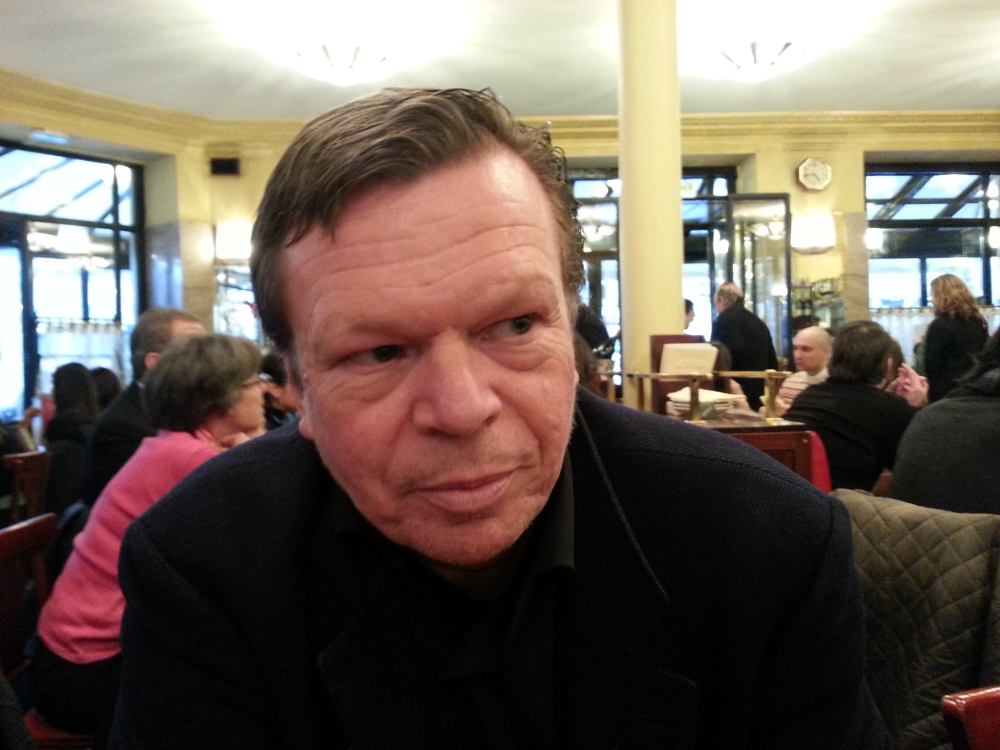
Peter is writer of the series The Heroine’s Journey and Hero’s Journey books, he has an MBA in Marketing, MBA in Financial Economics and graduated at university in Sociology and Communication Sciences.
Become a Great Storyteller
That’s why I set up The Power of your Story journey in the great cities of the world. A new way to use the power of your story. To guide you to life-changing, eye-opening movies, art, literature that truly have the power to enchant, enrich and inspire.
In this journey with Peter de Kuster you’ll explore your relationship with stories so far and your unique story identity will be sketched. You will be guided to movies, art, literature, myths that can put their finger on what you want to rewrite in your story, the feelings that you may often have had but perhaps never understood so clearly before; movies that open new perspectives and re-enchant the world for you.
You will be asked to complete a questionnaire in advance of your session and you’ll be given an instant story advice and movies to see to take away. Your full story advice and movies to see list will follow within a couple of days.
Practical Info
The price of this three day storytelling seminar is Euro 2850 excluding VAT per person. There are special prices when you want to attend with three or more people.
You can reach Peter for questions about dates and the program by mailing him at peterdekuster@hotmail.nl
TIMETABLE
09.40 Tea & Coffee on arrival
10.00 Morning Session
13.00 Lunch Break
14.00 Afternoon Session
18.00 Drinks
Read on for a detailed breakdown of the Power of your Story itinerary.
What Can I Expect?
Here’s an outline of the THE POWER OF YOUR STORY journey.
Journey Outline
OLD STORIES
- What is your Story?
- Are you even trying to tell a Story?
- Old Stories (stories about you, your art, your clients, your money, your self promotion, your happiness, your health)
- Tell your current Story
- Is this Really Your Story?
YOUR NEW STORY
- The Premise of your Story. The Purpose of your Life and Art
- The words on your tombstone
- You ultimate mission, out loud
- The Seven Great Plots
- The Twelve Archetypal Heroines
- The One Great Story
- Purpose is Never Forgettable
- Questioning the Premise
- Lining up
- Flawed Alignment, Tragic Ending
- The Three Rules in Storytelling
- Write Your New Story
TURNING STORY INTO ACTION
- Turning your story into action
- The Story Effect
- Story Ritualizing
- The Storyteller and the art of story
- The Power of Your Story
- Storyboarding your creative process
- They Created and Lived Happily Ever After
 The Power of Your Story