Stories about heroes are deep and eternal. They link our own longing and pain and passion with those who have come before in such a way that we learn something about the essence of what it means to be human and they also teach us what the power is of the stories we tell ourselves – about ourselves.
The stories that we tell that can give our lives significance are deeply primal and archetypal and can strike terror in our hearts, but they can also free us from unauthentic lives and make us real. Finding our own connection with such eternal story patterns provides a sense of meaning and significance in even the most painful or alienated moments and in this way restores nobility to life.
The paradox of modern life is that at the same time that we are living in ways never done before and therefore daily recreating our world, our actions often feel rootless and empty. To transcend this state, we need to feel rooted simultaneously in history and eternity.
This is why the hero’s journey is so important in the contemporary world. It is a timeless myth that links us to people of all times and places. Now, here in Rome. It is about fearlessly leaping off the edge of the known to confront the unknown, and trusting that when the time comes, we will have what we need to face our dragons, discover our treasures, and return to transform our world. It is also about learning to be true to ourselves and live in responsible community with one another.
This is a time in human history where heroism is greatly needed. Like heroes of old, we aid in restoring life, health and happiness as a side benefit of taking our own journeys, finding our own destinies, and giving our unique gifts. It is as if the world were a giant puzzle and each of us who takes a journey returns with one piece. Collectively, as we contribute our part, our world is transformed.
The transformation of our world depends upon all of us. Understanding this helps us move beyond a competitive stance into a concern with empowering ourselves and others. If some people ‘lose’ and do not make their potential contribution, we all lose. If we lack the courage to take our journeys, we create a void where our piece of the puzzle could have been, to our world’s as well our personal detriment.
Heroism is also not just about finding a new truth, but about having the courage to act on that vision. That is, in a very practical way, why heroes need to have the courage and care associated with strong ego development and the vision and clairty of mind that come from having taking their journeys and gained the treasure of their true selves. Most people know that heroes slay dragons, rescue damsels (and other victims) in distress and find an bring back treasures. At the close of the journey they often marry. They have reached a ‘happy ending’ to their journeys in which their ‘new renewing truth’ becomes manifested in the life they now live – in community with their new family and with other people. This new truth they bring back renews their own lives and also the lives of their kingdoms, and thereby affets everyone they touch. This mythic pattern is true for our personal journeys, although the happy ending is usually short lived. As soon as we return from one journey and enter a new phase of our lives, we are immeditately propelled into a new sort of journey: the pattern is not circular but spiral. We never really stop journeying, but we do have marker events when things come together as a result of the new reality we have encountered. And each time we begin our journeys, we do so at a new level and return with a new treasure and newfound transformative abilities.
Conscience. That stuff can drive you nuts.
So says Terry Malloy, the longshoreman who testifies against his union in “On the Waterfront.” The line, said by Marlon Brando, resonates all through the picture because the story is about conscience–and so is the story behind the story. This was the film made in 1954 by Elia Kazan after he agreed to testify before the House Un-American Activities Committee, named former associates who were involved with the Communist Party and became a pariah in left-wing circles.
“On the Waterfront” was, among other things, Kazan’s justification for his decision to testify. In the film, when a union boss shouts, “You ratted on us, Terry,” the Brando character shouts back: “I’m standing over here now. I was rattin’ on myself all those years. I didn’t even know it.” That reflects Kazan’s belief that communism was an evil that temporarily seduced him, and had to be opposed. Brando’s line finds a dramatic echo in A Life, Kazan’s 1988 autobiography, where he writes of his feelings after the film won eight Oscars, including best picture, actor, actress and director: “I was tasting vengeance that night and enjoying it. `On the Waterfront’ is my own story; every day I worked on that film, I was telling the world where I stood and my critics to go and – – – – themselves.”
In that statement you can feel the passion that was ignited by the HUAC hearings and the defiance of those who named names, or refused to. For some viewers, the buried agenda of “On the Waterfront” tarnishes the picture; the critic Jonathan Rosenbaum told me he could “never forgive” Kazan for using the film to justify himself. But directors make films for all sorts of hidden motives, some noble, some shameful, and at least Kazan was open about his own. And he made a powerful and influential movie, one that continued Brando’s immeasurable influence on the general change of tone in American movie acting in the 1950s.
“If there is a better performance by a man in the history of film in America, I don’t know what it is,” Kazan writes in his book. If you changed “better” to “more influential,” there would be one other performance you could suggest, and that would be Brando’s work in Kazan’s “A Streetcar Named Desire” (1951). In those early films, Brando cut through decades of screen mannerisms and provided a fresh, alert, quirky acting style that was not realism so much as a kind of heightened riff on reality. He became famous for his choices of physical gestures during crucial scenes (and as late as “The Godfather,” he was still finding them–the cat in his lap, the spray gun in the tomato patch).
In “On the Waterfront,” there’s a moment when Terry goes for a walk in the park with Edie (Eva Marie Saint), the sister of a man who has been thrown off a roof for talking to crime investigators. She drops a glove. He picks it up, and instead of handing it back, he pulls it on over his own workers’ hands. A small piece of business on the edge of the shot, but it provides texture.
And look at the famous scene between Terry and his brother, Charley (Rod Steiger), in the back seat of a taxi. This is the “I coulda been a contender” scene, and it has been parodied endlessly (most memorably by Robert De Niro in “Raging Bull”). But it still has its power to make us feel Terry’s pain, and even the pain of Charley, who has been forced to pull a gun on his brother. Here is Kazan on Brando:
“ … what was extraordinary about his performance, I feel, is the contrast of the tough-guy front and the extreme delicacy and gentle cast of his behavior. What other actor, when his brother draws a pistol to force him to do something shameful, would put his hand on the gun and push it away with the gentleness of a caress? Who else could read `Oh, Charley!’ in a tone of reproach that is so loving and so melancholy and suggests the terrific depth of pain?”
Kazan’s screenplay was by Budd Schulberg, and his producer was Sam Spiegel, one of the great independent buccaneers (his next production after “Waterfront” was “The Bridge on the River Kwai”). Spiegel at first proposed Frank Sinatra for the role of Terry Malloy, and Kazan agreed: “He spoke perfect Hobokenese.” The young, wiry Sinatra would have been well-cast, but then Spiegel decided that Brando, then a much bigger star, could double the budget available for the film. Kazan had already discussed costumes with Sinatra and felt bad about the switch, but Sinatra “let me off easy.”
The film was based on the true story of a longshoreman who tried to overthrow a corrupt union. In life, he failed; in the film, he succeeds, and today the ending of “On the Waterfront” feels too stagy and upbeat. The film was shot on location in Hoboken, N.J., on and near the docks, with real longshoremen playing themselves as extras (sometimes they’re moved around in groups that look artificially blocked). Brando plays a young ex-prizefighter, now a longshoreman given easy jobs because Charley is the right-hand man of the corrupt boss, Johnny Friendly (Lee J. Cobb). After he unwittingly allows himself to be used to set up the death of Edie’s brother, he starts to question the basic assumptions of his life–including his loyalty to Charley and Johnny, who after all ordered him to take a dive in his big fight in Madison Square Garden.
The other major character is a priest (Karl Malden), who tries to encourage longshoremen to testify against corruption. After one rebel is deliberately crushed in the hold of a ship, the priest makes a speech over his body (“if you don’t think Christ is down here on the waterfront, you got another think coming”). It would have been the high point of another kind of film, but against Brando’s more sinuous acting, it feels like a set piece.
Eva Marie Saint makes a perfect foil for Brando, and the two actors have a famous scene in a bar where he reveals, almost indirectly, that he likes her, and she turns the conversation from romance to conscience. At one point Kazan and his cameraman, Boris Kaufman, frame her pale face and hair in the upper-right-hand corner of the screen, with Brando in lower center, as if a guardian angel is hovering above him.
The best scenes are the most direct ones. Consider the way Brando refuses to cooperate with investigators who seek him out on the docks, early in the film. And the way he walks around on the rooftop where he keeps his beloved pigeons–lithe and catlike. Steiger is invaluable to the film, and in the famous taxi conversation, he brings a gentleness to match Brando’s: The two brothers are in mourning for the lost love between them.
Schulberg’s screenplay straddles two styles–the emerging realism and the stylized gangster picture. To the latter tradition belong lines like “He could sing, but he couldn’t fly,” when the squealer is thrown off the roof.
To the former: “You know how the union works? You go to a meeting, you make a motion, the lights go out, then you go out.” Brando’s “contender” speech is so famous it’s hard to see anew, but watch the film again and you feel the reality of the sadness between the two men, and the simple words that express it.
“On the Waterfront” was nominated for 11 Oscars and won eight. Ironically, the other three nominations were all for best supporting actor, where Cobb, Malden and Steiger split the vote. Today the story no longer seems as fresh; both the fight against corruption and the romance fall well within ancient movie conventions. But the acting and the best dialogue passages have an impact that has not dimmed; it is still possible to feel the power of the film and of Brando and Kazan, who changed American movie acting forever.
The Power of Your Story Seminar
You will examine with Peter de Kuster, founder of The Power of Your Story the way we tell stories about ourselves to ourselves — and, most important, the way we can change those stories to transform our business and personal lives.
“Your story is your life,” says Peter. As human beings, we continually tell ourselves stories — of success or failure; of power or victimhood; stories that endure for an hour, or a day, or an entire lifetime. We have stories about ourselves, our creative business, our customers ; about what we want and what we’re capable of achieving. Yet, while our stories profoundly affect how others see us and we see ourselves, too few of us even recognize that we’re telling stories, or what they are, or that we can change them — and, in turn, transform our very destinies.
Telling ourselves stories provides structure and direction as we navigate life’s challenges and opportunities, and helps us interpret our goals and skills. Stories make sense of chaos; they organize our many divergent experiences into a coherent thread; they shape our entire reality. And far too many of our stories, says Peter, are dysfunctional, in need of serious editing. First, he asks you to answer the question, “In which areas of my life is it clear that I cannot achieve my goals with the story I’ve got?” He then shows you how to create new, reality-based stories that inspire you to action, and take you where you want to go both in your work and personal life.
Our capacity to tell stories is one of our profoundest gifts. Peter’s approach to creating deeply engaging stories will give you the tools to wield the power of storytelling and forever change your business and personal life.
About Peter de Kuster
Peter de Kuster is the founder of The Heroine’s Journey & Hero’s Journey project, a storytelling firm which helps creative professionals to create careers and lives based on whatever story is most integral to their lifes and careers (values, traits, skills and experiences). Peter’s approach combines in-depth storytelling and marketing expertise, and for over 20 years clients have found it effective with a wide range of creative business issues.
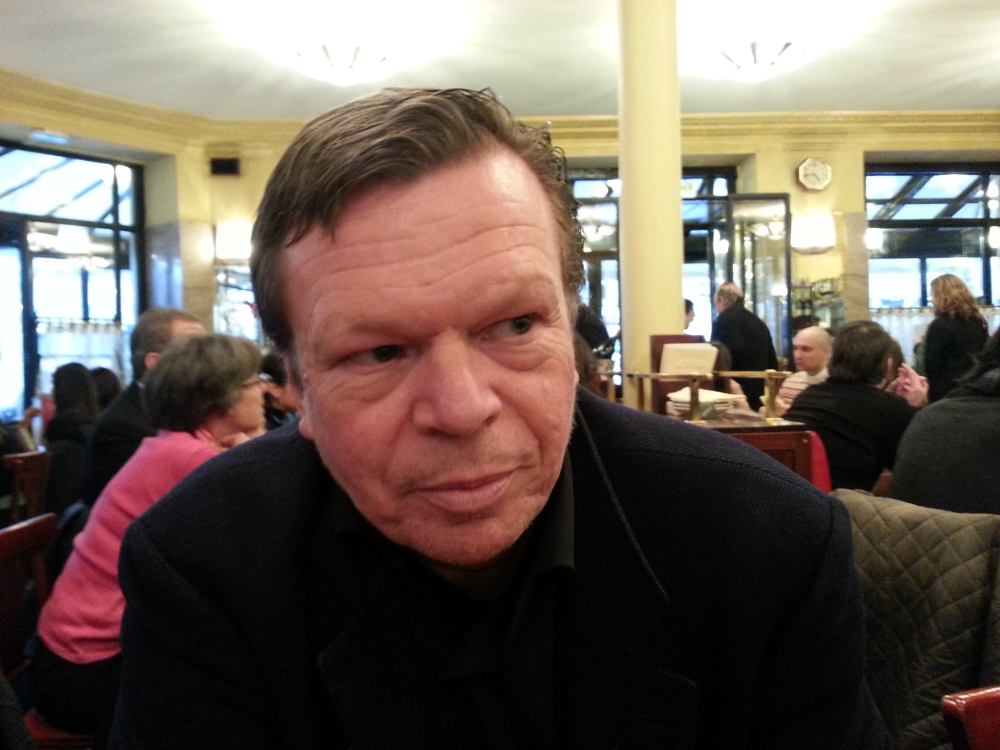
Peter is writer of the series The Heroine’s Journey and Hero’s Journey books, he has an MBA in Marketing, MBA in Financial Economics and graduated at university in Sociology and Communication Sciences.
Become a Great Storyteller
That’s why I set up The Power of your Story journey in the great cities of the world. A new way to use the power of your story. To guide you to life-changing, eye-opening movies, art, literature that truly have the power to enchant, enrich and inspire.
In this journey with Peter de Kuster you’ll explore your relationship with stories so far and your unique story identity will be sketched. You will be guided to movies, art, literature, myths that can put their finger on what you want to rewrite in your story, the feelings that you may often have had but perhaps never understood so clearly before; movies that open new perspectives and re-enchant the world for you.
You will be asked to complete a questionnaire in advance of your session and you’ll be given an instant story advice and movies to see to take away. Your full story advice and movies to see list will follow within a couple of days.
Practical Info
The price of this three day storytelling seminar is Euro 2850 excluding VAT per person. There are special prices when you want to attend with three or more people.
You can reach Peter for questions about dates and the program by mailing him at peterdekuster@hotmail.nl
TIMETABLE
09.40 Tea & Coffee on arrival
10.00 Morning Session
13.00 Lunch Break
14.00 Afternoon Session
18.00 Drinks
Read on for a detailed breakdown of the Power of your Story itinerary.
What Can I Expect?
Here’s an outline of the THE POWER OF YOUR STORY journey.
Journey Outline
OLD STORIES
- What is your Story?
- Are you even trying to tell a Story?
- Old Stories (stories about you, your art, your clients, your money, your self promotion, your happiness, your health)
- Tell your current Story
- Is this Really Your Story?
YOUR NEW STORY
- The Premise of your Story. The Purpose of your Life and Art
- The words on your tombstone
- You ultimate mission, out loud
- The Seven Great Plots
- The Twelve Archetypal Heroines
- The One Great Story
- Purpose is Never Forgettable
- Questioning the Premise
- Lining up
- Flawed Alignment, Tragic Ending
- The Three Rules in Storytelling
- Write Your New Story
TURNING STORY INTO ACTION
- Turning your story into action
- The Story Effect
- Story Ritualizing
- The Storyteller and the art of story
- The Power of Your Story
- Storyboarding your creative process
- They Created and Lived Happily Ever After
 The Power of Your Story