Commediants have a license to say what other people would be hanged for, to puncture the Ruler’s ego when the Ruler is in danger of hubris, and to generally provide balance in your life and business by breaking the rules and thereby allowing an outlet for forbidden insights, behaviors, and feelings.
The Commediant
Goal: Enjoyment, pleasure, aliveness
Fear: Boredom, nonaliveness
Task: Trust the process, enjoy the journey for its own sake
Gift: Joy, freedom, liberation
STORY TIME
Give some thought to when, where, how, and how much the Commediant Story expresses itself in your life.
- How much or how little is the Commediant expressed in your life? Has it been expressed more in the past and present? Do you see it emerging more in your future? Is it expressed more at work, at home, with friends, in dreams or fantasies?
- Who are some friends or relations who seem influenced by the archetype of the Commediant?
- Is there anything you wish were different about the expression of the Commediant in your life?
- Since each archetype expresses itself in many different ways, take some time to describe or otherwise portray (e.g. choose favorite heroes and heroines from books) the Commediant as it is expressed or could be expressed in your life. What does or would it look like? How does or would it act? In what setting does or would it feel most at home?
Jacques Tati’s “Mr. Hulot’s Holiday,” It is not a comedy of hilarity but a comedy of memory, nostalgia, fondness and good cheer. There are some real laughs in it, but “Mr. Hulot’s Holiday” gives us something rarer, an amused affection for human nature–so odd, so valuable, so particular.
The movie was released in 1953, and played for months, even years, in art cinemas. “Mr. Hulot” was as big a hit in its time as “Like Water for Chocolate,” “The Gods Must Be Crazy” and other small films that people recommend to each other. There was a time when any art theater could do a week’s good business just by booking “Hulot.” Jacques Tati (1908-1982) made only four more features in the next 20 years, much labored over, much admired, but this is the film for which he’ll be remembered.
The movie tells the story of Mr. Hulot’s holiday by the sea, in Brittany. As played by Tati, Hulot is a tall man, all angles, “a creature of silhouettes,” as Stanley Kauffmann observed: “There is never a closeup of him, and his facial expressions count for little.” He arrives at the seaside in his improbable little car, which looks like it was made for a Soap Box Derby and rides on bicycle wheels. (I always assumed this vehicle was built for the movie, but no: It is a 1924 Amilcar, and must have given its original owners many perplexing moments.)
Hulot, decked out in holiday gear and smoking a pipe, is friendly to a fault, but he is the man nobody quite sees. The holiday-makers are distracted by their own worlds, companions and plans, and notice Hulot only when something goes wrong, as it often does. The lobby of his seaside hotel, for example, is an island of calm until he leaves the door open, so that the wind can create a series of small but amusing annoyances that must have taken days to set up.
Tati doesn’t make a big point of establishing characters, but gradually we recognize faces. There is a pretty blond (Nathalie Pascaud) who is on holiday by herself, and is always cheerful, in a detached sort of way. Hulot the eligible bachelor walks out with her, takes her for a ride and even attempts unsuccessfully to go horseback riding with her, but she keeps him at a distance with her smile. She remains an elusive vision, like the blond in the convertible in “American Graffiti.”
Others are busy beavering away at being themselves. There is a waiter who cannot believe the trouble people put him to. An old couple who think they have been assigned to inspect everything in their path. A retired general, easily offended. Small children who are protected by the god of children, so their ice cream cone seems certain to spill but never quite does.
“Mr. Hulot’s Holiday” is a French film, with hardly any words in it. It plays as a silent film with music (a lilting, repetitive melody), a lot of sound effects and half-heard voices. Tati was a silent clown; he worked as a mime as a young man, and his Hulot seems to lack the knack of getting into a conversation.
The movie is constructed with the meticulous attention to detail of a Keaton or Chaplin. Sight gags are set up with such patience that they seem to expose hidden functions in the clockwork of the universe. Consider the scene where Hulot is painting his kayak, and the tide carries the paint can out to sea and then floats it in again, perfectly timed, when his brush is ready for it again. How was this scene done? Is it a trick, or did Tati actually experiment with tides and cans until he got it right? Is it “funny”? No, it is miraculous. The sea is indifferent to painters, but nevertheless provides the can when it is needed, and life goes on, and the boat gets painted.
And then consider Tati when he goes out paddling in his tiny kayak, which like his car is the wrong size for him. It capsizes. In another comedy, that would mean the hero gets wet, and we’re supposed to laugh. Not here; the boat folds up in just such a way that it looks like a shark, and there is a panic on the beach. Hulot remains oblivious. There is an almost spiritual acceptance in his behavior; nothing goes as planned, but nothing surprises him.
Not only sights but sounds have a will of their own in Tati’s universe. Listen to the thwanking sound made by the door in the hotel dining room. Does it annoy Hulot, who has been placed in the Lonely Guy table near to it? Probably, but it is in the nature of the door to thwank, and we sense that it has thwanked for a generation, and will thwank until the day the little clapboard hotel is torn down to put up a beachfront gargantoplex.
Let me try to explain my relationship with “Hulot.” The first time I saw it, I expected something along the lines of a Hollywood screwball comedy. Instead, the movie opens with its sweet little melody, which is quite pleased that life goes on. Hulot arrives (inconveniencing a dog that wants to sleep in the road) and tries his best to be a well-behaved holiday-maker. He is so polite that when the announcer on the hotel’s radio says “Good night, everybody!” he bows and doffs his hat. Because there were no closeups, because the movie did not insist on exactly who Hulot was, he became the audience–he was me.
When has a film so subtly and yet so completely captured nostalgia for past happiness? The movie is about the simplest of human pleasures: The desire to get away for a few days, to play instead of work, to breathe in the sea air, and maybe meet someone nice. It is about the hope that underlies all vacations, and the sadness that ends them. And it is amused, too, that we go about our days so intently, while the sea and the sky go about theirs.
The Power of Your Story Seminar
Amsterdam 17 April
You will examine with Peter de Kuster, founder of The Power of Your Story the way we tell stories about ourselves to ourselves — and, most important, the way we can change those stories to transform our business and personal lives.
“Your story is your life,” says Peter. As human beings, we continually tell ourselves stories — of success or failure; of power or victimhood; stories that endure for an hour, or a day, or an entire lifetime. We have stories about ourselves, our creative business, our customers ; about what we want and what we’re capable of achieving. Yet, while our stories profoundly affect how others see us and we see ourselves, too few of us even recognize that we’re telling stories, or what they are, or that we can change them — and, in turn, transform our very destinies.
Telling ourselves stories provides structure and direction as we navigate life’s challenges and opportunities, and helps us interpret our goals and skills. Stories make sense of chaos; they organize our many divergent experiences into a coherent thread; they shape our entire reality. And far too many of our stories, says Peter, are dysfunctional, in need of serious editing. First, he asks you to answer the question, “In which areas of my life is it clear that I cannot achieve my goals with the story I’ve got?” He then shows you how to create new, reality-based stories that inspire you to action, and take you where you want to go both in your work and personal life.
Our capacity to tell stories is one of our profoundest gifts. Peter’s approach to creating deeply engaging stories will give you the tools to wield the power of storytelling and forever change your business and personal life.
About Peter de Kuster
Peter de Kuster is the founder of The Heroine’s Journey & Hero’s Journey project, a storytelling firm which helps creative professionals to create careers and lives based on whatever story is most integral to their lifes and careers (values, traits, skills and experiences). Peter’s approach combines in-depth storytelling and marketing expertise, and for over 20 years clients have found it effective with a wide range of creative business issues.
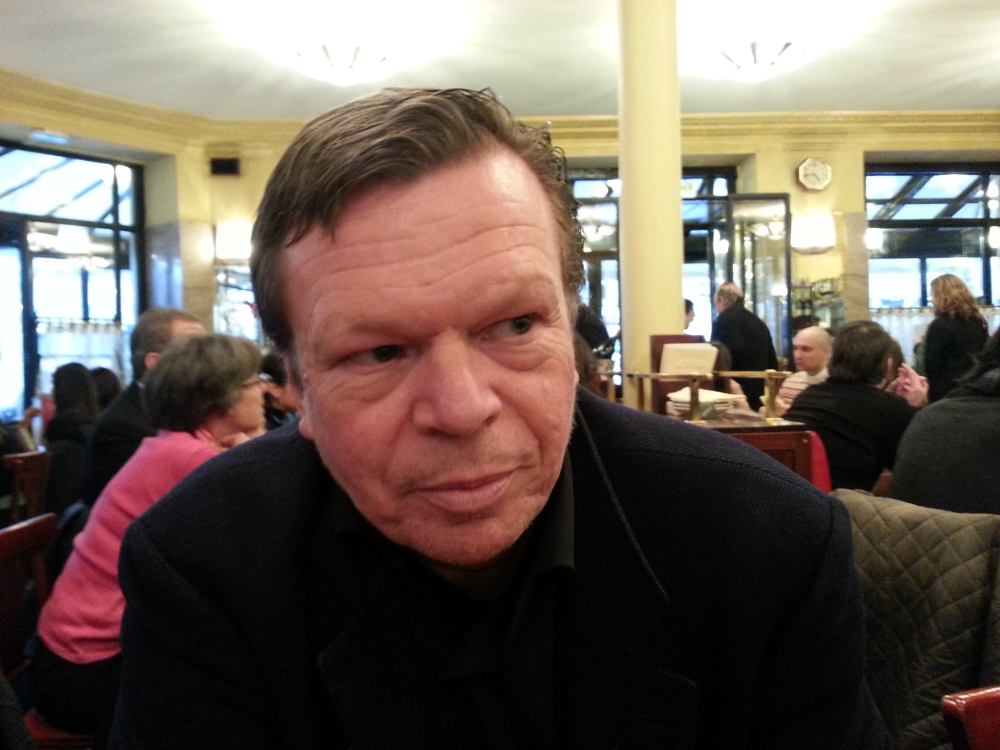
Peter is writer of the series The Heroine’s Journey and Hero’s Journey books, he has an MBA in Marketing, MBA in Financial Economics and graduated at university in Sociology and Communication Sciences.
Become a Great Storyteller in One Day
That’s why I set up The Power of your Story journey in the great cities of the world. A new way to use the power of your story. To guide you to life-changing, eye-opening movies, art, literature that truly have the power to enchant, enrich and inspire.
In this journey with Peter de Kuster you’ll explore your relationship with stories so far and your unique story identity will be sketched. You will be guided to movies, art, literature, myths that can put their finger on what you want to rewrite in your story, the feelings that you may often have had but perhaps never understood so clearly before; movies that open new perspectives and re-enchant the world for you.
You will be asked to complete a questionnaire in advance of your session and you’ll be given an instant story advice and movies to see to take away. Your full story advice and movies to see list will follow within a couple of days.
Practical Info
The price of this one day storytelling seminar is Euro 995 excluding VAT per person. There are special prices when you want to attend with three or more people.
You can reach Peter for questions about dates and the program by mailing him at peterdekuster@hotmail.nl
TIMETABLE
09.40 Tea & Coffee on arrival
10.00 Morning Session
13.00 Lunch Break
14.00 Afternoon Session
18.00 Drinks
Read on for a detailed breakdown of the Power of your Story itinerary.
What Can I Expect?
Here’s an outline of the THE POWER OF YOUR STORY journey.
Journey Outline
OLD STORIES
- What is your Story?
- Are you even trying to tell a Story?
- Old Stories (stories about you, your art, your clients, your money, your self promotion, your happiness, your health)
- Tell your current Story
- Is this Really Your Story?
YOUR NEW STORY
- The Premise of your Story. The Purpose of your Life and Art
- The words on your tombstone
- You ultimate mission, out loud
- The Seven Great Plots
- The Twelve Archetypal Heroines
- The One Great Story
- Purpose is Never Forgettable
- Questioning the Premise
- Lining up
- Flawed Alignment, Tragic Ending
- The Three Rules in Storytelling
- Write Your New Story
TURNING STORY INTO ACTION
- Turning your story into action
- The Story Effect
- Story Ritualizing
- The Storyteller and the art of story
- The Power of Your Story
- Storyboarding your creative process
- They Created and Lived Happily Ever After
 The Power of Your Story