When we discover our true selves, the Creator also comes into our lives. When we become aware of our connection with the power of the creative process. A positive but realistic projection of our future frees us to enjoy life in the present and to make our dreams come true. Visions are most powerful when consensually shared. What is most critical for the Creator is that your vision conforms to who you are at a deep level and what your life, at best, should really be about.
The Creator
Goal: Creation of a life, work, or new reality of any kind
Fear: Inauthenticity, miscreation, failure of imagination
Task: Self creation, self acceptance
Gift: Creativity, identity, vocation
STORY TIME
Give some thought to when, where, how, and how much the Creator Story expresses itself in your life.
- How much or how little is the Creator expressed in your life? Has it been expressed more in the past and present? Do you see it emerging more in your future? Is it expressed more at work, at home, with friends, in dreams or fantasies?
- Who are some friends or relations who seem influenced by the archetype of the Creator?
- Is there anything you wish were different about the expression of the Creator in your life?
- Since each archetype expresses itself in many different ways, take some time to describe or otherwise portray (e.g. choose favorite heroes and heroines from books) the Creator as it is expressed or could be expressed in your life. What does or would it look like? How does or would it act? In what setting does or would it feel most at home?
Frenhofer, the great artist, has painted nothing for ten years. He threw down his brush in the middle of painting what was intended as his masterpiece, to be titled “Le Belle Noiseuse,” or “the beautiful nuisance.” His model was his wife, Elizabeth, who inspired the great period of his career. “At first he painted me because I loved him,” she tells a friend. “Then he painted me because he loved me.” And then he stopped, perhaps because he feared that to achieve his painting would be to destroy their love. Frenhofer does not see the outsides of his models, but the insides — bones, sinew, soul.
One day three visitors call at the vast French chateau where Frenhofer still lives with Liz. They are an art dealer, a young artist, and the artist’s lover, Marianne. These two have been together three years. Marianne is aloof, quiet, strong-willed. There is a moment after dinner the first evening when Frenhofer regards her, and their whole relationship is contained in that look. She is walking away from him, but she is certainly aware of the look, or of the feeling behind it. He will pick up his brush again.
Jacques Rivette’s “La Belle Noiseuse” (1991) is the best film I have ever seen about the physical creation of art, and about the painful bond between an artist and his muse. Winner of the Palme d’Or prize at Cannes that year, it ran to a full four hours, and so its theatrical life was limited. Rivette edited a 125-minute version titled “Divertimento,” but why bother with it? The greatness of “La Belle Noiseuse” is in the time it spends on the creation of art, and the creation and destruction of passion.
Frenhofer is played by Michel Piccoli, the saturnine French star whose eyes can bore through other actors. With his high forehead and sculpted profile, he looks intelligent, but it is a formidable, threatening intelligence. He never plays the fall-guy. He always knows the story. Marianne, the young woman who inspires him, is played by Emmanuelle Béart, who at 23 had electrified audiences with “Manon of the Spring” (1986). Startlingly beautiful, with sensuous lips and deep eyes under arched brows, she seems at first a prop for a familiar story: The old artist will attempt to seduce her. Ah, but he wants more than that. He wants to possess her. And he wants to draw from her irritating willfulness the inspiration for his rebirth. He must have an abrasive to create.
His wife Elizabeth (Jane Birkin) fully understands this, and explains to the sister of Marianne’s boyfriend: “It’s not about the flesh. Not about nudity.” She says she doesn’t worry about “How do you say it? An affair.” She knows him too well. She even persuades Marianne to accept her husband’s invitation to model. “But do not let him paint your face,” she warns. There is a whiff here of The Portrait of Dorian Grey in reverse: The painting will steal the vitality of the model.
What I have described so far is merely plot, and in this film plot hardly concerns us. The great central passages of the film involve creation. In his cavernous stone studio, which reminds Marianne of her boarding-school chapel, Frenhofer begins to sketch her. We observe over his shoulder. Rivette use a static camera and long takes. He rarely cuts away We see a blank sheet of paper, and the drawing taking shape there. We see the physical process: First, Frenhofer’s obsession with arranging his pens, his brushes, his inks and paints. Then the first tentative lines on the page. Impatient stabs with the sharp pen. Washes of Payne’s Grey at various dilutions. His fingers and thumb smearing the washes into rough shapes. Later, on a larger scale, he works with charcoal. Then oil.
“In the wardrobe upstairs, there is a dressing gown,” he tells her. She understands, puts it on, disrobes in front of him, and will be entirely nude for at least at hour in this film. Yes, at first we observe Emmanuelle Béart as a woman. Then we see her as a model. Slowly we come to see her as Frenhofer wants to: The woman inside, the essence, the being. There is no small talk. He positions her in poses. He yanks her arms and legs like a puppet’s. “In the old days,” he says almost to himself, “they tied the arms and legs of the models into place, to keep to them from moving.” She complains of pain and cramps, wants to have a cigarette. He takes cigarettes out of her fingers, and pushes her into position.
Does it sound boring to watch a man simply drawing for extended periods? Yes, it does. But it is not. Suspense is building. There is a contest between them, a battle of will-power. She is a nuisance. Elizabeth says she spent some time in Quebec, where noiseuse means “nutty.” That’s what Frenhofer wants. She begins to understand. She accepts the pain to prove she is the equal of his determination. One day when he despairs, she orders him to continue. She will see this through.
The painting is completed, but how it looks need not consume us. It is enough to quote how she describes it: “A thing that was cold and dry — it was me.” What he does after finishing it is astonishing. No, he doesn’t destroy it. It is his masterpiece, and he knows it is. So does his wife, who quietly visits the studio and draws a cross on the back of the frame, like a grave marker. Cross-shaped shadows from a window fall on their bed that night, and across his body.
Listen to the sounds in this movie. Rivette almost never uses sound track music, unless there is an obvious source, like a radio. He employs room noises at a higher volume than other directors: Footfalls, doors slamming, plates rattling. The scratch of the pen on the paper is loud, and grows louder with his passion. When he is painting over Liz’s face on a re-used canvas, the noise of his brush swells. Listen very carefully during the scene where he has Marianne kneeling on a bench in a crucifixion pose. At first she cries. Then she starts to laugh, and he does too, and under their laughter you can hear the pen scratching, even though just now he is not using it.
Of the performances, there is nothing to be said about Piccoli except that he communicates exactly what Frenhofer needs from his art, and doesn’t need many words to do it. Emmanuelle Béart has an ethereal beauty, but it is her talent that has made her a leading actress of her generation. We quickly feel, without any dialog or behavior to spell it out, Marianne’s nuisance quality, her nuttiness if you will. Is the coldness and dryness she sees in the portrait what Frenhofer desired her for, or despaired of? Jane Birkin, born in England, at home in both countries, finds the perfect and difficult note for Elizabeth, the wife. Does she sometimes wish he had finished his great painting the first time through, even if it had destroyed their happiness? That she had been more abrasive and less loved? She believes in her husband’s greatness. That explains all the unanswered questions in this film, and there are some big ones.
The Power of Your Story Seminar
Amsterdam 17 April
You will examine with Peter de Kuster, founder of The Power of Your Story the way we tell stories about ourselves to ourselves — and, most important, the way we can change those stories to transform our business and personal lives.
“Your story is your life,” says Peter. As human beings, we continually tell ourselves stories — of success or failure; of power or victimhood; stories that endure for an hour, or a day, or an entire lifetime. We have stories about ourselves, our creative business, our customers ; about what we want and what we’re capable of achieving. Yet, while our stories profoundly affect how others see us and we see ourselves, too few of us even recognize that we’re telling stories, or what they are, or that we can change them — and, in turn, transform our very destinies.
Telling ourselves stories provides structure and direction as we navigate life’s challenges and opportunities, and helps us interpret our goals and skills. Stories make sense of chaos; they organize our many divergent experiences into a coherent thread; they shape our entire reality. And far too many of our stories, says Peter, are dysfunctional, in need of serious editing. First, he asks you to answer the question, “In which areas of my life is it clear that I cannot achieve my goals with the story I’ve got?” He then shows you how to create new, reality-based stories that inspire you to action, and take you where you want to go both in your work and personal life.
Our capacity to tell stories is one of our profoundest gifts. Peter’s approach to creating deeply engaging stories will give you the tools to wield the power of storytelling and forever change your business and personal life.
About Peter de Kuster
Peter de Kuster is the founder of The Heroine’s Journey & Hero’s Journey project, a storytelling firm which helps creative professionals to create careers and lives based on whatever story is most integral to their lifes and careers (values, traits, skills and experiences). Peter’s approach combines in-depth storytelling and marketing expertise, and for over 20 years clients have found it effective with a wide range of creative business issues.
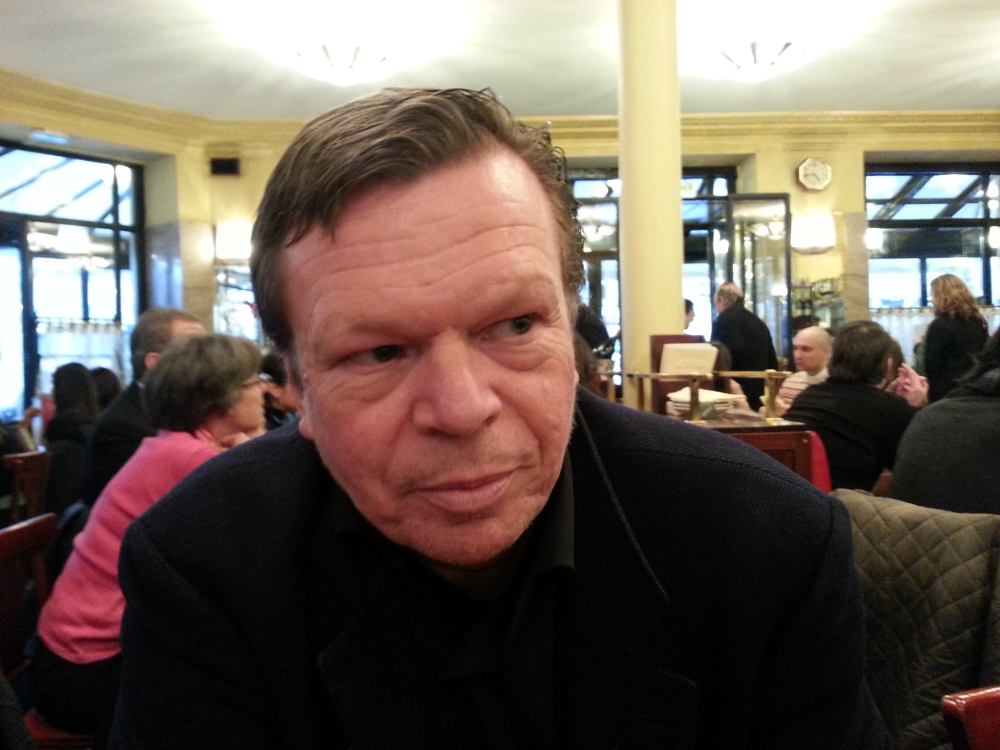
Peter is writer of the series The Heroine’s Journey and Hero’s Journey books, he has an MBA in Marketing, MBA in Financial Economics and graduated at university in Sociology and Communication Sciences.
Become a Great Storyteller in One Day
That’s why I set up The Power of your Story journey in the great cities of the world. A new way to use the power of your story. To guide you to life-changing, eye-opening movies, art, literature that truly have the power to enchant, enrich and inspire.
In this journey with Peter de Kuster you’ll explore your relationship with stories so far and your unique story identity will be sketched. You will be guided to movies, art, literature, myths that can put their finger on what you want to rewrite in your story, the feelings that you may often have had but perhaps never understood so clearly before; movies that open new perspectives and re-enchant the world for you.
You will be asked to complete a questionnaire in advance of your session and you’ll be given an instant story advice and movies to see to take away. Your full story advice and movies to see list will follow within a couple of days.
Practical Info
The price of this one day storytelling seminar is Euro 995 excluding VAT per person. There are special prices when you want to attend with three or more people.
You can reach Peter for questions about dates and the program by mailing him at peterdekuster@hotmail.nl
TIMETABLE
09.40 Tea & Coffee on arrival
10.00 Morning Session
13.00 Lunch Break
14.00 Afternoon Session
18.00 Drinks
Read on for a detailed breakdown of the Power of your Story itinerary.
What Can I Expect?
Here’s an outline of the THE POWER OF YOUR STORY journey.
Journey Outline
OLD STORIES
- What is your Story?
- Are you even trying to tell a Story?
- Old Stories (stories about you, your art, your clients, your money, your self promotion, your happiness, your health)
- Tell your current Story
- Is this Really Your Story?
YOUR NEW STORY
- The Premise of your Story. The Purpose of your Life and Art
- The words on your tombstone
- You ultimate mission, out loud
- The Seven Great Plots
- The Twelve Archetypal Heroines
- The One Great Story
- Purpose is Never Forgettable
- Questioning the Premise
- Lining up
- Flawed Alignment, Tragic Ending
- The Three Rules in Storytelling
- Write Your New Story
TURNING STORY INTO ACTION
- Turning your story into action
- The Story Effect
- Story Ritualizing
- The Storyteller and the art of story
- The Power of Your Story
- Storyboarding your creative process
- They Created and Lived Happily Ever After
 The Power of Your Story