The Independent uses experiences of confrontation with obstacles to try harder, to have greater faith, to be more perfect and loveable, to be more worthy. The Independent sees it als demonstrating the essential truth that we are all on our own.
The Independent
Goal: Remain autonomous
Fear: Exploitation, victimization
Task: Be open to receive to work together
Gift: Interdependence, empathy, realism
STORY TIME
Give some thought to when, where, how, and how much the Independent Story expresses itself in your life.
- How much or how little is the Independent expressed in your life? Has it been expressed more in the past and present? Do you see it emerging more in your future? Is it expressed more at work, at home, with friends, in dreams or fantasies?
- Who are some friends or relations who seem influenced by the archetype of the Independent?
- Is there anything you wish were different about the expression of the Independent in your life?
- Since each archetype expresses itself in many different ways, take some time to describe or otherwise portray (e.g. choose favorite heroes and heroines from books) the Independent as it is expressed or could be expressed in your life. What does or would it look like? How does or would it act? In what setting does or would it feel most at home?
The character of Christ himself is radically different from most previous film portraits. He is a weary, self-doubting individual, not always willing to carry the souls of man on his shoulders. There are times when he seems not to know or believe he is the son of God, and when he does, he uses that knowledge as a reason to rebuke his mother and the memory of Joseph. He berates and hectors his followers, and confides mostly in Judas, who is radically recast in this story as a good man who is only following instructions. The film follows the bold revisionism of Nikos Kazantzakis, whose novel was placed on the church’s index of forbidden books.
The story by Kazantzakis, Scorsese and Schrader grapples with the central mystery of Jesus, that he was both God and man, and uses the freedom of fiction to explore the implications of such a paradox. In the title role, Willem Dafoe creates a man who is the embodiment of dutiful masochism. Whether he is right or wrong about his divinity, he is prepared to pay the price, and that kind of faith is more courageous than certainty would be. Even in the last half of the film, when Jesus begins performing miracles, he seems almost an onlooker at his own accomplishments, taking little joy in them.
A key shot is when Michael Ballhaus’ camera pushes past Jesus into the sepulcher of the dead Lazarus. It is black inside, contrasted with the blinding sun, and then blacker and blacker until the whole screen is filled with blackness, and held for a few seconds. I take this as an emblem of Jesus’ experience of his miracles, during which he is reaching into an unknowable and frightening void.
Judas is the film’s other vivid character, played by Harvey Keitel as, in a sense, Christ’s manager. He does strategy, issues ultimatums, is the closest friend. One way the story commits sacrilege is by suggesting Judas was doing his duty by betraying Christ. Someone had to. Jesus doesn’t have close relationships with any of the other disciples, who he seems to believe will follow along of their own accord. He is closer, I suppose, with Mary Magdalene, but their conversations seem guarded or cryptic. Scorsese’s attention is more on Christ’s inner struggle than his worldly role.
What makes “The Last Temptation of Christ” one of his great films is not that it is true about Jesus but that it is true about Scorsese. Like countless others, he has found aspects of the Christ story that speak to him. This is the Jesus of his two most autobiographical characters, Charlie in “Mean Streets” and J.R. in “Who’s That Knocking at My Door?” Both of those characters were played by Keitel. Interesting that he choose Keitel this time to play Judas. Perhaps Judas is Scorsese’s autobiographical character in “The Last Temptation of Christ.” Certainly not the Messiah, but the mortal man walking beside him, worrying about him, lecturing him, wanting him to be better, threatening him, confiding in him, prepared to betray him if he must. Christ is the film, and Judas is the director.
The Power of Your Story Seminar
Amsterdam 17 April
You will examine with Peter de Kuster, founder of The Power of Your Story the way we tell stories about ourselves to ourselves — and, most important, the way we can change those stories to transform our business and personal lives.
“Your story is your life,” says Peter. As human beings, we continually tell ourselves stories — of success or failure; of power or victimhood; stories that endure for an hour, or a day, or an entire lifetime. We have stories about ourselves, our creative business, our customers ; about what we want and what we’re capable of achieving. Yet, while our stories profoundly affect how others see us and we see ourselves, too few of us even recognize that we’re telling stories, or what they are, or that we can change them — and, in turn, transform our very destinies.
Telling ourselves stories provides structure and direction as we navigate life’s challenges and opportunities, and helps us interpret our goals and skills. Stories make sense of chaos; they organize our many divergent experiences into a coherent thread; they shape our entire reality. And far too many of our stories, says Peter, are dysfunctional, in need of serious editing. First, he asks you to answer the question, “In which areas of my life is it clear that I cannot achieve my goals with the story I’ve got?” He then shows you how to create new, reality-based stories that inspire you to action, and take you where you want to go both in your work and personal life.
Our capacity to tell stories is one of our profoundest gifts. Peter’s approach to creating deeply engaging stories will give you the tools to wield the power of storytelling and forever change your business and personal life.
About Peter de Kuster
Peter de Kuster is the founder of The Heroine’s Journey & Hero’s Journey project, a storytelling firm which helps creative professionals to create careers and lives based on whatever story is most integral to their lifes and careers (values, traits, skills and experiences). Peter’s approach combines in-depth storytelling and marketing expertise, and for over 20 years clients have found it effective with a wide range of creative business issues.
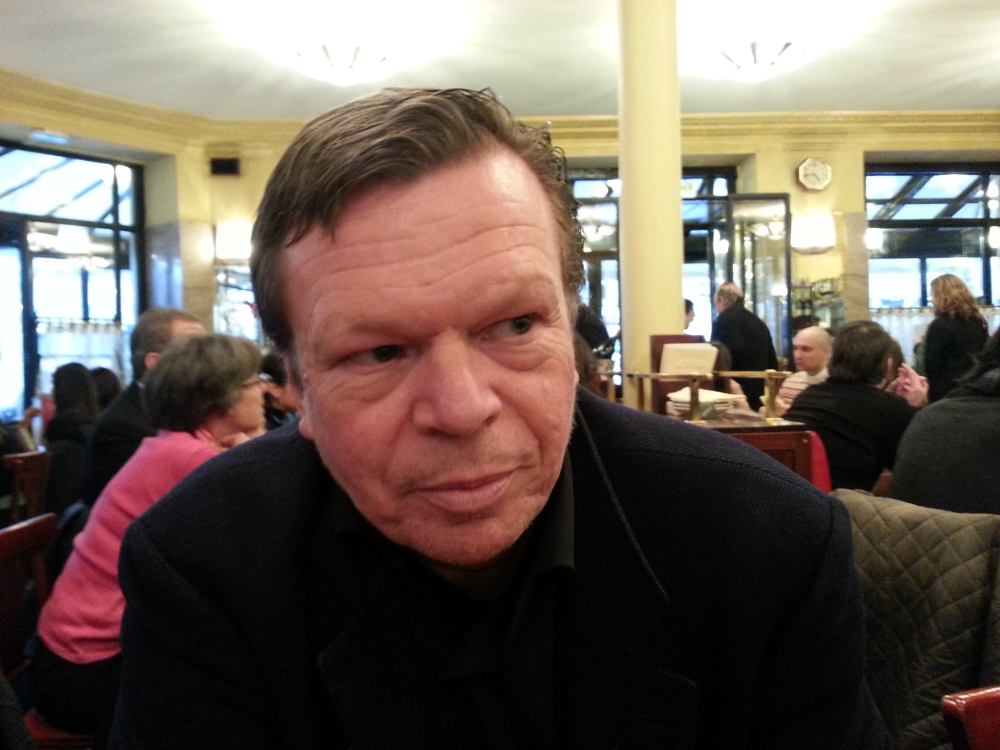
Peter is writer of the series The Heroine’s Journey and Hero’s Journey books, he has an MBA in Marketing, MBA in Financial Economics and graduated at university in Sociology and Communication Sciences.
Become a Great Storyteller in One Day
That’s why I set up The Power of your Story journey in the great cities of the world. A new way to use the power of your story. To guide you to life-changing, eye-opening movies, art, literature that truly have the power to enchant, enrich and inspire.
In this journey with Peter de Kuster you’ll explore your relationship with stories so far and your unique story identity will be sketched. You will be guided to movies, art, literature, myths that can put their finger on what you want to rewrite in your story, the feelings that you may often have had but perhaps never understood so clearly before; movies that open new perspectives and re-enchant the world for you.
You will be asked to complete a questionnaire in advance of your session and you’ll be given an instant story advice and movies to see to take away. Your full story advice and movies to see list will follow within a couple of days.
Practical Info
The price of this one day storytelling seminar is Euro 995 excluding VAT per person. There are special prices when you want to attend with three or more people.
You can reach Peter for questions about dates and the program by mailing him at peterdekuster@hotmail.nl
TIMETABLE
09.40 Tea & Coffee on arrival
10.00 Morning Session
13.00 Lunch Break
14.00 Afternoon Session
18.00 Drinks
Read on for a detailed breakdown of the Power of your Story itinerary.
What Can I Expect?
Here’s an outline of the THE POWER OF YOUR STORY journey.
Journey Outline
OLD STORIES
- What is your Story?
- Are you even trying to tell a Story?
- Old Stories (stories about you, your art, your clients, your money, your self promotion, your happiness, your health)
- Tell your current Story
- Is this Really Your Story?
YOUR NEW STORY
- The Premise of your Story. The Purpose of your Life and Art
- The words on your tombstone
- You ultimate mission, out loud
- The Seven Great Plots
- The Twelve Archetypal Heroines
- The One Great Story
- Purpose is Never Forgettable
- Questioning the Premise
- Lining up
- Flawed Alignment, Tragic Ending
- The Three Rules in Storytelling
- Write Your New Story
TURNING STORY INTO ACTION
- Turning your story into action
- The Story Effect
- Story Ritualizing
- The Storyteller and the art of story
- The Power of Your Story
- Storyboarding your creative process
- They Created and Lived Happily Ever After
 The Power of Your Story