The Lover archetype governs all sorts of human love, from parental love, to friendship, to spiritual love, but it is most important to romantic love. You might think of the Roman love god and goddess – Cupid and Venus – and of classic cinematic heartthrobs like Clark Gable, Gary Grant, Sophia Loren or Elizabeth Taylor. This is the realm of hearts and flowers, long strolls on sunset beaches, dancing in the moonlight – of the romantic love story in both its comic (they live happily ever after) and its tragic forms (torn apart by death – Titanic – or circumstances – Casablanca).
The Lover archetype also inspires the whole genre of romance novels. We all know that most romances follow a very defined plot. The young and beautiful heroine meets Mr. Right, but some circumstance or misunderstanding keeps them apart until somehow the truth is revealed and, after much heaving of chests and protestations of love, they marry and live happily ever after. Some of these novels are quite erotic, while others are more proper, but however much or little explicit sex they contain, the plot is remarkably consistent. And, in spite of this, thousands are sold every year. Some women read one every week and never tire of the same plot. Why? Because these plots call up a deep archetypal yearning for the experience of true love.
Commiting to people, places and activities you love. Without the Lover, you do not engage yourself with life. We know the Lover when we experience a passionate connection to our work, an activity, a cause, a way of life. We know that the Lover is at work when our connection with something is so strong that the thought of losing it brings intolerable pain. Without the Lover we survive but not really live. It is the Lover – passion, eros, attachment, desire, commitment, even lust – that makes us feel really alive.
The Lover
Core desire: Attain intimacy and experience sensual pleasure
Goal: Being in a relationship with the people, the work, the experiences, the surroundings they love. Bliss, oneness, unity
Fear: Being alone, a wallflower, unwanted, unloved, loss of love, disconnection
Strategy: Follow your bliss, commit to what you love, become more and more attractive physically, emotionally and in every other way, for yourself and others.\
Trap: doing anything and everything to attract and please others, losing identiy
Gift: Commitment, passion, gratitude, appreciation, ecstasy
Although women more than men love Lover archetype movies and novels, men, of course, are attracted by the archetype too. For literature aimed at men, the adventure story is often the lead, with the love story occupying second place. Nevertheless, the hero is not quite a hero if he fails to get the girl by the end of the story.
The archetype is also reflected in everyday assumptions about the successful life. Parents expect their children to find a fulfilling career and settle down. They often do not really see their work of raising the child as complete until the child has a love partner for life. Although the anticipation is that they will live happily ever after, the reality is that we live in a society where one out of every two marriages ends in divorce. Nevertheless, the search for true love continues to be lived out in most lives. If we cannot live happily ever after with one person, everyone expects us to get going and find someone else. What this means is that, for many, the Lover archetype is active throughout life, involved either in keeping the love of one’s partner (who could leave) or in finding someone new.
Levels of the Lover
The Call: infatuation, seduction, falling in love (with a person, an idea, a cause, work, a product). Level One: seeking great sex or a great romance Level Two: following your bliss and committing to whom and what you love Level Three: spiritual love, self – acceptance, and the experience of ecstasy Shadow: promiscuity, obsession, jealousy, envy, puritanism
Whether the love is romantic or of the friendship variety, the Lover’s self-esteem may derive from the sense of specialness that comes from being loved. At its worst, this can lead to a pathetically desperate need to be loved that can drive someone to promiscuity or to stay in an unfulfilling or even abusive situation. When a person has a stronger sense of self, the Lover can be expressed without so much compulsion. At its best, it offers deep, abiding, intimate connection between people – the kind that fuels marriages (or friendships) in which love really does last forevers.
Lovers think of themselves as being wonderfully appreciative of others. However, they typically dislike competitors who threaten to supplant them in the affections of others. Associated with the Lover archetype, therefore, may be an underside of competiveness that is generally unconscious and unacknowledged, with the result that jealousy can lead to very meanspirited behavior.
When the Lover archetype is active in an individual’s life, he or she will want to look not only good, but, indeed, beautiful or handsome. The underlying desire is to attract, give love, and express affection in intimate and pleasurable ways. In friendship and in families, this propensity can include cuddling, sharing the secrects of one’s heart, and bonding through shared likes and dislikes. With a romantic partner, of course, it also includes sexuality.
STORY TIME
Give some thought to when, where, how, and how much the Lover Story expresses itself in your life.
- How much or how little is the Lover expressed in your life? Has it been expressed more in the past and present? Do you see it emerging more in your future? Is it expressed more at work, at home, with friends, in dreams or fantasies?
- Who are some friends or relations who seem influenced by the archetype of the Lover?
- Is there anything you wish were different about the expression of the Lover in your life?
- Since each archetype expresses itself in many different ways, take some time to describe or otherwise portray (e.g. choose favorite heroes and heroines from books) the Lover as it is expressed or could be expressed in your life. What does or would it look like? How does or would it act? In what setting does or would it feel most at home?
Alfred Hitchcock’s “Notorious” is the most elegant expression of the master’s visual style, just as “Vertigo” is the fullest expression of his obsessions. It contains some of the most effective camera shots in his–or anyone’s–work, and they all lead to the great final passages in which two men find out how very wrong they both were.
This is the film, with “Casablanca,” that assures Ingrid Bergman’s immortality. She plays a woman whose notorious reputation encourages U.S. agents to recruit her to spy on Nazis in postwar Rio. And that reputation nearly gets her killed, when the man she loves mistrusts her. His misunderstanding is at the center of a plot in which all of the pieces come together with perfect precision, so that two people walk down a staircase to their freedom, and a third person climbs steps to his doom.
Hitchcock made the film in 1946, when the war was over but the Cold War was just beginning. A few months later, he would have made the villains Communists, but as he and Ben Hecht worked on the script, Nazis were still uppermost in their minds. (An opening subtitle says: “Miami, Florida, 3:20 p.m., April 20, 1946”–admirably specific, but as unnecessary as the similarly detailed information at the beginning of “Psycho.”)
The story stars Bergman as a patriotic American named Alicia Huberman, whose father is a convicted Nazi spy. Alicia is known for drinking and apparent promiscuity, and is recruited by an agent named Devlin (Cary Grant) to fly to Rio and insinuate herself into the household of a spy ring led by Sebastian (Claude Rains). Sebastian once loved her, and perhaps he still does; Devlin is essentially asking her to share the spy’s bed to discover his secrets. And this she is willing to do, because by the time he asks her, she is in love–with Devlin.
All of these sexual arrangements are of course handled with the sort of subtle dialogue and innuendo that Hollywood used to get around the production code. There is never a moment when improper behavior is actually stated or shown, but the film leaves no doubt. By the time all of the pieces are in place, we actually feel more sympathy for Sebastian than for Devlin. He may be a spy but he loves Alicia sincerely, while Devlin may be an American agent but has used Alicia’s love to force her into the arms of another man.
Hitchcock was known for his attention to visual details. He drew storyboards of every scene before shooting it, and slyly plays against Grant’s star power in the scene introducing Devlin to the movie. At a party the night her father has been convicted, Alicia drinks to forget. The camera positions itself behind the seated Devlin, so we see only the back of his head. He anchors the shot as the camera moves left and right, following the morally ambiguous Alicia as she flirts, drinks and tries to forget.
There are more famous shots the next morning. Alicia awakens with a hangover, and there is a gigantic foreground closeup of a glass of Alka-Seltzer (it will be paired much later in the movie with a huge foreground coffee cup that we know contains arsenic). From her point of view, she sees Devlin in the doorway, backlit and upside down. As she sits up, he rotates 180degrees. He suggests a spy deal. She refuses, talking of her plans to take a cruise. He plays a secret recording that proves she is, after all, patriotic–despite her loose image. As the recording begins, she is in shadow. As it continues, she is in bars of light. As it ends, she is in full light. Hitchcock has choreographed the visuals so that they precisely reflect what is happening.
The film is rich with other elegant shots, the most famous beginning with the camera on a landing high above the entrance hall of Sebastian’s mansion in Rio. It ends, after one unbroken movement, with a closeup of a key in Alicia’s nervously twisting hand. The key will open the wine cellar, where Devlin (posing as a guest) will join Alicia in trying to find Sebastian’s secret. One of the bottles contains not wine but a radioactive substance used in bombs. Of course, it could contain anything–maps, codes, diamonds–because it is a MacGuffin (Hitchcock’s name for that plot element that everyone is concerned about, although it hardly matters what it is).
The Hecht screenplay is ingenious in playing the two men against one another. Sebastian, played by Rains, is smaller, more elegant, more vulnerable, and dominated by his forbidding mother (Leopoldine Konstantin). Devlin, played by Grant, is tall, physically imposing, crude at times, suspicious where Sebastian is trusting. Both men love her but the wrong man trusts her, and the plot leads to a moment of inspired ingenuity in which Devlin is able to escort Alicia out of the Nazi mansion in full view of all of the spies, and the circumstances are such that nobody can stop him. (There is a point earlier in the film where Devlin walks up the same staircase, and if you count his steps you will find that on the way down he and Alicia descend more steps than there actually are–Hitchcock’s way of prolonging the suspense.)
Throughout Hitchcock’s career, he devised stories in which elegant women, usually blond, were manipulated into situations of great danger. Hitchcock was the master manipulator, with the male actors as his surrogates. “Vertigo” treats this theme so openly it almost gives the game away. But look how it works in “Notorious,” where Devlin (like the Jimmy Stewart character in “Vertigo”) grooms and trains innocent women to be exactly who he desires her to be, and then makes her do his bidding.
The great erotic moment in “Vertigo” is the one where the man kisses the woman of his fantasy, while the room whirls around him. There is a parallel scene in “Notorious,” and it was famous at the time as “the longest kiss in the history of the movies.” The production code forbade a kiss lasting longer than three seconds, and so Bergman and Grant alternate kissing with dialogue and eyeplay, while never leaving one another’s arms. The sequence begins on a balcony overlooking Rio, encompasses a telephone call and a discussion of the dinner menu, and ends with a parting at the apartment door, taking three minutes in all. The three-second rule led to a better scene; an actual180-second kiss might look like an exercise in slobbering.
The choice of Ingrid Bergman for the role was ideal; she subtly combined the noble and the carnal. Consider “Casablanca” (all of the viewers of “Notorious” would have), in which she lives with a resistance hero but in her heart loves a scruffy bar owner, and yet emerges as an idealistic heroine. In “Notorious,” we never seriously doubt that she is the heroine, but we can understand why the Grant character does. She appears to be a dipsomaniac, and besides, she sleeps with Sebastian. But she does it because she loves Devlin. Devlin has difficulty in loving a woman who would do that; one is reminded of Groucho Marx, who refused to join any club that would have him as a member.
Among its many achievements, “Notorious” ends well. Like clockwork, the inevitable events of the last 10 minutes take place, and they all lead to the final perfect shot, in which another Nazi says to Sebastian, “Alex, will you come in, please? I wish to talk to you.” And Alex goes in, knowing he will never come out alive.
The Power of Your Story Seminar
Amsterdam 17 April
You will examine with Peter de Kuster, founder of The Power of Your Story the way we tell stories about ourselves to ourselves — and, most important, the way we can change those stories to transform our business and personal lives.
“Your story is your life,” says Peter. As human beings, we continually tell ourselves stories — of success or failure; of power or victimhood; stories that endure for an hour, or a day, or an entire lifetime. We have stories about ourselves, our creative business, our customers ; about what we want and what we’re capable of achieving. Yet, while our stories profoundly affect how others see us and we see ourselves, too few of us even recognize that we’re telling stories, or what they are, or that we can change them — and, in turn, transform our very destinies.
Telling ourselves stories provides structure and direction as we navigate life’s challenges and opportunities, and helps us interpret our goals and skills. Stories make sense of chaos; they organize our many divergent experiences into a coherent thread; they shape our entire reality. And far too many of our stories, says Peter, are dysfunctional, in need of serious editing. First, he asks you to answer the question, “In which areas of my life is it clear that I cannot achieve my goals with the story I’ve got?” He then shows you how to create new, reality-based stories that inspire you to action, and take you where you want to go both in your work and personal life.
Our capacity to tell stories is one of our profoundest gifts. Peter’s approach to creating deeply engaging stories will give you the tools to wield the power of storytelling and forever change your business and personal life.
About Peter de Kuster
Peter de Kuster is the founder of The Heroine’s Journey & Hero’s Journey project, a storytelling firm which helps creative professionals to create careers and lives based on whatever story is most integral to their lifes and careers (values, traits, skills and experiences). Peter’s approach combines in-depth storytelling and marketing expertise, and for over 20 years clients have found it effective with a wide range of creative business issues.
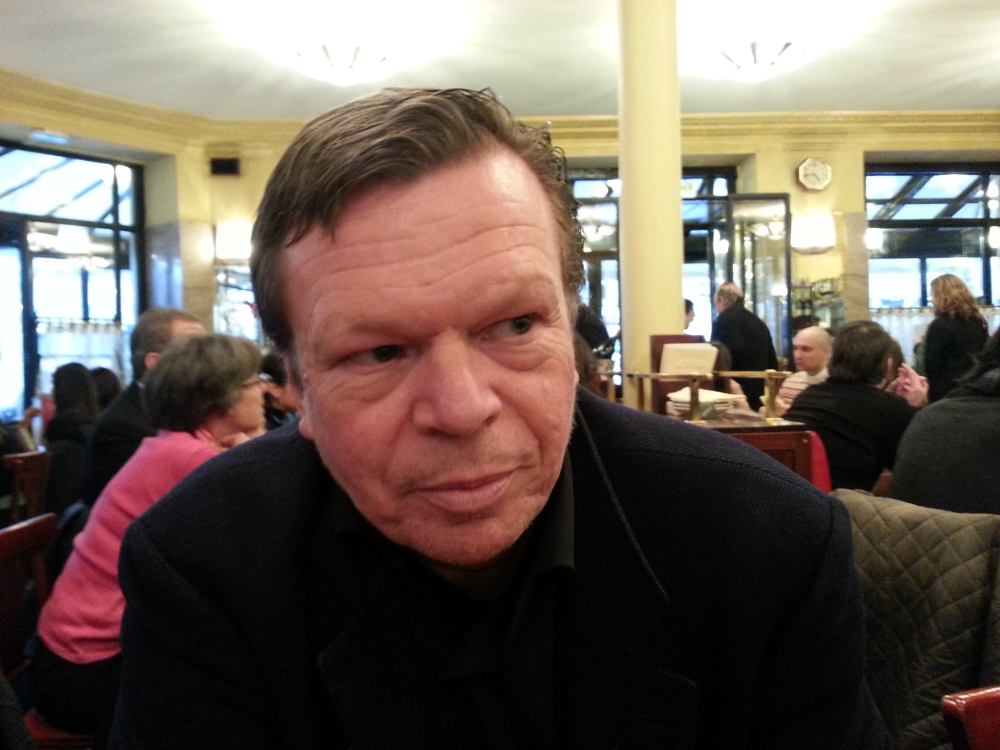
Peter is writer of the series The Heroine’s Journey and Hero’s Journey books, he has an MBA in Marketing, MBA in Financial Economics and graduated at university in Sociology and Communication Sciences.
Become a Great Storyteller in One Day
That’s why I set up The Power of your Story journey in the great cities of the world. A new way to use the power of your story. To guide you to life-changing, eye-opening movies, art, literature that truly have the power to enchant, enrich and inspire.
In this journey with Peter de Kuster you’ll explore your relationship with stories so far and your unique story identity will be sketched. You will be guided to movies, art, literature, myths that can put their finger on what you want to rewrite in your story, the feelings that you may often have had but perhaps never understood so clearly before; movies that open new perspectives and re-enchant the world for you.
You will be asked to complete a questionnaire in advance of your session and you’ll be given an instant story advice and movies to see to take away. Your full story advice and movies to see list will follow within a couple of days.
Practical Info
The price of this one day storytelling seminar is Euro 995 excluding VAT per person. There are special prices when you want to attend with three or more people.
You can reach Peter for questions about dates and the program by mailing him at peterdekuster@hotmail.nl
TIMETABLE
09.40 Tea & Coffee on arrival
10.00 Morning Session
13.00 Lunch Break
14.00 Afternoon Session
18.00 Drinks
Read on for a detailed breakdown of the Power of your Story itinerary.
What Can I Expect?
Here’s an outline of the THE POWER OF YOUR STORY journey.
Journey Outline
OLD STORIES
- What is your Story?
- Are you even trying to tell a Story?
- Old Stories (stories about you, your art, your clients, your money, your self promotion, your happiness, your health)
- Tell your current Story
- Is this Really Your Story?
YOUR NEW STORY
- The Premise of your Story. The Purpose of your Life and Art
- The words on your tombstone
- You ultimate mission, out loud
- The Seven Great Plots
- The Twelve Archetypal Heroines
- The One Great Story
- Purpose is Never Forgettable
- Questioning the Premise
- Lining up
- Flawed Alignment, Tragic Ending
- The Three Rules in Storytelling
- Write Your New Story
TURNING STORY INTO ACTION
- Turning your story into action
- The Story Effect
- Story Ritualizing
- The Storyteller and the art of story
- The Power of Your Story
- Storyboarding your creative process
- They Created and Lived Happily Ever After
 The Power of Your Story