Many stories, fairy tales and legends end with the discovery that the main character has made a journey to their development of the humility, empathy and knowledge of the challenges of ordinary life necessary to truly great leadership.
The Ruler
Goal: a harmonious and prosperous new life and business
Fear: chaos, loss of control
Task: take full responsibility for your life; find ways to express your deeper self in the world
Gift: mastery, responsibility, competence
STORY TIME
Give some thought to when, where, how, and how much the Ruler Story expresses itself in your life.
- How much or how little is the Ruler expressed in your life? Has it been expressed more in the past and present? Do you see it emerging more in your future? Is it expressed more at work, at home, with friends, in dreams or fantasies?
- Who are some friends or relations who seem influenced by the archetype of the Ruler?
- Is there anything you wish were different about the expression of the Ruler in your life?
- Since each archetype expresses itself in many different ways, take some time to describe or otherwise portray (e.g. choose favorite heroes and heroines from books) the Ruler as it is expressed or could be expressed in your life. What does or would it look like? How does or would it act? In what setting does or would it feel most at home?
We invest Hobbits with qualities that cannot be visualized. In my mind, they are good-hearted, bustling, chatty little creatures who live in twee houses or burrows, and dress like the merry men of Robin Hood–in smaller sizes, of course. They eat seven or eight times a day, like to take naps, have never been far from home and have eyes that grow wide at the sounds of the night. They are like children grown up or grown old, and when they rise to an occasion, it takes true heroism, for they are timid by nature and would rather avoid a fight.
Such notions about Hobbits can be found in “Lord of the Rings: The Fellowship of the Ring,” but the Hobbits themselves have been pushed off center stage. If the books are about brave little creatures who enlist powerful men and wizards to help them in a dangerous crusade, the movie is about powerful men and wizards who embark on a dangerous crusade, and take along the Hobbits. That is not true of every scene or episode, but by the end “Fellowship” adds up to more of a sword and sorcery epic than a realization of the more naive and guileless vision of J. R. R. Tolkien.
The Ring Trilogy embodies the kind of innocence that belongs to an earlier, gentler time. The Hollywood that made “The Wizard of Oz” might have been equal to it. But “Fellowship” is a film that comes after “Gladiator” and “Matrix,” and it instinctively ramps up to the genre of the overwrought special-effects action picture. That it transcends this genre–that it is a well-crafted and sometimes stirring adventure–is to its credit. But a true visualization of Tolkien’s Middle-earth it is not.
The trilogy is mostly about leaving places, going places, being places, and going on to other places, all amid fearful portents and speculations. There are a great many mountains, valleys, streams, villages, caves, residences, grottos, bowers, fields, high roads, low roads, and along them the Hobbits and their larger companions travel while paying great attention to mealtimes. Landscapes are described with the faithful detail of a Victorian travel writer. The travelers meet strange and fascinating characters along the way, some of them friendly, some of them not, some of them of an order far above Hobbits or even men. Sometimes they must fight to defend themselves or to keep possession of the ring, but mostly the trilogy is an unfolding, a quest, a journey, told in an elevated, archaic, romantic prose style that tests our capacity for the declarative voice.
“The Lord of the Rings” is not about a narrative arc or the growth of the characters, but about a long series of episodes in which the essential nature of the characters is demonstrated again and again (and again). The ring, which provides the purpose for the journey, serves Tolkien as the ideal MacGuffin, motivating an epic quest while mostly staying right there on a chain around Frodo Baggins’ neck.
Peter Jackson, the New Zealand director who masterminded this film (and two more to follow, in a $300 million undertaking), has made a work for, and of, our times. It will be embraced, I suspect, by many Tolkien fans and take on aspects of a cult. It is a candidate for many Oscars. It is an awesome production in its daring and breadth, and there are small touches that are just right; the Hobbits may not look like my idea of Hobbits (may, indeed, look like full-sized humans made to seem smaller through visual trickery), but they have the right combination of twinkle and pluck in their gaze–especially Elijah Wood as Frodo and Ian Holm as the worried Bilbo.
Yet the taller characters seem to stand astride the little Hobbit world and steal the story away. Gandalf the good wizard (Ian McKellen) and Saruman the treacherous wizard (Christopher Lee) and Aragorn (Viggo Mortensen), who is the warrior known as Strider, are so well-seen and acted, so fearsome in battle, that we can’t imagine the Hobbits getting anywhere without them. The elf Arwen (Liv Tyler), the Elf Queen Galadriel (Cate Blanchett) and Arwen’s father, Elrond (Hugo Weaving), are not small like literary elves (“very tall they were,” the book tells us), and here they tower like Norse gods and goddesses, accompanied by so much dramatic sound and lighting that it’s a wonder they can think to speak, with all the distractions.
Jackson has used modern special effects to great purpose in several shots, especially one where a massive wall of water forms and reforms into the wraiths of charging stallions. I like the way he handles crowds of Orcs in the big battle scenes, wisely knowing that in a film of this kind, realism has to be tempered with a certain fanciful fudging. The film is remarkably well made. But it does go on, and on, and on–more vistas, more forests, more sounds in the night, more fearsome creatures, more prophecies, more visions, more dire warnings, more close calls, until we realize this sort of thing can continue indefinitely. “This tale grew in the telling,” Tolkien tells us in the famous first words of his foreword; it’s as if Tolkien, and now Jackson, grew so fond of the journey, they dreaded the destination.
That “Fellowship of the Ring” doesn’t match my imaginary vision of Middle-earth is my problem, not yours. Perhaps it will look exactly as you think it should. But some may regret that the Hobbits have been pushed out of the foreground and reduced to supporting characters. And the movie depends on action scenes much more than Tolkien did. In a statement last week, Tolkien’s son Christopher, who is the “literary protector” of his father’s works, said, “My own position is that ‘The Lord of the Rings’ is peculiarly unsuitable to transformation into visual dramatic form.” That is probably true, and Jackson, instead of transforming it, has transmuted it, into a sword-and-sorcery epic in the modern style, containing many of the same characters and incidents.
The Power of Your Story Seminar
Amsterdam 17 April
You will examine with Peter de Kuster, founder of The Power of Your Story the way we tell stories about ourselves to ourselves — and, most important, the way we can change those stories to transform our business and personal lives.
“Your story is your life,” says Peter. As human beings, we continually tell ourselves stories — of success or failure; of power or victimhood; stories that endure for an hour, or a day, or an entire lifetime. We have stories about ourselves, our creative business, our customers ; about what we want and what we’re capable of achieving. Yet, while our stories profoundly affect how others see us and we see ourselves, too few of us even recognize that we’re telling stories, or what they are, or that we can change them — and, in turn, transform our very destinies.
Telling ourselves stories provides structure and direction as we navigate life’s challenges and opportunities, and helps us interpret our goals and skills. Stories make sense of chaos; they organize our many divergent experiences into a coherent thread; they shape our entire reality. And far too many of our stories, says Peter, are dysfunctional, in need of serious editing. First, he asks you to answer the question, “In which areas of my life is it clear that I cannot achieve my goals with the story I’ve got?” He then shows you how to create new, reality-based stories that inspire you to action, and take you where you want to go both in your work and personal life.
Our capacity to tell stories is one of our profoundest gifts. Peter’s approach to creating deeply engaging stories will give you the tools to wield the power of storytelling and forever change your business and personal life.
About Peter de Kuster
Peter de Kuster is the founder of The Heroine’s Journey & Hero’s Journey project, a storytelling firm which helps creative professionals to create careers and lives based on whatever story is most integral to their lifes and careers (values, traits, skills and experiences). Peter’s approach combines in-depth storytelling and marketing expertise, and for over 20 years clients have found it effective with a wide range of creative business issues.
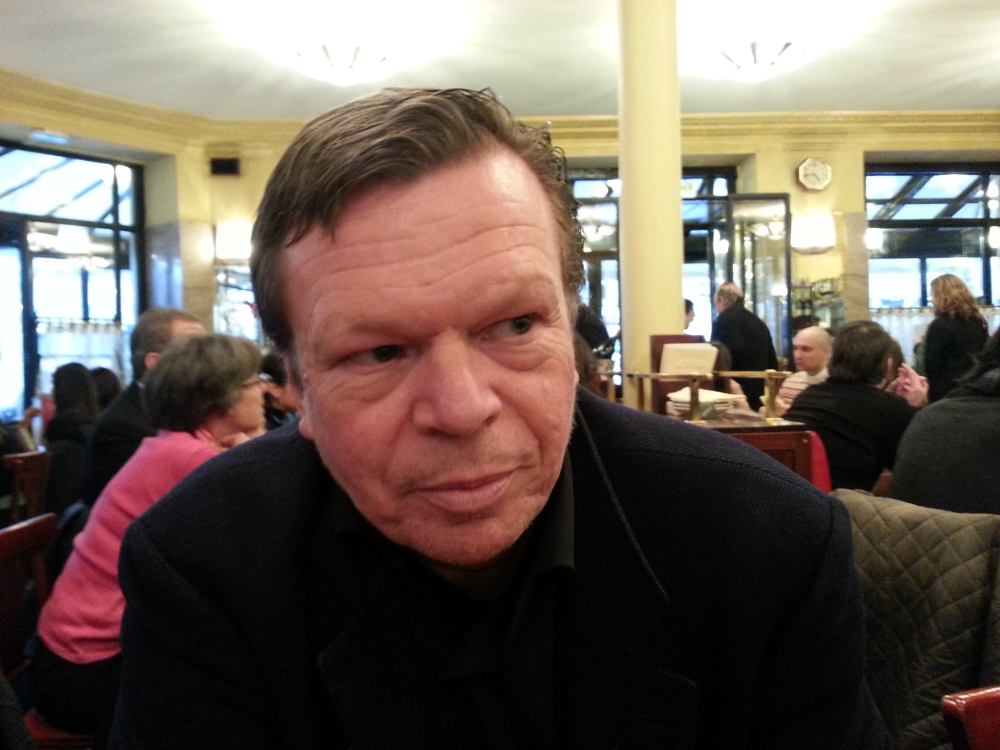
Peter is writer of the series The Heroine’s Journey and Hero’s Journey books, he has an MBA in Marketing, MBA in Financial Economics and graduated at university in Sociology and Communication Sciences.
Become a Great Storyteller in One Day
That’s why I set up The Power of your Story journey in the great cities of the world. A new way to use the power of your story. To guide you to life-changing, eye-opening movies, art, literature that truly have the power to enchant, enrich and inspire.
In this journey with Peter de Kuster you’ll explore your relationship with stories so far and your unique story identity will be sketched. You will be guided to movies, art, literature, myths that can put their finger on what you want to rewrite in your story, the feelings that you may often have had but perhaps never understood so clearly before; movies that open new perspectives and re-enchant the world for you.
You will be asked to complete a questionnaire in advance of your session and you’ll be given an instant story advice and movies to see to take away. Your full story advice and movies to see list will follow within a couple of days.
Practical Info
The price of this one day storytelling seminar is Euro 995 excluding VAT per person. There are special prices when you want to attend with three or more people.
You can reach Peter for questions about dates and the program by mailing him at peterdekuster@hotmail.nl
TIMETABLE
09.40 Tea & Coffee on arrival
10.00 Morning Session
13.00 Lunch Break
14.00 Afternoon Session
18.00 Drinks
Read on for a detailed breakdown of the Power of your Story itinerary.
What Can I Expect?
Here’s an outline of the THE POWER OF YOUR STORY journey.
Journey Outline
OLD STORIES
- What is your Story?
- Are you even trying to tell a Story?
- Old Stories (stories about you, your art, your clients, your money, your self promotion, your happiness, your health)
- Tell your current Story
- Is this Really Your Story?
YOUR NEW STORY
- The Premise of your Story. The Purpose of your Life and Art
- The words on your tombstone
- You ultimate mission, out loud
- The Seven Great Plots
- The Twelve Archetypal Heroines
- The One Great Story
- Purpose is Never Forgettable
- Questioning the Premise
- Lining up
- Flawed Alignment, Tragic Ending
- The Three Rules in Storytelling
- Write Your New Story
TURNING STORY INTO ACTION
- Turning your story into action
- The Story Effect
- Story Ritualizing
- The Storyteller and the art of story
- The Power of Your Story
- Storyboarding your creative process
- They Created and Lived Happily Ever After
 The Power of Your Story