We are aided on our journey by inner guides, or archetypes, each of which exemplifies a way of being on the journey. The Power of your Story explores twelve such inner guides: The Dreamer, The Independent, The Warrior, The Caregiver, The Explorer, The Rule Breaker, The Lover, The Creator, The Master, The Magician, The Sage and The Commediant. Each has a lesson to teach us, and each presides over a stage of the journey.
The inner guides are archetypes that have been with us since the dawn of time. We see them reflected in recurring images in art, literature, myth, music, movies and we know they are archetypal because they are found everywhere, in all times and places. Because the guides are truly archetypal, and hence reside as energy within the unconscious psychological life of all people everywhere, they exist both inside and outside the individual human.
They live in us, but even more importantly, we live in them. We can, therefore, find them by going inward in our own dreams, fantasies and often actions as well) or by going outward (to myth, legend, art, literature, movies, music and religion). Thus they provide images of the hero and heroines in our own story.
“The Adventures of Robin Hood” was made with sublime innocence and breathtaking artistry, at a time when its simple values rang true. In these cynical days when swashbucklers cannot be presented without an ironic subtext, this great 1938 film exists in an eternal summer of bravery and romance. We require no Freudian subtext, no revisionist analysis; it is enough that Robin wants to rob the rich, pay the poor and defend the Saxons not against all Normans, only the bad ones: “It’s injustice I hate, not the Normans.”
For all of its technical splendor, however, the film would not be a masterpiece without the casting–not just of Flynn and de Havilland, who are indispensable, but also of such dependable Warners’ supporting stars as Claude Rains, as the effete Prince John; Basil Rathbone, as the snaky Sir Guy of Gisbourne, and Patric Knowles, Eugene Pallette and Alan Hale as (respectively) Will Scarlett, Friar Tuck and Little John, the fearless Merry Men. Unlike modern films where superstars dominate every scene, the Hollywood films of the golden era have depth in writing and casting, so the story can resonate with more than one tone.
Because Errol Flynn in later life became a caricature of himself and a rather nasty man, it’s exhilarating to see him here at the dawn of his career. He was improbably handsome, but that wasn’t really the point: What made him a star was his lighthearted exuberance, the good cheer with which he embodies a role like Robin Hood. When George C. Scott was asked what he looked for in an actor, he mentioned “joy of performance,” and Flynn embodies that with a careless rapture. Watch his swagger as he enters John’s banquet hall and throws a deer down before the prince, full knowing that the punishment for poaching a deer is death. Surrounded by his enemies, he fearlessly accuses John of treason against his brother Richard the Lionhearted, and then fights his way out of the castle again. Another actor might have wanted to project a sense of uncertainty, or resolve, or danger; Flynn shows us a Robin Hood so supremely alive that the whole adventure is a lark. Yes, his eyes shift to note that the exit is being barred and guards are readying their swords, but he observes not in fear but in anticipation.
This is the scene at which Maid Marian first sees Robin, and we first see her. The shift in her feelings about Sir Robin is measured out scene by scene. It is not a sudden transition but a gradual dawning upon her that this is the man she loves, and that she must escape her arranged marriage to Gisbourne.
Their love scenes, so simple and direct, made me reflect that modern love scenes in action movies are somehow too realistic; they draw too much on psychology and not enough on romance and fable. It is touching and revealing to see the lovers in middle age in “Robin and Marian” (1976), with Sean Connery andAudrey Hepburn bridging the poignancy of their long separation, but how much more satisfying on an elementary level to see Flynn and de Havilland playing their characters as the instruments of fate; they come together not simply because of love or desire, but because they are so destined. Their union suggests the medieval ideal of chivalric love, in which marriage is a form of God’s will.
Stunt men were used in some shots in “The Adventures of Robin Hood.” But many daring scenes obviously use the real Flynn, who, like Douglas Fairbanks Sr. in the 1922 “Robin Hood,” wanted it known he took his chances. Some stunts are the same in both pictures, as when Robin cuts the rope holding a gate and then rides the rope up as the gate comes down. Others include carefree leaps from ankle-breaking heights, and of course the sword fights.
There are moments in “Robin Hood” as playful as a child’s game, as when Robin and his men rise to the bait of Prince John’s archery tournament. Are we to believe that the most wanted men in the kingdom could disguise themselves simply by pulling their hats low over their faces? And there are moments a little too obvious, as when Robin takes Marion to a part of Sherwood Forest occupied by some of the Saxons he has helped, and they skulk about like an engraving of tired and huddled masses, rousing themselves to express gratitude to him. We knew that Robin Hood took from the rich to give to the poor, but we didn’t know he ran his own refugee camp.
There are also moments of bravado, as when an arrow extinguishes a candle on its way to killing a Norman. And when Robin’s arrow splits his opponent’s in the archery tourney. And the great sword fight between Robin and Sir Guy that cuts between the men and their shadows. And Technicolor is never more glorious than in the big outdoor scenes of pageantry, such as the assembling of the court for the tournament.
The intimate scenes have a directness that is almost bold. When Robin and Marian look in each other’s eyes and confess their love, they do it without edge, without spin, without arch poetry. The movie knows when to be simple. And it is the bond between Robin and Marian, after all, that stands at the heart of the movie. The ideal hero must do good, defeat evil, have a good time and win the girl. “The Adventures of Robin Hood” is like a textbook on how to get that right.
The Power of Your Story Seminar
Amsterdam 17 April
You will examine with Peter de Kuster, founder of The Power of Your Story the way we tell stories about ourselves to ourselves — and, most important, the way we can change those stories to transform our business and personal lives.
“Your story is your life,” says Peter. As human beings, we continually tell ourselves stories — of success or failure; of power or victimhood; stories that endure for an hour, or a day, or an entire lifetime. We have stories about ourselves, our creative business, our customers ; about what we want and what we’re capable of achieving. Yet, while our stories profoundly affect how others see us and we see ourselves, too few of us even recognize that we’re telling stories, or what they are, or that we can change them — and, in turn, transform our very destinies.
Telling ourselves stories provides structure and direction as we navigate life’s challenges and opportunities, and helps us interpret our goals and skills. Stories make sense of chaos; they organize our many divergent experiences into a coherent thread; they shape our entire reality. And far too many of our stories, says Peter, are dysfunctional, in need of serious editing. First, he asks you to answer the question, “In which areas of my life is it clear that I cannot achieve my goals with the story I’ve got?” He then shows you how to create new, reality-based stories that inspire you to action, and take you where you want to go both in your work and personal life.
Our capacity to tell stories is one of our profoundest gifts. Peter’s approach to creating deeply engaging stories will give you the tools to wield the power of storytelling and forever change your business and personal life.
About Peter de Kuster
Peter de Kuster is the founder of The Heroine’s Journey & Hero’s Journey project, a storytelling firm which helps creative professionals to create careers and lives based on whatever story is most integral to their lifes and careers (values, traits, skills and experiences). Peter’s approach combines in-depth storytelling and marketing expertise, and for over 20 years clients have found it effective with a wide range of creative business issues.
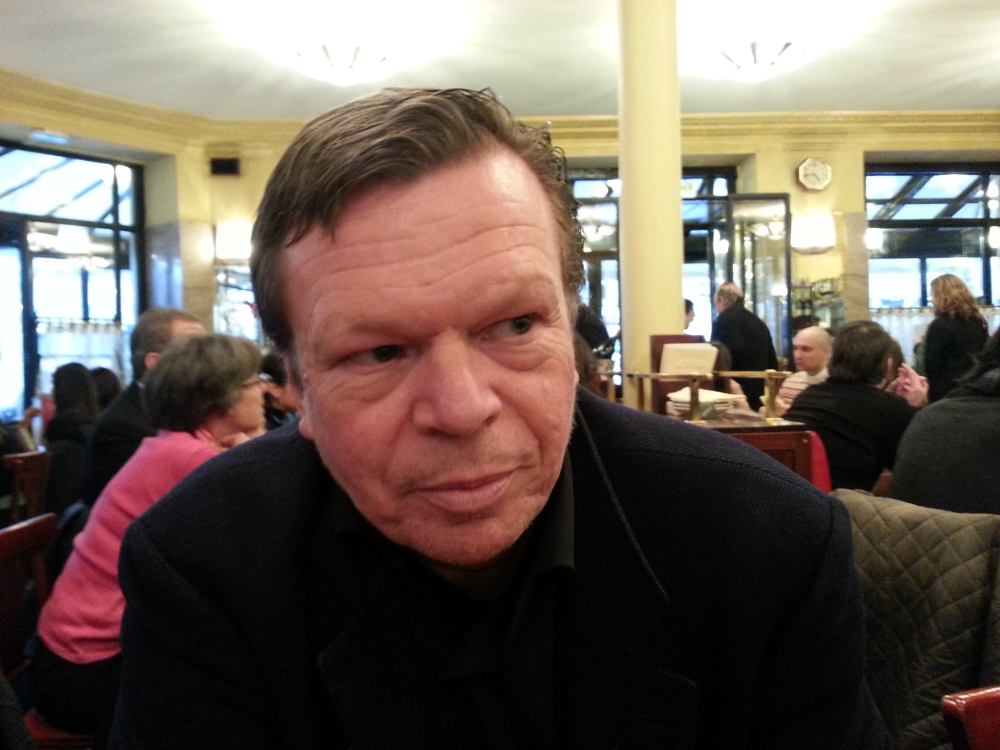
Peter is writer of the series The Heroine’s Journey and Hero’s Journey books, he has an MBA in Marketing, MBA in Financial Economics and graduated at university in Sociology and Communication Sciences.
Become a Great Storyteller in One Day
That’s why I set up The Power of your Story journey in the great cities of the world. A new way to use the power of your story. To guide you to life-changing, eye-opening movies, art, literature that truly have the power to enchant, enrich and inspire.
In this journey with Peter de Kuster you’ll explore your relationship with stories so far and your unique story identity will be sketched. You will be guided to movies, art, literature, myths that can put their finger on what you want to rewrite in your story, the feelings that you may often have had but perhaps never understood so clearly before; movies that open new perspectives and re-enchant the world for you.
You will be asked to complete a questionnaire in advance of your session and you’ll be given an instant story advice and movies to see to take away. Your full story advice and movies to see list will follow within a couple of days.
Practical Info
The price of this one day storytelling seminar is Euro 995 excluding VAT per person. There are special prices when you want to attend with three or more people.
You can reach Peter for questions about dates and the program by mailing him at peterdekuster@hotmail.nl
TIMETABLE
09.40 Tea & Coffee on arrival
10.00 Morning Session
13.00 Lunch Break
14.00 Afternoon Session
18.00 Drinks
Read on for a detailed breakdown of the Power of your Story itinerary.
What Can I Expect?
Here’s an outline of the THE POWER OF YOUR STORY journey.
Journey Outline
OLD STORIES
- What is your Story?
- Are you even trying to tell a Story?
- Old Stories (stories about you, your art, your clients, your money, your self promotion, your happiness, your health)
- Tell your current Story
- Is this Really Your Story?
YOUR NEW STORY
- The Premise of your Story. The Purpose of your Life and Art
- The words on your tombstone
- You ultimate mission, out loud
- The Seven Great Plots
- The Twelve Archetypal Heroines
- The One Great Story
- Purpose is Never Forgettable
- Questioning the Premise
- Lining up
- Flawed Alignment, Tragic Ending
- The Three Rules in Storytelling
- Write Your New Story
TURNING STORY INTO ACTION
- Turning your story into action
- The Story Effect
- Story Ritualizing
- The Storyteller and the art of story
- The Power of Your Story
- Storyboarding your creative process
- They Created and Lived Happily Ever After
 The Power of Your Story