The Rule Breaker destroys what is not working in our lives and business, for ourselves and the people we care about.
The Rule Breaker
Goal: Destroy what is not working. Growth, metamorphosis
Fear: Stagnation or annihiliation.
Task: Learn to let go, turn it over
Gift: Radical freedom
STORY TIME
Give some thought to when, where, how, and how much the Rule Breaker Story expresses itself in your life.
- How much or how little is the Rule Breaker expressed in your life? Has it been expressed more in the past and present? Do you see it emerging more in your future? Is it expressed more at work, at home, with friends, in dreams or fantasies?
- Who are some friends or relations who seem influenced by the archetype of the Rule Breaker?
- Is there anything you wish were different about the expression of the Rule Breaker in your life?
- Since each archetype expresses itself in many different ways, take some time to describe or otherwise portray (e.g. choose favorite heroes and heroines from books) the Rule Breaker as it is expressed or could be expressed in your life. What does or would it look like? How does or would it act? In what setting does or would it feel most at home?
“Bonnie and Clyde” is a milestone in the history of American movies, a work of truth and brilliance. It is also pitilessly cruel, filled with sympathy, nauseating, funny, heartbreaking, and astonishingly beautiful. If it does not seem that those words should be strung together, perhaps that is because movies do not very often reflect the full range of human life.
The lives in this case belonged, briefly, to Clyde Barrow and Bonnie Parker. They were two nobodies who got their pictures in the paper by robbing banks and killing people. They weren’t very good at the bank robbery part of it, but they were fairly good at killing people and absolutely first-class at getting their pictures in the paper.
Bonnie was a gum-chewing waitress and Clyde was a two-bit hood out on parole. But from the beginning, they both seemed to have the knack of entertaining people. Bonnie wrote ballads and mailed them in with pictures Clyde took with his Kodak. They seemed to consider themselves public servants, bringing a little sparkle to the poverty and despair of the Dust Bowl during the early Depression years.
“Good afternoon,” Clyde would say when they walked into a bank. “This is the Barrow Gang.” In a way Bonnie and Clyde were pioneers, consolidating the vein of violence in American history and exploiting it, for the first time in the mass media.
In “Bonnie and Clyde,” real people die. Before they die they suffer, horribly. Before they suffer they laugh, and play checkers, and make love, or try to. These become people we know, and when they die it is not at all pleasant to be in the audience.
When people are shot in “Bonnie and Clyde.” they are literally blown to bits. Perhaps that seems shocking. But perhaps at this time, it is useful to be reminded that bullets really do tear skin and bone, and that they don’t make nice round little holes like the Swiss cheese effect in Fearless Fosdick.
When C.W. Moss takes the wounded Bonnie and Clyde to his father’s home, the old man snorts: “What’d they ever do for you boy? Didn’t even get your name in the paper.” Is that a funny line, or a tragic one?
The performances throughout are flawless. Warren Beatty and Faye Dunaway, in the title roles, surpass anything they have done on the screen before and establish themselves (somewhat to my surprise) as major actors.
Michael J. Pollard, as C.W. Moss, the driver and mechanic for the gang, achieves a mixture of moronic good humor and genuine pathos that is unforgettable. When Bonnie tells him, “We rob banks,” and asks him to come along, he says nothing. But the expression on his face and the movements of his body create a perfect, delightful moment.
Gene Hackman and Estelle Parsons play Buck and Blanche Barrow, the other members of the gang, as inarticulate, simple, even good – willed. When Buck is reunited with his kid brother, they howl with glee and punch each other to disguise the truth that they have nothing to say. After the gang has shot its way out of a police trap and Buck is mortally wounded, Blanche’s high, mindless scream in the getaway car provides, for me, a very adequate vision of hell.
This is pretty clearly the best American film of the year. It is also a landmark. Years from now it is quite possible that “Bonnie and Clyde” will be seen as the definitive film of the 1960s, showing with sadness, humor and unforgiving detail what one society had come to. The fact that the story is set 35 years ago doesn’t mean a thing. It had to be set sometime. But it was made now and it’s about us.
The Power of Your Story Seminar
Amsterdam 17 April
You will examine with Peter de Kuster, founder of The Power of Your Story the way we tell stories about ourselves to ourselves — and, most important, the way we can change those stories to transform our business and personal lives.
“Your story is your life,” says Peter. As human beings, we continually tell ourselves stories — of success or failure; of power or victimhood; stories that endure for an hour, or a day, or an entire lifetime. We have stories about ourselves, our creative business, our customers ; about what we want and what we’re capable of achieving. Yet, while our stories profoundly affect how others see us and we see ourselves, too few of us even recognize that we’re telling stories, or what they are, or that we can change them — and, in turn, transform our very destinies.
Telling ourselves stories provides structure and direction as we navigate life’s challenges and opportunities, and helps us interpret our goals and skills. Stories make sense of chaos; they organize our many divergent experiences into a coherent thread; they shape our entire reality. And far too many of our stories, says Peter, are dysfunctional, in need of serious editing. First, he asks you to answer the question, “In which areas of my life is it clear that I cannot achieve my goals with the story I’ve got?” He then shows you how to create new, reality-based stories that inspire you to action, and take you where you want to go both in your work and personal life.
Our capacity to tell stories is one of our profoundest gifts. Peter’s approach to creating deeply engaging stories will give you the tools to wield the power of storytelling and forever change your business and personal life.
About Peter de Kuster
Peter de Kuster is the founder of The Heroine’s Journey & Hero’s Journey project, a storytelling firm which helps creative professionals to create careers and lives based on whatever story is most integral to their lifes and careers (values, traits, skills and experiences). Peter’s approach combines in-depth storytelling and marketing expertise, and for over 20 years clients have found it effective with a wide range of creative business issues.
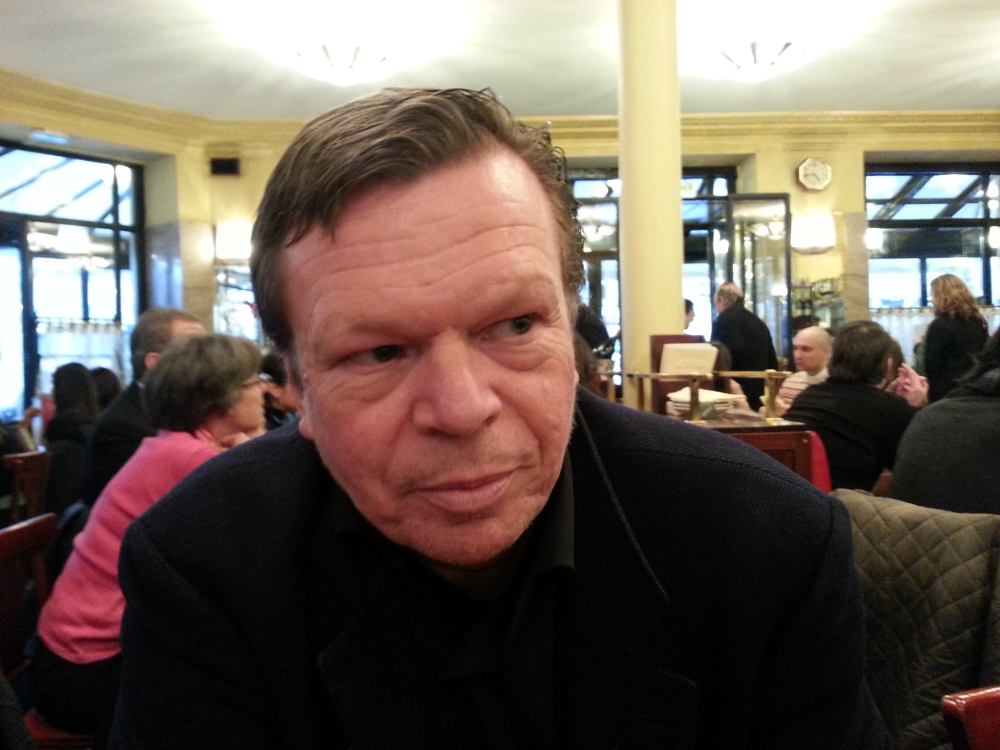
Peter is writer of the series The Heroine’s Journey and Hero’s Journey books, he has an MBA in Marketing, MBA in Financial Economics and graduated at university in Sociology and Communication Sciences.
Become a Great Storyteller in One Day
That’s why I set up The Power of your Story journey in the great cities of the world. A new way to use the power of your story. To guide you to life-changing, eye-opening movies, art, literature that truly have the power to enchant, enrich and inspire.
In this journey with Peter de Kuster you’ll explore your relationship with stories so far and your unique story identity will be sketched. You will be guided to movies, art, literature, myths that can put their finger on what you want to rewrite in your story, the feelings that you may often have had but perhaps never understood so clearly before; movies that open new perspectives and re-enchant the world for you.
You will be asked to complete a questionnaire in advance of your session and you’ll be given an instant story advice and movies to see to take away. Your full story advice and movies to see list will follow within a couple of days.
Practical Info
The price of this one day storytelling seminar is Euro 995 excluding VAT per person. There are special prices when you want to attend with three or more people.
You can reach Peter for questions about dates and the program by mailing him at peterdekuster@hotmail.nl
TIMETABLE
09.40 Tea & Coffee on arrival
10.00 Morning Session
13.00 Lunch Break
14.00 Afternoon Session
18.00 Drinks
Read on for a detailed breakdown of the Power of your Story itinerary.
What Can I Expect?
Here’s an outline of the THE POWER OF YOUR STORY journey.
Journey Outline
OLD STORIES
- What is your Story?
- Are you even trying to tell a Story?
- Old Stories (stories about you, your art, your clients, your money, your self promotion, your happiness, your health)
- Tell your current Story
- Is this Really Your Story?
YOUR NEW STORY
- The Premise of your Story. The Purpose of your Life and Art
- The words on your tombstone
- You ultimate mission, out loud
- The Seven Great Plots
- The Twelve Archetypal Heroines
- The One Great Story
- Purpose is Never Forgettable
- Questioning the Premise
- Lining up
- Flawed Alignment, Tragic Ending
- The Three Rules in Storytelling
- Write Your New Story
TURNING STORY INTO ACTION
- Turning your story into action
- The Story Effect
- Story Ritualizing
- The Storyteller and the art of story
- The Power of Your Story
- Storyboarding your creative process
- They Created and Lived Happily Ever After
 The Power of Your Story