Both Rulers and Magicians want to control reality and to change negative circumstances into positive ones. Sages have little or no need to control or change the world; they just want to understand it. The Sage’s path is the journey to find out the truth – about ourselves, our world, our life and work. At its highest leves, it is not simply about finding knowledge, but about becoming wise. It is the Sage within that resonate to the adage, ‘That ye shall know the truth, and the truth shall set you free”
The Sage
Goal: Truth, understanding
Fear: Deception, illusion
Task: Attainment of knowledge, wisdom, enlightenment
Gift: Wisdom, objectivity, direct honest feedback
STORY TIME
Give some thought to when, where, how, and how much the Sage Story expresses itself in your life.
- How much or how little is the Sage expressed in your life? Has it been expressed more in the past and present? Do you see it emerging more in your future? Is it expressed more at work, at home, with friends, in dreams or fantasies?
- Who are some friends or relations who seem influenced by the archetype of the Sage?
- Is there anything you wish were different about the expression of the Sage in your life?
- Since each archetype expresses itself in many different ways, take some time to describe or otherwise portray (e.g. choose favorite heroes and heroines from books) the Sage as it is expressed or could be expressed in your life. What does or would it look like? How does or would it act? In what setting does or would it feel most at home?
They say The Da Vinci Code has sold more copies than any book since the Bible. Good thing it has a different ending. Dan Brown’s novel is utterly preposterous; Ron Howard’s movie is preposterously entertaining. Both contain accusations against the Catholic Church and its order of Opus Dei that would be scandalous if anyone of sound mind could possibly entertain them. I know there are people who believe Brown’s fantasies about the Holy Grail, the descendants of Jesus, the Knights Templar, Opus Dei and the true story of Mary Magdalene. This has the advantage of distracting them from the theory that the Pentagon was not hit by an airplane.
Let us begin, then, by agreeing that The Da Vinci Code is a work of fiction. And that since everyone has read the novel, I need only give away one secret — that the movie follows the book religiously. While the book is a potboiler written with little grace and style, it does supply an intriguing plot. Luckily, Ron Howard is a better filmmaker than Dan Brown is a novelist; he follows Brown’s formula (exotic location, startling revelation, desperate chase scene, repeat as needed) and elevates it into a superior entertainment, with Tom Hanks as a theo-intellectual Indiana Jones.
Hanks stars as Robert Langdon, a Harvard symbologist in Paris for a lecture when Inspector Fache (Jean Reno) informs him of the murder of museum curator Jacques Sauniere (Jean-Pierre Marielle). This poor man has been shot and will die late at night inside the Louvre; his wounds, although mortal, fortunately leave him time enough to conceal a safe deposit key, strip himself, cover his body with symbols written in his own blood, arrange his body in a pose and within a design by Da Vinci, and write out, also in blood, an encrypted message, a scrambled numerical sequence and a footnote to Sophie Neveu (Audrey Tautou), the pretty French policewoman whom he raised after the death of her parents. Most people are content with a dying word or two; Jacques leaves us with a film treatment.
Having read the novel, we know what happens then. Sophie warns Robert he is in danger from Fache, and they elude capture in the Louvre and set off on a quest that leads them to the vault of a private bank, to the French villa of Sir Leigh Teabing (Ian McKellen), to the Temple Church in London, to an isolated Templar church in the British countryside, to a hidden crypt and then back to the Louvre again. The police, both French and British, are one step behind them all of this time, but Sophie and Robert are facile, inventive and daring. Also, perhaps, they have God on their side.
This series of chases, discoveries and escapes is intercut with another story, involving an albino named Silas (Paul Bettany), who works under the command of the Teacher, a mysterious figure at the center of a conspiracy to conceal the location of the Holy Grail, what it really is, and what that implies. The conspiracy involves members of Opus Dei, a society of Catholics who in real life (I learn from a recent issue of the Spectator) are rather conventionally devout and prayerful. Although the movie describes their practices as “maso-chastity,” not all of them are chaste and hardly any practice self-flagellation. In the months ahead, I would advise Opus Dei to carefully scrutinize membership applications.
Opus Dei works within but not with the church, which also harbors a secret cell of cardinals who are in on the conspiracy (the pope and most other Catholics apparently don’t have backstage passes).
These men keep a secret that, if known, could destroy the church. That’s why they keep it. If I were their adviser, I would point out that by preserving the secret, they preserve the threat to the church, and the wisest strategy would have been to destroy the secret, say, 1,000 years ago.
But one of the fascinations of the Catholic Church is that it is the oldest continuously surviving organization in the world, and that’s why movies like “The Da Vinci Code” are more fascinating than thrillers about religions founded, for example, by a science-fiction author in the 1950s. All of the places in “The Da Vinci Code” really exist, though the last time I visited the Temple Church I was disappointed to find it closed for “repairs.” A likely story.
Tom Hanks, Audrey Tautou and Jean Reno do a good job of not overplaying their roles, and Sir Ian McKellen overplays his in just the right way, making Sir Leigh into a fanatic whose study just happens to contain all the materials for an audio-visual presentation that briefs his visitors on the secrets of Da Vinci’s “The Last Supper” and other matters. Apparently he keeps in close touch with other initiates. On the one hand, we have a conspiracy that lasts 2,000 years and threatens the very foundations of Christianity, and on the other hand a network of rich dilettantes who resemble a theological branch of the Baker Street Irregulars.
Yes, the plot is absurd, but then most movie plots are absurd. That’s what we pay to see. What Ron Howard brings to the material is tone and style, and an aura of mystery that is undeniable. He begins right at the top; Columbia Pictures logo falls into shadow as Hans Zimmer’s music sounds simultaneously liturgical and ominous. The murder scene in the Louvre is creepy in a ritualistic way, and it’s clever the way Langdon is able to look at letters, numbers and symbols and mentally rearrange them to yield their secrets.
The movie works; it’s involving, intriguing and constantly seems on the edge of startling revelations. After it’s over and we’re back on the street, we wonder why this crucial secret needed to be protected by the equivalent of a brain-twister puzzle crossed with a scavenger hunt. The trail that Robert and Sophie follow is so difficult and convoluted that it seems impossible that anyone, including them, could ever follow it. The secret needs to be protected up to a point; beyond that it is absolutely lost, and the whole point of protecting it is beside the point. Here’s another question: Considering where the trail begins, isn’t it sort of curious where it leads? Still, as T.S. Eliot wrote, “In my beginning is my end.” Maybe he was on to something.
The Power of Your Story Seminar
Amsterdam 17 April
You will examine with Peter de Kuster, founder of The Power of Your Story the way we tell stories about ourselves to ourselves — and, most important, the way we can change those stories to transform our business and personal lives.
“Your story is your life,” says Peter. As human beings, we continually tell ourselves stories — of success or failure; of power or victimhood; stories that endure for an hour, or a day, or an entire lifetime. We have stories about ourselves, our creative business, our customers ; about what we want and what we’re capable of achieving. Yet, while our stories profoundly affect how others see us and we see ourselves, too few of us even recognize that we’re telling stories, or what they are, or that we can change them — and, in turn, transform our very destinies.
Telling ourselves stories provides structure and direction as we navigate life’s challenges and opportunities, and helps us interpret our goals and skills. Stories make sense of chaos; they organize our many divergent experiences into a coherent thread; they shape our entire reality. And far too many of our stories, says Peter, are dysfunctional, in need of serious editing. First, he asks you to answer the question, “In which areas of my life is it clear that I cannot achieve my goals with the story I’ve got?” He then shows you how to create new, reality-based stories that inspire you to action, and take you where you want to go both in your work and personal life.
Our capacity to tell stories is one of our profoundest gifts. Peter’s approach to creating deeply engaging stories will give you the tools to wield the power of storytelling and forever change your business and personal life.
About Peter de Kuster
Peter de Kuster is the founder of The Heroine’s Journey & Hero’s Journey project, a storytelling firm which helps creative professionals to create careers and lives based on whatever story is most integral to their lifes and careers (values, traits, skills and experiences). Peter’s approach combines in-depth storytelling and marketing expertise, and for over 20 years clients have found it effective with a wide range of creative business issues.
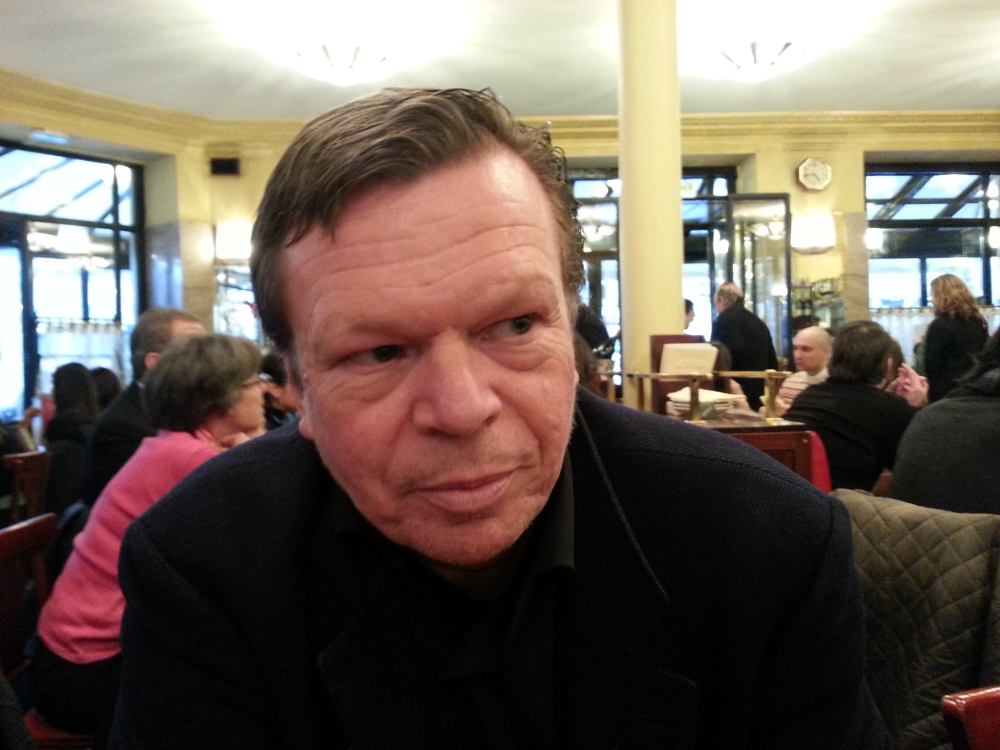
Peter is writer of the series The Heroine’s Journey and Hero’s Journey books, he has an MBA in Marketing, MBA in Financial Economics and graduated at university in Sociology and Communication Sciences.
Become a Great Storyteller in One Day
That’s why I set up The Power of your Story journey in the great cities of the world. A new way to use the power of your story. To guide you to life-changing, eye-opening movies, art, literature that truly have the power to enchant, enrich and inspire.
In this journey with Peter de Kuster you’ll explore your relationship with stories so far and your unique story identity will be sketched. You will be guided to movies, art, literature, myths that can put their finger on what you want to rewrite in your story, the feelings that you may often have had but perhaps never understood so clearly before; movies that open new perspectives and re-enchant the world for you.
You will be asked to complete a questionnaire in advance of your session and you’ll be given an instant story advice and movies to see to take away. Your full story advice and movies to see list will follow within a couple of days.
Practical Info
The price of this one day storytelling seminar is Euro 995 excluding VAT per person. There are special prices when you want to attend with three or more people.
You can reach Peter for questions about dates and the program by mailing him at peterdekuster@hotmail.nl
TIMETABLE
09.40 Tea & Coffee on arrival
10.00 Morning Session
13.00 Lunch Break
14.00 Afternoon Session
18.00 Drinks
Read on for a detailed breakdown of the Power of your Story itinerary.
What Can I Expect?
Here’s an outline of the THE POWER OF YOUR STORY journey.
Journey Outline
OLD STORIES
- What is your Story?
- Are you even trying to tell a Story?
- Old Stories (stories about you, your art, your clients, your money, your self promotion, your happiness, your health)
- Tell your current Story
- Is this Really Your Story?
YOUR NEW STORY
- The Premise of your Story. The Purpose of your Life and Art
- The words on your tombstone
- You ultimate mission, out loud
- The Seven Great Plots
- The Twelve Archetypal Heroines
- The One Great Story
- Purpose is Never Forgettable
- Questioning the Premise
- Lining up
- Flawed Alignment, Tragic Ending
- The Three Rules in Storytelling
- Write Your New Story
TURNING STORY INTO ACTION
- Turning your story into action
- The Story Effect
- Story Ritualizing
- The Storyteller and the art of story
- The Power of Your Story
- Storyboarding your creative process
- They Created and Lived Happily Ever After
 The Power of Your Story