The hero’s journey includes three major stages: preparation, the journey and the return. During the preparation stage, we are challenged to prove our competence, our courage, our humanity and our fidelity to high ideals. On the journey, we leave the safety of the family or tribe and embark on a quest where we encounter new travel companions, challenges, love and new treasures. But most important, our story about ourselves and thus ourselves, is transformed. In myth that transformation is often symbolized by the finding of a treasure. On our return from the quest, we become Masters of our own universe, which is transformed because we are changed. But we must also continually be reborn and renewed or we become tyrants, clinging dogmatically to our old truts to the detriment of our universe. Whenever we lose our sense of integrity and wholeness or begin to feel inadequate to current life challenges, we must embark on the quest again.
Preparation
The first four archetypes help us prepare for the journey. We begin dreaming and from the Dreamer we learn optimism and trust. When we experience the ‘fall’ we become Independent, we learn that we need to provide for ourselves and stop relying on others to take care for us. When the Warrior comes in to our lives, we learn to set goals and develop strategies for achieving them, strategies that almost always require the development of discipline and courage. When the Caregiver becomes active, we learn to take care of others, and eventually to care for ourselves as well. These four attributes – optimism, the capacity to support yourself, the courage to fight for yourself and others and compassion and care for yourself and others, together provide the basic skills for living in society. But almost always, we still feel unsatisfied if this is all we can do, even though we have learned what is necessary to be happy, passionate and successful in the world.
The Journey
We begin to yearn for something beyond ourselves and become Explorers, searching for that ineffable something that will satisfy. Answering the call and embarking on the journey, we find that soon we are experiencing privation and suffering as the Rule Breaker takes away much that had seemed essential to our lives. It is complemented, however, by an initiation into Eros, the Lover, the Passion as we find ourselves in love with people, causes, places, work. This love is so strong it requires commitment – and we are no longer free. The treasure that emerges out of this encounter with breaking the rules and commitment to love is the birth of the true self. The Creator helps us begin to express this self in the world and prepares us to return to our world. These four abilities, to strive, to let go, to love and to create – teach us the creative, innovation, storytelling process, to re-imagine the old story and tell the new story. The process prepares us to return to our world and change our lives.
The Return
When we return, we realize that we are the Masters of our world. At first we may be disappointed at the state of this realm. But as we act on our new story and are more fully true to our deeper sense of identity, the wasteland begins to bloom. As the Magician is activated in our lives, we become adept at transforming oursleves and others so that our world can continually be renewed. However we are not completely fulfilled or happy until we face our own subjectivity and so the Sage helps us know what truth really is. As we learn to both accept our subjectivity and let go of imprisonment to illusions and petty desires, we are able to reach a state of nonattachment in which we can be free. We are then ready to open to the Commediant and learn to live joyously in the moment, without worrying about tomorrow. This final set of attainments – taking total responsibility for our lives, transforming ourselves and others, nonattachment and a commitment to truth, and a capacity for joy and spontaneity – is itself the reward for our journey.
The Spiral Nature of the Journey
Thinking of the hero & heroine moving through stages of preparation, journey and return, and being aided by twelve archetypes in order, is useful as a teaching device, but in most cases, of course, growth really does not happen in such defined, linear way. Our guides come to to us when they – and at some level we – choose.
The pattern is more like a spiral, the final stage of the journey, epitomized by the archetype of the Commediant, folds back into the first archetype, the Dreamer, but at a higher level than before. This time, the Dreamer is wiser about life. On the spiral journey, we may encounter each archetype many times, and in the process gains new gifts at higher or deeper levels of development. Each encounter enriches your story. Archetypes we have not yet experienced are like holes in your story; experiences that we have little or no way of understanding simply pass enough.
Has there ever been a film where the music more perfectly suited the action than in Carol Reed’s “The Third Man”? The score was performed on a zither by Anton Karas, who was playing in a Vienna beerhouse one night when Reed heard him. The sound is jaunty but without joy, like whistling in the dark. It sets the tone; the action begins like an undergraduate lark and then reveals vicious undertones.
The story begins with a spoken prologue (“I never knew the old Vienna, before the war. . .”). The shattered postwar city has been divided into French, American, British and Russian zones, each with its own cadre of suspicious officials. Into this sinkhole of intrigue falls an American innocent: Holly Martins (Joseph Cotton), alcoholic author of pulp Westerns. He has come at the invitation of his college chum Harry Lime. But Lime is being buried when Martins arrives in Vienna.
How did Lime die? That question is the engine that drives the plot, as Martins plunges into the murk that Lime left behind. Calloway (Trevor Howard), the British officer in charge, bluntly says Lime was an evil man, and advises Holly to take the next train home. But Harry had a girl named Anna (Alida Valli), who Holly sees at Lime’s grave, and perhaps she has some answers. Certainly Holly has fallen in love with her, although his trusting Yankee heart is no match for her defenses.
“The Third Man” (1949) was made by men who knew the devastation of Europe at first hand. Carol Reed worked for the British Army’s wartime documentary unit, and the screenplay was by Graham Greene, who not only wrote about spies but occasionally acted as one. Reed fought with David O. Selznick, his American producer, over every detail of the movie; Selznick wanted to shoot on sets, use an upbeat score and cast Noel Coward as Harry Lime. His film would have been forgotten in a week. Reed defied convention by shooting entirely on location in Vienna, where mountains of rubble stood next to gaping bomb craters, and the ruins of empire supported a desperate black market economy. And he insisted on Karas’ zither music (“The Third Man Theme” was one of 1950’s biggest hits).
Reed and his Academy Award-winning cinematographer, Robert Krasker, also devised a reckless, unforgettable visual style. More shots, I suspect, are tilted than are held straight; they suggest a world out of joint. There are fantastic oblique angles. Wide-angle lenses distort faces and locations. And the bizarre lighting makes the city into an expressionist nightmare. (During a stakeout for Lime, a little balloon man wanders onto the scene, and his shadow is a monster three stories high). Vienna in “The Third Man” is a more particular and unmistakable *place* than almost any other location in the history of the movies; the action fits the city like a hand slipping on a glove.
Then there are the faces: Joseph Cotton’s open, naive face contrasts with the “friends” of Harry Lime: the corrupt “Baron” Kurtz (Ernst Deutsch); the shifty Dr. Winkel (Erich Ponto), the ratlike Popescu (Siegfried Breuer). Even a little boy with a rubber ball looks like a wizened imp. The only trusting faces are those of innocents like the hall porter (Paul Hoerbiger) who tells Holly, “There was another man . . . a third man. . .” and the beefy Sgt. Paine (Bernard Lee), Calloway’s aide, who levels the drunken Holly with a shot to the chin and then apologizes. Even the resident exiles are corrupt; Crabbin (Wilfrid Hyde-White), the head of the discussion group, chatters about culture while smoothly maneuvering his mistress out of sight through doors and up stairs.
As for Harry Lime: He allows Orson Welles to make the most famous entrance in the history of the movies, and one of the most famous speeches. By the time Lime finally appears we have almost forgotten Welles is even *in* the movie. The sequence is unforgettable: the meow of the cat in the doorway, the big shoes, the defiant challenge by Holly, the light in the window, and then the shot, pushing in, on Lime’s face, enigmatic and teasing, as if two college chums had been caught playing a naughty prank.
The famous speech comes during an uneasy ride on a giant Ferris wheel; at one point, Lime slides open the door of the car they are riding in, and Holly uneasily wraps an arm around a post. Harry tries to justify himself: “You know what the fellow said: In Italy for 30 years under the Borgias they had warfare, terror, murder and bloodshed, but they produced Michelangelo, Leonardo da Vinci and the Renaissance. In Switzerland they had brotherly love–they had 500 years of democracy and peace, and what did that produce? The cuckoo clock.” (Greene says this speech was written by Welles.)
The emotional heart of the movie is Holly’s infatuation with Anna, who will love Harry and be grateful to him no matter what she learns. The scenes between Holly and Anna are enriched by tiny details, as when they visit Harry’s apartment and she opens a drawer without looking–because she already knows what will be inside. Or the way she sometimes slips and calls Holly “Harry.” Everyone in the movie has trouble with names. Holly calls Calloway “Callahan,” and Dr. Winkle insists on “VINK-ell!” And the name on Harry Lime’s tombstone is wrong, too.
The chase sequence in “The Third Man” is another joining of the right action with the right location. Harry escapes into the sewer system like a cornered rat, and Reed edits the pursuit into long, echoing, empty sewer vistas, and closeups of Lime’s sweaty face, his eyes darting for a way out. Presumably there would be no lights in the Vienna sewers, but there are strong light sources just out of sight behind every corner, throwing elongated shadows, backlighting Harry and his pursuers.
The final scene in “The Third Man” is a long, elegiac sigh. It almost did not exist. Selznick and Greene originally wanted a happy ending. (Greene originally wrote, “. . . her hand was through his arm”). Reed convinced Greene he was wrong. The movie ends as it begins, in a cemetery, and then Calloway gives Holly a ride back to town. They pass Anna walking on the roadside. Holly asks to be let out of the jeep. He stands under a tree, waiting for her. She walks toward him, past him, and then out of frame, never looking. After a long pause, Holly lights a cigarette and wearily throws away the match. Joseph Cotten recalled later that he thought the scene would end sooner. But Reed kept the camera running, making it an unusually long shot, and absolutely perfect.
“The Third Man” reflects the optimism of Americans and the bone-weariness of Europe after the war. It’s a story about grownups and children: Adults like Calloway, who has seen at first hand the results of Lime’s crimes, and children like the trusting Holly, who believes in the simplified good and evil of his Western novels.
“The Third Man” is like the exhausted aftermath of “Casablanca.” Both have heroes who are American exiles, awash in a world of treachery and black market intrigue. Both heroes love a woman battered by the war. But “Casablanca” is bathed in the hope of victory, while “The Third Man” already reflects the Cold War years of paranoia, betrayal and the Bomb. The hero doesn’t get the girl in either movie–but in “Casablanca,” Ilsa stays with the resistance leader to help in his fight, while in “The Third Man” Anna remains loyal to a rat. Yet Harry Lime saved Anna, a displaced person who faced certain death. Holly will never understand what Anna did to survive the war, and Anna has absolutely no desire to tell him.
Of all the movies I have seen, this one most completely embodies the romance of going to the movies. I saw it first on a rainy day in a tiny, smoke-filled cinema on the Left Bank in Paris. It told a story of existential loss and betrayal. It was weary and knowing, and its glorious style was an act of defiance against the corrupt world it pictured. Seeing it, I realized how many Hollywood movies were like the pulp Westerns that Holly Martins wrote: naive formulas supplying happy endings for passive consumption. I read the other day that they plan to remake “The Third Man.” Do you think Anna will cave in to Holly–or will she remain true to her bitter cynicism and unspeakable knowledge?
The Power of Your Story Seminar
You will examine with Peter de Kuster, founder of The Power of Your Story the way we tell stories about ourselves to ourselves — and, most important, the way we can change those stories to transform our business and personal lives.
“Your story is your life,” says Peter. As human beings, we continually tell ourselves stories — of success or failure; of power or victimhood; stories that endure for an hour, or a day, or an entire lifetime. We have stories about ourselves, our creative business, our customers ; about what we want and what we’re capable of achieving. Yet, while our stories profoundly affect how others see us and we see ourselves, too few of us even recognize that we’re telling stories, or what they are, or that we can change them — and, in turn, transform our very destinies.
Telling ourselves stories provides structure and direction as we navigate life’s challenges and opportunities, and helps us interpret our goals and skills. Stories make sense of chaos; they organize our many divergent experiences into a coherent thread; they shape our entire reality. And far too many of our stories, says Peter, are dysfunctional, in need of serious editing. First, he asks you to answer the question, “In which areas of my life is it clear that I cannot achieve my goals with the story I’ve got?” He then shows you how to create new, reality-based stories that inspire you to action, and take you where you want to go both in your work and personal life.
Our capacity to tell stories is one of our profoundest gifts. Peter’s approach to creating deeply engaging stories will give you the tools to wield the power of storytelling and forever change your business and personal life.
About Peter de Kuster
Peter de Kuster is the founder of The Heroine’s Journey & Hero’s Journey project, a storytelling firm which helps creative professionals to create careers and lives based on whatever story is most integral to their lifes and careers (values, traits, skills and experiences). Peter’s approach combines in-depth storytelling and marketing expertise, and for over 20 years clients have found it effective with a wide range of creative business issues.
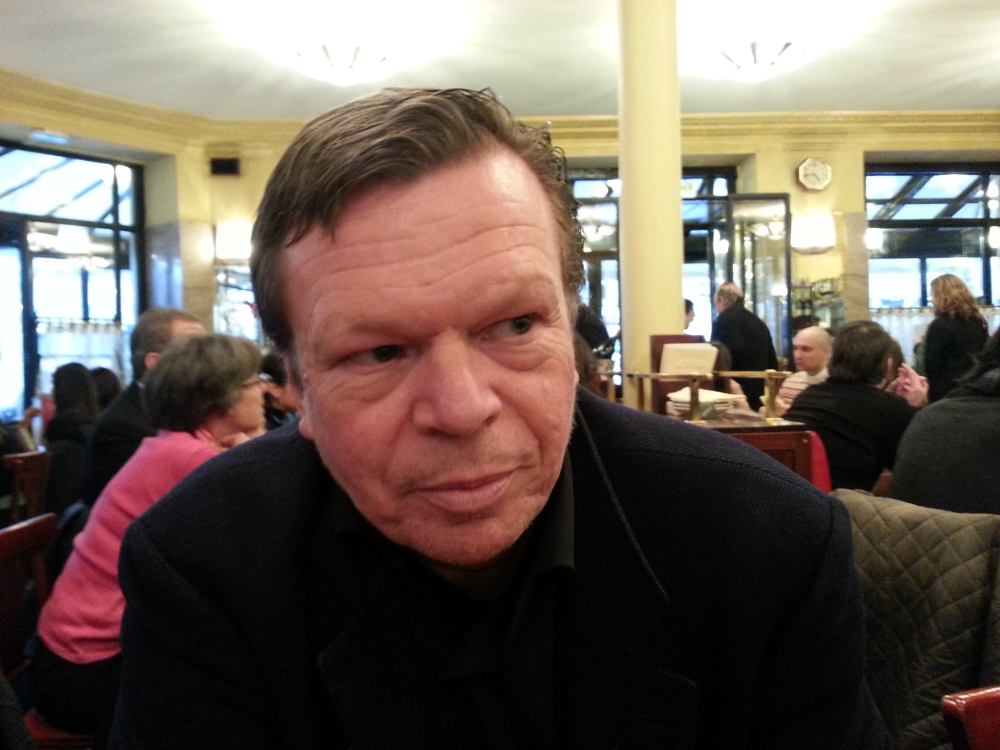
Peter is writer of the series The Heroine’s Journey and Hero’s Journey books, he has an MBA in Marketing, MBA in Financial Economics and graduated at university in Sociology and Communication Sciences.
Become a Great Storyteller
That’s why I set up The Power of your Story journey in the great cities of the world. A new way to use the power of your story. To guide you to life-changing, eye-opening movies, art, literature that truly have the power to enchant, enrich and inspire.
In this journey with Peter de Kuster you’ll explore your relationship with stories so far and your unique story identity will be sketched. You will be guided to movies, art, literature, myths that can put their finger on what you want to rewrite in your story, the feelings that you may often have had but perhaps never understood so clearly before; movies that open new perspectives and re-enchant the world for you.
You will be asked to complete a questionnaire in advance of your session and you’ll be given an instant story advice and movies to see to take away. Your full story advice and movies to see list will follow within a couple of days.
Practical Info
The price of this three day storytelling seminar is Euro 2850 excluding VAT per person. There are special prices when you want to attend with three or more people.
You can reach Peter for questions about dates and the program by mailing him at peterdekuster@hotmail.nl
TIMETABLE
09.40 Tea & Coffee on arrival
10.00 Morning Session
13.00 Lunch Break
14.00 Afternoon Session
18.00 Drinks
Read on for a detailed breakdown of the Power of your Story itinerary.
What Can I Expect?
Here’s an outline of the THE POWER OF YOUR STORY journey.
Journey Outline
OLD STORIES
- What is your Story?
- Are you even trying to tell a Story?
- Old Stories (stories about you, your art, your clients, your money, your self promotion, your happiness, your health)
- Tell your current Story
- Is this Really Your Story?
YOUR NEW STORY
- The Premise of your Story. The Purpose of your Life and Art
- The words on your tombstone
- You ultimate mission, out loud
- The Seven Great Plots
- The Twelve Archetypal Heroines
- The One Great Story
- Purpose is Never Forgettable
- Questioning the Premise
- Lining up
- Flawed Alignment, Tragic Ending
- The Three Rules in Storytelling
- Write Your New Story
TURNING STORY INTO ACTION
- Turning your story into action
- The Story Effect
- Story Ritualizing
- The Storyteller and the art of story
- The Power of Your Story
- Storyboarding your creative process
- They Created and Lived Happily Ever After
 The Power of Your Story