‘Where there is a will, there’s a way’
When most of us think of the hero, we imagine a Warrior. The Warrior escapes from a confining environment and begins the journey in search of a treasure. On the journey, he or she is called upon to face and slay many dragons. Such heroes have courage and subsribe to high ideals, and they ware willing to risk their very lives to defend their world and their honor or to protect the weak from harm. The Warrior within each of us calls us to have courage, strength and integrity, the capacity to make goals and to stick to them; and the ability to fight, when necessary, for ourselves or others. The Warrior exacts a high level of commitment to our own integrity. Warriors live by, and when necessary fight for, their own principles or values even when doing so is economically or socially costly. It competition, it means doing your utmost best, and striving not only to win, but to play fair.
The Warrior
Desire: prove one’s worth through courageous and difficult action
Goal: exert mastery in a way that improves the world
Fear: weakness, vulnerability, ‘wimping out
Strategy: become as strong, competent and powerful as you are capable of being
Trap: arrogance, developing a need for there always to be an enemy
Gifts: competence and courage
To get a sense of the Warrior, think John Wayne, James Bond. Virtually all superheroes – Superman, Wonder Woman, Batman etcera fit this. We see the Warrior in any crusader for a cause or in efforts to rescue the victim or defend the underdog. The natural environment for the Warrior is the battlefield, the athletic contest, the streets, the workplace, the political jungle or anyplace where difficulty or challenges await courageous and energetic action. The Warrior wants to make the world a better place. His or her underlying fear is failing to have what it takes to persevere and prevail. This archetype helps us develop energy, discipline, focus and determination.
Levels of the Warrior
The Call: the bully kicks sand in your face or someone tries to intimidate or abuse you; a challenge beckons; someone needs you to help defend him or her
Level One: the development of boundaries, competence, mastery, expressed through achievement, motivated or tested through competion
Level Two: as with a soldier, doing your duty for your country, organization, community or family
Level Three: using your strength, competence and courage for something that makes a difference to you and to the world
Shadow: ruthlessness and obsessive need to win
Warrioring is about claiming our power in the world, establishing our place in the world and making that world a better place. The well developed inner Warrior is necessary, above all, to protect our boundaries. Without courageous, disciplined and well trained Warriors our world is always in danger of being overrun by the barbarians. Without a strong internal Warrior, we have no defense angainst the demands and intrusions of others.
STORY TIME
Give some thought to when, where, how, and how much the Warrior Story expresses itself in your life.
- How much or how little is the Warrior expressed in your life? Has it been expressed more in the past and present? Do you see it emerging more in your future? Is it expressed more at work, at home, with friends, in dreams or fantasies?
- Who are some friends or relations who seem influenced by the archetype of the Warrior?
- Is there anything you wish were different about the expression of the Warrior in your life?
- Since each archetype expresses itself in many different ways, take some time to describe or otherwise portray (e.g. choose favorite heroes and heroines from books) the Warrior as it is expressed or could be expressed in your life. What does or would it look like? How does or would it act? In what setting does or would it feel most at home?
Ever since William Moulton Marston created her in 1941, Wonder Woman has always been at her best when her stories lean into the feminist ethos at her core. When artists treat her compassion as the key to understanding her—rather than her brutality in battle—audiences are privy to a superhero who offers what no other can: a power fantasy that privileges the interiority and desires of women. But film rarely has made room for the fantasies of women on such a grand scale. And in comic adaptations, women can be tough, funny, and self-assured. But rarely are they the architects of their own destiny.
It wasn’t the glimmer of a blade or even the picturesque shores of Themyscira, the utopian paradise Wonder Woman calls home. Through moments of quiet verisimilitude and blistering action sequences, Jenkins’ gaze often wisely returns to the face of her lead heroine, Diana (Gal Gadot). At times, her face is inquisitive, morose, and marked by fury. But more often than not she wears a bright, open smile that carries the optimism and hope that is true to the character’s long history as well as a much-needed salve from what other blockbusters offer. In turn, “Wonder Woman” isn’t just a good superhero film. It is a sincerely good film in which no qualifiers are needed. It’s inspiring, evocative, and, unfortunately, a bit infuriating for the chances it doesn’t take.
Written by Allan Heinberg, with a story also by Zack Snyder and Jason Fuchs, the story uses a variety of inspiration culled from Wonder Woman’s 76-year history. As a young girl, Diana enjoys the loving protection of the Amazons of Themyscira, a secluded island paradise created by the gods of Olympus. No Amazon is fiercer or more protective than her mother, Queen Hippolyta (Connie Nielsen). But Diana longs to be trained in the art of war by her aunt, Antiope (a stellar Robin Wright). She grows from a kind, young girl into an inquisitive, brave, young woman who never hesitates to helps those in need. Even a man like Captain Steve Trevor (an endlessly charming Chris Pine), who brings news of World War I when he crash-lands on the island disrupting this all-female sanctuary, gets saved by her. Diana leaves behind the only life she’s ever known, heading to late 1910s London to stop the war she believes is influenced by the god Ares.
Cinematographer Matthew Jensen, production designer Aline Bonetto, and costume designer Lindy Hemming form Themyscira into a gorgeous utopia that utilizes a variety of cultural touchstones. It’s free of the Hellenic influence you’d expect from a story that takes such inspiration from Greek myth with the Amazons creating their home in a way that respects the lush nature around them rather than destroying it. It isn’t sterile either. The scenes set in Themyscira have a dazzling array of colors including the gold of armor, the cerulean blue of the sea that surrounds them, warm creams, and deep browns. Jenkins films many of these scenes in wide shot, reveling in the majestic nature of this culture. Similarly, the history of the Amazons, told in a dense but beautifully rendered backstory by Hippolyta, evokes a painterly quality reminiscent of Caravaggio. Having said that, while “Wonder Woman” has a lot to offer visually, what makes this film so captivating is Gal Gadot and Chris Pine.
Gadot wonderfully inhabits the mix of curiosity, sincerity, badassery, and compassion that has undergirded Wonder Woman since the beginning. Most importantly, she wears her suit, the suit doesn’t wear her. She evokes a classic heroism that is a breath of fresh air and nods to Christopher Reeve’s approach to Superman from the 1970s. Likewise, Pine matches her hopefulness with a world weariness and sharp sense of humor. He’s more than capable at bringing an emotional complexity to a character most aptly described as a dude-in-distress. There are particularly great scenes at the beginning, as Diana talks about men being unnecessary for female pleasure. Steve seems undone by her presence, which makes the development of their story authentic. Their chemistry is electrifying, making “Wonder Woman” a successful romance and superhero origin story set during one of the most brutal wars.
At their best, blockbusters evoke awe that can be both humbling and thrilling. Think of the first time you saw the T-Rex in “Jurassic Park” or the suspense that suffuses all of “Aliens.” “Wonder Woman” excels at this particularly in the earliest chapter set in Themyscira. Watching Antiope smirk during an intense fight and Hippolyta’s tender scenes with Diana. “Wonder Woman” is like nothing that has come before it in how it joyously displays the camaraderie among women, many of whom are women of color and over 40. It’s electrifying watching the Amazons train and talk with each other. These women are fierce and kind, loyal and brave. It was just awesome to see Artemis (Ann J. Wolfe) and Antiope in battle.
While “Wonder Woman” is an overall light, humorous and hopeful movie, it isn’t afraid of touching on politics. The feminism of the film is sly. It’s seen in moments when characters of color comment on their station in life and Diana faces sexism from powerful men who doubt her intelligence. Of course, the feminism, charming performances, and delightful humor would be nothing without the direction by Patty Jenkins.
Superhero films inherently carry the thrill of seeing these characters come to life and brandish great abilities, but far too often the fight scenes are neither epic nor engaging. So often they’re flatly lit, unimaginatively framed extravaganzas of characters fighting in airplane hangers and other drab surroundings. But what makes “Wonder Woman” so blistering is Jenkins’ distinctive gaze particularly in the fight scenes. She shows off the great physicality of the Amazons, Diana’s included, giving the action full room to breathe without being burdened by excessive editing or an over-reliance on close-ups. She treats action as a dance of sorts, with important characters having their own distinctive styles so that nothing ever feels repetitive. The sequences depicting Themyscira and Diana’s first entry on the battlefield of World War I are particularly exemplary.
“Wonder Woman” is beautiful, kindhearted, and buoyant. Jenkins and her collaborators have created a Wonder Woman film that is inspiring, blistering, and compassionate, in ways that honor what has made this character an icon.
The Power of Your Story Seminar
Amsterdam 17 April
You will examine with Peter de Kuster, founder of The Power of Your Story the way we tell stories about ourselves to ourselves — and, most important, the way we can change those stories to transform our business and personal lives.
“Your story is your life,” says Peter. As human beings, we continually tell ourselves stories — of success or failure; of power or victimhood; stories that endure for an hour, or a day, or an entire lifetime. We have stories about ourselves, our creative business, our customers ; about what we want and what we’re capable of achieving. Yet, while our stories profoundly affect how others see us and we see ourselves, too few of us even recognize that we’re telling stories, or what they are, or that we can change them — and, in turn, transform our very destinies.
Telling ourselves stories provides structure and direction as we navigate life’s challenges and opportunities, and helps us interpret our goals and skills. Stories make sense of chaos; they organize our many divergent experiences into a coherent thread; they shape our entire reality. And far too many of our stories, says Peter, are dysfunctional, in need of serious editing. First, he asks you to answer the question, “In which areas of my life is it clear that I cannot achieve my goals with the story I’ve got?” He then shows you how to create new, reality-based stories that inspire you to action, and take you where you want to go both in your work and personal life.
Our capacity to tell stories is one of our profoundest gifts. Peter’s approach to creating deeply engaging stories will give you the tools to wield the power of storytelling and forever change your business and personal life.
About Peter de Kuster
Peter de Kuster is the founder of The Heroine’s Journey & Hero’s Journey project, a storytelling firm which helps creative professionals to create careers and lives based on whatever story is most integral to their lifes and careers (values, traits, skills and experiences). Peter’s approach combines in-depth storytelling and marketing expertise, and for over 20 years clients have found it effective with a wide range of creative business issues.
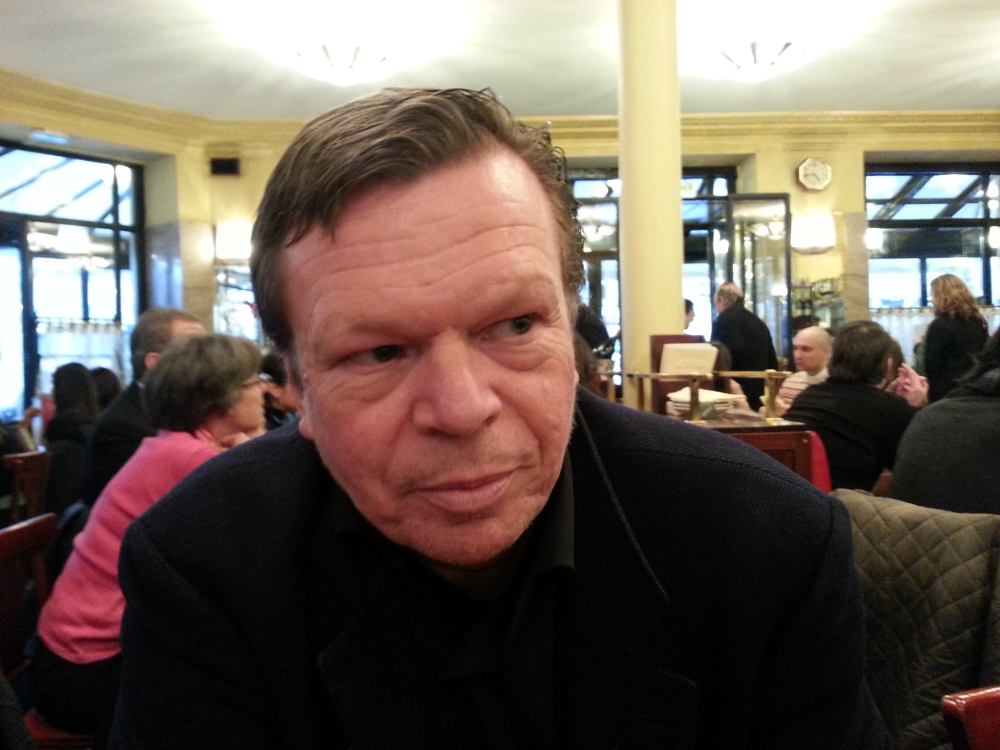
Peter is writer of the series The Heroine’s Journey and Hero’s Journey books, he has an MBA in Marketing, MBA in Financial Economics and graduated at university in Sociology and Communication Sciences.
Become a Great Storyteller in One Day
That’s why I set up The Power of your Story journey in the great cities of the world. A new way to use the power of your story. To guide you to life-changing, eye-opening movies, art, literature that truly have the power to enchant, enrich and inspire.
In this journey with Peter de Kuster you’ll explore your relationship with stories so far and your unique story identity will be sketched. You will be guided to movies, art, literature, myths that can put their finger on what you want to rewrite in your story, the feelings that you may often have had but perhaps never understood so clearly before; movies that open new perspectives and re-enchant the world for you.
You will be asked to complete a questionnaire in advance of your session and you’ll be given an instant story advice and movies to see to take away. Your full story advice and movies to see list will follow within a couple of days.
Practical Info
The price of this one day storytelling seminar is Euro 995 excluding VAT per person. There are special prices when you want to attend with three or more people.
You can reach Peter for questions about dates and the program by mailing him at peterdekuster@hotmail.nl
TIMETABLE
09.40 Tea & Coffee on arrival
10.00 Morning Session
13.00 Lunch Break
14.00 Afternoon Session
18.00 Drinks
Read on for a detailed breakdown of the Power of your Story itinerary.
What Can I Expect?
Here’s an outline of the THE POWER OF YOUR STORY journey.
Journey Outline
OLD STORIES
- What is your Story?
- Are you even trying to tell a Story?
- Old Stories (stories about you, your art, your clients, your money, your self promotion, your happiness, your health)
- Tell your current Story
- Is this Really Your Story?
YOUR NEW STORY
- The Premise of your Story. The Purpose of your Life and Art
- The words on your tombstone
- You ultimate mission, out loud
- The Seven Great Plots
- The Twelve Archetypal Heroines
- The One Great Story
- Purpose is Never Forgettable
- Questioning the Premise
- Lining up
- Flawed Alignment, Tragic Ending
- The Three Rules in Storytelling
- Write Your New Story
TURNING STORY INTO ACTION
- Turning your story into action
- The Story Effect
- Story Ritualizing
- The Storyteller and the art of story
- The Power of Your Story
- Storyboarding your creative process
- They Created and Lived Happily Ever After
 The Power of Your Story