The following are the first steps in a process we’ve devised and refined over the years, from feedback our clients have provided. It starts with you writing your current story – a first draft. Eventually, after some hard and honest work – and several drafts – you’ll have produced a story that accurately reflects the way things have been going in your life. Then you’ll discard this current story, recasting it now as your ‘old story’ and replace it with your new, forward moving story.
But that’s getting ahead of ourselves – especially considering that the majority of those I’ve worked with have not quite ‘gotten’ their current story on the first attempt.
Step 1. Identify the important areas of your life where the stories you tell yourself or others are clearly not working. They simply do not take you where you ultimately want to go – for example, with personal relationships, work, financial health, physical health. Ask yourself: in what areas is it clear I can’t get to where I want to go with the story I’ve got?
Step 2. Articulate as clearly as possible the story you currently have that isn’t working. Put it down on paper. Eventually we’ll refer to this as your Old Story.
Before you begin writing your Old Story: Really bring it to life. Express your logic, your rationale, your thinking process about why you’ve been living the way you have. By getting it down on paper, you can see it, study it, break it down, judge how it flows (or stumbles) as a story. Write in the voice you typically use privately with yourself. Don’t hold back. If it’s a rationalizing, scapegoating voice, then use that. If it’s bitter or prideful, use it. This story – initially, anyway is for your eyes, no one else’s, so don’t write your story scared; no need to be diplomatic of politically correct. At some point you may wish to share it with others.
Growing older was a smart career move for Bette Davis, whose personality was adult, hard-edged and knowing. Never entirely comfortable as an ingenue, she was glorious as a professional woman, a survivor, or a bitchy predator. Her veteran actress Margo Channing in “All About Eve” (1950) was her greatest role; it seems to show her defeated by the wiles of a younger actress, but in fact marks a victory: the triumph of personality and will over the superficial power of beauty. She never played a more autobiographical role.
The movie, written by Mankiewicz, begins like “Sunset Boulevard” with a narration by a writer – -the theater critic Addison DeWitt (George Sanders), bemused, cynical, manipulative. He surveys the room at a theatrical awards dinner, notes the trophy reserved for Eve Harrington (Baxter), and describes the survivors of Eve’s savage climb to the top: her director Bill Sampson (Gary Merrill), her writer Lloyd Richards (Hugh Marlowe), Lloyd’s wife Karen (Celeste Holm), who was her greatest supporter. And the idol she cannibalized, Margo. As the fatuous old emcee praises Eve’s greatness, the faces of these people reflect a different story.
The movie creates Margo Channing as a particular person, and Eve Harrington as a type. Eve is a breathless fan, eyes brimming with phony sincerity. She worms her way into Margo’s inner circle, becoming her secretary, then her understudy, then her rival. Faking humility and pathos is her greatest role, and at first only one person sees through it: crusty old Birdie (Thelma Ritter), Margo’s wardrobe woman. “What a story!” she snaps. “Everything but the bloodhounds snappin’ at her rear end.”
Margo believes Eve’s story of hard luck and adoration; no actor has much trouble believing others would want to devote their lives to them. Good, sweet Karen also sympathizes with the girl, and arranges to strand Margo in the country one weekend so that Eve can go on as her understudy. Karen is repaid when Eve tries to steal her playwright husband, after an earlier, unsuccessful attempt to steal Margo’s fiancé, Bill. He is played by Merrill (Davis’ real-life husband), who turns her away with a merciless put-down: “What I go after, I want to go after. I don’t want it to come after me.”
Eve is a universal type. Margo plays at having an ego but is in love with her work — a professional, not an exhibitionist. She’s the real thing. But the sardonic tone of the film is set by Sanders, as DeWitt. He’s the principal narrator, and with his cigarette holder, his slicked-down hair and his flawless evening dress, he sees everything with deep cynicism. He has his own agenda; while Eve naively tries to steal the men who belong to the women who helped her, Addison calmly schemes to keep Eve as his own possession. Sanders, who won the Oscar for best supporting actor, lashes her in one of the movie’s most savage speeches: “Is it possible, even conceivable, that you’ve confused me with that gang of backward children you play tricks on? That you have the same contempt for me as you have for them?” And: “I am nobody’s fool. Least of all, yours.”
The party sequence contains Davis’ best work in the movie, beginning with her famous line, “Fasten your seat belts. It’s going to be a bumpy night.” Drinking too much, disillusioned by Eve’s betrayal, depressed by her 40th birthday, she says admitting her age makes her “feel as if I’ve taken all my clothes off.” She looks at Bill and bitterly says: “Bill’s 32. He looks 32. He looked it five years ago. He’ll look it 20 years from now. I hate men.”
Davis smokes all through the movie. In an age when stars used cigarettes as props, she doesn’t smoke as behavior, or to express her moods, but because she wants to. The smoking is invaluable in setting her apart from others, separate from their support and needs; she is often seen within a cloud of smoke, which seems like her charisma made visible.
The movie’s strength and weakness is Anne Baxter, whose Eve lacks the presence to be a plausible rival to Margo, but is convincing as the scheming fan. When Eve understudies for Margo and gets great reviews, Mankiewicz wisely never shows us her performance; better to imagine it, and focus on the girl whose look is a little too intense, whose eyes a little too focused, whose modesty is somehow suspect.
The Power of Your Story Seminar
Amsterdam 17 April
You will examine with Peter de Kuster, founder of The Power of Your Story the way we tell stories about ourselves to ourselves — and, most important, the way we can change those stories to transform our business and personal lives.
“Your story is your life,” says Peter. As human beings, we continually tell ourselves stories — of success or failure; of power or victimhood; stories that endure for an hour, or a day, or an entire lifetime. We have stories about ourselves, our creative business, our customers ; about what we want and what we’re capable of achieving. Yet, while our stories profoundly affect how others see us and we see ourselves, too few of us even recognize that we’re telling stories, or what they are, or that we can change them — and, in turn, transform our very destinies.
Telling ourselves stories provides structure and direction as we navigate life’s challenges and opportunities, and helps us interpret our goals and skills. Stories make sense of chaos; they organize our many divergent experiences into a coherent thread; they shape our entire reality. And far too many of our stories, says Peter, are dysfunctional, in need of serious editing. First, he asks you to answer the question, “In which areas of my life is it clear that I cannot achieve my goals with the story I’ve got?” He then shows you how to create new, reality-based stories that inspire you to action, and take you where you want to go both in your work and personal life.
Our capacity to tell stories is one of our profoundest gifts. Peter’s approach to creating deeply engaging stories will give you the tools to wield the power of storytelling and forever change your business and personal life.
About Peter de Kuster
Peter de Kuster is the founder of The Heroine’s Journey & Hero’s Journey project, a storytelling firm which helps creative professionals to create careers and lives based on whatever story is most integral to their lifes and careers (values, traits, skills and experiences). Peter’s approach combines in-depth storytelling and marketing expertise, and for over 20 years clients have found it effective with a wide range of creative business issues.
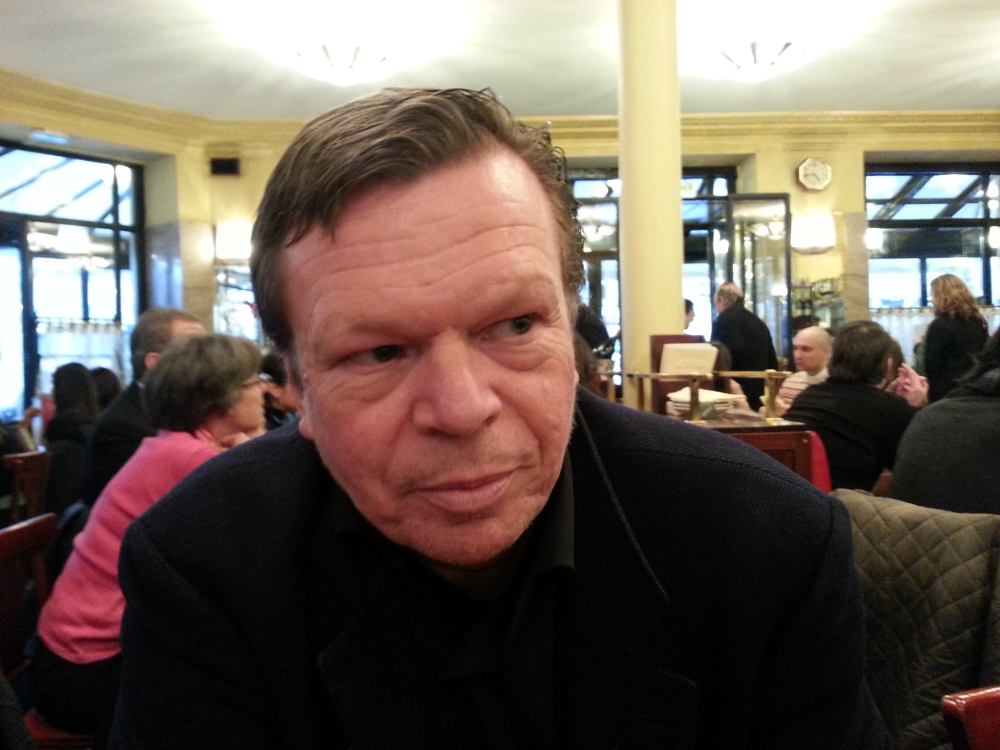
Peter is writer of the series The Heroine’s Journey and Hero’s Journey books, he has an MBA in Marketing, MBA in Financial Economics and graduated at university in Sociology and Communication Sciences.
Become a Great Storyteller in One Day
That’s why I set up The Power of your Story journey in the great cities of the world. A new way to use the power of your story. To guide you to life-changing, eye-opening movies, art, literature that truly have the power to enchant, enrich and inspire.
In this journey with Peter de Kuster you’ll explore your relationship with stories so far and your unique story identity will be sketched. You will be guided to movies, art, literature, myths that can put their finger on what you want to rewrite in your story, the feelings that you may often have had but perhaps never understood so clearly before; movies that open new perspectives and re-enchant the world for you.
You will be asked to complete a questionnaire in advance of your session and you’ll be given an instant story advice and movies to see to take away. Your full story advice and movies to see list will follow within a couple of days.
Practical Info
The price of this one day storytelling seminar is Euro 995 excluding VAT per person. There are special prices when you want to attend with three or more people.
You can reach Peter for questions about dates and the program by mailing him at peterdekuster@hotmail.nl
TIMETABLE
09.40 Tea & Coffee on arrival
10.00 Morning Session
13.00 Lunch Break
14.00 Afternoon Session
18.00 Drinks
Read on for a detailed breakdown of the Power of your Story itinerary.
What Can I Expect?
Here’s an outline of the THE POWER OF YOUR STORY journey.
Journey Outline
OLD STORIES
- What is your Story?
- Are you even trying to tell a Story?
- Old Stories (stories about you, your art, your clients, your money, your self promotion, your happiness, your health)
- Tell your current Story
- Is this Really Your Story?
YOUR NEW STORY
- The Premise of your Story. The Purpose of your Life and Art
- The words on your tombstone
- You ultimate mission, out loud
- The Seven Great Plots
- The Twelve Archetypal Heroines
- The One Great Story
- Purpose is Never Forgettable
- Questioning the Premise
- Lining up
- Flawed Alignment, Tragic Ending
- The Three Rules in Storytelling
- Write Your New Story
TURNING STORY INTO ACTION
- Turning your story into action
- The Story Effect
- Story Ritualizing
- The Storyteller and the art of story
- The Power of Your Story
- Storyboarding your creative process
- They Created and Lived Happily Ever After
 The Power of Your Story