Recognizing the ways our own lives connect with the twelve archetypal stages of the hero’s & heroine’s journey helps ennoble and give meaning to the everyday experiences of our lives. However, it is equally important to honor our own uniqueness. People spiral through these stages in different orders and ways.
Finding the great story that drives your life is a great quest. To know your story is to know who you are. It is not to be taken lightly, although it does not have to be unduly heavy either. (indeed, creativity comes more easily with a good dose of Commediant) If you know your own great story, you are much less likely to sell yourself short, to get confused by the inessential, or to let others manipulate you or talk you into being less than you could be.
For most of our lives, many of us feel as if we are travelling without a map. We know we are moving but we have no real sense of where we have been, where we are, or where we are headed. The model provided in this guide provides a general map for the journey, but it is a generic map, not one tailored to your individual life. Your own great story will very likely have one or two dominant archetypes, and very definitely will include many different archetypal elements, but the way you put them together will be unique – and your own.
Finding Your Dominant Myth
The best way to determine your dominant myth is to write or otherwise express your life story – as honestly as you know how – and then notice its underlying plot structure. You can do this by comparing the basis plot of your autobiography with the chart of archetypal stories included in this website.
Dreamer: brings optimism
Independent: paradise lost, rely on yourself to create better conditions
Warrior: develops competence and mastery for yourself and others
Caregiver: care for yourself and others, gains the capacity to choose to live as feels right
Explorer: goes on a journey, finds treasure of autonomy and vocation
Rule Breaker: destroys what not works for yourself and others, loses illusions and inauthentic patterns
Lover: finds people, places and activities they love and are commited for
Creator: discovers true self; explores ways of creating a life which facilitates the expression of that self
Master: takes responsibility for own world; world is restored to fertility, harmony and peace.
Magician: learns to transform self and others; learns to have flow experiences
Sage: seeks truth, recognizes own subjectivity; experiences truth
Commediant: lives for pleasure, enjoys the moment, is able to trust the process, finds happiness.
Perhaps you see that your story is one of constant search for love, or truth, or answers, you are in some version of the Explorer plot. And so on. (You may find that your story combines major elements of several archetypes).
The danger of not knowing one’s life myth is that it is possible to be continually judging oneself by the standard of a journey that is not one’s own. For example someone whose compelling myth is that of the Lover may continue to be apologetic about his or her failure to achieve great feats, since most people in our culture measure themselves against the yardstick of the myth of the Warrior and the Master. Someone whose informing myth is the Master, however, may feel inadequate for failing to live simply in the moment, that is to be a Commediant.
People often feel a great sense of relief after they write their story and find their informing myth, since they see that what they have been doing is, in fact, just right for them. However, not everyone feels this way. When people identify the plot they have been living, they may suddenly realize that they are possessed or imprisoned – not liberated – by this story and its informing archetype. One way of talking about this is to see a myth as one’s “story”.
At its core, the fictional Lew Wallace story of Judah Ben-Hur is basically a revenge movie in the “Gladiator” tradition. But by setting the protagonist’s tragic betrayal in the hands of childhood friend Messala during the events surrounding Christ’s crucifixion, his suffering and redemption gained special weight and meaning. From a cinematic point of view, the 1959 “Ben-Hur” holds up rather well to this day and there is no doubt that its chariot race is still one of the greatest action scenes of all time. Just place it alongside with the rather brief one in “Quo Vadis” (1951) that is shot with background photography, and the difference is mind blowing. Time hasn’t been quite as kind with “Ben-Hur’s” other renowned set piece (the maritime battle), as it is now painfully obvious how it was shot in a tank at the studio lot. The film as a whole is very much a product of its time, with perfectly shaven and bathed characters, whose clothes seem like they just came out from the manufacturing line, as were their shiny new shields and helmets. The acting, as was often the case in those days, is the very definition of hammy and is best remembered by the endless, preachy dialogue between Charlton Heston and Haya Harareet while both stood cheek to cheek, their eyes pointing to the sky.
The Power of Your Story Seminar
You will examine with Peter de Kuster, founder of The Power of Your Story the way we tell stories about ourselves to ourselves — and, most important, the way we can change those stories to transform our business and personal lives.
“Your story is your life,” says Peter. As human beings, we continually tell ourselves stories — of success or failure; of power or victimhood; stories that endure for an hour, or a day, or an entire lifetime. We have stories about ourselves, our creative business, our customers ; about what we want and what we’re capable of achieving. Yet, while our stories profoundly affect how others see us and we see ourselves, too few of us even recognize that we’re telling stories, or what they are, or that we can change them — and, in turn, transform our very destinies.
Telling ourselves stories provides structure and direction as we navigate life’s challenges and opportunities, and helps us interpret our goals and skills. Stories make sense of chaos; they organize our many divergent experiences into a coherent thread; they shape our entire reality. And far too many of our stories, says Peter, are dysfunctional, in need of serious editing. First, he asks you to answer the question, “In which areas of my life is it clear that I cannot achieve my goals with the story I’ve got?” He then shows you how to create new, reality-based stories that inspire you to action, and take you where you want to go both in your work and personal life.
Our capacity to tell stories is one of our profoundest gifts. Peter’s approach to creating deeply engaging stories will give you the tools to wield the power of storytelling and forever change your business and personal life.
About Peter de Kuster
Peter de Kuster is the founder of The Heroine’s Journey & Hero’s Journey project, a storytelling firm which helps creative professionals to create careers and lives based on whatever story is most integral to their lifes and careers (values, traits, skills and experiences). Peter’s approach combines in-depth storytelling and marketing expertise, and for over 20 years clients have found it effective with a wide range of creative business issues.
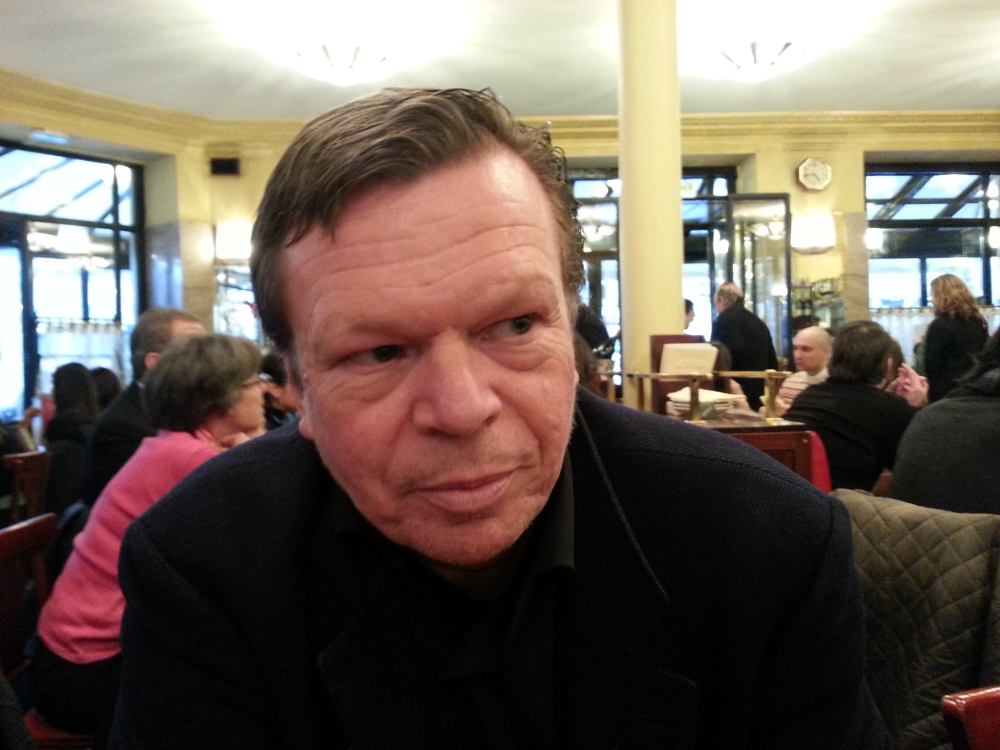
Peter is writer of the series The Heroine’s Journey and Hero’s Journey books, he has an MBA in Marketing, MBA in Financial Economics and graduated at university in Sociology and Communication Sciences.
Become a Great Storyteller
That’s why I set up The Power of your Story journey in the great cities of the world. A new way to use the power of your story. To guide you to life-changing, eye-opening movies, art, literature that truly have the power to enchant, enrich and inspire.
In this journey with Peter de Kuster you’ll explore your relationship with stories so far and your unique story identity will be sketched. You will be guided to movies, art, literature, myths that can put their finger on what you want to rewrite in your story, the feelings that you may often have had but perhaps never understood so clearly before; movies that open new perspectives and re-enchant the world for you.
You will be asked to complete a questionnaire in advance of your session and you’ll be given an instant story advice and movies to see to take away. Your full story advice and movies to see list will follow within a couple of days.
Practical Info
The price of this three day storytelling seminar is Euro 2850 excluding VAT per person. There are special prices when you want to attend with three or more people.
You can reach Peter for questions about dates and the program by mailing him at peterdekuster@hotmail.nl
TIMETABLE
09.40 Tea & Coffee on arrival
10.00 Morning Session
13.00 Lunch Break
14.00 Afternoon Session
18.00 Drinks
Read on for a detailed breakdown of the Power of your Story itinerary.
What Can I Expect?
Here’s an outline of the THE POWER OF YOUR STORY journey.
Journey Outline
OLD STORIES
- What is your Story?
- Are you even trying to tell a Story?
- Old Stories (stories about you, your art, your clients, your money, your self promotion, your happiness, your health)
- Tell your current Story
- Is this Really Your Story?
YOUR NEW STORY
- The Premise of your Story. The Purpose of your Life and Art
- The words on your tombstone
- You ultimate mission, out loud
- The Seven Great Plots
- The Twelve Archetypal Heroines
- The One Great Story
- Purpose is Never Forgettable
- Questioning the Premise
- Lining up
- Flawed Alignment, Tragic Ending
- The Three Rules in Storytelling
- Write Your New Story
TURNING STORY INTO ACTION
- Turning your story into action
- The Story Effect
- Story Ritualizing
- The Storyteller and the art of story
- The Power of Your Story
- Storyboarding your creative process
- They Created and Lived Happily Ever After
 The Power of Your Story