For once, London’s Sunday Times war correspondent Marie Colvin (Rosamund Pike) is answering questions, not asking them. In the interview that brackets “A Private War,” the journalist who interviewed rebel leaders and despotic rulers is asked what she would want some future journalist to know about her and her work. She answers, “I cared enough to go to these places and write in a way to make someone else care about it.” Documentary director Matthew Heineman (“Cartel Land,” “City of Ghosts”) made his first narrative film the story of a journalist and documentarian covering the most brutal and terrifying places on earth for readers who would glance at her stories as they had their morning marmalade and toast.
Colvin, known for her dashingly piratical eye patch and fearless reporting from war zones in Syria, East Timor, Libya, Kosovo, Chechnya, Iran, Iraq, and Sri Lanka, was an American from Long Island who was intensely traumatized by what she saw but somehow, even after the loss of an eye in Sri Lanka and severe PTSD that led to hospitalization, could not stay away. Hours after her last report from Syria on CNN, proving that Bashar Assad was bombing innocent civilians, not, as he claimed, terrorist gangs, Colvin was killed there.
She had no patience for American soldiers with clipboards explaining the rules for being embedded to get military support and protection. Instead of the relative safety of an embed, Colvin kept going back to the most dangerous places because she needed to tell the story, or, rather stories. She wanted the world to know how ordinary people were affected by the decisions made by people in power, not just the sanitized details of troop movements and diplomatic maneuvers. As The Telegraph wrote in her obituary, her specialty was “illustrating a fearsomely complex conflict by finding the most dramatic, personal story at its heart.”
The dramatic, personal story of Colvin herself is absorbingly told here, largely because of Pike’s dynamic performance, showing us a woman who was courageous enough to risk her life for a story on a daily basis but remained vulnerable enough to make the stories viscerally compelling. That combination took a terrible toll. She used sex and booze to numb her feelings but they could not stop the nightmares. “You’re not going to get anywhere if you acknowledge fear,” she says, but she admits that after the danger is over, she feels it. It is surreal to see her back in London at an elegant gala event, picking up another journalism award in between trips to war zones where she has to maintain enough distance from the carnage all around her to write about it – and keep from becoming part of it. The contrast in perspective and priorities between Colvin and her editor (an excellent Tom Hollander) makes a deeper point about the uneasy and sometimes conflicted relationship between editors trying to sell papers and reporters trying to get the story read.
To the extent we need to know why she had this compulsion and whether she missed having a home and family, those elements are present without being reductive or simplistic. We see her casual dismissal of being blinded in one eye with her friends and then we see the way she looks at her face in the mirror when she is alone. She impulsively asks her ex-husband to take another chance on marriage and children, and he gently explains why that is not possible. in the mental hospital where she is being treated for PTSD, Colvin gives what she calls the “psychobabble” explanation of her need to be in war zones to her closest colleague, the photographer Paul Conroy (Jamie Dornan, unrecognizable under a thick beard). Her father this, her mother that, but really it all comes down to what she said in the first place: she wants to make other people care about people suffering tragic and unjust events on the other side of the world. To lift her spirits, she wears ultra-expensive La Perla lingerie under her flack jacket, airily explaining, “If anyone digs my corpse from a trench, I want them to be impressed.”
“I see it so you don’t have to,” Colvin says. No, she saw it, and wrote about it, so that we would see it, too. As a documentarian, Heineman shares Colvin’s commitment to telling stories the world too often would rather not see. He has a strong sense of time and place and keeps the story compelling without letting the audience become desensitized by tragedy.
The Power of Your Story Seminar
You will examine with Peter de Kuster, founder of The Power of Your Story the way we tell stories about ourselves to ourselves — and, most important, the way we can change those stories to transform our business and personal lives.
“Your story is your life,” says Peter. As human beings, we continually tell ourselves stories — of success or failure; of power or victimhood; stories that endure for an hour, or a day, or an entire lifetime. We have stories about ourselves, our creative business, our customers ; about what we want and what we’re capable of achieving. Yet, while our stories profoundly affect how others see us and we see ourselves, too few of us even recognize that we’re telling stories, or what they are, or that we can change them — and, in turn, transform our very destinies.
Telling ourselves stories provides structure and direction as we navigate life’s challenges and opportunities, and helps us interpret our goals and skills. Stories make sense of chaos; they organize our many divergent experiences into a coherent thread; they shape our entire reality. And far too many of our stories, says Peter, are dysfunctional, in need of serious editing. First, he asks you to answer the question, “In which areas of my life is it clear that I cannot achieve my goals with the story I’ve got?” He then shows you how to create new, reality-based stories that inspire you to action, and take you where you want to go both in your work and personal life.
Our capacity to tell stories is one of our profoundest gifts. Peter’s approach to creating deeply engaging stories will give you the tools to wield the power of storytelling and forever change your business and personal life.
About Peter de Kuster
Peter de Kuster is the founder of The Heroine’s Journey & Hero’s Journey project, a storytelling firm which helps creative professionals to create careers and lives based on whatever story is most integral to their lifes and careers (values, traits, skills and experiences). Peter’s approach combines in-depth storytelling and marketing expertise, and for over 20 years clients have found it effective with a wide range of creative business issues.
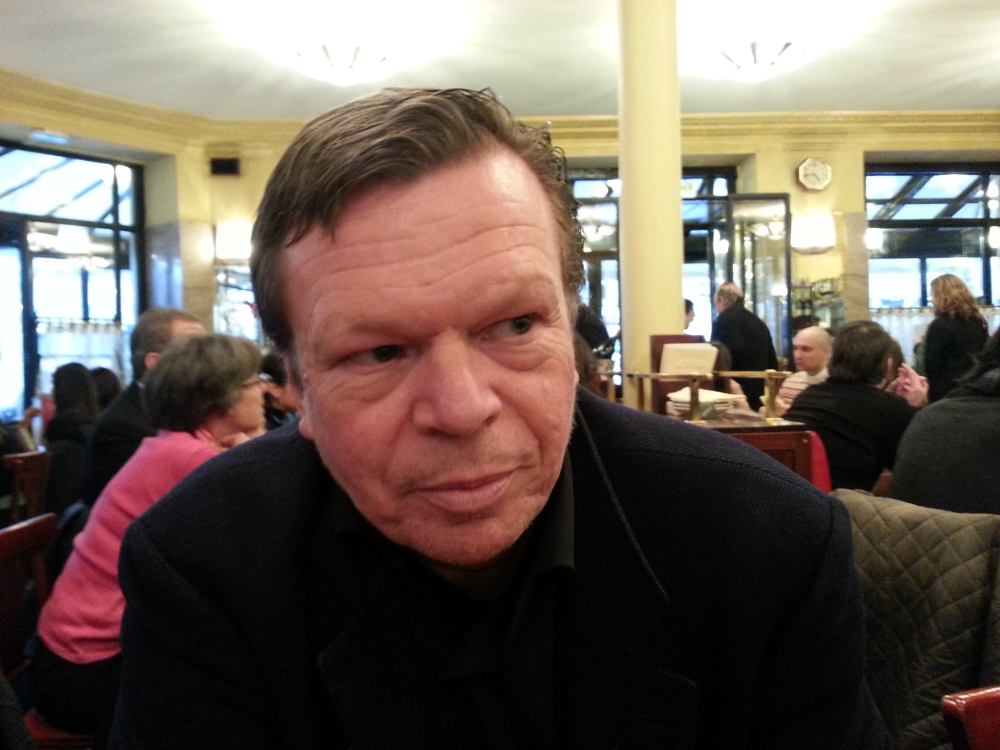
Peter is writer of the series The Heroine’s Journey and Hero’s Journey books, he has an MBA in Marketing, MBA in Financial Economics and graduated at university in Sociology and Communication Sciences.
Become a Great Storyteller in One Day
That’s why I set up The Power of your Story journey in the great cities of the world. A new way to use the power of your story. To guide you to life-changing, eye-opening movies, art, literature that truly have the power to enchant, enrich and inspire.
In this journey with Peter de Kuster you’ll explore your relationship with stories so far and your unique story identity will be sketched. You will be guided to movies, art, literature, myths that can put their finger on what you want to rewrite in your story, the feelings that you may often have had but perhaps never understood so clearly before; movies that open new perspectives and re-enchant the world for you.
You will be asked to complete a questionnaire in advance of your session and you’ll be given an instant story advice and movies to see to take away. Your full story advice and movies to see list will follow within a couple of days.
Practical Info
The price of this two day storytelling seminar is Euro 1895 excluding VAT per person. There are special prices when you want to attend with two or more people.
You can reach Peter for questions about dates and the program by mailing him at peterdekuster@hotmail.nl
TIMETABLE
09.40 Tea & Coffee on arrival
10.00 Morning Session
13.00 Lunch Break
14.00 Afternoon Session
18.00 Drinks
Read on for a detailed breakdown of the Power of your Story itinerary.
What Can I Expect?
Here’s an outline of the THE POWER OF YOUR STORY journey.
Journey Outline
OLD STORIES
- What is your Story?
- Are you even trying to tell a Story?
- Old Stories (stories about you, your art, your clients, your money, your self promotion, your happiness, your health)
- Tell your current Story
- Is this Really Your Story?
YOUR NEW STORY
- The Premise of your Story. The Purpose of your Life and Art
- The words on your tombstone
- You ultimate mission, out loud
- The Seven Great Plots
- The Twelve Archetypal Heroines
- The One Great Story
- Purpose is Never Forgettable
- Questioning the Premise
- Lining up
- Flawed Alignment, Tragic Ending
- The Three Rules in Storytelling
- Write Your New Story
TURNING STORY INTO ACTION
- Turning your story into action
- The Story Effect
- Story Ritualizing
- The Storyteller and the art of story
- The Power of Your Story
- Storyboarding your creative process
- They Created and Lived Happily Ever After
 The Power of Your Story