“Schindler’s List” is described as a film about the Holocaust, but the Holocaust supplies the field for the story, rather than the subject. The film is really two parallel character studies–one of a con man, the other of a psychopath. Oskar Schindler, who swindles the Third Reich, and Amon Goeth, who represents its pure evil, are men created by the opportunities of war.
Schindler had no success in business before or after the war, but used its cover to run factories that saved the lives of more than 1,000 Jews. (Technically, the factories were failures, too, but that was his plan: “If this factory ever produces a shell that can actually be fired, I’ll be very unhappy.”) Goeth was executed after the war, which he used as a cover for his homicidal pathology.
In telling their stories, Steven Spielberg found a way to approach the Holocaust, which is a subject too vast and tragic to be encompassed in any reasonable way by fiction. In the ruins of the saddest story of the century, he found, not a happy ending, but at least one affirming that resistance to evil is possible and can succeed. In the face of the Nazi charnel houses, it is a statement that has to be made, or we sink into despair.
In ”Schindler’s List,” his brilliant achievement is the character of Oskar Schindler, played by Liam Neeson as a man who never, until almost the end, admits to anyone what he is really doing. Schindler leaves it to ”his” Jews, and particularly to his accountant Itzhak Stern (Ben Kingsley), to understand the unsayable: that Schindler is using his factory as a con game to cheat the Nazis of the lives of his workers. Schindler leaves it to Stern, and Spielberg leaves it to us; the movie is a rare case of a man doing the opposite of what he seems to be doing, and a director letting the audience figure it out itself.
The measure of Schindler’s audacity is stupendous. His first factory makes pots and pans. His second makes shell casings. Both factories are so inefficient they make hardly any contribution to the Nazi war effort. A more cautious man might have insisted that the factories produced fine pots and usable casings, to make them invaluable to the Nazis. The full measure of Schindler’s obsession is that he wanted to save Jewish lives and produce unusable goods–all the while wearing a Nazi party badge on the lapel of his expensive black-market suit.
The key to his character is found in his first big scene, in a nightclub frequented by Nazi officers. We gather that his resources consist of the money in his pocket and the clothes he stands up in. He walks into the club, sends the best champagne to a table of high-ranking Nazis, and soon has the Nazis and their girlfriends sitting at his table, which swells with late arrivals. Who is this man? Why, Oskar Schindler, of course. And who is that? The Reich never figures out the answer to that question.
Schindler’s strategy as a con man is to always seem in charge, to seem well-connected, to lavish powerful Nazis with gifts and bribes, and to stride, tall and imperious, through situations that would break a lesser man. He also has the con man’s knack of disguising the real object of the con. The Nazis accept his bribes and assume his purpose is to enrich himself through the war. They do not object, because he enriches them, too. It never occurs to them that he is actually saving Jews. There is that ancient story about how the guards search the thief’s wheelbarrow every day, unable to figure out what he is stealing. He is stealing wheelbarrows. The Jews are Schindler’s wheelbarrows.
Some of the most dramatic scenes in the movie show Schindler literally snatching his workers from the maw of death. He rescues Stern from a death train. Then he redirects a trainload of his male workers from Auschwitz to his hometown in Czechoslovakia. When the women’s train is misrouted to Auschwitz in error, Schindler boldly strides into the death camp and bribes the commandant to ship them back out again. His insight here is that no one would walk into Auschwitz on such a mission if he were not the real thing. His very boldness is his shield.
Stern, of course, quickly figures out that Schindler’s real game is not to get rich but to save lives. Yet this is not said aloud until Schindler has Stern make a list of some 1,100 workers who will be transported to Czechoslovakia. “The list is an absolute good,” Stern tells him. “The list is life. All around its margins lies the gulf.”
Consider now Commandant Amon Goeth (Ralph Fiennes), the Nazi who has power over the Krakow ghetto and later over the camp where the Jews are moved. He stands on the balcony of his ski chalet and shoots Jews as target practice, destroying any shred of hope they may have that the Nazi policies will follow some sane pattern. If they can die arbitrarily at his whim, then both protest and adherence are meaningless, and useless.
Goeth is clearly mad. War masks his underlying nature as a serial killer. His cruelty twists back on his victims: He spares a life only long enough to give his victim hope, and then shoots him. Seeing “Schindler’s List” again recently, I wondered if it was a weakness to make Goeth insane. Would it have been better for Spielberg to focus instead on a Nazi functionary–an “ordinary” man who is simply following orders? The terror of the Holocaust comes not because a monster like Goeth could murder people, but because thousands of people snatched from their everyday lives became, in the chilling phrase, Hitler’s willing executioners.
The film as Spielberg made it is haunting and powerful; perhaps it was necessary to have a one-dimensional villain in a film whose hero has so many hidden dimensions. The ordinary man who was just “following orders” might have disturbed the focus of the film–although he would have been in contrast with Schindler, an ordinary man who did not follow orders.
“Schindler’s List” gives us information about how parts of the Holocaust operated, but does not explain it, because it is inexplicable that men could practice genocide. Or so we want to believe. In fact, genocide is a commonplace in human history, and is happening right now in Africa, the Middle East, Afghanistan, and elsewhere. The United States was colonized through a policy of genocide against native peoples. Religion and race are markers that we use to hate one another, and unless we can get beyond them, we must concede we are potential executioners. The power of Spielberg’s film is not that it explains evil, but that it insists that men can be good in the face of it, and that good can prevail.
At the end of the war, Schindler’s Jews are in a strange land–stranded, but alive. A member of the liberating Russian forces asks them, “Isn’t a town over there?” and they walk off toward the horizon. The next shot fades from black and white into color. At first we think it may be a continuation of the previous action, until we see that the men and women on the crest of the hill are dressed differently now. And then it strikes us, with the force of a blow: Those are Schindler’s Jews. We are looking at the actual survivors and their children as they visit Oskar Schindler’s grave. The movie began with a list of Jews being confined to the ghetto. It ends with a list of some who were saved. The list is an absolute good. The list is life. All around its margins lies the gulf.
The Power of Your Story Seminar
You will examine with Peter de Kuster, founder of The Power of Your Story the way we tell stories about ourselves to ourselves — and, most important, the way we can change those stories to transform our business and personal lives.
“Your story is your life,” says Peter. As human beings, we continually tell ourselves stories — of success or failure; of power or victimhood; stories that endure for an hour, or a day, or an entire lifetime. We have stories about ourselves, our creative business, our customers ; about what we want and what we’re capable of achieving. Yet, while our stories profoundly affect how others see us and we see ourselves, too few of us even recognize that we’re telling stories, or what they are, or that we can change them — and, in turn, transform our very destinies.
Telling ourselves stories provides structure and direction as we navigate life’s challenges and opportunities, and helps us interpret our goals and skills. Stories make sense of chaos; they organize our many divergent experiences into a coherent thread; they shape our entire reality. And far too many of our stories, says Peter, are dysfunctional, in need of serious editing. First, he asks you to answer the question, “In which areas of my life is it clear that I cannot achieve my goals with the story I’ve got?” He then shows you how to create new, reality-based stories that inspire you to action, and take you where you want to go both in your work and personal life.
Our capacity to tell stories is one of our profoundest gifts. Peter’s approach to creating deeply engaging stories will give you the tools to wield the power of storytelling and forever change your business and personal life.
About Peter de Kuster
Peter de Kuster is the founder of The Heroine’s Journey & Hero’s Journey project, a storytelling firm which helps creative professionals to create careers and lives based on whatever story is most integral to their lifes and careers (values, traits, skills and experiences). Peter’s approach combines in-depth storytelling and marketing expertise, and for over 20 years clients have found it effective with a wide range of creative business issues.
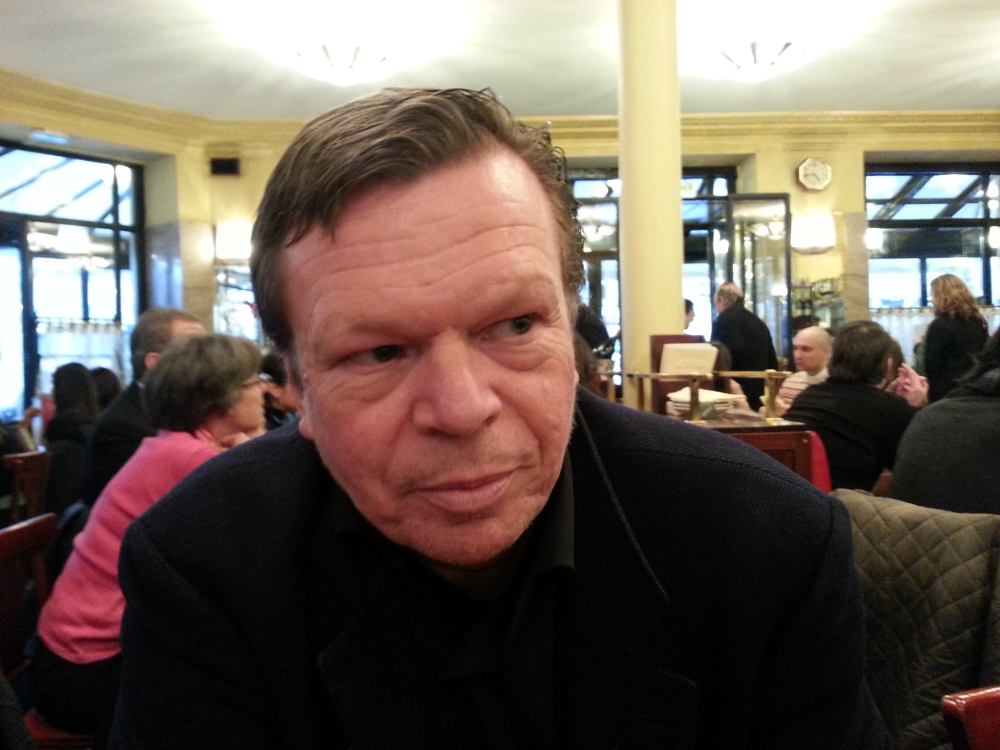
Peter is writer of the series The Heroine’s Journey and Hero’s Journey books, he has an MBA in Marketing, MBA in Financial Economics and graduated at university in Sociology and Communication Sciences.
Become a Great Storyteller
That’s why I set up The Power of your Story journey in the great cities of the world. A new way to use the power of your story. To guide you to life-changing, eye-opening movies, art, literature that truly have the power to enchant, enrich and inspire.
In this journey with Peter de Kuster you’ll explore your relationship with stories so far and your unique story identity will be sketched. You will be guided to movies, art, literature, myths that can put their finger on what you want to rewrite in your story, the feelings that you may often have had but perhaps never understood so clearly before; movies that open new perspectives and re-enchant the world for you.
You will be asked to complete a questionnaire in advance of your session and you’ll be given an instant story advice and movies to see to take away. Your full story advice and movies to see list will follow within a couple of days.
Practical Info
The price of this three day storytelling seminar is Euro 2850 excluding VAT per person. There are special prices when you want to attend with three or more people.
You can reach Peter for questions about dates and the program by mailing him at peterdekuster@hotmail.nl
TIMETABLE
09.40 Tea & Coffee on arrival
10.00 Morning Session
13.00 Lunch Break
14.00 Afternoon Session
18.00 Drinks
Read on for a detailed breakdown of the Power of your Story itinerary.
What Can I Expect?
Here’s an outline of the THE POWER OF YOUR STORY journey.
Journey Outline
OLD STORIES
- What is your Story?
- Are you even trying to tell a Story?
- Old Stories (stories about you, your art, your clients, your money, your self promotion, your happiness, your health)
- Tell your current Story
- Is this Really Your Story?
YOUR NEW STORY
- The Premise of your Story. The Purpose of your Life and Art
- The words on your tombstone
- You ultimate mission, out loud
- The Seven Great Plots
- The Twelve Archetypal Heroines
- The One Great Story
- Purpose is Never Forgettable
- Questioning the Premise
- Lining up
- Flawed Alignment, Tragic Ending
- The Three Rules in Storytelling
- Write Your New Story
TURNING STORY INTO ACTION
- Turning your story into action
- The Story Effect
- Story Ritualizing
- The Storyteller and the art of story
- The Power of Your Story
- Storyboarding your creative process
- They Created and Lived Happily Ever After
 The Power of Your Story