Charles is “stuck.” That’s the word more than one person uses to describe him. He spends most of his time in the second floor apartment of his Brooklyn walk-up, as oblivious to the world outside as it is to him. When his very pregnant neighbor from the building next door says she’s never seen him before, she quantifies that detail with the number of years she’s lived a stone’s throw away. Charles’ fellow tenants recognize him, but have yet to interact with him in any meaningful way. When writer/director Casimir Nozkowski’s “The Outside Story” opens, Charles is even more stuck than usual; he’s just broken up with his live-in girlfriend Isha, a woman everyone in the neighborhood seems to know. In fact, she is the connection point whenever Charles has to introduce himself to his fellow denizens.
She’s also the sole reason Charles leaves the house, as he’s promised to honor alternate side of the street parking for her car as she prepares to move out of his place. That traffic ticket bane of New York City area existence is what sets the story in motion. After he’s dissed over a lack of tip by his food delivery guy—the one person who has seen him on the regular—Charles accidentally grabs the wrong set of keys and leaves his house to chase the guy down and offer him a measly dollar. The good intention causes him to be locked outside draped in a ratty sweater and minus his shoes. As if this weren’t enough trouble, Charles is also on an editing deadline for Turner Classic Movies. If he can’t get back inside, and soon, he just may lose his job.
So begins his journey through the neighborhood, reconnecting with the life outside his apartment. Nozkowski crafts a sweet, gentle situational comedy, surrounding his lead with a slew of supporting characters whose expected quirkiness is sharpened by a heaping dash of saltiness and keen observation. Of course, everyone has some wisdom to impart to Charles, but the method, and Charles’ response, unfold in often unexpected ways. Much of this stems from the actors, all of whom make meals out of the smallest parts. They’re in a playful orbit around the film’s worthy, shining star.
We know there has to be a scene where Charles becomes “unstuck,” that is, he returns to life. But “The Outside Story” doesn’t make it a grandiose gesture. Instead, the film portrays it as a silent moment on his part. The camera stays on his face, and his response is simultaneously heartbreaking and uplifting. This is a beautiful performance, a calling card for the starring roles to come.
Much of his role is some form of exasperated response to the situation at hand, a situation that can’t help but get escalated by fate and Charles’ reaction. These scenes play out with everyone from the ticket-crazy Officer Slater, who takes sadistic glee in writing parking citations, to Andre, the upstairs neighbor Charles keeps inconveniencing every time he needs to get buzzed into the building. These antagonistic yet comic run-ins occur alongside sweeter interactions between Charles and his piano-playing young neighbor Elena and the older, widowed neighborhood lifer, Sara. “The Outside Story” is smart enough to flesh each character out so well that one could easily follow them into a movie of their own.
For example, Charles convinces Elena to let him into her house so he can charge his now dead cellphone in case his landlord calls back about dropping off a spare set of keys. Inside, we meet Elena’s mother, a Mama Rose-type who has had some success on the stage (“One review said I was the best nun!” she proudly tells Charles) and who demands Elena perform her recital piece for their guest. When Elena refuses, it causes a bit of uncomfortable dispute. This one scene plays like a mini-movie, a tangent that at first seems extraneous. But there’s a payoff later, one that gives Elena a poignant depth.
Also, Andre’s arc proves more interesting than it first appears. It turns out his exasperation at Charles’ numerous interruptions is due to the fact he’s in a romantic relationship with a married couple. The film doesn’t treat this with any salaciousness. Instead, the trio offer Charles advice about how to deal with his feelings about the breakup. One would never expect a candid, touching meditation on the uselessness of jealousy to come from a setup like this.
And then there’s Isha, who haunts the film via a few carefully chosen flashbacks before making her grand entrance in the final scenes. She’s so tired of Charles’ ennui that she commits a bit of infidelity that, while not a home run in the scoring department, would still merit at least a double. Isha shows up with moving men ready to take her stuff from Charles’ abode, and her former paramour’s potentially unsuccessful attempt to show that he has changed results in a hilarious and sad piece of cringe comedy slapstick that Charles and the moving men superbly execute.
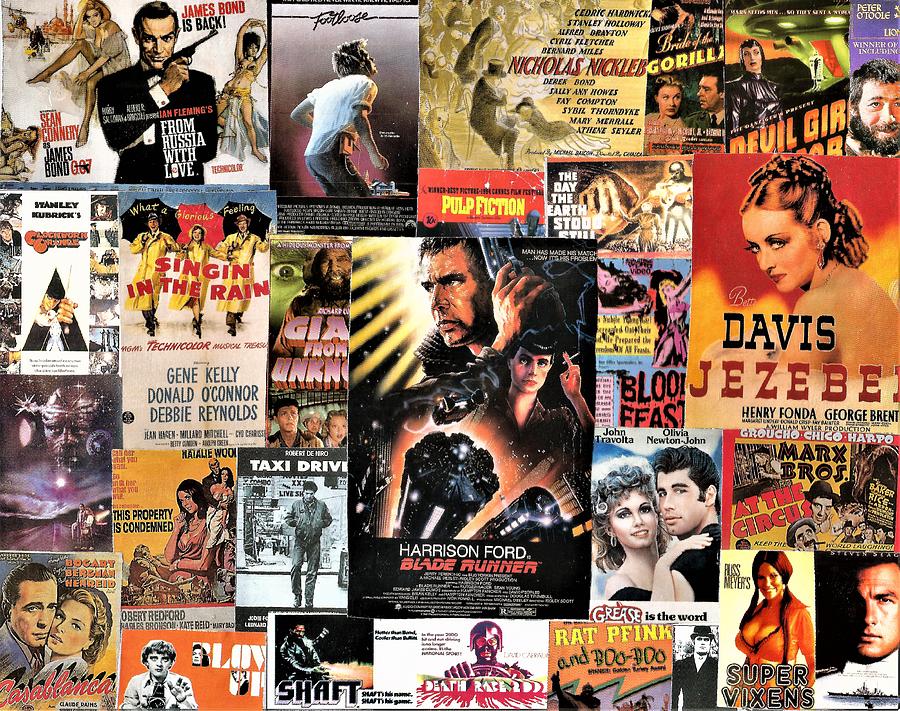
I haven’t even gotten to what exactly Charles does for TCM, which I’ll not reveal. His edited pieces use fictitious actors, yet the response he has to them is strong enough for you to feel his love and admiration. There’s a film geek’s running joke here: every time Charles mentions his current subject, someone responds with a description of one of the actor’s films. Charles provides the title, and everyone bonds around how great the performance is in it.
STORY COACHING
THE POWER OF YOUR STORY. REWRITE YOUR STORY, TRANSFORM YOUR LIFE AND BUSINESS
“Your story is your life,” says Peter de Kuster. As human beings, we continually tell ourselves stories — of success or failure; of power or victimhood; stories that endure for an hour, or a day, or an entire lifetime. We have stories about ourselves, our creative business, our customers ; about what we want and what we’re capable of achieving. Yet, while our stories profoundly affect how others see us and we see ourselves, too few of us even recognize that we’re telling stories, or what they are, or that we can change them — and, in turn, transform our very destinies.
Telling ourselves stories provides structure and direction as we navigate life’s challenges and opportunities, and helps us interpret our goals and skills. Stories make sense of chaos; they organize our many divergent experiences into a coherent thread; they shape our entire reality. And far too many of our stories, says Peter, are dysfunctional, in need of serious editing. First, he asks you to answer the question, “In which areas of my life is it clear that I cannot achieve my goals with the story I’ve got?” He then shows you how to create new, reality-based stories that inspire you to action, and take you where you want to go both in your work and personal life.
Our capacity to tell stories is one of our profoundest gifts. Peter’s approach to creating deeply engaging stories will give you the tools to wield the power of storytelling and forever change your business and personal life.
Amidst today’s uncertainty, it is more important than ever to rewrite your story and transform your life and work. Dive deep into your unique story and areas for growth with the coaching of Peter de Kuster.
IS THE POWER OF YOUR STORY COACHING FOR YOU?
 You are a professional who is interested in transform the story you tell yourself about yourself to yourself. The story about your life, the story about your relations, the story about your work or your story about your happiness.
- You are aware that there are no quick fixes. Learning is a journey that works when you are fully committed to it. Coaching can bring awareness and help you navigate, but in the end it’s you who is in charge of your growth.
- You want to learn more about how to resource yourself, learn about blind spots, and get feedback.
- You are curious and want to engage in online coaching
- You are motivated to work in-between sessions on yourself (e.g. working on homework assignments that will help you develop new storytelling, skills, and behaviors).
WHAT’S YOUR COACHING QUESTION?
The Power of Your Story Coaching is all about your development. To make the most out of your sessions, we ask you to prepare topics to work on with Peter. These topics can serve as a starting point for further in-depth exploration with Peter.
These coaching topics typically resonate with the professionals Peter works with:
How can I stay authentic?
What are my values and how do I align these with my life and work?
How can I manage my time and energy better?
How can I have impact with my stories?
How can I handle pressure better?
About Peter de Kuster
Peter de Kuster is the founder of The Power of Your Story project, a storytelling firm which helps professionals to create careers and lives based on whatever story is most integral to their lives and careers (values, traits, skills and experiences). Peter’s approach combines in-depth storytelling and marketing expertise, and for over 20 years clients have found it effective with a wide range of creative business issues.

Peter is writer of the series The Heroine’s Journey and Hero’s Journey books, he has an MBA in Marketing, MBA in Financial Economics and graduated at university in Sociology and Communication Sciences.
PRICING
1 session for EUR 350 (excl. VAT)
3 sessions for EUR 995 (excl. VAT)
6 sessions for EUR 1,950 (excl. VAT)
9 sessions for EUR 2,850 (excl. VAT)
FAQ
Who can sign up for The Power of Your Story coaching?
Professionals who wish to improve their storytelling skills and mindset.
What language do we speak in the coaching sessions?
English.
Can I buy coaching for my organization?
Yes, you can! We support many organizations around the world with their coaching needs. Please contact us for more information.
Can I bring my own topics?
Yes, for individual coaching you get to choose your own topic.
Are coaching sessions confidential?
Yes. Peter will not share anything that is discussed in the coaching sessions.
How do I sign up?
Send Peter a mail to theherojourneyquestionnaires@gmail.com to start booking your coaching sessions.
 The Power of Your Story