“The Dry,” the film adaptation of Jane Harper’s 2016 international bestseller of the same name, opens with aerial shots of the parched land in Kiewarra, a farming community somewhere outside Melbourne. But there’s clearly no farming going on in the arid expanse below, with its lifeless stretches of dried brown fields. These shots continue throughout “The Dry,” directed by Robert Connolly grounding “The Dry” in a very specific world, a very specific time. This is a “whodunit,” but the atmosphere is not generic in any way, and the immense heat is felt in every scene, where the fields and tinder-box trees look stunted and almost terrified. The same goes for the community huddled in the midst of “the dry.” They are all trapped in space and time, not only by the drought, but by two crimes, separated by decades, all of which threatens to set the whole place ablaze.
City detective Aaron Falk, who grew up in Kiewarra, returns for the funeral of Luke Hadler, a childhood friend. This funeral is not your run-of-the-mill sad affair: Luke shot his wife Karen and their small son, before shooting himself. Aaron’s return to town stirs up memories of a scandal from 20 years ago, when a teenage girl named Ellie drowned under mysterious circumstances, circumstances which implicated both Luke and Aaron. Both boys were suspects in her death, and they lied to the police to cover their tracks. The scandal was so intense that Aaron’s family left town and never came back. Aaron walks back into a hurting community, suffering from the drought, and still in a rage about what happened years before.
Aaron’s return is greeted with hostility by most town members, particularly Ellie’s father, who blames Aaron for his daughter’s death. Luke’s parents, however, convince Aaron to stay on to look into the closed case: they believe their son could never have done such a thing, they think there might have been foul play. Against his better judgment, struggling with guilt and ambivalence, Aaron stays. He teams up with Greg Raco, the local police sergeant, who is traumatized from discovering the bodies and inexperienced at investigating violent crimes. Still, though, Greg is a good cop, and has strong sense that there was something very “off” about that crime scene.
Intriguing flashbacks, presented in subjective fragments, are sprinkled throughout the film, interrupting Aaron’s present-day investigation. Creating a collage of the activities of the group of four friends—Ellie, Luke, Gretchen, and Aaron—leading up to Ellie’s death. The flashbacks never show too much, revealing their truths slowly and inadvertently, sometimes jumping backwards or forwards. The approach makes the audience the detective, trying to interpret the information provided. Luke appears to be pursuing Ellie (albeit in a rough-house way), while Aaron has a silent crush on her. Gretchen is a mostly-passive hanger-on. Bana’s grim and troubled demeanor shows how haunted he is at every turn by his young self, his young friends, the beautiful laughing doomed Ellie.
As “The Dry” progresses, so, too, do these flashbacks, leading us closer and closer to Ellie’s drowning. As seen through the present-day, where suspicion of Aaron still lingers, these flashbacks shed doubt on every single thing not only he says, but everyone else. Aaron reunites with Gretchen , and they share memories of Luke, of Ellie. Nobody seems to have any clue what set Luke off, why he would kill his family.
“The Dry” is filled with memorable characters: the small-town doctor, the harried grade school principal, the taciturn farmer living with his grandmother: all of these people have secrets, but whether or not the secrets have anything to do with the crime is unknown. Aaron must wade through all of it. Part of the joy of “The Dry” is watching this excellent cast in action.
Cinematographer Stefan Duscio gives us enormous wide shots of the drought-parched land, with the smoke of wildfires billowing up in the distance, or dust devils spiraling their way across dried fields, cars barreling towards town creating huge dusty trails behind them, all of which gives an eerie sense of isolation and struggle. “The Dry” never lets you forget where you are. This is most evident in the scene when Aaron goes back to the river where Ellie drowned. Only, the river has dried up, leaving just a cavern cutting through the dirt.
Bana is wonderful at mixing the confidence of the “big city” cop with the anxiety of a man grappling with his dark past. Whatever his guilt may or may not be in regards to Ellie’s death—and the film is a “whodunit” on two separate tracks—he feels inhibited from proclaiming his innocence. There’s a sadness in Bana’s face, in his posture, a tortured grief and guilt, but overlaying that is the competence and canniness of a cop alert to suspicious behavior and inconsistencies. In its own quiet way, it’s a very effective and emotional performance.
STORY COACHING
THE POWER OF YOUR STORY. REWRITE YOUR STORY, TRANSFORM YOUR LIFE AND BUSINESS
“Your story is your life,” says Peter de Kuster. As human beings, we continually tell ourselves stories — of success or failure; of power or victimhood; stories that endure for an hour, or a day, or an entire lifetime. We have stories about ourselves, our creative business, our customers ; about what we want and what we’re capable of achieving. Yet, while our stories profoundly affect how others see us and we see ourselves, too few of us even recognize that we’re telling stories, or what they are, or that we can change them — and, in turn, transform our very destinies.
Telling ourselves stories provides structure and direction as we navigate life’s challenges and opportunities, and helps us interpret our goals and skills. Stories make sense of chaos; they organize our many divergent experiences into a coherent thread; they shape our entire reality. And far too many of our stories, says Peter, are dysfunctional, in need of serious editing. First, he asks you to answer the question, “In which areas of my life is it clear that I cannot achieve my goals with the story I’ve got?” He then shows you how to create new, reality-based stories that inspire you to action, and take you where you want to go both in your work and personal life.
Our capacity to tell stories is one of our profoundest gifts. Peter’s approach to creating deeply engaging stories will give you the tools to wield the power of storytelling and forever change your business and personal life.
Amidst today’s uncertainty, it is more important than ever to rewrite your story and transform your life and work. Dive deep into your unique story and areas for growth with the coaching of Peter de Kuster.
IS THE POWER OF YOUR STORY COACHING FOR YOU?
 You are a professional who is interested in transform the story you tell yourself about yourself to yourself. The story about your life, the story about your relations, the story about your work or your story about your happiness.
- You are aware that there are no quick fixes. Learning is a journey that works when you are fully committed to it. Coaching can bring awareness and help you navigate, but in the end it’s you who is in charge of your growth.
- You want to learn more about how to resource yourself, learn about blind spots, and get feedback.
- You are curious and want to engage in online coaching
- You are motivated to work in-between sessions on yourself (e.g. working on homework assignments that will help you develop new storytelling, skills, and behaviors).
WHAT’S YOUR COACHING QUESTION?
The Power of Your Story Coaching is all about your development. To make the most out of your sessions, we ask you to prepare topics to work on with Peter. These topics can serve as a starting point for further in-depth exploration with Peter.
These coaching topics typically resonate with the professionals Peter works with:
How can I stay authentic?
What are my values and how do I align these with my life and work?
How can I manage my time and energy better?
How can I have impact with my stories?
How can I handle pressure better?
About Peter de Kuster
Peter de Kuster is the founder of The Power of Your Story project, a storytelling firm which helps professionals to create careers and lives based on whatever story is most integral to their lives and careers (values, traits, skills and experiences). Peter’s approach combines in-depth storytelling and marketing expertise, and for over 20 years clients have found it effective with a wide range of creative business issues.
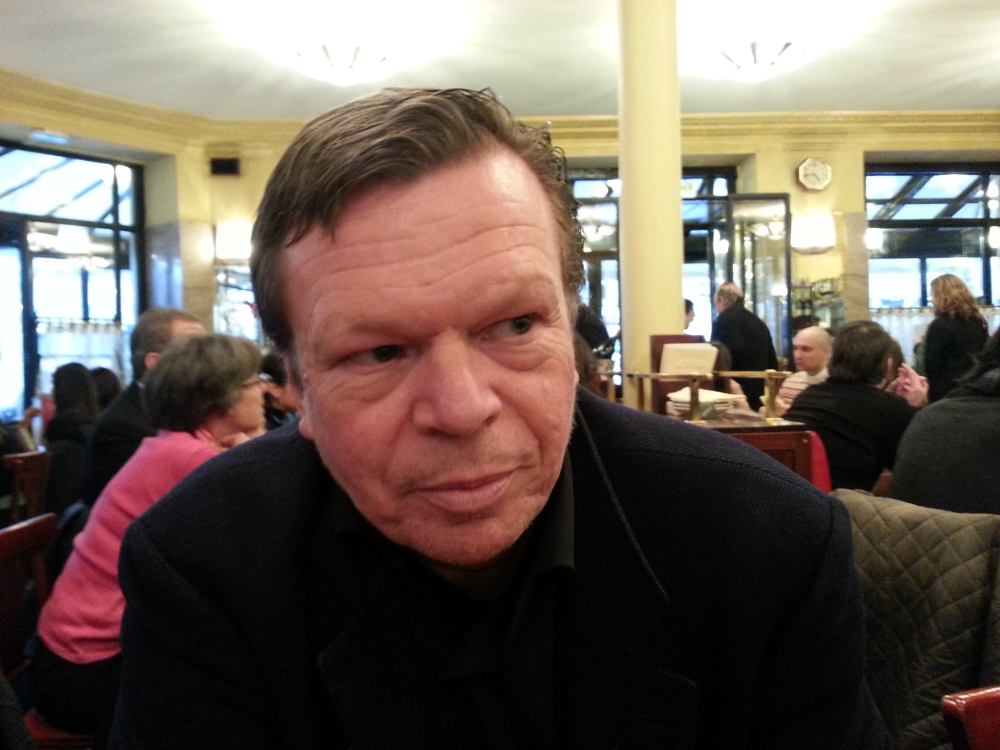
Peter is writer of the series The Heroine’s Journey and Hero’s Journey books, he has an MBA in Marketing, MBA in Financial Economics and graduated at university in Sociology and Communication Sciences.
PRICING
1 session for EUR 350 (excl. VAT)
3 sessions for EUR 995 (excl. VAT)
6 sessions for EUR 1,950 (excl. VAT)
9 sessions for EUR 2,850 (excl. VAT)
FAQ
Who can sign up for The Power of Your Story coaching?
Professionals who wish to improve their storytelling skills and mindset.
What language do we speak in the coaching sessions?
English.
Can I buy coaching for my organization?
Yes, you can! We support many organizations around the world with their coaching needs. Please contact us for more information.
Can I bring my own topics?
Yes, for individual coaching you get to choose your own topic.
Are coaching sessions confidential?
Yes. Peter will not share anything that is discussed in the coaching sessions.
How do I sign up?
Send Peter a mail to theherojourneyquestionnaires@gmail.com to start booking your coaching sessions.
How do I pay?
After you send the mail, you will receive an email with a link to pay.
How do I book and reschedule sessions?
Once we’ve received your payment, Peter will contact you and book your coaching sessions. He will also support you with rescheduling sessions if needed.
What is your cancellation policy?
Individual coaching sessions can be postponed up to one week before the session.
 The Power of Your Story