The first two series of Follow the Money were spent in fancy offices and boardrooms of Energreen and Absalon Bank respectively. With the third and final series, we depart from the previous two and set off on what has been described as almost a spin-off.
It is immediately signalled in the opening credits, where we literally follow drug money from a buyer on the street through many hands to the mechanic sealing it in the door of a car for onward transport across borders. Unusually for drama from DR, it is even been stamped season three rather than episode 21. The message is clear: we should expect something new. And it delivers. This is, in fact, the best series and, luckily, very watchable, even if you haven’t seen one and two. The only characters that remain are Alf (Thomas Hwan) and Nicky (Esben Smed).
So where did we leave them?
During the final stages of investigation in series two, Alf had been shot and seriously injured by the Evil Swede, banker Christensen’s somewhat unlikely but very efficient fixer/hitman. His partner, Mads, had of his own accord decided to make a deal with a corrupt English top shot to ward off the attack on the Danish currency which risked bankrupting the entire country. He then resigned from the police force to spend time with his ill wife and new baby meaning the partnership with Alf ended. Two years later Alf is no longer in the Financial Crimes Unit but is instead working for Task Force Nørrebro and focusing on drug trade in Copenhagen.
Nicky was working for Evil Swede, before things blew up and he killed him as revenge for his friend Bimse’s death. (I can’t be the only one still sad about Bimse.) Having to flee the country, Nicky then dumped a bag of cash with his girlfriend Lina and left her and young son Milas without a word. Now, Nicky has returned and set up a juice bar to serve as a front where he can launder some of his revenue from his real business, importing hash from southern Europe. In what I like to think is a nod to Stringer Bell and The Wire, we also find him in business school, when he has the time.
Alf is suffering from PTSD and unable to sleep. His doctor who won’t prescribe sleeping pills anymore and would rather see him on sick leave from work. Predictably he doesn’t agree. “I just need to fucking sleep!” His frustration is clear also during a surveillance operation at a gym. His background and approach are different to his those of his more adrenaline-driven colleagues and he openly challenges the case lead Møller (Esben Dalgaard Andersen) who decides to make an arrest rather than wait to wait and follow the money higher up the chain. The team, however, are very happy with the 350 kilos of hash they find and consider it a great success. Tension between colleagues is, of course, a staple ingredient and rather fun but shouldn’t be taken too far or it’ll just detract from the plot. Alf has also got himself into a relationship with married prosecutor Isa (Marie Askehave). He’s in a bit of a mess. The contrast in his situation from previous series is clear.
Meanwhile, there is increasing demand for Nicky’s goods and he agrees to supply though his system isn’t yet equipped for it. The juice bar, managed by Lala (Dulfi Al-Jabouri), can only funnel so much, and Jawad’s exchange bureau is also limited. Jawad (Imad Abul-Foul) suggests his nephew can be of use but when meeting him Nicky clocks him as a clown who will draw police attention immediately an no one to do business with. Every step is considered. It’s clear Nicky has kept progressing in his field while away from Denmark. We are shown that Nicky is now one of the big boys. Not least by his security measures at home. To convince Jawad, Nicky let’s on he is building a network in Denmark for Marco. This name dropping unsettles Jawad and he agrees to process the money this once.
The more human and vulnerable side of Nicky comes out as we see him find out from a bent copper that his son has ended up in care with a foster family. Having initially thrown away all the information he later comes back to rummage through the bin to recover it. We need to have a reason to like the criminals and care about what happens to them as a story progresses and here we have a sudden reminder for Nicky that there are things beyond drug trade. These scenes are very well played by Esben Smed.
Happily for the task force, the phones that were seized along with all the hash turn out to be useful. They lead the team to an address where they start to methodically search the cellar looking for more drugs. The dog is soon onto something and Alf finds a door to a hidden storage space. As the light comes on the horror is revealed. Eight people lie dead.
In the ensuing hurry to find the owner of the storage room Alf is still shaken up and and accidentally fires his weapon while searching a flat with Møller. This is more important than personal differences so Møller quickly decides how this is to be explained away.
The dead Romanians are found to be business owners on paper and used as pawns for money laundering. Storm stops Alf from resigning and makes him lead on the case.
In episode two we meet Anna, the third main character of the series. She’s a competent and experienced long-term employee at a bank who had hoped to become the new branch director. Her boss offers useless platitudes when he tells her she didn’t get the promotion – later he reuses them to announce that Anna’s junior colleague Nete got the job. When Follow the Money was broadcast in Denmark, Maria Rich’s portrayal of Anna was much praised. She indeed plays this role beautifully. You can sense it’s not the first time Anna has been undervalued and overlooked for promotion. Her disappointment is too painful. At home too, there is little appreciation from her husband and son. Their attention is elsewhere. Until, that is, Søren (Jacob Hauberg Lohmann) needs help as his supplier of essential materials has had his accounts frozen and now construction will have to halt costing Søren money he doesn’t have. He hasn’t been forthcoming with the state of his business it seems.
A few extra hands are added to the team and Alf’s investigation. Among them is Stine (Marijana Jankovic) who is immediately wise to the dynamics of the group and encourages Alf to assert his authority as lead investigator rather than let Møller get away with de facto making the decisions about what constitutes real and important police work and leaving the paper work to Bjørn. Yes please, it’s good to have a no nonsense, strong woman in this group to make sure things will run a bit more smoothly. Of course, there is Isa as well, who won’t let the police get away with shoddy work. After all it’s the prosecutor that need to have a strong case in court at the end of it.
The investigation continues and the owner of the storage room that housed the eight dead Romanians is caught and admits he sublet it to a man he never met, Marco. Coupled with Bjørns paper trail findings, namely lots of money going through Jawad’s company both kinds of police work are starting to pay off. From a viewer’s perspective it nice to have a good balance and a change of pace in the storytelling that automatically comes with the different aspects of police investigations.
Anna relents, her loyalty to the bank presumably depleted, and covers Rune’s tracks of transferring a couple of million kroner from Norway to Russia. She’s visibly excited by the power of having done it. When she finds her husband has gone to play footy with the lads that evening, after having just saved his bacon, she takes up Rune’s offer of dinner. He gives her, and us, his analysis of who she is and he’s certainly more insightful than Søren. He also knows the effect his flattery has on her. “You’re good and others would pay well for your services.” We already know who is in need of such services so let’s assume it’s only a matter of time before the connection is made.
Nicky is getting on with importing more goods and quicker to meet the demands of his customers. Though he has also taken the time to look up his ex Lina at an inpatient facility to find out what happened to Milas. In their brief conversation he has the nerve to reproach her for having let her aunt and uncle care for Milas when “he needs his mother”. Her shouted apology snaps Nicky back to the reality where he left them both and didn’t look back for two years.
Jawad’s CCTV footage doesn’t initially turn up any leads for the police. But in a surprising turn of events Alf gets some OxyContin whilst out for one of his late-night runs, promptly pops four at once, and then manages to find an indication that the CCTV had been turned off briefly. Something shady is clearly going on in Jawad’s cellar. Just as well that Alf has something good to show for it when he rushes to work the next afternoon after having passed out and finally stayed asleep for longer than an hour. Even Møller seems impressed. Here is a strong lead to follow up on. Maybe there will be a better atmosphere at work from now on?
There is a risk with series depicting environments that are heavily male-dominated that there is too much testosterone on display and it becomes either bit ridiculous or even gratuitously violent. At two episodes in that’s not been a problem here. As long as the personality clash between Alf and Møller doesn’t escalate to a pissing contest, we should be fine. Let’s see going forward.
Some series take a while to get started. The laying out of the plot can take some time and progression feels a bit slow. That’s not the case here. We’re hitting the ground running and the series is immediately engaging with a well-crafted script. The introduction of many new characters can sometimes be a bit overwhelming but even though almost all the characters are new, there is no confusion. It helps, of course, that we have a very strong and recognisable ensemble. Every role is cast perfectly.
It is also a very well-timed series thematically, both in terms of gang crime flaring up locally and money laundering being exposed within a big Danish bank recently. I suspect this makes the series much more interesting to most viewers than the very intricate financial plot of the second series. It’s entertainment first and foremost, of course, but also dealing with relevant issues in society.
STORY COACHING

THE POWER OF YOUR STORY. REWRITE YOUR STORY, TRANSFORM YOUR LIFE AND BUSINESS
“Your story is your life,” says Peter de Kuster. As human beings, we continually tell ourselves stories — of success or failure; of power or victimhood; stories that endure for an hour, or a day, or an entire lifetime. We have stories about ourselves, our creative business, our customers ; about what we want and what we’re capable of achieving. Yet, while our stories profoundly affect how others see us and we see ourselves, too few of us even recognize that we’re telling stories, or what they are, or that we can change them — and, in turn, transform our very destinies.
Telling ourselves stories provides structure and direction as we navigate life’s challenges and opportunities, and helps us interpret our goals and skills. Stories make sense of chaos; they organize our many divergent experiences into a coherent thread; they shape our entire reality. And far too many of our stories, says Peter, are dysfunctional, in need of serious editing. First, he asks you to answer the question, “In which areas of my life is it clear that I cannot achieve my goals with the story I’ve got?” He then shows you how to create new, reality-based stories that inspire you to action, and take you where you want to go both in your work and personal life.
Our capacity to tell stories is one of our profoundest gifts. Peter’s approach to creating deeply engaging stories will give you the tools to wield the power of storytelling and forever change your business and personal life.
Amidst today’s uncertainty, it is more important than ever to rewrite your story and transform your life and work. Dive deep into your unique story and areas for growth with the coaching of Peter de Kuster.
IS THE POWER OF YOUR STORY COACHING FOR YOU?
 You are a professional who is interested in transform the story you tell yourself about yourself to yourself. The story about your life, the story about your relations, the story about your work or your story about your happiness.
- You are aware that there are no quick fixes. Learning is a journey that works when you are fully committed to it. Coaching can bring awareness and help you navigate, but in the end it’s you who is in charge of your growth.
- You want to learn more about how to resource yourself, learn about blind spots, and get feedback.
- You are curious and want to engage in online coaching
- You are motivated to work in-between sessions on yourself (e.g. working on homework assignments that will help you develop new storytelling, skills, and behaviors).
WHAT’S YOUR COACHING QUESTION?
The Power of Your Story Coaching is all about your development. To make the most out of your sessions, we ask you to prepare topics to work on with Peter. These topics can serve as a starting point for further in-depth exploration with Peter.
These coaching topics typically resonate with the professionals Peter works with:
How can I stay authentic?
What are my values and how do I align these with my life and work?
How can I manage my time and energy better?
How can I have impact with my stories?
How can I handle pressure better?
About Peter de Kuster
Peter de Kuster is the founder of The Power of Your Story project, a storytelling firm which helps professionals to create careers and lives based on whatever story is most integral to their lives and careers (values, traits, skills and experiences). Peter’s approach combines in-depth storytelling and marketing expertise, and for over 20 years clients have found it effective with a wide range of creative business issues.
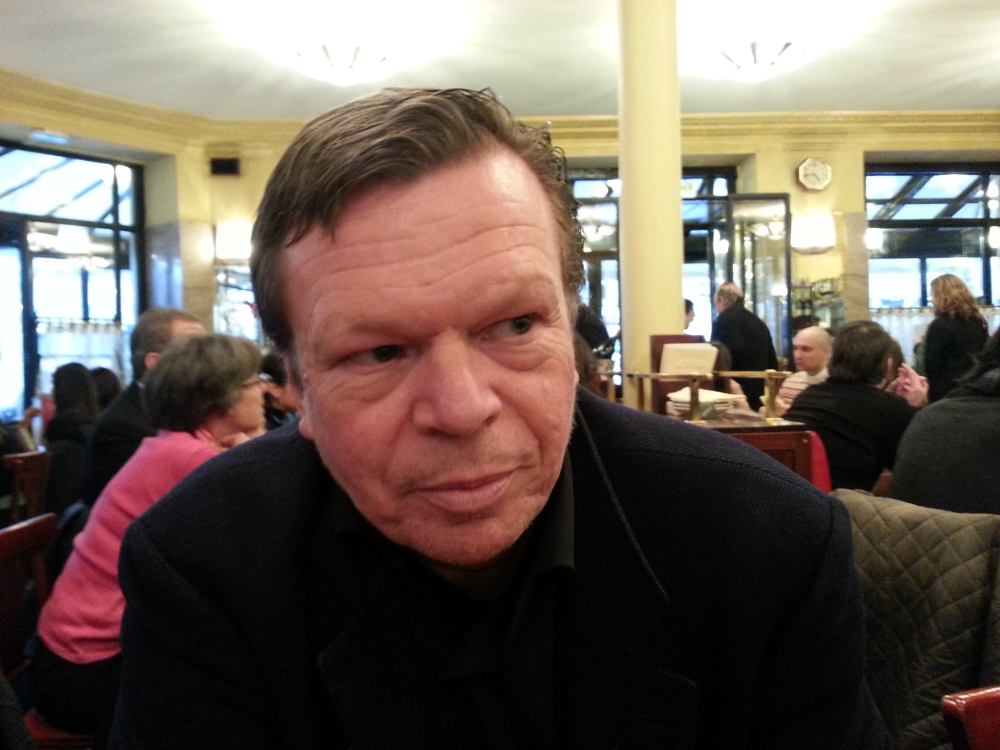
Peter is writer of the series The Heroine’s Journey and Hero’s Journey books, he has an MBA in Marketing, MBA in Financial Economics and graduated at university in Sociology and Communication Sciences.
PRICING
1 session for EUR 350 (excl. VAT)
3 sessions for EUR 995 (excl. VAT)
6 sessions for EUR 1,950 (excl. VAT)
9 sessions for EUR 2,850 (excl. VAT)
FAQ
Who can sign up for The Power of Your Story coaching?
Professionals who wish to improve their storytelling skills and mindset.
What language do we speak in the coaching sessions?
English.
Can I buy coaching for my organization?
Yes, you can! We support many organizations around the world with their coaching needs. Please contact us for more information.
Can I bring my own topics?
Yes, for individual coaching you get to choose your own topic.
Are coaching sessions confidential?
Yes. Peter will not share anything that is discussed in the coaching sessions.
How do I sign up?
Send Peter a mail to theherojourneyquestionnaires@gmail.com to start booking your coaching sessions.
How do I pay?
After you send the mail, you will receive an email with a link to pay.
How do I book and reschedule sessions?
Once we’ve received your payment, Peter will contact you and book your coaching sessions. He will also support you with rescheduling sessions if needed.
What is your cancellation policy?
Individual coaching sessions can be postponed up to one week before the session.
 The Power of Your Story