“Halston” is an empathetic portrait of someone you wouldn’t want to work for, be in love with, or trust a great deal of money with. The American women’s fashion designer, an “artist who liked to spend money,” was audacious to put it lightly, and so too is this compelling epic about ego that embeds you in his world of brilliant designs and self-sabotage. It doesn’t hurt that it has a career-best performance from Ewan McGregor as its center, who approaches the grandeur of Roy Halston as if the fashion designer were an actor, and matches the power of this artist who only wanted to be known by his middle name. And along with exquisite costume design in depicting Halston’s rise and fall from the ‘60s to the late ‘80s, the five episodes are told with restraint and focus by director Daniel Minahan.
The series jumps right to the beginning of Halston’s ascendance, so much that his famous design for the pill box hat worn by Jackie Kennedy is a blink-and-you’ll-miss-it detail, despite the importance it had to getting Halston’s name and fashion into the mainstream. It is framed here as a moment in which Halston’s narcissism wins, but funding is still a problem. The pleasure of this captivating series is getting to see what he does with the opportunities that are given to him, especially when massive companies with seemingly good intent like Norton Simon convince him to let them use Halston’s name.
But Halston didn’t achieve this success alone, even if it takes Halston four episodes here to realize that as part of his emotional journey. The story builds around him a group of up and comers in the scene, who make their own contributions, and are performed with their own compelling grace across the board. There’s Elsa Peretti, his go-to model; or Joe Eula, an illustrator who becomes like an angel on Halston’s shoulder throughout tough decisions. Throughout the series, Halston’s ability for genius cutting and sculpting is on display, but part of the very drama about the series concerns how certain breakthroughs were not exactly his own.
A great example of this comes from fashion history, as with the Halston teardrop perfume bottle. Peretti is shown designing it after a necklace she wore, after Halston insisted on making. He gets pushback from Mahoney that the design isn’t logical or factory assembly-friendly, but nonetheless, Halston was right. The bottle is a hit. And yet this success did not create an openness; it fueled Halston’s stubbornness as a businessman and an artist. Halston’s life decisions become a dirge that the series embraces, especially as he’s presented with numerous doors that could have lead to more commercial success.
The group does have a not-so-secret weapon in Liza Minnelli, a long-time friend of Halston’s. Played here by Krysta Rodriquez, it’s a splashy, charming performance that has the same air of tribute as McGregor’s work, but has more outward fun with recreating Minnelli’s presence on stage or as a star.
McGregor treats Halston as a piece of art, a complex being with always more behind his moments of hubris and genius. A major breakthrough for Halston is presented early, in which he realizes he can slick his hair back, don sunglasses, and lower his voice. It’s a presentation of power, and a costume. There could have been more from this script about how he came to these ideas, but such a moment is telling and adds to the richness of what McGregor is trying to do.
The series’ larger avoidance of young flashbacks—which becomes a bit of a gap in the few instances it does—is nonetheless answered by McGregor’s work. What was Halston the younger like? You can trace it to McGregor’s face, the way he relishes being able to have control and power in the office, but sometimes seems scared by the bare-chested sexuality of escort and artist Victor Hugo. Hugo was Halston’s lover and just one piece of Halston’s long history of transactional, protective relationships. One of McGregor’s most fascinating additions to the image of Halston is that of palpable, guarded insecurity, albeit for someone who would become so self-destructive and later lose the power of his brand name in part because of what ego he had.
A lot of the series’ later passages, especially in this downfall, show Halston at his most self-sabotaging, focusing on luxury or ego instead of creating. “Fashion moves fast,” as Mahoney says, and the competition with Calvin Klein and other names gets out of Halston’s hands quickly, as do his vices of doing cocaine and blowing deadlines. Such scenes exemplify how McGregor approaches this character with complete empathy, embracing how that factor is needed for an actor, or viewer, to connect with such a character. But “Halston” presses on that a great deal, with numerous examples of his gross exorbitance (flying his dinners on a private jet from Manhattan to Montauk), or his stubbornness as an artist to barely do work. Some viewers may not see him as a hero or an artist, and some might even see the project itself as tone-deaf. That becomes a type of litmus test to sticking with “Halston,” which loves its character deeply but also presents his crash in visceral slow motion.
But the world around Halston is captivating, with intoxicating, music-driven sequences that capture the grandeur of Halston’s reign in the ’70s, and there’s a stunning recreation of his famous Olympic Tower studio and showroom, a glass castle in New York City overlooking a cathedral. And Minahan has a sure hand with moving Halston between different friendships, unfolding intimate scenes that show how these people have their own lives and would create their own legacies away from him.
STORY COACHING
THE POWER OF YOUR STORY. REWRITE YOUR STORY, TRANSFORM YOUR LIFE AND BUSINESS
“Your story is your life,” says Peter de Kuster. As human beings, we continually tell ourselves stories — of success or failure; of power or victimhood; stories that endure for an hour, or a day, or an entire lifetime. We have stories about ourselves, our creative business, our customers ; about what we want and what we’re capable of achieving. Yet, while our stories profoundly affect how others see us and we see ourselves, too few of us even recognize that we’re telling stories, or what they are, or that we can change them — and, in turn, transform our very destinies.
Telling ourselves stories provides structure and direction as we navigate life’s challenges and opportunities, and helps us interpret our goals and skills. Stories make sense of chaos; they organize our many divergent experiences into a coherent thread; they shape our entire reality. And far too many of our stories, says Peter, are dysfunctional, in need of serious editing. First, he asks you to answer the question, “In which areas of my life is it clear that I cannot achieve my goals with the story I’ve got?” He then shows you how to create new, reality-based stories that inspire you to action, and take you where you want to go both in your work and personal life.
Our capacity to tell stories is one of our profoundest gifts. Peter’s approach to creating deeply engaging stories will give you the tools to wield the power of storytelling and forever change your business and personal life.
Amidst today’s uncertainty, it is more important than ever to rewrite your story and transform your life and work. Dive deep into your unique story and areas for growth with the coaching of Peter de Kuster.
IS THE POWER OF YOUR STORY COACHING FOR YOU?
 You are a professional who is interested in transform the story you tell yourself about yourself to yourself. The story about your life, the story about your relations, the story about your work or your story about your happiness.
- You are aware that there are no quick fixes. Learning is a journey that works when you are fully committed to it. Coaching can bring awareness and help you navigate, but in the end it’s you who is in charge of your growth.
- You want to learn more about how to resource yourself, learn about blind spots, and get feedback.
- You are curious and want to engage in online coaching
- You are motivated to work in-between sessions on yourself (e.g. working on homework assignments that will help you develop new storytelling, skills, and behaviors).
WHAT’S YOUR COACHING QUESTION?
The Power of Your Story Coaching is all about your development. To make the most out of your sessions, we ask you to prepare topics to work on with Peter. These topics can serve as a starting point for further in-depth exploration with Peter.
These coaching topics typically resonate with the professionals Peter works with:
How can I stay authentic?
What are my values and how do I align these with my life and work?
How can I manage my time and energy better?
How can I have impact with my stories?
How can I handle pressure better?
About Peter de Kuster
Peter de Kuster is the founder of The Power of Your Story project, a storytelling firm which helps professionals to create careers and lives based on whatever story is most integral to their lives and careers (values, traits, skills and experiences). Peter’s approach combines in-depth storytelling and marketing expertise, and for over 20 years clients have found it effective with a wide range of creative business issues.
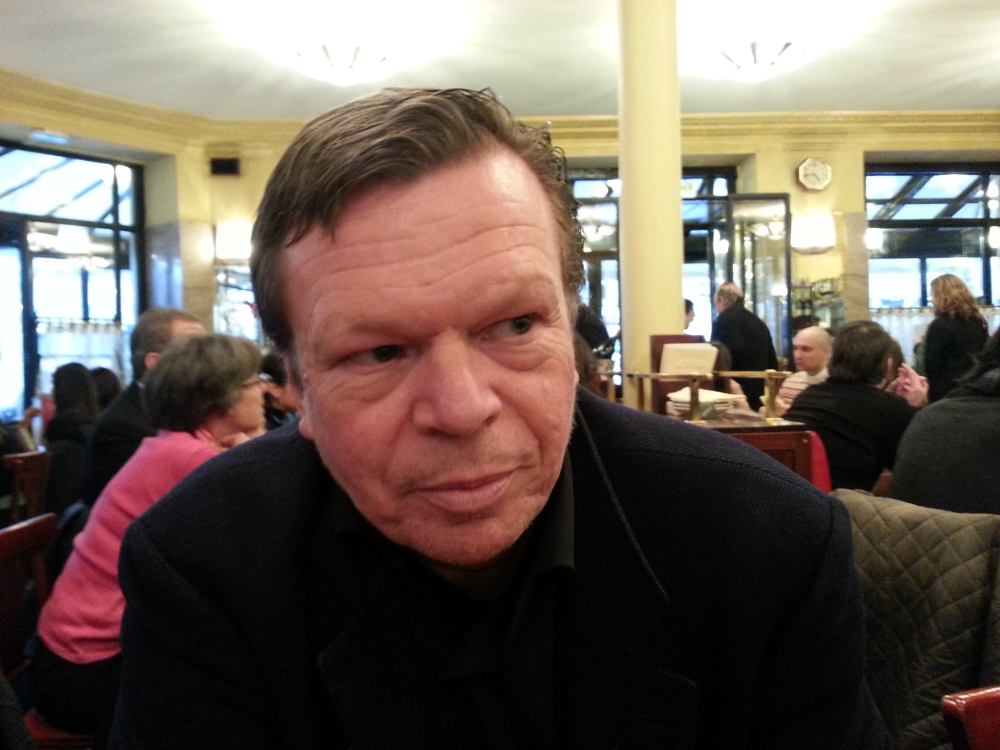
Peter is writer of the series The Heroine’s Journey and Hero’s Journey books, he has an MBA in Marketing, MBA in Financial Economics and graduated at university in Sociology and Communication Sciences.
PRICING
1 session for EUR 350 (excl. VAT)
3 sessions for EUR 995 (excl. VAT)
6 sessions for EUR 1,950 (excl. VAT)
9 sessions for EUR 2,850 (excl. VAT)
FAQ
Who can sign up for The Power of Your Story coaching?
Professionals who wish to improve their storytelling skills and mindset.
What language do we speak in the coaching sessions?
English.
Can I buy coaching for my organization?
Yes, you can! We support many organizations around the world with their coaching needs. Please contact us for more information.
Can I bring my own topics?
Yes, for individual coaching you get to choose your own topic.
Are coaching sessions confidential?
Yes. Peter will not share anything that is discussed in the coaching sessions.
How do I sign up?
Send Peter a mail to theherojourneyquestionnaires@gmail.com to start booking your coaching sessions.
How do I pay?
After you send the mail, you will receive an email with a link to pay.
How do I book and reschedule sessions?
Once we’ve received your payment, Peter will contact you and book your coaching sessions. He will also support you with rescheduling sessions if needed.
What is your cancellation policy?
Individual coaching sessions can be postponed up to one week before the session.
 The Power of Your Story