“Wrath of Man” is one of Guy Ritchie’s best-directed movies—and one of his most surprising, at least in terms of style and tone. Gone is the jumpy, busy, lighthearted, buzzed-bloke-in-a-pub-telling-you-a-tale vibe of film like “Snatch”. In its place is voluptuous darkness, so sinister that you may wonder if its main character is the devil himself.
This character is named Patrick “H” Hill (one letter removed from “Hell”). His coworkers at Los Angeles’ Fortico armored car company call him “H,” which sets him up to be sort of a Kafka character, a nearly nameless cog in a societal machine. H is a rookie on the job. He reads as a surly, socially inept, uncommunicative lump—he barely passes the driving and shooting tests, and his resting face is somewhere between brooding and seething—but his supervisor Bullet hires him anyway because beggars can’t be choosers. Morale has been low ever since a daylight heist became a bloody public shootout that claimed multiple lives, including two Fortico guards.
Adapted from the 2004 French film “Le Convoyeur” (aka “Cash Truck”), and borrowing the basic outline of the story, “Wrath of Man” is a time-shifting neo-noir crime thriller, filled with tough, sometimes violent men: gangsters and former combat veterans, mostly, with a smattering of security guards and cops. Ritchie suggests that H could belong to any of those groups, or might be something else entirely. We instantly suspect he’s not the man he claims to be even if we haven’t seen the trailer (in H’s very first scene, somebody says his name and he replies a half-second later than he should). Then the film lets a couple of major characters suspect the same thing, and then a couple more, until it becomes a regular topic of discussion at Fortico, along with jokes about somebody on the team being an inside man for armored car robbers (which seems plausible, given how often their trucks are attacked).
From there until a third of the way through the story, Ritchie and Statham treat H as a blank screen upon which the imagination can project scenarios. We wonder who H really is and what he actually wants. And we wonder whether his precise response to another heist—shooting a bushel of robbers singlehandedly while crooks use Bullet as human shield and H’s partner, Boy Sweat Dave sits in the driver’s seat of the armored car, paralyzed with fear—is a harbinger of heroic deeds to come, or the opening salvo in an inside-man strategy that will reveal H as a monster of greed and bloodlust.
Then the movie takes us to a different time and place; and then, 15 minutes later, to another time and place; and then another, always giving us additional information about H that will likely negate whatever take you had. This is less of a self-consciously clever Quentin Tarantino-Guy Ritchie maneuver, and more in the poker-faced, un-ironic spirit of classic older films that inspired them, like “The Killing”. To avoid disclosing twists that delighted me (even when, in retrospect, I should’ve seen them coming) let’s say that each narrative shift (heralded by a white-on-black chapter title) widens the movie’s focus, until it becomes a panorama of sleaze and cruelty.
It’s not a spoiler to say that H has a personal reason for what he’s doing at Fortico, and that every one of his actions, no matter how seemingly ill-advised, contributes to his mission, whether he’s baiting a coworker at a bar, threatening another employee at gunpoint into answering some questions, or staring just a bit too long at the wall of ID badges where Fortico employees clock in and out. His cell phone’s ring tone is a sample from Wagner’s “Ride of the Valkryies,” and there’s zero indication that H picked it because he thought it was funny. He looks like a guy who laughed four times in the 1990s and decided it wasn’t for him.
There’s a touch of Clint Eastwood’s hero-as-horror-movie-stalker characters in the film’s presentation of H. He’s never really happy unless he’s torturing or killing somebody that he thinks deserves to suffer pain, but even then, he doesn’t seem happy. He seems driven by a code and a sense of duty rather than by the raw emotions he ought to be feeling, based on what we come to know about him.
The Eastwood vibe is so strong that it makes the decision to cast Eastwood’s son Scott as a snotty psycho named Jan seem like critical commentary on cinema history. Ritchie might be the first director to find something uniquely malignant in the younger Eastwood’s screen presence, which is reminiscent of his dad in the pre-spaghetti Western era, before he figured out how to be a star. Jan oozes fratty entitlement, and his smirky, gum-chewing, rebel-without-a-grievance shallowness is central to his vileness. He’s the kind of crook who is specifically warned not to buy anything expensive after a heist, then gets himself a loft apartment and a $28,000 bike and seems offended when a colleague calls him out.
He’s just one more snake in the snake pit. There are three, maybe four major characters in this film that you’d briefly consider saving from a house fire. H and Jan aren’t on the list. Nor are Boy Sweat Dave or the ex-mercenaries Carlos, Sam and Jackson, or a mysterious law enforcement bigwig known only as The King (Andy Garcia) who finds out that H is tearing through the underworld and decides to stand back and let him do his thing. “Let the painter paint,” he says, describing its vigilante hero: “Creasy’s art is death, and he’s about to paint his masterpiece.”
If there’s a problem with the movie, it’s that the blood-painter H is so mesmerizing—the kind of driven, merciless antihero who keeps you guessing as to whether he even has a soul to lose—that whenever “Wrath of Man” leaves him to flesh out the other characters, they can’t measure up because their badness is too legible. They want money, they want respect, they’re bored and need something to do, etc. They don’t enter the room and bring the smell of sulphur with them, like H.
You need just the right actor for such an innately ludicrous part. Statham is it. He’s always been a more versatile and game leading man than his lad-movie resume might indicate— he’s always got that economical, Old Hollywood movie star work ethic, giving viewers the information they need at the moment when they need it.
There aren’t many adjectives in his acting here. It’s a nouns-and-verbs star turn, like Eastwood and Charles Bronsonin Sergio Leone’s Westerns. When H’s office manager, Terry, says the new guy is “colder than a reptile,” it seems like an understatement. Ritchie amplifies Statham’s choices by treating his shaved dome and wood-carved face as sinister art objects, hiding his eyes in shadow as H processes bad news and giving his noggin the Colonel Kurtz globe-of-doom treatment.
More so than any other Ritchie film, you feel the presence of Evil in this one, in the capital-E, mythological or biblical sense, soul-rotting and innocence-killing, not “bad guy does bad things while laughing.” The completeness and sureness of the movie’s aesthetic is a joy to behold, even when the images capture human beings doing savage things. You don’t really root for anyone in this film. They are criminals engaged in contests of will. But the film is not a value-neutral exercise. There is an undertone of lament to a lot of the violent action. Every character made their bed and must lie it. More often than not, it’s a deathbed.
STORY COACHING
THE POWER OF YOUR STORY. REWRITE YOUR STORY, TRANSFORM YOUR LIFE AND BUSINESS
“Your story is your life,” says Peter de Kuster. As human beings, we continually tell ourselves stories — of success or failure; of power or victimhood; stories that endure for an hour, or a day, or an entire lifetime. We have stories about ourselves, our creative business, our customers ; about what we want and what we’re capable of achieving. Yet, while our stories profoundly affect how others see us and we see ourselves, too few of us even recognize that we’re telling stories, or what they are, or that we can change them — and, in turn, transform our very destinies.
Telling ourselves stories provides structure and direction as we navigate life’s challenges and opportunities, and helps us interpret our goals and skills. Stories make sense of chaos; they organize our many divergent experiences into a coherent thread; they shape our entire reality. And far too many of our stories, says Peter, are dysfunctional, in need of serious editing. First, he asks you to answer the question, “In which areas of my life is it clear that I cannot achieve my goals with the story I’ve got?” He then shows you how to create new, reality-based stories that inspire you to action, and take you where you want to go both in your work and personal life.
Our capacity to tell stories is one of our profoundest gifts. Peter’s approach to creating deeply engaging stories will give you the tools to wield the power of storytelling and forever change your business and personal life.
Amidst today’s uncertainty, it is more important than ever to rewrite your story and transform your life and work. Dive deep into your unique story and areas for growth with the coaching of Peter de Kuster.
IS THE POWER OF YOUR STORY COACHING FOR YOU?
 You are a professional who is interested in transform the story you tell yourself about yourself to yourself. The story about your life, the story about your relations, the story about your work or your story about your happiness.
- You are aware that there are no quick fixes. Learning is a journey that works when you are fully committed to it. Coaching can bring awareness and help you navigate, but in the end it’s you who is in charge of your growth.
- You want to learn more about how to resource yourself, learn about blind spots, and get feedback.
- You are curious and want to engage in online coaching
- You are motivated to work in-between sessions on yourself (e.g. working on homework assignments that will help you develop new storytelling, skills, and behaviors).
WHAT’S YOUR COACHING QUESTION?
The Power of Your Story Coaching is all about your development. To make the most out of your sessions, we ask you to prepare topics to work on with Peter. These topics can serve as a starting point for further in-depth exploration with Peter.
These coaching topics typically resonate with the professionals Peter works with:
How can I stay authentic?
What are my values and how do I align these with my life and work?
How can I manage my time and energy better?
How can I have impact with my stories?
How can I handle pressure better?
About Peter de Kuster
Peter de Kuster is the founder of The Power of Your Story project, a storytelling firm which helps professionals to create careers and lives based on whatever story is most integral to their lives and careers (values, traits, skills and experiences). Peter’s approach combines in-depth storytelling and marketing expertise, and for over 20 years clients have found it effective with a wide range of creative business issues.
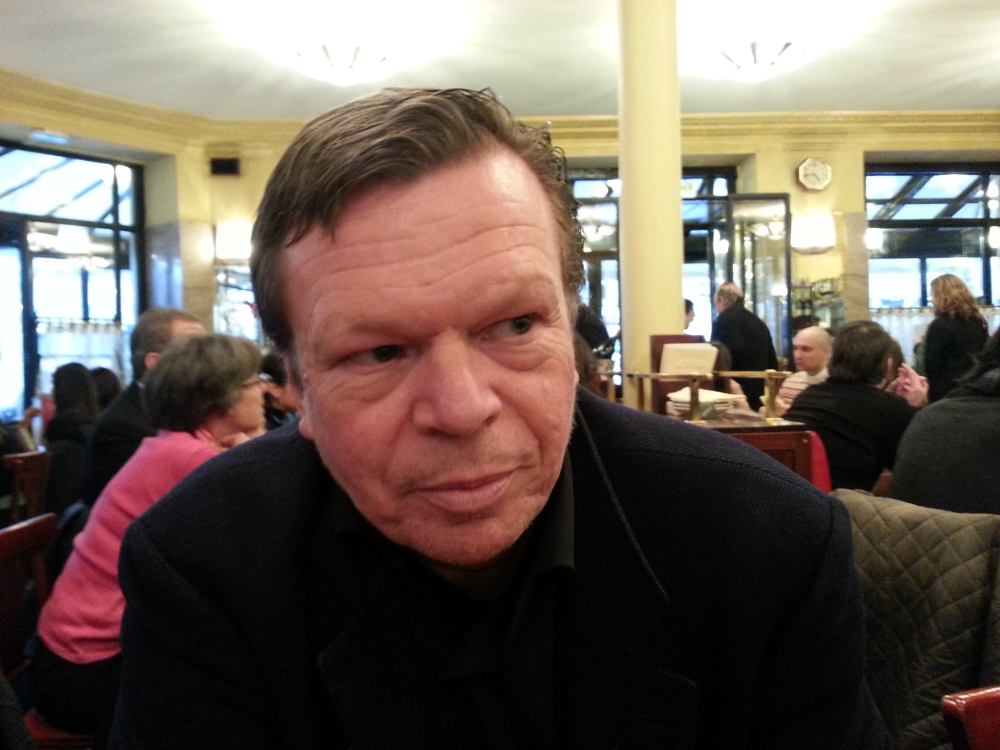
Peter is writer of the series The Heroine’s Journey and Hero’s Journey books, he has an MBA in Marketing, MBA in Financial Economics and graduated at university in Sociology and Communication Sciences.
PRICING
1 session for EUR 350 (excl. VAT)
3 sessions for EUR 995 (excl. VAT)
6 sessions for EUR 1,950 (excl. VAT)
9 sessions for EUR 2,850 (excl. VAT)
FAQ
Who can sign up for The Power of Your Story coaching?
Professionals who wish to improve their storytelling skills and mindset.
What language do we speak in the coaching sessions?
English.
Can I buy coaching for my organization?
Yes, you can! We support many organizations around the world with their coaching needs. Please contact us for more information.
Can I bring my own topics?
Yes, for individual coaching you get to choose your own topic.
Are coaching sessions confidential?
Yes. Peter will not share anything that is discussed in the coaching sessions.
How do I sign up?
Send Peter a mail to theherojourneyquestionnaires@gmail.com to start booking your coaching sessions.
How do I pay?
After you send the mail, you will receive an email with a link to pay.
How do I book and reschedule sessions?
Once we’ve received your payment, Peter will contact you and book your coaching sessions. He will also support you with rescheduling sessions if needed.
What is your cancellation policy?
Individual coaching sessions can be postponed up to one week before the session.
 The Power of Your Story