My life took a dramatic turn on the eve of a critical heart operation-a moment that would forever alter my understanding of the power of storytelling. The night before my surgery, I found himself engrossed in the series La meglio gioventu, a gripping narrative that captured my full attention. So completely absorbed was he that the looming reality of his heart operation, and the very real possibility of death, faded into the background. Even when late in the night a different surgeon appeared than the one who I knew to be operating me. Who told me that due to complications a much more difficult operation had to be performed than I was promised before, The difference between a death risk of 10 percent to over 30 to 40 percent. And they had to install a new metal heartvalve. Which meant that I would hear my own heartbeat in my head the rest of my life. All ne information what could have unsettled me or caused me to debate. Yet I just wanted to finish the story I was watching which had pulled me in completely. No time for resistance or worries. If I would die I certainly needed to see the end of this story. In that moment, I experienced firsthand what stories can do: they transport us beyond our fears, ground us in the present, and grant us the courage to face the unknown.
This experience is at the heart of The Power of Your Story, a compelling exploration of how the hero’s journey and heroine’s journey-classic story models often seen in movies-mirror the transformative journeys we all undertake in life. Peter’s story is not just about survival; it is about awakening to the narrative we tell ourselves and harnessing that story to shape our destiny.
The hero’s journey follows a protagonist who ventures from the ordinary world into a realm of trials, transformation, and ultimate return. Peter’s heart operation became his personal call to adventure, a threshold crossing that challenged his deepest fears and beliefs.
By immersing himself in La Meglio Gioventu that night, Peter exemplified the essence of storytelling’s power: to captivate, to heal, and to inspire. The series offered a temporary escape but also a profound lesson-stories are not mere entertainment; they are tools for survival and growth. They allow us to rewrite the script of our lives, to move beyond limiting narratives, and to emerge transformed.
La Meglio Gioventù is an epic Italian family saga spanning from 1966 to 2003, centered on the Carati family, primarily the two brothers Nicola and Matteo, whose divergent paths and intertwined destinies reflect the classic hero’s journey archetype.
The story begins in the mid-1960s Italy, where Nicola and Matteo Carati are finishing their school exams and preparing for a carefree summer trip to Norway with friends Carlo and Berto. This represents their ordinary world-youthful, hopeful, and full of promise. Matteo, restless and emotionally volatile, takes a job at a psychiatric institution where he meets Giorgia, a deeply traumatized patient subjected to electroshock therapy. Disturbed by her treatment, Matteo impulsively rescues her from the institution, intending to reunite her with her father. This act disrupts the brothers’ planned vacation and marks the beginning of their journey into a more complex, challenging reality.
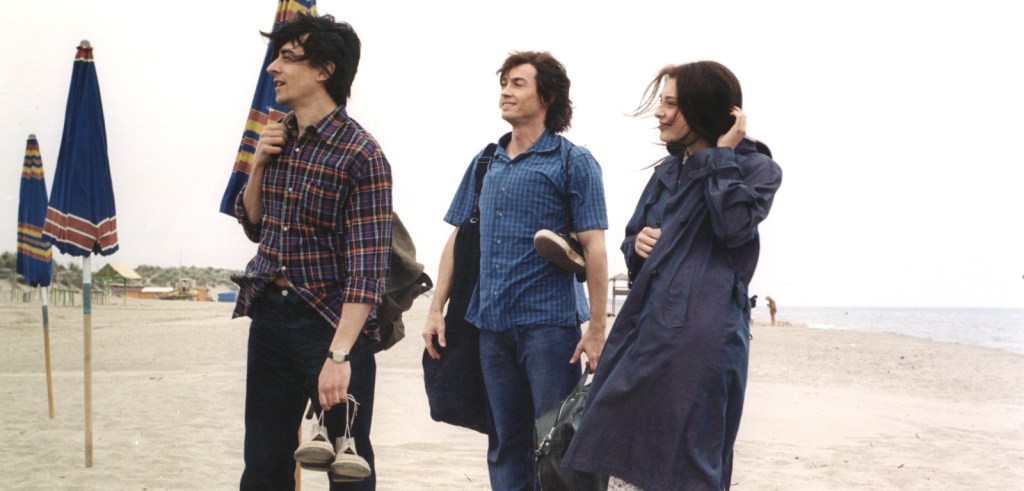
Initially, the brothers attempt to maintain normalcy, but Matteo’s impulsiveness and anger lead him to leave university and join the army, signaling a refusal to face his inner turmoil and family responsibilities directly. Nicola, more patient and idealistic, pursues a medical career, focusing on psychiatry and reforming mental health care. Nicola’s work as a psychiatrist and activist introduces him to mentors and allies in his fight against the mistreatment of psychiatric patients. His compassion and determination help him navigate the bureaucratic and social obstacles to improve conditions for people like Giorgia.
The brothers’ lives diverge sharply. Matteo is stationed in Sicily, confronting the Mafia and corruption, while Nicola becomes a psychiatrist and political activist in Turin. Matteo’s temper and frustration lead to his reassignment to Rome, where he tries to build a new life but struggles with his past and identity. Both brothers face personal and political challenges. Nicola’s marriage to Giulia, a passionate activist, is tested when she joins the Red Brigades terrorist group, disappearing into the underground and fracturing the family. Matteo falls in love with Mirella, a librarian he met in Sicily, but his emotional instability and lies strain their relationship. Nicola’s fight to ban electroshock therapy and his efforts to care for Giorgia represent his moral and professional trials. Matteo’s battles with his own demons and the Mafia’s shadow test his resilience
The family confronts tragedy with the death of their father from cancer, forcing the brothers to face unresolved emotions and their fractured relationship. Matteo’s inability to reconcile with his family and his inner turmoil deepen, while Nicola continues his advocacy and healing work. Matteo’s mental health deteriorates. His relationship with Mirella collapses after she confronts him about his lies. Overwhelmed by despair, Matteo commits suicide by jumping from his apartment balcony on New Year’s Eve. This devastating loss shakes the family to its core and forces Nicola and their mother Adriana to confront painful truths about Matteo’s struggles and their own failures to understand him.
In the aftermath, Nicola discovers a photograph of Matteo taken by Mirella in Sicily, revealing that Matteo fathered a son. This revelation offers a glimmer of hope and connection beyond death. Nicola encourages Giorgia to live independently, symbolizing growth and healing. Nicola travels to Sicily to meet Mirella and the child, bridging the gap between past pain and future possibilities. He also persuades his mother to visit Stromboli, where Mirella lives, to meet her grandchild. This journey represents a return to family and reconciliation
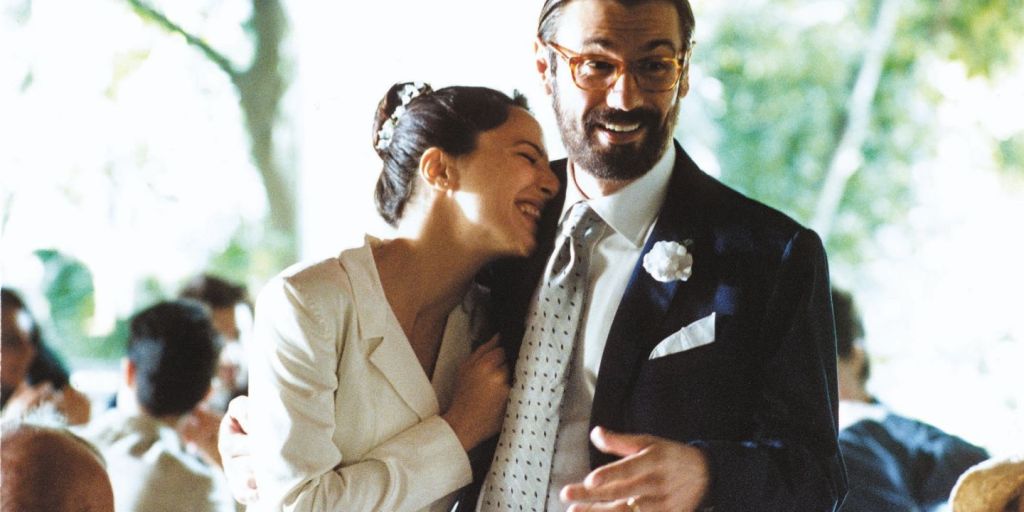
The family’s reunion on Stromboli and Nicola’s ongoing visits signify emotional resurrection-a chance to rebuild bonds and find peace despite loss. The characters embody resilience, having endured political upheaval, personal tragedy, and societal change over decadesThe story closes with the Carati family transformed by their experiences. Nicola’s dedication to justice and healing, Matteo’s tragic fate, Giulia’s radical activism, and the next generation’s emergence underscore the enduring power of personal and collective stories. The film portrays how individuals navigate history’s tides, seeking meaning and connection through their own hero’s journey
La Meglio Gioventù masterfully maps the hero’s journey onto a multi-generational family saga, illustrating how personal growth, social responsibility, love, and loss intertwine. Nicola and Matteo’s contrasting paths-one toward healing and activism, the other toward turmoil and despair-reflect the complex challenges of youth and adulthood. Their story captures the essence of the hero’s and heroine’s journeys: confronting adversity, enduring transformation, and ultimately returning with insight and hope.
I invite readers who love the movies to explore their own story here on The Power of Your Story. Inspired by your favorite movies. To feel how your own storytelling will contribute in confronting your challenges with courage, and to discover the inner resources that stories can unlock. Here on the Power of Your Story I will reveal how the stories we tell ourselves about our successes, failures, and identities are not fixed truths but living narratives that shape our energy, actions, and ultimately, our fate.
My journey from the brink of death to a renewed sense of purpose is a personal testament to the idea that the most important story we will ever tell is our own-and that by embracing the power of our story, we can create lives filled with meaning, resilience, and joy.
 The Power of Your Story