Your story is your life. As human beings, we continually tell ourselves stories — of success or failure; of power or victimhood; stories that endure for an hour, or a day, or an entire lifetime. We have stories about our work, our families and relationships, our health; about what we want and what we’re capable of achieving. Yet, while our stories profoundly affect how others see us and we see ourselves, too few of us even recognize that we’re telling stories, or what they are, or that we can change them — and, in turn, transform our very destinies.
Your story is your life. A Beautiful Mind (2001), an Oscar-winning Best Picture, perfectly illustrates this truth through the harrowing journey of mathematician John Nash. Nash’s internal narratives—tales of genius, espionage, and isolation—initially propel him toward brilliance but spiral into delusion, nearly destroying his career, marriage, and sanity. The film reveals how unexamined stories shape our reality, echoing the idea that we tell ourselves tales of success or failure, power or victimhood, often without recognizing their power.
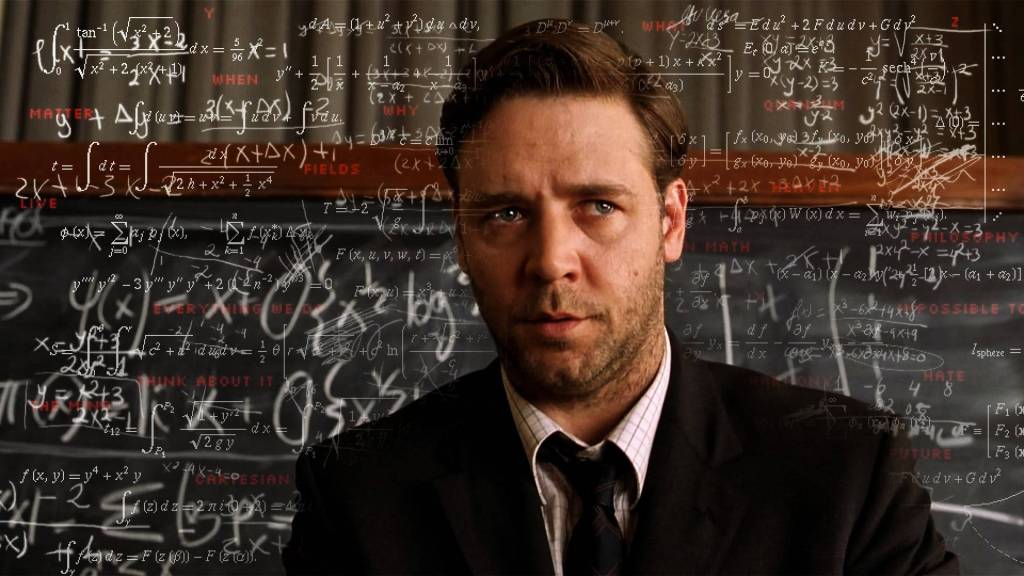
Nash arrives at Princeton as a prodigy obsessed with originality, crafting a story of himself as a solitary trailblazer destined for greatness. His breakthrough in game theory stems from this narrative, yet social awkwardness fuels a counter-story of rejection, breeding resentment toward peers and women he views as conquests. Schizophrenia shatters this fragile balance: hallucinatory figures like roomie Charles, agent Parcher, and niece Marcy embody his unmet desires for friendship, purpose, and innocence. These illusions become his reality, convincing him he’s decoding Soviet codes for the Pentagon—a gripping saga of heroic sacrifice that justifies paranoia and withdrawal from loved ones.
The pivot comes when wife Alicia uncovers the fabrications, forcing Nash to confront the chasm between his stories and truth. His descent peaks in rage and violence, as delusions demand he kill his family to “protect” them, mirroring how victimhood narratives sabotage health, relationships, and potential. Yet Alicia’s unwavering love challenges his script: she symbolizes the enduring power of authentic bonds, urging him to rewrite his tale. Nash learns to ignore hallucinations—not erase them—choosing a new narrative of resilience and integration. He returns to Princeton, teaches humbly, and earns the Nobel Prize, transforming victim into victor.
This evolution underscores the text’s core: our stories about work, family, and capabilities dictate destinies, but awareness allows change. Nash’s early arrogance evolves into empathy; he values collaboration over competition, love over logic. His Nobel speech celebrates Alicia’s devotion above intellect, proving rewritten stories heal. The film’s visual cues—desaturated tones for delusions, warm hues for recovery—reinforce this shift from shadowed isolation to luminous connection.
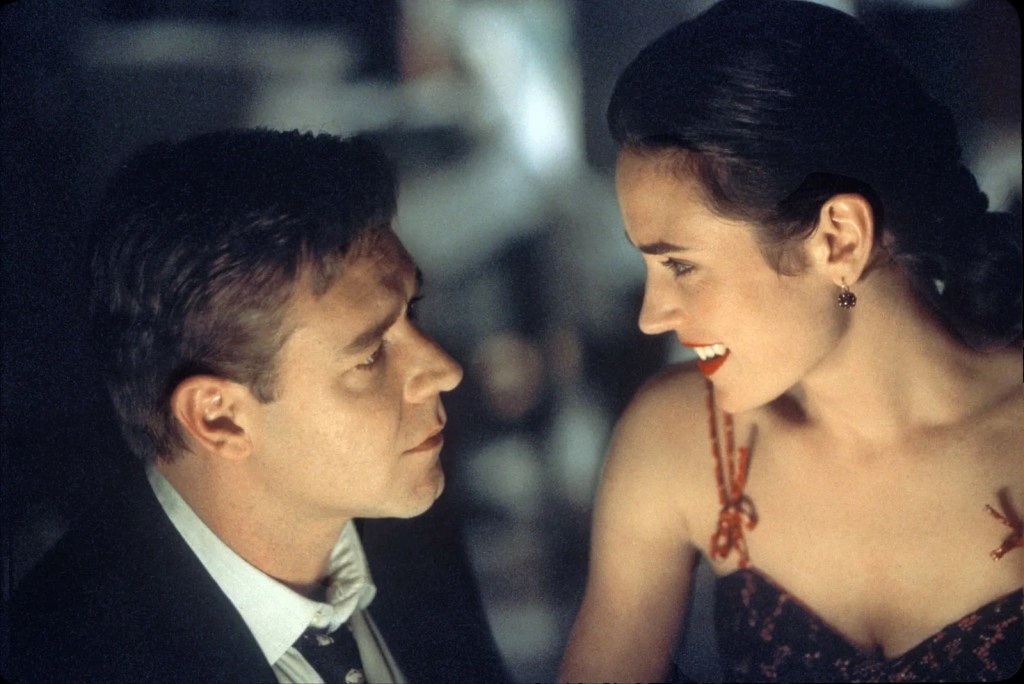
Ultimately, A Beautiful Mind warns that ignored inner dialogues breed chaos, but intentional retelling forges triumph. Nash’s arc—from prodigy undone by false epics to elder wise in reality’s quiet patterns—shows anyone can seize narrative reins. As he waves Alicia’s handkerchief post-speech, it signals not defeat, but destiny reclaimed through story’s alchemy. Love, perseverance, and self-awareness conquer even the mind’s fiercest fictions, affirming: change your tale, transform your life.
Telling ourselves stories provides structure and direction as we navigate life’s challenges and opportunities, and helps us interpret our goals and skills. Stories make sense of chaos; they organize our many divergent experiences into a coherent thread; they shape our entire reality. And far too many of our stories are dysfunctional, in need of serious editing. First, we ask you to answer the question, “In which areas of my life is it clear that I cannot achieve my goals with the story I’ve got?” We then show you how to create new, reality-based stories that inspire you to action, and take you where you want to go both in your work and personal life.
For decades I have been examining the power of story to increase engagement and performance. Thousands of individuals from every walk of life have sought out and benefited from our life-altering stories.
Our capacity to tell stories is one of our profoundest gifts. My approach to creating deeply engaging stories will give you the tools to wield the power of storytelling and forever change your business and personal life.
Stories shape human experience like a compass that brings order to chaos. Three famous Oscar-winning movies—Good Will Hunting, The King’s Speech, and Forrest Gump—illustrate the profound role our personal stories play in directing our lives. Each film reveals how dysfunctional stories can hold us back and how revising those narratives leads to transformation. Through these films, it becomes clear that the stories we tell ourselves about our abilities, relationships, and purpose deeply influence our reality, shaping success or failure in both personal and professional life.
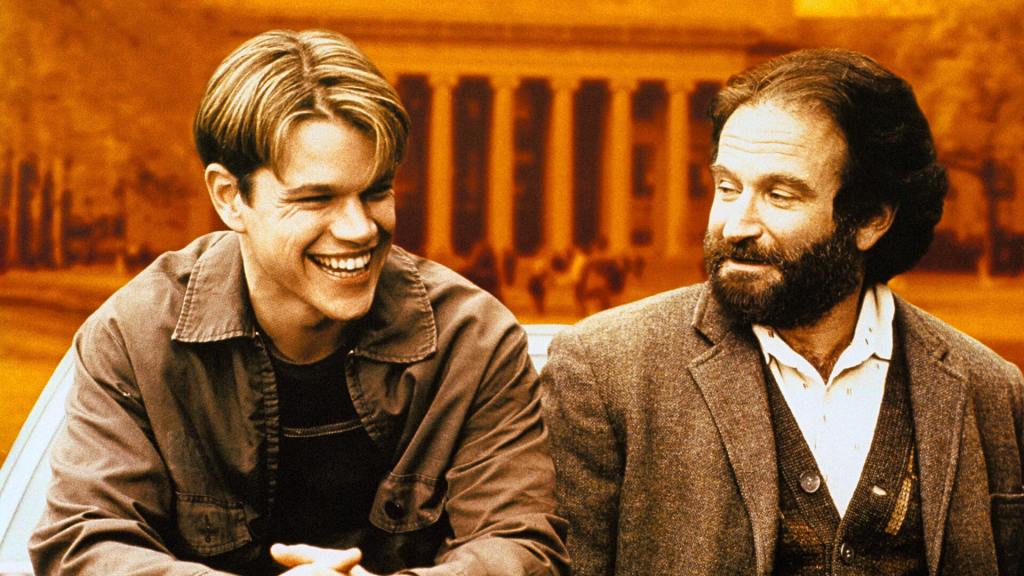
In Good Will Hunting (Best Original Screenplay, 1997), janitor Will Hunting embodies the chaos of a dysfunctional self-narrative rooted in childhood abuse and abandonment. Will tells himself a story of worthlessness and rage: he’s a brilliant mathematician hiding behind fists and sarcasm, convinced that vulnerability leads to betrayal. This tale organizes his experiences into a coherent thread of isolation—he sabotages jobs, relationships, and his genius potential, fearing true connection will expose his pain. The film’s core question hits hard: “In which areas of my life is it clear that I cannot achieve my goals with the story I’ve got?” For Will, it’s everywhere—love with Skylar crumbles under his defenses, his intellect stagnates in menial work, and therapy fails until Sean Maguire pierces the armor. Sean’s raw empathy forces Will to confront his edited memories of trauma, revealing how they distort reality. By film’s end, Will crafts a new, reality-based story of self-worth and pursuit: he drives to chase love and opportunity, empowered to wield his gifts. This shift from victimhood to agency boosts engagement and performance, mirroring how therapeutic storytelling heals deep wounds.
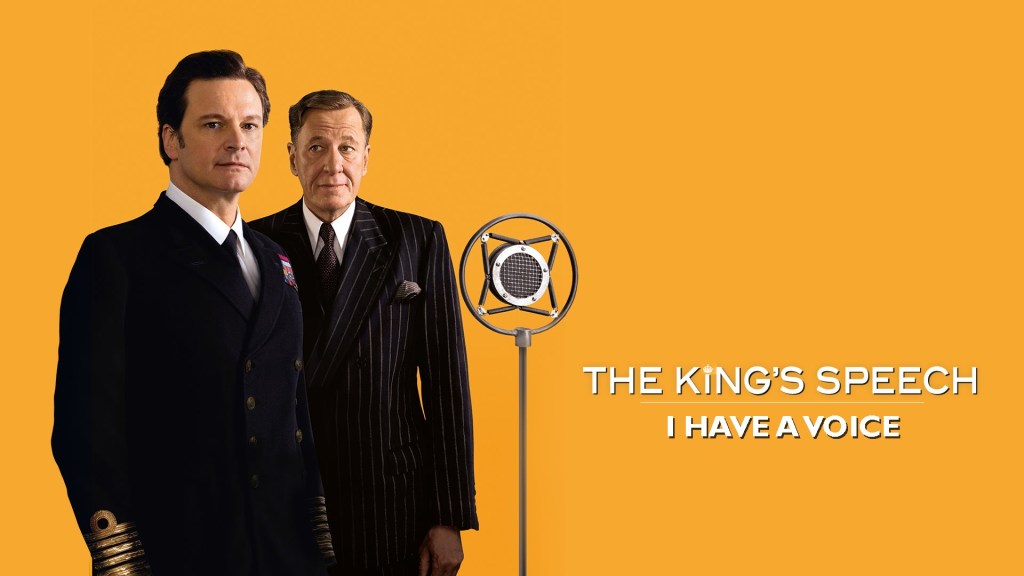
Similarly, The King’s Speech (Best Picture, 2010) charts King George VI’s battle against a narrative of inadequacy forged by his stammer and royal pressures. Bertie (Prince Albert) views himself as a flawed failure, unfit for leadership—his story frames every stutter as proof of weakness, amplifying chaos into public humiliation. This dysfunctional script hampers his goals: commanding respect as king amid rising fascism seems impossible. He must interrogate: where does this story block progress? In duty, family, and self-image. Enter unconventional therapist Lionel Logue, who demands equality and excavates buried pains like parental rejection. Through exercises blending play, profanity, and honesty, Bertie rewrites his tale—from fearful mute to resilient voice. His triumphant wartime broadcast weaves divergent experiences (stammers, abdication crisis, therapy breakthroughs) into a coherent thread of authentic strength. This new narrative inspires national unity and personal purpose, proving stories provide structure for challenges while editing out self-doubt.

Forrest Gump (Best Picture, 1994) contrasts with optimism, showing a functional story mastering life’s unpredictability. Forrest’s simple narrative—”Mama always said life is like a box of chocolates”—interprets chaos through resilience, kindness, and presence. Low IQ and braces don’t define him; instead, he organizes ping-pong triumphs, war heroism, shrimping fortune, and Jenny’s loss into a thread of earnest action. No major dysfunction mars his tale—it’s reality-based, focusing on skills like loyalty and perseverance amid Vietnam, counterculture, and grief. When Lieutenant Dan rages against fate, Forrest’s steady story anchors him, fostering mutual growth. This empowers Forrest to run across America, inspire millions, and build a legacy of love (fathering Forrest Jr.). His arc teaches that empowering stories align goals with opportunities, turning divergent paths into directed triumph without needing overhaul.
Together, these films affirm storytelling’s gift: it structures chaos, interprets skills amid opportunities, and drives performance. Dysfunctional narratives—like Will’s trauma armor or Bertie’s fear—demand editing via self-questioning and reality checks. Forrest’s resilient simplicity shows proactive tales prevent stagnation. Asking “Where is my story failing me?” unlocks new scripts that propel work (Nash-like genius unleashed, royal duty fulfilled) and personal realms (love embraced, bonds healed). Thousands have transformed through such shifts, as storytellers like Logue or Sean demonstrate. Wielding this power—crafting engaging, action-oriented narratives—forever alters trajectories, turning life’s box of chocolates into purposeful adventure.
Day 1. That’s Your Story?
Day 2. The Premise of Your Story, the Purpose of Your Life
Day 3. How Faithful a Narrator Are You
Day 4. Is It Really Your Story You’re Living?
Day 5. The Private Voice
Day 6. The Three Rules of Storytelling
PART TWO
New Stories
Day 7. It is not about time
Day 8. Do You Have the Resources to Live Your Best Story?
Day 9. Indoctrinate Yourself
Day 10. Turning Story into Action: Training Mission and Rituals
Day 11. More than Mere Words; Finishing the Story, Completing the Mission
Day 12. Storyboarding the Transformation Process in Eight Steps
Introduction
I am Peter de Kuster, founder of The Hero’s Journey and The Heroine’s Journey, and for much of my life, I have believed in the transformative power of stories—especially the ones we tell ourselves. But it took a near-death experience to truly open my eyes to what I wanted to dedicate my life to: helping others discover, shape, and share their unique stories, and in doing so, to rewrite my own.
Lying in that hospital bed, suspended between what was and what could be, I realized how fragile and precious life is. All the plans, the business meetings, the deadlines—they faded into insignificance. What remained was a burning question: What story do I want to tell with the rest of my life? The answer was clear. I wanted to travel, to write, to tell stories.
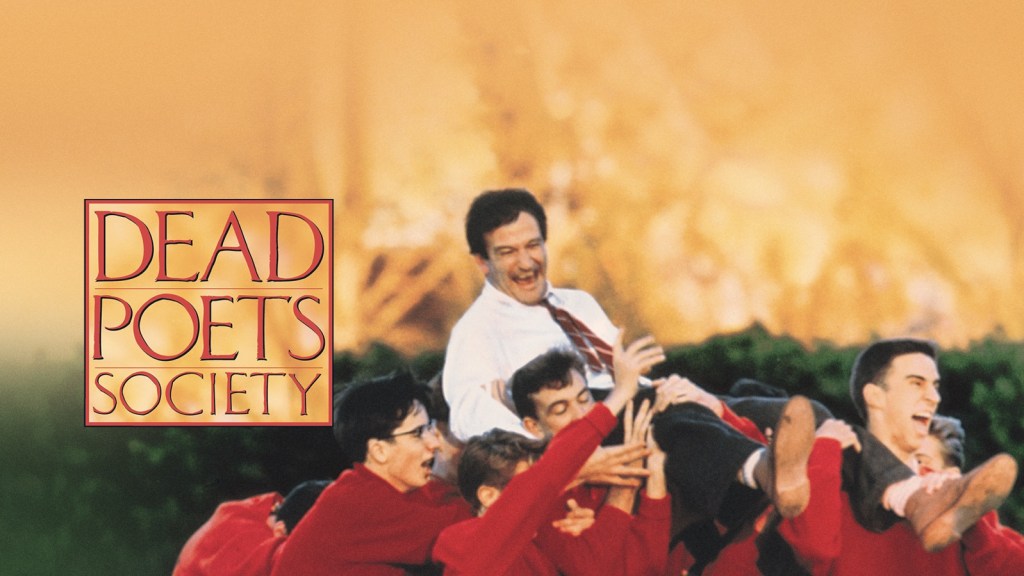
There is a language older than words that has always fascinated me. It speaks in images and emotions, in the quiet tightening of a throat in a dark cinema, in the sigh when the credits roll and you realize the story on the screen has quietly rewritten a sentence in the story you tell about yourself. Like in Dead Poets Society, where students seize the day, ripping out textbook pages to embrace poetry’s raw power over conformity, sparking personal rebellion and self-discovery. That is the language I am searching for with The Power of Your Story: a universal language of stories that crosses borders, backgrounds, and biographies, and invites each of us to become a better storyteller of our own life.
My quest runs through movie palaces in Rome, side streets in London, quiet museums in Venice, and cafés in Amsterdam, where people sit with notebooks, watching scenes from great films and quietly recognizing themselves. In these story-rich places, I walk with entrepreneurs, artists, and seekers who arrive with a familiar question hidden behind their official goals: “Why does the story I am living not feel like mine anymore?” Together we watch heroes and heroines on the screen and notice that, beneath costume and culture, they share something startlingly similar: seven great plots, twelve archetypal heroes, and again and again one great story about leaving an old life behind to claim a truer one.
What fascinates me is how the same story patterns keep appearing in people who have never met. A designer in Berlin talks like a Warrior exhausted by endless battles for recognition. A chef in Barcelona feels like the Orphan, forever on the edge of belonging. A startup founder in Paris discovers she has been living the Ruler’s story of control when her heart longs for the Explorer’s open road. Then we sit in a cinema and watch a character in a film struggle with the very same script. In La Vita è Bella, a father shields his son from Holocaust horrors by framing camp life as an enchanted game, turning despair into defiant love and survival. In that moment, the language of story becomes universal: you no longer feel uniquely stuck; you feel spoken to. The film is no longer “about” someone else. It is a mirror, gently asking: “Is this the story you still want to live?”

In The Power of Your Story, I always begin with one question: “In which areas of your life is it clear that you cannot achieve your goals with the story you’ve got?” It is a brave question because it exposes the hidden contracts we live by: “I must always please,” “I must never fail,” “I am only valuable when I achieve.” As people answer, you can feel the old plot loosening its grip. Then, using the archetypes and classic plots from film, we start drafting a new premise: What if your life is not a tragedy of overwork but a quest for meaningful creation? What if your business is not a battlefield but a love story with your best customers? What if your leadership is not about power but about pilgrimage—inviting others on a journey that matters?
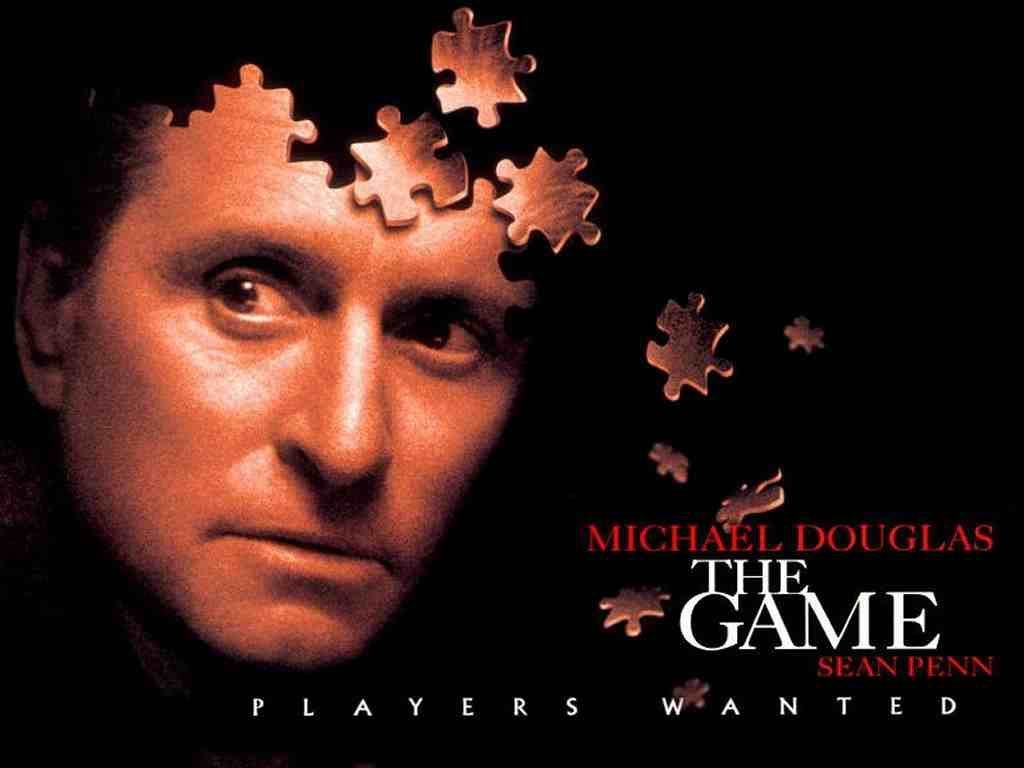
Movies help because they condense a lifetime of trial and error into two hours of heightened truth. When you see a character cling to the wrong story and lose everything, you recognize your own flawed alignment; when you see them question their premise and realign, you glimpse what might be possible for you. In The Game, Nicholas Van Orton unravels his rigid control narrative through a chaotic “game” that strips illusions, forcing rebirth from existential void. In Rome or Venice, walking from cinema to café, we translate those cinematic moments back into the language of everyday decisions: Which clients do you choose? How do you speak about your work? What do you tolerate in your calendar that you would never accept in your favorite film’s final act?
What this quest can bring all of us is not a neat formula, but a toolkit and a courage. The toolkit consists of questions and structures: the premise of your story, the words on your future tombstone, the mission you dare to say out loud, the archetype that best expresses your values, the plot that truly fits the season of life you are in. The courage comes from realizing you are not alone: every great story, every great business, every meaningful relationship has had to rewrite itself at some point. When you start to see your life as a work in progress rather than a verdict, you reclaim authorship. You stop asking, “What is happening to me?” and start asking, “What story am I telling—and what story do I want to tell next?”
The universal language of stories is, in the end, a language of choice. You cannot control every event, every loss, every unexpected twist. But you can choose the story that gives those events meaning. My work, and my joy, is to walk with people through the great cities and great movies of the world until they can hear that language clearly in themselves. When they do, something simple and astonishing happens: they stop trying to live someone else’s script. They become the storyteller, not just the character. And from that moment on, their business, their relationships, and their inner life begin to align around a new, truer story—one only they can tell.
What do I mean by ‘story’?
What do I mean by ‘story’? I don’t intend to offer tips on how to fine-tune the mechanics of telling stories to enhance the desired effect on listeners. And I do not mean the boiler-plate, holier-than-thou brand stories often found in the Mission Statement of corporate websites, or the Here’s -why-we’ll – absolutely-meet-our-fourth-quarter numbers-narrative-yarn-turned-pep-rally that team leaders often like to spin to rally the troops.
No, I wish to examine the most compelling story about storytelling – namely how we tell stories about ourselves to ourselves. Indeed, the idea of ‘one’s own story’ is so powerful, so native, that I hardly consider it a metaphor, as if it’s some new lens through which to look at life. Your life is your story. Your story is your life. When stories we read or watch or listen to are triumphant, they are so because they fundamentally remind us what is most true or possible in life – even when it is an escapist romantic comedy or sci-fi fantasy or fairy tale. If you are human, then you tell yourself stories – positive ones and negative, consciously and, far more than not, subconsciously. Stories that span a single episode, or a year, or a semester, or a weekend, or a relationship, or a season, or an entire tenure on this planet. Telling ourselves stories helps us navigate our way through life because they provide structure and direction. ‘Just seeing my life as a story’ said one of my clients ‘allowed me to establish a sort of road map, so when I have to make decisions about what I need to do [the map] makes it easier, takes away a lot of stress’.
Consider Big Fish (2003): Edward Bloom weaves mythic quests from mundane days, subconsciously navigating love, fear, legacy. His son Will rejects “lies” for facts—until reconciliation proves narrative trumps literalism, turning ordinary into epic Hero’s Journey.
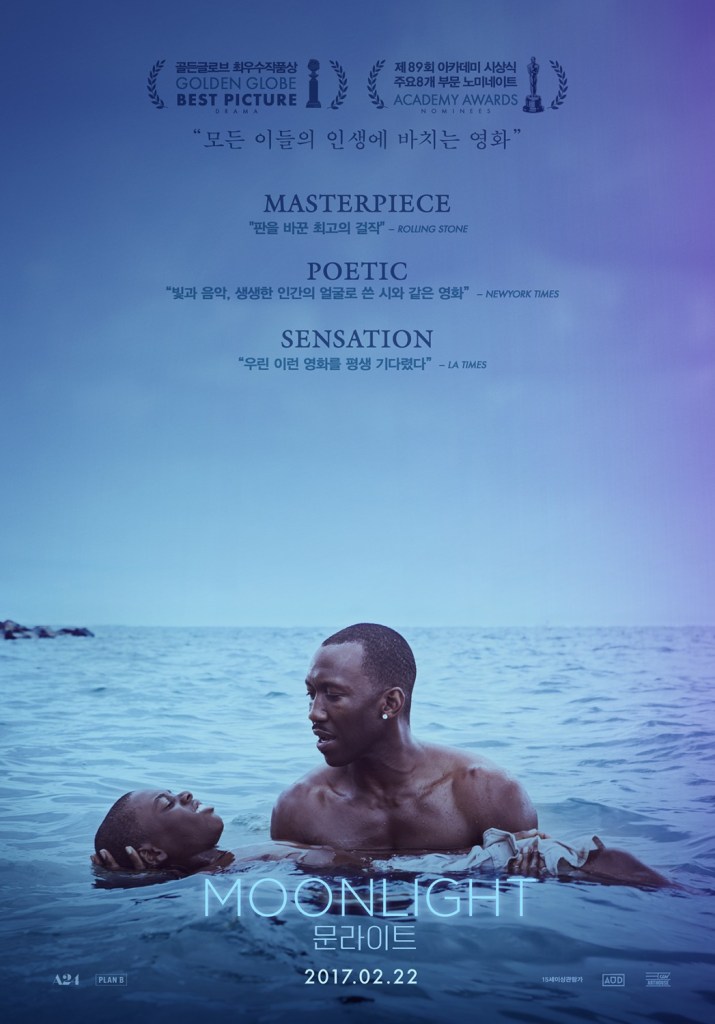
Or Moonlight (2016): Chiron’s silent chapters reshape identity through trauma’s inner scripts—from shame to resilient strength, a roadmap amid chaos.
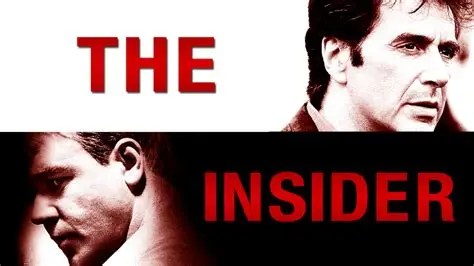
Like The Insider (1999), where whistleblower Jeffrey Wigand shatters corporate illusions, rewriting his ethical tale against deceit. These films mirror our quest: ditch limiting stories. Own your narrative—premise, turning points, archetypes. As in Gladiator’s redemption arc, re-author for courage, wholeness.
Indeed we are actually wired to tell stories: The human brain, according to a New York Times article about scientists investigating why we think the way we do, has evolved into a narrative-creating machine that takes ‘whatever it encounters, no matter how apparently random’ and imposes on it ‘chronology and cause-and-effect logic’. Writes Justin Barrett, psychologist at Oxford University, ‘We automatically and often unconsciously look for an explanation of why things happen to us and ‘stuff just happens’ is no explanation’ (which feeds one possible theory for why we need, or even create, God or Gods). Stories impose meaning on the chaos; they organize and give context to our sensory experiences, which otherwise might seem like no more than a fairly colorless sequence of facts. Facts are meaningless until you create a story around them.
Slumdog Millionaire (2008): Oscar Winner on Narrative from Chaos
Slumdog Millionaire, Best Picture winner sweeping eight Oscars, captures our brain’s narrative machinery turning random horrors into destined epic. Jamal Malik (Dev Patel), Mumbai slum survivor, faces game show scrutiny: each question pulls “apparently random” traumas—blinded mom, child labor, blinding betrayal—into chronological cause-effect revelation. Facts (poverty, loss) stay colorless until his subconscious story imposes meaning: life’s quiz scripted for love’s reunion with Latika (Freida Pinto). Jamal unconsciously forges “why”: childhood games predict quiz answers, police torture demands destiny’s proof. Stories organize sensory chaos: beggar scams gain context as survival lore, Quiz Master’s cynicism crumbles under Jamal’s mythic arc. No god needed; narrative creates one. Spanning episodes (seasons of orphanage, train-top flights), Jamal’s tale reminds us of possibilities—slumdog to millionaire—proving stories color drab sequences with vibrant purpose. Triumph erupts in finale’s dance, affirming wiring for chronology: randomness yields roadmap from void to victory. Watch it; reclaim your chaos as legend.

A story is our creation of a reality; indeed our story matters more than what actually happens. Is there really any difference, as someone famously asked, between the life of a king who sleeps twelve hours a day dreaming he’s a pauper, and that of a pauper who sleeps twelve hours a day dreaming he’s a king?
By ‘story’ I mean those tales we create and tell ourselves and others, and which form the only reality we will ever know in this life. Our stories may or may not conform to the real world. They may or may not inspire us to take hope – filled action to better our lives. They may or may not take us where we ultimately want to go. But since our destiny follows our stories, it is imperative that we do everything in our power to get our stories right.
For most of us, that means some serious editing.
To edit a dysfunctional story, you must first identify it. To do that you must answer the question: In which important areas of my life is it clear that I cannot achieve my goals with the story I have got? Only after confronting and satisfactorily answering this question can you expect to build new reality – based stories that will take you where you want to go.
Is this all starting to sound a little vague? I’m not surprised. But hold on. I understand you may be thinking Life as a story? The whole concept strikes you, perhaps, as a tad …. soft. I don’t look at my life in terms of story, you say. I disagree. Your life is the most important story you will ever tell, and you are telling it right now, whether you know it or not. From very early on you are spinning and telling multiple stories about your life, publicly and privately, stories that have a theme, a tone, a premise – whether you know it or not. Some stories are for better, some for worse. No one lacks material. Everyone’s got a story.
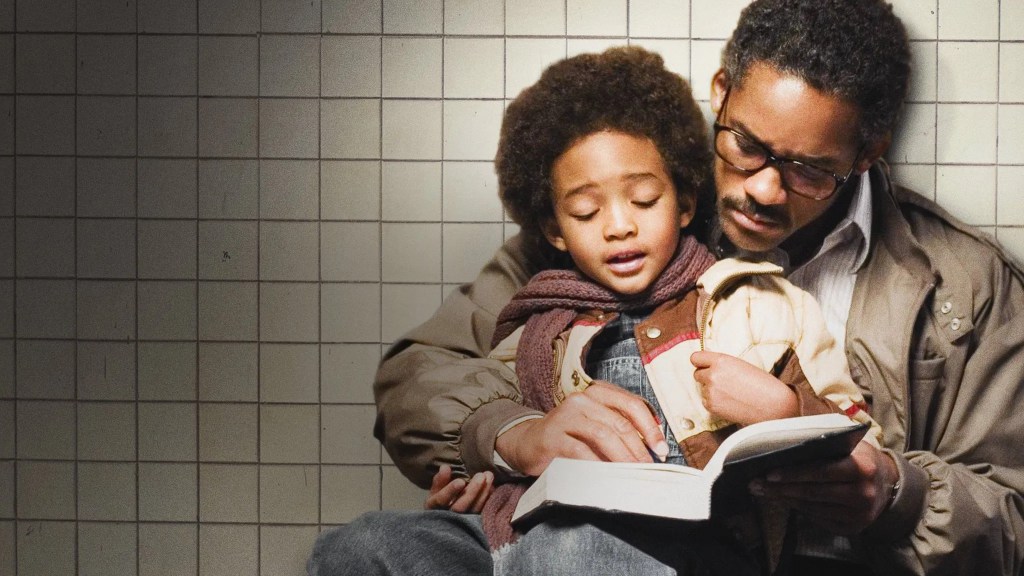
The Pursuit of Happyness, starring Will Smith as Chris Gardner, powerfully illustrates identifying and editing life’s core story for goal achievement. Stranded homeless with son Christopher amid unpaid bills and failed sales gigs, Chris clings to a dysfunctional premise: “I’m a failure doomed by bad luck”—blocking career dreams, stability. Therapist-like mentors and self-confrontation force the question: “In jobs, fatherhood, survival—where does this story fail me?” Only then does he rewrite for reality-based triumph. From early spins—public boasts masking private despair, tones of victimhood—Chris’s yarn spans episodes: internship rejections, shelter lines. Vague “soft” concepts? No—life’s material screams dysfunction everywhere goals elude. “Your story’s the most important you’ll tell,” echoes his arc; unrecognized themes sabotage now, demanding confrontation before new builds. Post-identification, Chris authors afresh: premise shifts to “Relentless grind wins,” toning persistence across seasons of hunger, exams. Bone density scanner hustles become metaphors for unyielding quest; internship yields stockbroker breakthrough. Everyone’s got stories—better or worse—but editing unlocks destinations. Chris proves: answer the hard question, rebuild boldly.
And thank goodness. Because our capacity to tell stories is, I believe, just about our profoundest gift. Perhaps the true power of the story metaphor is best captured by this seemingly contradiction: we employ the word ‘story’ to suggest both the wildest of dreams (it is just a story ……) and an unvarnished depiction of reality (okay, what is the story?). How is that for range?
The challenge? Most of us are not writers. ‘I am not a professional novelist’ one client said to me, when finally the time came for him to put pen to paper. ‘If this is the story of my life, you are damn right I’m intimidated. Can you give me a little help in how to get this out? That’s what I intend to do with the Hero’s Journey and The Heroine’s Journey project. First, help you to identify how pervasive the story is in life, your life, and second, to rewrite it.
Every life has elements to it that every story has – beginning, middle, and end; theme; subplots; trajectory; tone.
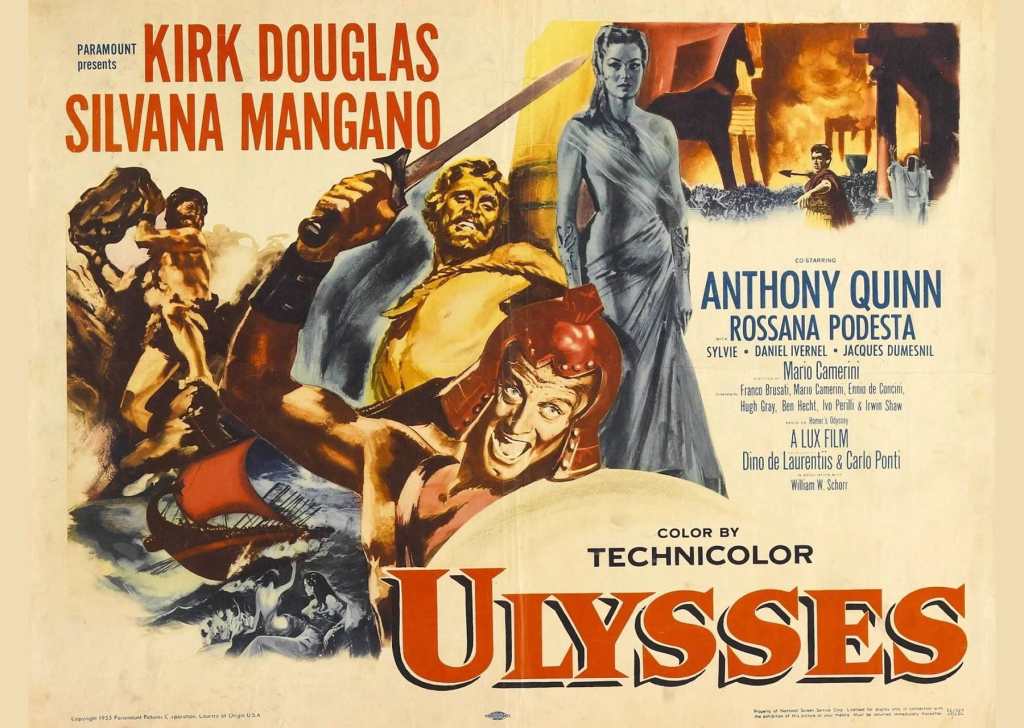
In mythology, the story of Odysseus provides a profound analogy for how we can understand the development of true talent. Odysseus, on his long journey home from Troy, knew that every stage of his voyage would bring at least one troublesome challenge—whether it was the wrath of the gods, the lure of the Sirens, or the monstrous Cyclops. What distinguished Odysseus was not just his skill or cunning, but a deep sureness that his journey was part of a compelling and enduring story embedded deep within his psyche. This story gave him the strength to face adversity with courage and resilience.
Similarly, in any professional pursuit—whether in sports, the arts, or entrepreneurship—there will always be at least one troublesome moment in every round, every project, every endeavor. The key to true mastery is not to avoid these moments but to expect them and to understand that they are integral to the journey. Talent develops not merely through flawless execution but through the confidence that comes from knowing one’s story is larger than any single setback.
This sureness, this inner narrative, becomes a guiding force. It transforms challenges from obstacles into meaningful trials that test and deepen one’s character. When a person embraces this perspective, each difficult moment becomes an opportunity for growth rather than a cause for doubt. The development of talent, then, is inseparable from the power of a compelling story—one that endures, shapes identity, and fuels perseverance through every troublesome shot life presents.
Story is everywhere in life. Perhaps your story is that you are responsible for the happiness and livelihoods of dozens of people around you and you are the unappreciated hero. If you see things in more general terms, maybe your story is that the world is full of traps and misfortune – at least for you – and you’re the perpetual victim (I’m always so unlucky…. I always end up getting the short end of the stick…. People can’t be trusted and will take advantage of me if I give them the chance.).
If you are focused on one subplot – business say – then maybe your story is that you sincerely want to execute the major initiatives in your company, yet you are restricted in some essential way and thus can never get far enough from the forest to see the trees. Maybe your story is that you must keep chasing even though you already seem to have a lot (even too much) because the point is to get more and more of it – money, prestige, power, control, attention. Maybe your story is that you and your children just can’t connect. Or your story might be essentially a rejection of another story – and everything you do is filtered through that rejection.
Stories are everywhere. Your body tells a story. The smile or frown on your face, your shoulders thrust back in confidence or slumped roundly in despair, the liveliness or fatigue in your gait, the sparkle of hope and joy in your eyes or the blank stare, your fitness, the size of your gut, the tone and strength of your physical being, your overall presentation – those are all part of your story, one that’s especially apparent to everyone else. We judge books by their covers not simply because we are wired to judge quickly but because the cover so often provides astonishing accurate clues to what is going on inside. What is your story about your physical self? Does it truly work for you? Can it take you where you want to go in the short term? How about ten years from now? What about thirty?
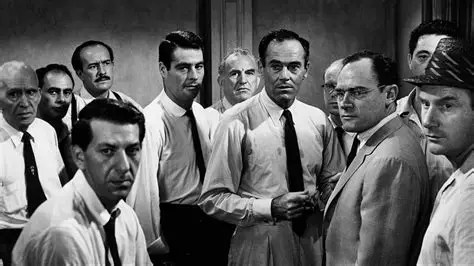
In the sweltering jury room, Juror 8 embodied the unappreciated hero, shoulders thrust back against the weight of eleven men’s hasty verdicts, responsible for a slum boy’s life—their livelihoods hanging on his solitary doubt. His story defied the group’s victim trap: a world of misfortune where the kid got the short end, untrusted slum spawn ripe for exploitation. “Open-and-shut,” they chorused, chasing quick escape like prestige in a ballgame subplot, restricted by bias’s forest, blind to evidence trees. Father-son rifts echoed—Juror 3’s fractured bond fueling rage—while bodies told tales: slumped despair in sweat-soaked shirts, fatigued gaits pacing fury, blank stares of prejudice, guts straining under heat’s tone, covers judging the kid guilty before deliberation.
Heat’s verdict sparked rejection of the mob narrative. No cabaret cool-down; Juror 8’s calm spark—knife demo, timeline flaws, glasses marks—ignited hope’s swing. Shoulders unslumped across the room, eyes sparkling with reason’s joy, strides lively as votes flipped from prey to justice. From cesspool bigotry, he built a playground of doubt, saving the boy from the chair. The others marveled post-unanimous not guilty, toasting over rain-cooled coats, vowing fairness they’d forget in comfort. Dozens beyond the door owed this unseen heroism.
Juror 8’s stand screams in your story: frowns trapping “unlucky” slouches, fitness fading under despair’s gut. Does your physical cover propel short-term truth, or chain you in ten years? Thirty? Bodies clue inner scripts—strengthen tone, ignite gaze, present confident. Stories permeate life; rewrite the verdict now. Reject victim haste; deliberate glory like him. Your presentation leads—make it acquit your potential, not condemn it.
You have a story about your company, though your version may depart wildly from your customer’s or business partners. You have a story about your family. Anything that consumes our energy can be a story, even if we don’t always call it a story. There is the story of your relationship. The story of you and food, or you and anger, or you and impossible dreams. The story of you, the friend. The story of you, your father’s son or your mother’s daughter. Some of these stories work and some of them fail. According to my experience, an astounding number of these stories, once they are identified, are deemed tragic – not by me, mind you but by the people living them.
Like it or not, there will be a story around your death. What will it be? Will you die a senseless death? Perhaps you drank too much and failed to buckle your seat belt and were thrown from your car, or you died from colon cancer because you refused to undergo an embarrassing colonoscopy years before when the disease was treatable. Or after years of bad nutrition, no exercise, and abuse of your body, you suffered a fatal heart attack at age fifty – nine. ‘Senseless death’ means that it did not have to happen when it happened; it means your story did not have to end the way it ended. Think about the effect the story of your senseless death might have on your family, on those you care about who you are leaving behind. How would that story impact their life stories? Ask yourself, Am I okay dying a senseless death? Your immediate reaction is almost certainly, “No!, of course not!
I’m not trying to be morbid. Story – which dies if deprived of energy – is not about death but life. Yet if you continue to tell a bad story, if you continue to give energy to a bad story, then you will almost assuredly beget another bad one, or ten. Why is abuse so commonly passed from one generation to the next? How much is the recurrence of obesity, diabetes and certain other diseases across families a genetic predisposition, and how much is the repetition of a dangerous story about food and physical exertion.
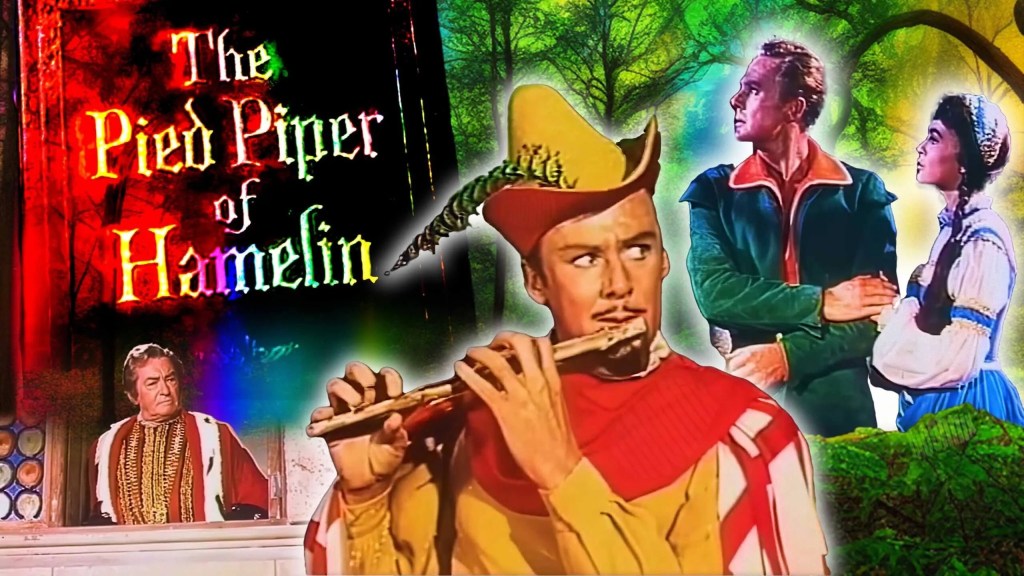
One of the most enduring examples of how bad stories persist through generations is the legend of the Pied Piper of Hamelin. This chilling German folktale, first chronicled in the Middle Ages and immortalized by the Brothers Grimm, tells of a town plagued by rats. The citizens, desperate for relief, hire a mysterious piper who drives the vermin away with his magical music. But when the townspeople refuse to pay him, the piper returns and lures away their children, who are never seen again. The tale has been retold for centuries, its details shifting with each generation, but always retaining its dark core: a community’s broken promise leading to a terrible loss.
The Pied Piper story is a classic example of how disturbing myths can outlast their origins. While some historians speculate that the tale may have roots in a real event—perhaps a mass migration or a tragedy that befell the town’s youth—the myth has grown far beyond any factual basis. Its endurance owes much to its unsettling themes: betrayal, punishment, and the vulnerability of children. These elements resonate across cultures and eras, ensuring the story’s survival even as its original context fades.
Such stories persist because they tap into deep-seated fears and moral anxieties. The Pied Piper warns of the consequences of breaking promises and the dangers lurking in the unknown. Its longevity shows how bad stories—those that unsettle, frighten, or caution—can become embedded in collective memory, passed down not just for entertainment, but as warnings or explanations for inexplicable events. In doing so, they shape cultural attitudes and even influence real-world behavior for generations
Unhealthy storytelling is characterized by a diet of faulty thinking and, ultimately, long – term negative consequences. This undetectable, yet inexorable progression is not unlike what happens to coronary arteries from a high-fat, high-cholesterol diet. In the body, the consequence of such a diet is hardening of the arteries. In the mind, the consequence of bad storytelling is hardening of the categories, narrowing of the possibilities, calcification of perception. Both roads lead to tragedy, often quietly.
The cumulative effect of our damaging stories will have tragic consequences on our health, engagement, performance and happiness. Because we can’t confirm the damage our defective storytelling is wreaking, we disregard it, or veto our gut reactions to make a change. Then one day we awaken to the reality that we have become cynical, negative, angry. That is now who we are. Though we never quite saw it coming, that is now our true story.
It is not just individuals who tell stories about themselves; groups do it, too. Nations and religions and universities, companies and sports teams and political parties each tell stories about themselves to capture the imagination of their constituencies. Companies tell their stories to engage their customers and, increasingly, their workforce, stories which must be internally consistent and powerful if they’re to succeed over time.
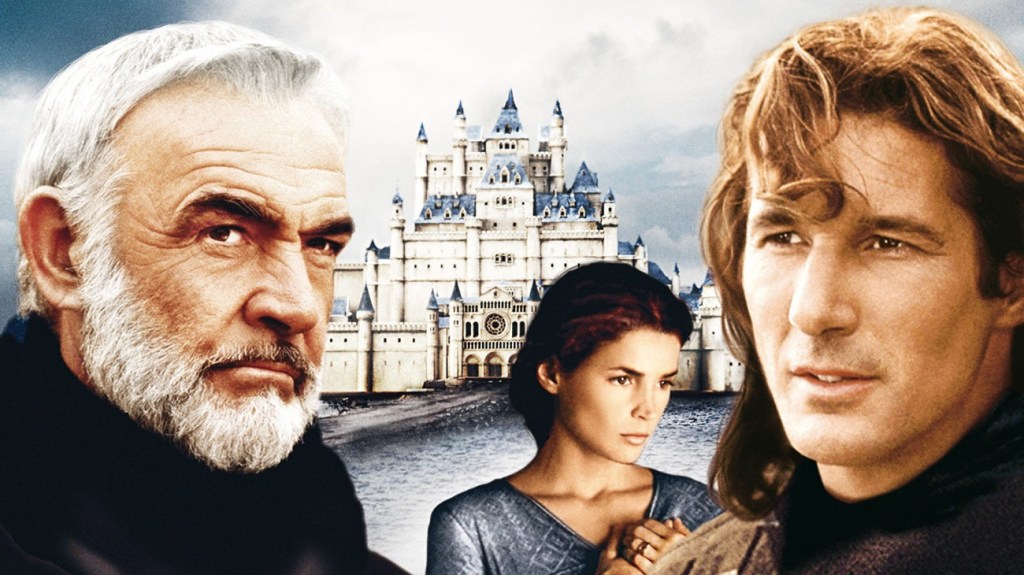
Few myths illustrate the power of branding your story as effectively as the legend of King Arthur and the Sword in the Stone. While tales of chivalric kings and magical swords abound in world mythology, the Arthurian legend stands out because of how its core elements—Arthur, Excalibur, Camelot, and the Round Table—have been carefully shaped, named, and repeated over centuries, turning them into instantly recognizable symbols.
The story goes that Britain was in chaos after the death of King Uther Pendragon. In the midst of this turmoil, a mysterious sword appeared, embedded in a stone, bearing the inscription that only the rightful king could pull it free. Many tried and failed, but the young and unassuming Arthur succeeded, revealing his destiny. This simple but powerful narrative, with its clear hero, magical object, and dramatic test, has been retold in countless forms, from medieval romances to modern films.
What sets the Arthurian myth apart is how its branding—the names, symbols, and motifs—have been meticulously cultivated. The very name “Excalibur” evokes images of heroism and destiny. Camelot conjures a utopian kingdom of justice and equality. The Round Table, with its emphasis on equality among knights, became a symbol for fair leadership. Over time, storytellers and chroniclers added layers to the legend, reinforcing these branded elements until they became cultural shorthand for ideals like nobility, honor, and rightful rule.
The enduring success of the Arthurian legend demonstrates that branding isn’t just for products—it’s essential for stories, too. By attaching memorable names and symbols to its core themes, the myth became more than a tale; it became a cultural touchstone, instantly recognizable and endlessly adaptable, proving the lasting power of a well-branded story.
Throughout this seminar I will detail how such organizations and their employees have reworked their story to the great advantage of both their business and their culture.
For twenty-five years I have studied human behavior and performance, and been privileged to witness many success stories of positive behavioral change: better relationships at home and at work, better job performance, weight loss and all-around improved health and lowering of health risks; love, excitement, joy and the discovery of talents heretofore buried. My experience has led me to see that these changes may be brought about by a unique integration of all the human sciences.
Over the past 30 years, my work has been deeply rooted in exploring flow experiences—those moments of deep engagement and creativity where challenge meets skill perfectly, as described by Mihaly Csikszentmihalyi. What I have discovered is that flow is not just a psychological state but a transformative journey, especially when combined with the power of storytelling. Storytelling provides the narrative framework that helps individuals and leaders make sense of their experiences, integrate their passions, and sustain flow beyond fleeting moments.
In my leadership journeys I use storytelling archetypes to create conditions that naturally foster flow. These timeless narrative structures help participants embody roles and challenges that align with their skills, creating a balance that triggers flow states. Storytelling here is not just decoration—it is a tool for meaning-making and motivation, enabling people to connect their personal and professional challenges to a larger, inspiring narrative.
Client feedback has been essential throughout this journey. From the earliest workshops to the latest leadership retreats, I have consistently integrated participant reflections and stories to refine the frameworks and exercises. This iterative process ensures that the storytelling methods remain relevant, practical, and deeply resonant. Clients often report that framing their challenges within a story helps them gain clarity, see new possibilities, and sustain the passion that fuels flow. Their feedback has confirmed that storytelling is the bridge between abstract flow theory and real-world application, making flow accessible and sustainable in everyday leadership and creative work.
In sum, my three decades of work show that flow and storytelling are inseparable partners. Flow offers the experience of peak engagement, while storytelling provides the narrative structure that helps individuals understand, sustain, and share that experience meaningfully. This synergy, continuously refined through client collaboration, is at the heart of my approach to leadership and creativity.
Chocolate: A Story of Flow and Transformation
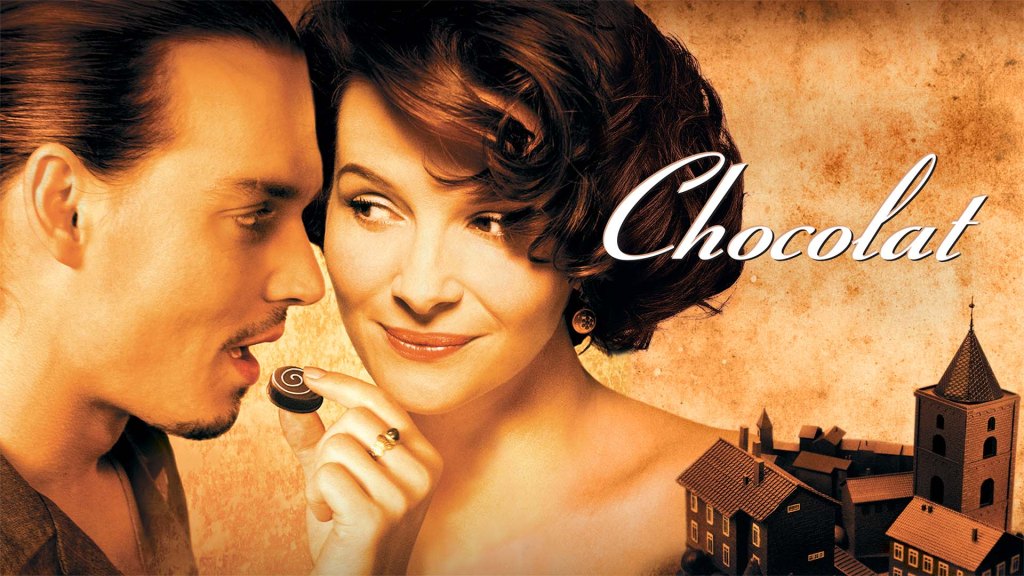
In the quiet French village touched by tradition and tension, Vianne Rocher’s story began as an act of gentle rebellion—a stranger opening a chocolate shop that quickly became a conduit for flow and transformation. Vianne’s skill met challenge perfectly, creating a space where the art of chocolate-making awakened passion, creativity, and joy in others. Her story wasn’t just about sweets but about balancing skill and challenge, inviting others into moments of deep engagement that Mihaly Csikszentmihalyi calls flow.
Vianne’s presence stirred the village, including a mayor rigid in control and townsfolk bound by old stories of fear and suspicion. Through her storytelling and the magic of chocolate, she offered new narratives—of connection, hope, and possibility—that helped people reimagine their lives. Her subtle leadership created the conditions for flow not only in her craft but in the hearts and behaviors of those around her, fostering a culture of openness and transformation.
Her journey illustrates how flow is more than personal psychology; it’s a collective narrative journey. Storytelling framed challenges not as threats but as adventures aligned with individual and communal strength. Vianne’s chocolate shop became a symbol of meaning, motivation, and engagement—a shared story that sustained passion well beyond fleeting moments of delight. The interplay of skill and challenge, wrapped in storytelling archetypes, enabled the village to rewrite its collective story, ultimately transforming business and culture alike.
This story of flow and storytelling synergy offers leadership lessons: authentic connection to purpose, engagement through narrative, and the creation of shared myths that propel change. Like Vianne, leaders and organizations can harness this integration to unlock both peak performance and profound cultural shifts, sustained by stories that resonate deeply and inspire continually.
Of course, some people who have travelled with me on the Power of your Story are utterly unaffected by what we do and what they’re exposed to. Why? Some feel their ‘story’ needs no major reworking (and perhaps they’re absolutely right). Some fail to buy in to what we do because they’re just moving too fast. For some, the timing isn’t right (though, as I intend to show, it is always the right moment to change: now). Whatever the reason, for virtually every group I encounter 20% – the percentage is like clockwork – are simply not interested in what we have to say.
I respect that. The Power of Your Story was not designed to push an agenda. While I passionately believe that the story metaphor is universal and, with awareness, can be extraordinarily beneficial, it ‘works’ only when the individual is willing to look hard at the major problem areas in his or her life, explore why they’re problems, then meaningfully change the problem elements, be they structure or content, which are causing a profound lack of productivity, fulfillment, engagement, and sense of purpose. We work with people. We don’t stand over them and make them do something they don’t want.
Unlike many practitioners in the field of performance improvement , I do not believe you can have it all. It’s an absurd proposition. I don’t believe that every day will be a great day, that you can eliminate regret and despair and worry, that you will always be moving forward, that you will always succeed, that you won’t veer off track again. I do believe that you can have what is most important to you. And that this is achievable if you’re willing to follow the steps of the process advocated in this seminar.

Federico Fellini’s La Dolce Vita embodies a profound exploration of the human story—not one of pushing a fixed agenda but inviting reflection on what anchors or fragments our lives. Marcello Rubini, a society journalist drifting through Rome’s glittering but hollow nightlife, shows us how stories shape our engagement with life’s meaning and purpose. This is not a tale of having it all—an absurd ideal—but of the struggle to find what matters most amid chaos, regret, and fleeting pleasures. Marcello’s story challenges us to look deeply at our own problem areas, to explore why they block fulfillment, and to discover what shifts are needed to break free.
Throughout the film, Marcello oscillates between chasing the elusive ‘sweet life’ and confronting profound emptiness—his relationships, career, and desires ensnared in cycles of distraction and disillusionment. His encounter with the glamorous but unattainable Sylvia, the intellectual yet tragic Steiner, and the innocent Paola each reflect chapters in his fragmented narrative. Marcello’s journey is a reminder that meaningful change demands courage to notice when we stray, admit where we are lost, and embrace the discomfort of transformation. He cannot force change; instead, his story unfolds in hesitant steps, and so must ours.
This film illustrates how storytelling—when wielded with awareness—offers a framework for facing life’s essential questions, integrating passions, and navigating setbacks. It underscores that the goal is not perfection or constant progress but to claim what is most vital to us, even amid failure and wavering. Marcello’s muted gestures—the shrug to Paola’s call, the silent embrace of loss, the restless pacing in emptiness—speak volumes about the stories our bodies tell. They remind us that our outer presentation often mirrors inner turmoil or possibility. The power lies in being willing to re-author the script with honesty and resolve.
In leadership and life, La Dolce Vita teaches that the power of our stories grows when we align them with authenticity and self-awareness rather than illusions. It calls for embracing complexity, rejecting the fantasy of ‘having it all,’ and choosing instead to cultivate what truly sustains us. Marcello’s path is an archetype: the seeker who must acknowledge loss and limitation before glimpsing meaning. Ours is the choice to follow this journey, step by step, with grace and awareness, crafting stories that nurture rather than deplete our hearts and souls.
Who are the people who come to the Power of Your Story with dysfunctional life stories that need serious editing? They are, simply put, among the smartest, most talented, most ambitious, most creative people in their communities and professional circles. Some participants even bring, or return with spouses, friends or parents. They tend to have lots of responsibilities, they’re accountable for a great deal that goes on in their companies, they often make lots and lots of money….. yet, perhaps ironically, for all their accomplishments they can’t seem to get their stories right. On the questionnaire I ask clients to fill out before they come down to a world city for our two – and – a – half – day journeys (or to the one and two day events we conduct around the world) they are asked, among other things, to write down some of the most important parts of their life story. ‘My father died young of emphysema’, wrote the CEO of his family’s company. Later on the questionnaire, he wrote ‘I smoke two packs a day.’ Still later, describing one of his goals for the now fifty-year-old company, he wrote, ‘On the evening celebrating our company’s seventy-fifth anniversary, I want to be able to look back on yet another quarter century of quality, growth and profitability’.
How can these three sentences follow from each other without their author acknowledging that, taken together, they add up to utter nonsense? Especially when the author is superbly gifted in so many other areas?
‘The most important thing in my life is my family, wrote one client ‘and if things continue in the direction they’re going, I’m almost certainly heading for divorce and complete estrangement from my children’.
I’ll give him this much: At least he saw the tragedy coming.
In a previous book I argued that one of our biggest problems is rooted in our flawed belief that simply investing time in the things we care about will generate a positive return. That belief and the story that flows from it are simply not true. We can spend time with our families, be present at dinnertime, have lunches with our direct colleagues, remember to call home when traveling, put in 45 minutes on the treadmill five days a week – we can all do all of it but if we’re too exhausted, too distracted, too frustrated and angry when ‘doing’ these things, the positive return we hoped for will simply not materialize. Without investing high-quality, focused energy in the activity before you, whatever it may be, setting time aside simply takes us from absenteeism to presenteeism.
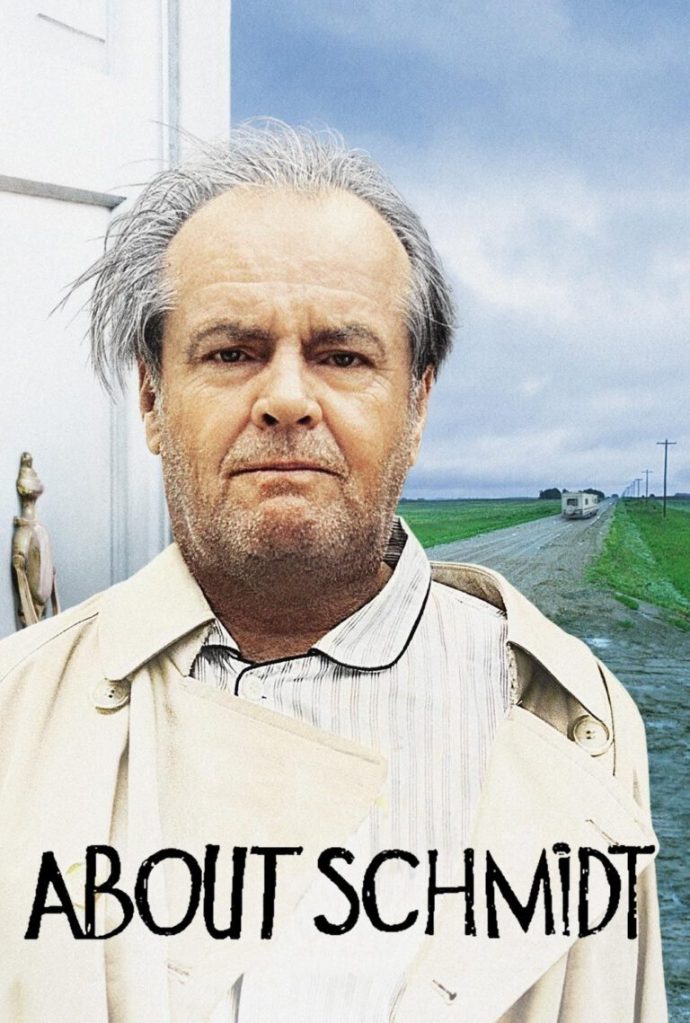
Warren Schmidt’s story in About Schmidt lays bare the silent plague of presenteeism, that vague malady where entrepreneurs—and all of us—drag impaired selves through the day, medically, physically, or psychologically compromised. For decades, Warren clocked in as an actuary at Woodmen of the World, his mind adrift in fatigue, his energy sapped by routine’s dull grind. Retirement hit like a void: no plans, just a drooping face and world-weary slump, haunting his Omaha home. Was this “present” Warren truly better than absent? As spouse to Helen, father to Jeannie, he haunted roles without vitality, time wasted without energy’s spark. Time holds value only at energy’s intersection—priceless when fused with full engagement, flow, or bliss. Warren embodied the opposite: a ghost in his own life.
Helen’s sudden death from a brain clot shattered his inertia. Dumping her belongings after discovering her old affair, he fired up the Winnebago, chasing his daughter’s wedding in Denver to derail her union with waterbed salesman Randall. Along the interstate, presenteeism morphed into raw confrontation. Visiting his old office, he saw his files trashed—useless relics. Camping under stars, a meteor streaked as he forgave Helen, apologizing for his failings. Energy flickered: not constant bliss, but glimmers of purpose. Yet Roberta’s hot tub advance repelled him, back thrown out on Randall’s bed, exhaustion fueling fury at Jeannie’s choices. He ranted to foster child Ndugu in letters, venting irrelevance: “My life made no difference.”
The wedding crystallized his malaise. Surrounded by Randall’s eccentric clan, Warren hid disapproval in a kind speech, fleeing depleted. Driving home, final letter to Ndugu questioned legacy: soon dead, erased. Yet Ndugu’s simple drawing—a child’s sun—pierced despair. Warren glimpsed full engagement’s promise: not every day triumphant, but energy reclaiming time. Presenteeism’s trap—impaired performance as parent, spouse, self—demanded rewrite. Flow awaited where challenge met renewed skill, not zombie endurance.
Schmidt’s odyssey whispers to entrepreneurs: fatigued presence poisons more than absence. Bliss blooms in energy’s surge, transforming time into legacy. Warren didn’t “have it all”—regret lingered, tracks veered—but he touched what mattered: honest reckoning, familial bridges, self-forgiveness. His slumped gait straightened faintly; eyes sparked briefly. We, too, must audit: is half-alive outshining nothing? Chase full engagement—flow’s bliss—at energy-time’s crossroads. Sponsor your own awakening; let letters to your future self ignite purpose beyond presenteeism’s haze.
Presenteeism is a condition increasingly plaguing entrepreneurs, a vague malady defined as impaired job performance because one is medically or otherwise physically or psychologically compromised. Is an entrepreneur who is too fatigued or mentally not there for eight hours really better than no one? How about a parent? A spouse? Time has value only in its intersection with energy; therefore, it becomes priceless in its intersection with extraordinary energy – something which I call full engagement. Or flow. Or bliss.
In what areas are you disengaged right now. Whatever the answer, you’re likely to lay a good deal of the blame for this disengagement on external facts – overwork, the time and psychic demands of dealing with aging parents, frequent travel, an unsupportive spouse, not enough hours in the day, debt, not my fault, out of my hands, too much to do, always on the call – but such excuse-making is neither helpful nor accountable.
We enjoy the privilege of being the hero, the final author of the story we write with our life, yet we possess a marvelous capacity to give ourselves only a supporting role in the ‘storytelling’ process, while ascribing the premier, dominant role to the markets, our family, our kids, fate, chance, genetics. Getting our stories straight in life does not happen without our understanding that the most precious resource that we human beings possess is our energy.
The energy principle still holds, and is crucial to ideas in this seminar, too; I maintain that it is at the heart of the solution not only to our individual problems but also to our collective, national ones – our health care problem, our obesity problem, our stress problem, our multi-tasking problem.
In recent years I’ve come to see that, amazingly, the key to almost all of our problems, more fundamental even than poor energy management, is faulty storytelling, because it is storytelling that drives the way we gather and spend our energy. I believe that stories – again, not the ones people tell us but the ones we tell ourselves determine nothing less than our personal and professional destinies. And the most important story you will ever tell about yourself is the story you tell to yourself. (Mind if I repeat that: the most important story you will ever tell about yourself is the story you tell to yourself).
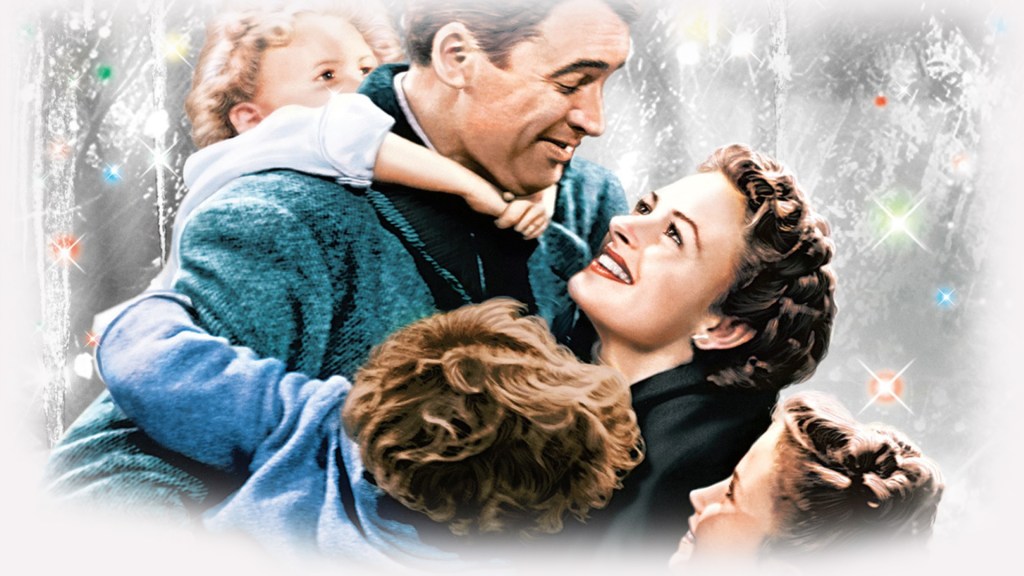
It’s a Wonderful Life, through the life of George Bailey, beautifully illustrates the idea that we are the heroes and authors of the story we live, even though it’s tempting to think that external forces like markets, family, fate, or genetics write that story for us. George often puts himself in a supporting role, feeling trapped by circumstance and sacrifice, while the external pressures seem dominant. Yet, the film reveals that the true power lies in how we use our energy and the stories we tell ourselves about our worth and purpose. George’s energy, initially poured into dreams and ambitions, is redirected repeatedly to serve his community and family, embodying the principle that our personal and collective destinies arise from the stories we choose to live by, not merely those imposed upon us.
The film powerfully demonstrates how misunderstanding or underestimating our role in our own story can lead to despair, as George does when he feels worthless and believes his life has no significance. His crisis of faith and meaning underlines the importance of the stories we internalize about ourselves, especially in difficult times. When George is shown by his guardian angel Clarence what life would have been like without him, the story he tells himself shifts—he realizes that though he saw himself as a victim of fate and circumstance, he is in fact the hero whose actions have shaped an entire community. This transformation underscores the text’s assertion that the most important story is the one we tell ourselves about ourselves, which governs how we gather and expend our energy.
The movie also highlights themes of sacrifice and building a community, tying into the seminar’s ideas about energy management. George sacrifices his own desires, continually putting the needs of others first, exemplifying how our personal narratives often involve a delicate balance between self and others. Yet, this sacrifice is a conscious choice, not a surrender to external forces. His kindness and belief in the importance of every individual reflect a story where love and faith fuel the energy not only for personal resilience but for social cohesion and mutual support. This aligns with the notion that storytelling is crucial to national and collective solutions—from healthcare to stress management—because it shapes how energy is invested in the world around us.
In essence, It’s a Wonderful Life portrays that our lives are an energetic investment, steered by the stories we embrace. George Bailey’s journey encourages reflection on personal authorship: though markets collapse, family demands, and fate seem overwhelming, the narrative we commit to—how we see and value ourselves—determines whether we play a leading or supporting role. Through introspection and renewed faith, individuals can reclaim their heroic story, channel their energy effectively, and transform despair into hope and purpose, echoing the seminar’s core message about life, energy, and storytelling.
Thus, this film exemplifies the insight that the fundamental key to addressing personal and collective challenges lies in correcting the faulty stories we tell ourselves, because it is those stories that ultimately drive our energy and shape our destinies, making the narrative shift from victimhood to heroism possible
So, you would better examine your story, especially this one that is supposedly the most familiar of all. ‘The most erroneous stories are those we think we know best – and therefore never scrutinize or question’ said paleontologist Stephen Jay Gould. Participate in your story rather than observing it from afar, make sure it is a story that compels you. Tell yourself the right story – the rightness of which only you can really determine, only you can really feel – and the dynamics of your energy change. If you are finally living the story you want, then it need not – it should not and won’t – be an ordinary one. It can and will be extraordinary.
After all you are not just the author of your story but also its main character the hero. Heroes are never ordinary.
In the end your story is not a tragedy. Nor is it a comedy or a romance or a thriller or a drama. It is something else. What label would you give the story of your life, the most important story you will ever tell. To me that sounds like a hero’s journey.
End of story.
PART ONE
Old Stories
If an idiot were to tell you the same story every day for a year, you would end by believing it – Horace Mann
That’s Your Story?
Slow death.
An uglier two-word phrase it’s hard to find. But if you’re at all like the people I see in the Hero’s Journey & Hero’s Journey seminars, then I’m afraid you understand the phrase all too well.
How did it come to this?
What am I doing?
Where am I going?
What do I want?
Is my life working on any meaningful level? Why doesn’t it work better?
Am I right now dying, slowly, for something I’m not willing to die for
Why am I working so hard, moving so fast, feeling so lousy
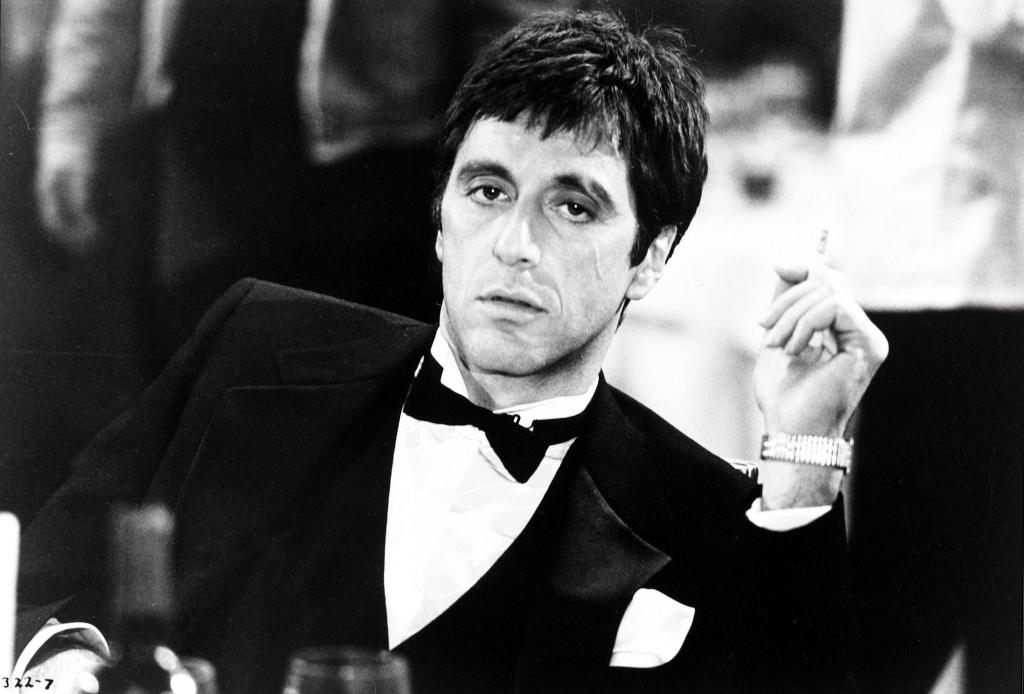
Tony Montana arrived in Miami with nothing but fire in his belly—a Cuban refugee dreaming of the American Dream’s simple latte: a decent job, a little cash, respect. “The world is yours,” the billboard taunted, and Tony believed it. He started small, killing for green cards, chainsawing rivals, but each bloody step up the ladder tasted sweeter than the last. From Frank Lopez’s sidekick to kingpin, he built an empire of coke mountains and tiger-striped baths. Yet satisfaction? A ghost. The mansion, the Ferrari, Elvira—wife like a trophy—faded fast. He craved the next grande: more powder, bigger deals, total control.
This is the slow death, the hedonic supersizing that workshop after workshop reveals in raw self-evaluations. Tony’s story mirrors those voices—frustrated, disappointed, trapped in dysfunctional narratives they scribble on day one, unfinished until desperation hits. He had the good and pure once: loyalty to Manny, love for Gina. Achieved? Now they’re chains. The six-figure deals birthed dreams of empires; the mansion begged for a second, a yacht, an island. Each win normalized, dopamine crashed, leaving emptiness. Tony snorted deeper, shot wilder, blind to the treadmill whirring beneath.
In my Power of Your Story seminars, participants echo Tony’s nightmare. They chase “success” like him—salary to six figures, home to vacation palace—only to voice the same hollow frustration. “It doesn’t sound fun,” I hear year after year, worse each time. Tony’s ego took over, plot lost in paranoia. He alienated Elvira with rages, Gina with control, Manny with betrayal. The chainsaw scene’s terror foreshadowed his fragmentation: body and soul diced by endless want. Rebellion against limits? It birthed nightmare—DEA raids, shootouts, sister’s overdose.
Tony’s autobiography, if written, ends in blood: “Say hello to my little friend!” as bullets riddle his mansion. No unknotting, just catastrophe. He supersized goals till fulfillment fled, proving the text’s truth—not everyone dies slowly, but those on this path? Their lives scream dissatisfaction, not living, barely getting by. Workshops show the fix: rewrite the story. Ditch the ego’s infinite hunger for authentic plot—gratitude, purpose beyond stuff. Tony couldn’t; will you? Spot the supersizing early, savor the simple coffee, or join the ranks reading aloud their unfinished tales of regret. Your narrative awaits authorship
Slow death: what a harsh phrase. Is that really what is happening to all those people, the ones who start out contended by what is good and pure in life – a simple cup of coffee, a few seemingly reasonable life goals (a nice salary, say, and one’s own home) – and who , once they have achieved those goals, can’t even be satisfied because they’ve already moved on to life’s next-sized latte (six figure salary, second home, three cars) only to move on to something double-extra grand when that’s achieved, a continual supersizing that guarantees one can’t ever be fulfilled?
Okay. Not everyone I see or hear about is dying slowly. But to judge from the responses I get, workshop after workshop, year after year – and each year it gets worse – whatever it is they’re doing sure doesn’t sound fun. It doesn’t even sound like getting by. I read the frustration and disappointment in their self-evaluations and hear it in their own voices, if and when they’re comfortable enough to read aloud from their current dysfunctional story, the autobiographical narrative they attempt to write the first day at the Power of Your Story, but usually don’t finish until the night before our last day together.
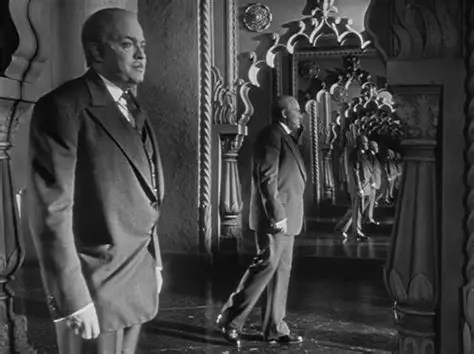
Charles Foster Kane started with the simple latte of life—a boy in the snow, sledding on Rosebud, dreaming pure joys amid Colorado’s chill. His mother traded him for security to Thatcher, the banker who dangled education and fortune. Kane resisted, wielding that sled like a shield against the world stealing his innocence. Yet the American Dream whispered promises: a newspaper, power, influence. He seized the Inquirer, crusading for the little guy, filling pages with zest. Readers flocked; satisfaction bloomed. But contentment? Fleeting. The grande called—a political run for governor, Emily as trophy wife, a mansion to dwarf rivals. Each victory normalized, hunger gnawing deeper.
This is the slow death I hear in workshop after workshop at Power of Your Story. Participants arrive content once with modest goals—a steady salary, cozy home—like Kane’s early Inquirer days. They achieve, celebrate briefly, then supersize: six figures, second properties, fleets of cars. Frustration mounts in their self-evaluations, voices cracking as they read unfinished autobiographical drafts on day one, delaying till the last night. Kane’s tale mirrors theirs. Post-election scandal—courtesy of his rival—shattered his governor bid, but he pivoted to Susan, the singer from the nightclub. Opera lessons, tours, a career supersized on his dime. Headlines hailed her “success,” yet her voice cracked like his soul. Pills piled up; a suicide bid halted the charade. Still, he pushed grander: Xanadu, his pleasure dome, a warehouse of looted wonders—statues, art, European castles shipped whole.
Year after year, the responses worsen. “It doesn’t sound fun,” they confess, echoing Kane’s hollow empire. Xanadu sprawled endless, mirrors multiplying his image into infinity, statues staring back in judgment. He collected obsessively—Egyptian relics, Venetian gondolas—each acquisition a bigger latte to quench the void. But love soured: Emily divorced him over infidelity; Susan fled after he smashed her dressing room, barbiturates spilling like his wasted energy. Manny-like friends? Bernstein and Leland faded, loyalty bought then betrayed. Kane’s energy, once vibrant in newsroom brawls, drained into isolation. Power motive thrummed in Herrmann’s score, Dies Irae condemning his ruthless climb—tritones twisting like his heart. Rosebud’s melody, hopeful fourths falling, haunted as childhood’s ghost.
In seminars, I see Kane’s dysfunctional story replicated. They chase external wins, blind to the treadmill. Kane’s “Declaration of Principles”—fighting corruption—devolved into scandal-mongering for circulation. Marriage to Emily? Political alliance supersized to control. Susan? Ego’s puppet, her failure his mirror. Each phase birthed bigger voids: Inquirer to media empire, wife to mistress, home to Xanadu. Workshop voices reveal the toll—stress, obesity, health crumbling under multitasking myths. Kane aged into a tyrant, ranting at empty halls, infinity mirrors mocking his solitude. No joy in the palace; just echoes. His energy, squandered on supersizing, left a shell. Reporters chased “Rosebud” post-death, piecing fragments—mother’s boarding house, sled in flames. The missing piece burned, like lives half-lived.
Kane’s “No Trespassing” gates sealed his fate. Power isolated; possessions mocked. He died clutching a snow globe, whispering “Rosebud”—that simple sled, pure joy before Thatcher’s theft. Not wealth consoled, but lost innocence. Workshops prove not all supersize to death, but those who do? Their narratives scream disappointment, barely getting by. Rewrite now: savor the coffee, not the venti abyss. Kane couldn’t finish his story; his draft incinerated. Yours awaits bold authorship—trade grand illusions for genuine plot, or join the slow death parade, voices fading in regret. Spot the supersizing; reclaim your energy before Xanadu becomes your cage.
As the Power of Your Story seminar progresses and people’s defenses start to melt away, I hear more and more of these stories. By almost any reasonable standard, these stories exemplify failure; in many cases, disaster. There is no joy to be found in them, and even precious little forward movement. In every workshop, nearly everyone has a dysfunctional story that is not working in at least one important part of his or her life: stories about how they do not interact often or well with their families; about how unfulfilling the other significant relationships in their lives are; about how – despite all that extracurricular failure – they’re not even performing particularly well at work, or, if they are, about how little pleasure they gain from it; about how they don’t feel very good physically and their energy is depleted.
On top of all that (isn’t that enough?), they feel guilty about their predicaments.They know, on some almost buried level, that their life is in crisis and the crisis will not simply go away. Their company is not going to make it go away. And so they wake up one morning to the realization that the bad story they for so long only feared has finally become their life, their story. Not that this development is their fault. No. Nor is there a heck of a lot to be done about it.
It is a competitive, cutthroat world out there
God knows, I want to change but I simply can’t. I’ll get eaten up and beaten by someone who’s willing to sacrifice everything.
The world moves faster today than it did a generation ago
What am I supposed to do – quit my job?
These are the facts of my life. There’s nothing I can do about them.
My life is a known quantity; so why mess with it even if it’s killing me?
Let me repeat that one: …… even if it’s killing me.
People don’t need new facts – they need a new story.

The Purpose of Seeing: The Awakening in American Beauty
Lester Burnham’s story begins the way many purpose stories do—inside a life that looks complete but feels lifeless. A comfortable house, a career, a family, routines finely tuned and utterly empty. He is not lost in chaos, but in numbness. His days move smoothly, unexamined, until one quiet realization disturbs the surface: “I have become invisible in my own life.”
That recognition—painful, almost embarrassing—is where purpose begins. It rarely enters through grand events, but through fatigue with pretending. Lester doesn’t wake up to some new opportunity; he wakes up to the truth that he has been asleep for years. He begins to wonder what it means to actually live, not merely function.
The First Stirring of Choice
Every story of purpose begins with disobedience. For Lester, it starts small—a refusal to keep performing the part written for him. He begins to question everything that feels automatic: his job, his marriage, his endless compromises. It’s not rebellion for its own sake, but the instinctive reach for authenticity.
We are taught to measure success by security, yet purpose resists containment. Lester’s first steps toward freedom are clumsy, sometimes selfish, sometimes beautiful. He quits, he laughs, he remembers music, movement, desire. What the world calls crisis, his soul calls renewal.
The Illusion of Freedom
Like many travelers on the road to meaning, Lester mistakes liberation for purpose. He confuses “doing whatever I want” with “becoming who I am.” Yet behind his apparent recklessness blooms something more gentle—a reawakening of wonder. Mowing lawns, lifting weights, driving at night with the windows open—these moments, simple and unpolished, return him to presence.
Purpose often begins beneath the surface of joy. It’s the quiet sense that being alive, truly alive, is enough. For Lester, beauty breaks through not as perfection but as awareness—an invitation to see the sacred inside the ordinary.
The Mirror of Others
Around him, every other character reflects a fragment of this same hunger. His daughter, searching for identity; his wife, trapped in control; the boy next door, finding magic through the camera lens. Through them, the film whispers that we all live behind walls of fear—different costumes, same prison.
Ricky’s perspective—his ability to find beauty in decay—becomes Lester’s teacher. What is ugly and mundane, he sees as alive. Watching him, Lester finally grasps that purpose is not something to acquire but to perceive. The world hadn’t gone dull; he had simply stopped noticing.
The Moment of Grace
At the end, as his life narrows to a single instant, Lester finds what he was chasing all along: presence. He has rediscovered love for his daughter, compassion for his wife, and a quiet reverence for existence itself. That final smile—tranquil, unafraid—is the subtle mark of a man who has reclaimed his purpose, not by adding anything new, but by remembering how to see.
Purpose, in his story, is vision restored: the ability to witness life as gift rather than burden. American Beauty reminds us that beauty is not an adjective but a state of awareness. It waits beneath the noise of ambition, the exhaustion of pretending, the clutter of control. Once we pause to notice, even a plastic bag lifted by the wind can reveal the meaning we thought we’d lost.
Is Your Company Even Trying to Tell a Story?
We’ve examined the corporate story the worker hears. Let’s see what story the company is typically telling.
First they need you and you need them. (Ideally, they also want you and you also want them, but that may not be part of your company’s story). The typical company is saying that the fast-paced business world being what it is – what with globalization and outsourcing and downsizing and sustainability and AI and synergies and streamlining – it must make increasing demands on your life. Keep swimming or die. Which means longer hours for you, ergo less time for your family and yourself. It means holding meetings during lunch or before or after the workday proper, which essentially kills your chance to exercise and stay in shape. (and let’s just order in any food that’s fast during meetings to maximize efficiency). Oh, right: and while all this is going on, the company – continually stressing its imperative to move forward if it is to survive at all – also demands that you frequently change directions, reinvent the very way you operate, completely alter how you conduct business.
Everyone who likes that story, raise your hand.
Older workers, in particular – those who have seen it all before – are likely to undermine the story for such a company. So, too, anyone else who fears that he or she may be easy to eliminate, or may have a diminished role in the transformed company. To these employees the story their company is telling may be exciting in the abstract, or to investors, but it’s potentially humiliating for them. Among these workers, suspicion, cynicism and distrust run rampant. While the defiant worker publicly may appear vested in the change process, privately he tells himself: New thinking be damned. He works subversively to undermine the new directive. He knows that, for the new initiatives to take, everyone must embrace them. Not him. He will go through the motions but he is not going to make any real course corrections.
And so, like a dinosaur, he moves closer and closer to extinction.
The employee loses and the company loses as well. Entire organizations have been undermined by storytelling that excludes a significant portion of their workforce. Failure to align the evolving corporate story with the aspirations of the individual employees, up and down the workforce – the very ones who have been enjoined to help write that new, improved story – has systemic implications. Athletes routinely give up on playing hard for coaches they deem excessively punitive or inconsistent; the bond of their mutually aligned stories – to win a championship – is undermined because the coach’s story does not seem to allow for the inevitable particularities of any individual athlete’s story. Mutiny is not just what happens when ship captains indefensibly change or robotically stick to the rules but also when CEO’s and schoolteachers do it. Organizations have been undermined by refusing to alter their story when it clearly wasn’t working.
The Social Network tells the story of the rapid rise of Facebook, a story representative of many modern companies’ demanding and fast-changing narratives. Mark Zuckerberg starts as a Harvard undergraduate with an idea born from frustration and ambition. The company’s implicit story to its people is relentless growth and reinvention to survive the cutthroat, ever-accelerating tech world. The demands on Zuckerberg and his team escalate quickly, their lives consumed by coding, negotiating, and scaling, with little room for personal connection or reflection.
From the start, Zuckerberg’s world is marked by conflict in relationships—his breakup with Erica Albright, the fraying of friendship with co-founder Eduardo Saverin, and clashes with the Winklevoss twins who accuse Zuckerberg of intellectual theft. The fast pace of innovation in Facebook’s story leaves no time for reconciliation or trust-building. The energy they invest drives incredible success but simultaneously saps their personal lives and moral compass.
Older figures or partners in the narrative, like Eduardo, become marginalized and betrayed as corporate priorities and ambitions overshadow loyalty and fairness. With new leadership and investors like Sean Parker stepping in, the story focuses on scaling and domination, often at the cost of human connection. The company’s drive to constantly evolve breeds suspicion, distrust, and legal battles, reflecting the toxic dynamics that many workers experience in the high-pressure corporate world.
The climax is bittersweet: Facebook becomes a global powerhouse, yet Zuckerberg ends up isolated, alone, and yearning for the genuine connections he sacrificed. The story underscores how the company’s relentless demand for reinvention and success paralleled his personal alienation.
Zuckerberg’s tale offers a mirror. The corporate story often demands that we “keep up or be left behind,” driving burnout and fractured relationships. What’s missing is a new story—one that values people as much as profits, that balances ambition with humanity. Changing facts like market dynamics won’t suffice; shifting the story we tell ourselves and each other about work and value is key to restoring energy, connection, and purpose.

The Social Network illustrates the cost of a corporate story without heart—a cautionary tale urging companies and individuals alike to rewrite their narratives for sustainable success and human flourishing.
If alignment of stories, yours and your company’s, is to be achieved – and I believe it’s neither as lofty nor as complicated a task as it may sound – then it is ideally generated both from top down (the company side) and bottom up (the workers side). But let’s not get carried away. For our purposes, we’ll presume zero input form the company. It is, after all, corporate culture.
That means the burden to change stories is on you.
Presenteeism
What if the most important adventure of your working life was not about the projects you complete, the titles you hold, or even the outcomes you deliver—but about the story you tell yourself? What if the office, with its familiar routines and relentless pace, is both your crossroads and your call to adventure?
Those who know me understand I see life and work as journeys—epic quests each of us must undertake. Every working person is a hero in the making. And every workplace challenge is a shadowy threshold, begging us to re-examine the story we live by—and the roles we choose.
In my journeys with creative professionals, entrepreneurs, leaders, and artists worldwide, I notice a repeating theme: too many of us are living by default stories, not the ones we would choose if we remembered we had the pen in our hand. Even the most ambitious, purpose-driven individuals fall prey to this trap.
We tell ourselves stories like:
- “I am valuable because I am always here.”
- “If I slow down or admit I’m struggling, I’ll be replaced.”
- “To be a hero is to put others before myself, no matter the cost.”
These are powerful myths, but not always true or empowering for the modern workplace hero. They lead us straight to the quicksand of presenteeism, where showing up becomes a prison, not a purposeful journey.
The First Threshold: Awakening to the Call
Every hero’s journey begins with a call to adventure—a crisis that shakes up the old world and offers a chance, however frightening, for transformation. Presenteeism is this crisis. What if you saw your own disengagement or declining health not as a personal failing, but as a summons? A moment to examine the story you’re living.
Are you actually answering your call, or are you stuck reliving someone else’s tired script?
Pause for a moment at your desk. Close your eyes. Ask: What is the true story I’m living here? Am I the weary warrior constantly pressing on, or the resourceful hero who knows when to rest, renew, and return with deeper gifts?
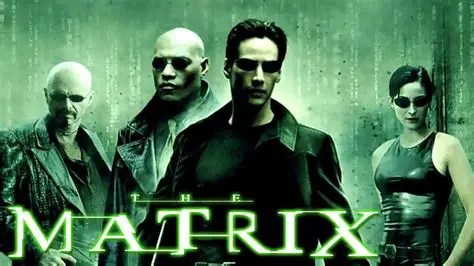
The Purpose of Awakening: Neo’s Journey Through The Matrix
When I think of Neo’s story, I don’t see machines or battles first. I see a man sitting quietly before his computer, haunted by the feeling that something essential is missing. That itch—that faint pulse of discontent—is the sound of purpose calling. It begins as a question: What is real? What am I meant for? Every seeker starts there, in the tension between what the world shows and what the heart suspects.
Neo’s life, before awakening, reflects the familiar illusion of modern certainty: a stable routine, a system that explains everything, a comfort born from control. Yet comfort often hides confinement. Like many of us, he lived inside invisible walls of expectation until the moment came when not knowing became more unbearable than fear itself.
The Moment of Choice
Purpose always begins with a choice—the decision to trust the unknown more than the familiar. For Neo, that choice is literal: one pill leading deeper into illusion, the other into truth. It is a moment that mirrors our own crossroads: do we remain in safety, or do we step toward meaning, even if it undoes the life we have built?
That small act of courage, the willingness to question, breaks the first chain. The world dissolves, and he awakens not as a different person but as himself for the first time. Purpose does not change who we are; it reveals what was always waiting beneath the noise.
The Journey Through Doubt
Every calling demands unlearning. Neo’s awakening is not clean but chaotic—his body rejecting false limits, his mind flooded with disbelief. The old self resists; the new one hesitates. It’s a process every traveler through purpose knows well: discovery, doubt, surrender.
Morpheus becomes a guide, but he does not hand over answers. He hands over faith. He knows that truth must be lived, not taught. “There’s a difference between knowing the path and walking the path.” That is the essence of purpose—it cannot be conceptual; it must be embodied.
Little by little, Neo realizes that belief shapes experience. The Matrix bends not to force, but to conviction. Purpose works the same way; life reshapes itself when we finally decide who we are meant to be.
The Death of the Old Self
Toward the end, Neo faces his deepest initiation—the surrender of control. When he risks everything, without certainty of survival, he crosses the invisible threshold between seeker and servant. That moment—his death and rebirth—teaches the central truth of purpose: it’s not about power, but alignment.
He no longer fights to prove he is “the one.” He becomes it by letting go of fear. Power flows through purpose, not ego. His awakening is not about escaping the Matrix—it’s about transforming the way he sees it.
Living Awake
When Neo steps forward at last, walking into the world with open eyes, his purpose is clear: to awaken others. That is the final stage of every purpose journey—to become a mirror for those still sleeping. What began as an act of rebellion ends as an act of service.
The Matrix, for all its spectacle, is simply the story of awakening—of shedding illusion, finding one’s truth, and realizing that freedom starts inside. Purpose doesn’t demand that we overthrow the world; it asks that we first reclaim ourselves.
Neo’s journey reminds me that every life holds its own red pill moment, when the question knocks and silence is no longer enough. Whether we answer or not decides everything.
Allies and Mentors: The Importance of Leaders, Teams, and Self-Compassion
No hero travels alone. In epic tales and in real life, allies and mentors make all the difference. The modern workplace often pushes us into isolation—presenteeism thrives when we are most disconnected, convinced we are in this alone. But what if your story included allies?
Allies can be:
- A leader who models vulnerability and honesty about limits
- A team that values open conversation, not just relentless performance
- A workplace culture that considers well-being non-negotiable
Or, perhaps most importantly, an inner mentor: your wiser self who reminds you that even heroes need healing. When we share our struggles honestly, we invite others to do the same; we rewrite a culture of silent suffering into one of shared humanity.
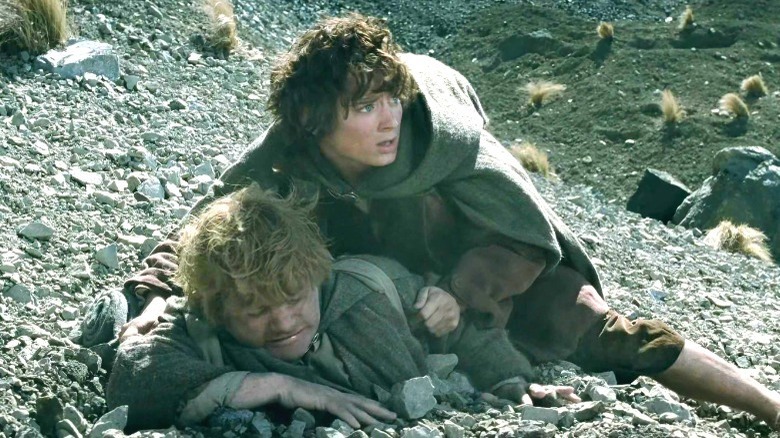
The Weight and the Way: Frodo’s Journey to Purpose
Frodo Baggins’s story begins not with courage, but with comfort. He lives quietly among familiar hills, dreaming little beyond the borders of his home. Yet it is often from such calm beginnings that purpose first whispers. When the great burden of the Ring finds him, it is not adventure he receives, but calling. And with that calling comes fear—the kind every traveler must face when the road ahead demands more than they believe they can give.
I’ve always seen Frodo’s journey as the story of how purpose reshapes the ordinary. It does not ask if we are ready; it asks if we are willing. He does not seek heroism—he accepts responsibility. That small turning of the heart, from reluctance to resolve, is the first act of transformation.
The Burden of Meaning
The Ring’s power is not only its magic; it is the illusion it creates—that purpose is about greatness, control, or glory. Every step Frodo takes toward Mordor strips that illusion away. With time, his task ceases to feel noble and begins to feel endless, his strength dwindling under the invisible weight of what he carries.
And still, he walks. Purpose often looks like endurance when viewed from the middle of the road. It is seldom glamorous; it is often quiet, heavy, uncertain. Frodo learns that the true test is not whether we can bear the burden, but whether we can walk beside it without surrendering our soul.
Companionship as Compass
Along his path, Frodo discovers that purpose does not thrive in isolation. Sam becomes his compass—steadfast, loyal, unassuming. Through him, Frodo learns that even the grandest journeys depend on kindness, and that purpose shared is purpose strengthened.
No one travels toward meaning alone. We all need someone to remind us why we began, especially when we’ve forgotten the sound of home. Sam does this not with speeches, but with presence—a living symbol that hope is sustained not by certainty, but by care.
The Inner Battle
The closer Frodo comes to his destination, the more he realizes that the greatest struggle lies within. The Ring tempts him with power, whispering promises of control and safety. But purpose, he learns, is not control—it is surrender. To be faithful to the task, even when the task consumes you, is the highest form of courage.
In those moments of darkness, his body frail and his faith thin, Frodo becomes something beyond hero: he becomes human at its bravest—willing to lose everything so that life may continue.
The Return and the Quiet Truth
When the journey ends, and the Ring is gone, Frodo does not return to Shire life unchanged. He cannot. Purpose has marked him; peace now carries the taste of memory. Many expect joy from completion, but true purpose often leaves both gains and scars. It deepens rather than restores.
In the end, Frodo’s final act of leaving—sailing to the West—is not escape but acknowledgment. Some journeys change us so profoundly that return means beginning anew elsewhere. His departure speaks a truth many travelers learn: when one purpose has been fulfilled, making space for another is its own form of grace.
The Gift of the Road
Frodo’s story isn’t about destroying a ring; it’s about understanding that meaning is born through service, sacrifice, and faith. The smallest person carrying the greatest burden—that is the paradox of purpose.
Every journey remarkable or quiet asks the same question: will we walk forward even when the way is unclear? Frodo answers yes—and in doing so, reminds us that purpose isn’t in the triumph but in the walking, step by step, toward what must be done.
Crossing Into the Unknown: Changing the Story from Within
The core message of the hero’s journey is this: Transformation is possible. Not by fleeing our struggles or pretending they don’t exist, but by facing them honestly and letting them change us.
Presenteeism, at heart, is a warning flag. It signals a misalignment: between your body and your story, your willingness and your capacity, your presence and your true purpose. To change this, you do not need a grand gesture—just a willingness to edit the script:
- Instead of “I must always be present,” try: “My best work comes from knowing when to engage and when to replenish.”
- Instead of “Heroes never falter,” try: “True heroism is knowing my limits and helping others respect theirs.”
This is not self-indulgence. Research shows that places prioritizing well-being see higher productivity, lower turnover, and more vibrant, creative workplaces. Your organization benefits when its people are truly present.

The Purpose of the Force: Luke Skywalker’s Journey
When I think of Luke Skywalker, I see not a hero, but a seeker. His story begins not with battles or destinies, but with restlessness—a longing to become more than what he is. He gazes at the twin suns sinking into the desert horizon, feeling their pull like two halves of a question: Where do I belong? Why am I here? That moment of yearning is where purpose always begins.
Luke’s world, bounded by sand and repetition, mirrors the early chapters of every purposeful life—the ones where we mistake safety for smallness and confusion for failure. He does not yet know that this hunger, this ache to leave the familiar behind, is not rebellion. It is awakening.
The Call to Step Beyond
The call to purpose rarely arrives gently. It often enters disguised as loss or upheaval. For Luke, it comes with tragedy—the destruction of the life he knew—and the invitation of a mentor who sees in him something still asleep. He resists, as most of us do. To follow purpose often means to let go of belonging, to step into uncertainty guided only by faith and instinct.
Obi-Wan becomes less a teacher than a mirror. Through him, Luke begins to recognize that destiny is not inherited but accepted. Purpose does not wait for permission; it grows through courage. Every lesson in the Force is an act of surrender—to trust what cannot be measured, to see what cannot yet be proven.
The Battle Within
The real conflict Luke faces is not between empires, but within himself. Fear and doubt are his true enemies. He must learn to quiet ambition, to turn inward until intuition becomes his compass. Purpose demands awareness: the humility to fail, the honesty to listen, and the strength to rise again.
Each trial he faces—each choice that tempts him toward anger or mercy—becomes a revelation of character. Slowly, the boy who once hunted adventure becomes the man willing to bear its cost. Through struggle, he discovers that the Force is not power but alignment—the harmony found when what we desire and what we serve become one.
The Moment of Truth
Every purposeful journey has a moment of surrender. For Luke, it comes when he confronts the shadow of lineage—the truth of where he comes from—and chooses compassion over vengeance. In that act, he transcends fate itself. Purpose, he learns, is not defeating darkness but refusing to let it define him.
This is the essence of awakening: to stand where fear expected you to fall, and to choose love instead. That decision, quiet and human, changes everything.
Coming Home
When the battles fade and the universe grows still, Luke’s final gift is perspective. He sees that purpose was never about glory or even victory—it was about connection, service, and faith in something larger than self. The journey that began with a longing to escape ends with the understanding that true freedom is belonging—to life, to others, to the Force that binds it all.
Luke’s story teaches that purpose is not a destiny to find but a truth to remember. It begins with wonder, matures through loss, and fulfills itself in compassion. In the end, he is more than a hero—he is awake.
Trials and Temptations: The Lure of Busyness and the Fear of Absence
No journey is without its temptations. In the world of work, “busyness” and “constantly being seen” are seductive false gods. We look for validation by logging long hours, replying to emails at midnight, never daring to say “I need a break.” This is presenteeism in its purest form.
But every story has a turning point—a moment when the hero sees through the illusion and claims a deeper power. What if you challenged the myth that visibility equals value? What if leadership meant championing cycles of exertion and renewal—for yourself and those you lead?
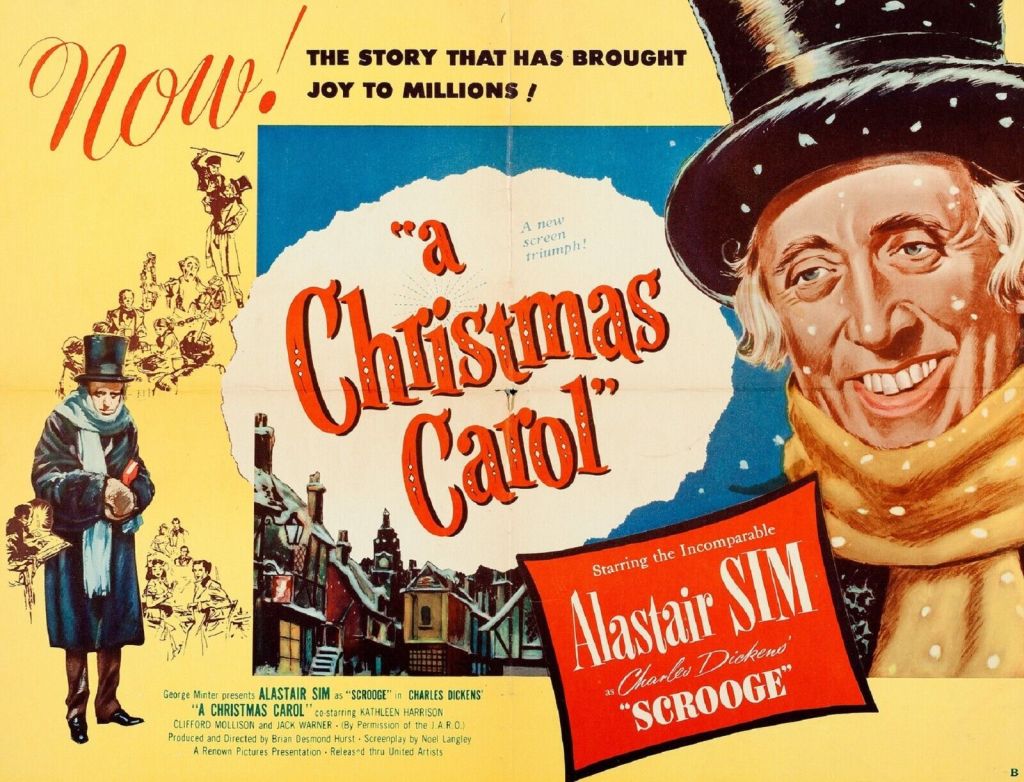
The Purpose of Awakening: The Journey of Ebenezer Scrooge
When I think of Scrooge’s story, what strikes me most is not his greed, but his forgetfulness. He begins as a man who has simply lost his way—successful by the world’s measures, empty by his own. His purpose has withered, sealed beneath layers of routine and calculation. It is not wickedness that defines him, but absence: the absence of wonder, warmth, and belonging.
Every act in his life has become transaction; every decision measured against efficiency. He moves through days without joy, seeing people as interruptions rather than invitations. I recognize that kind of blindness—it is what happens when purpose is replaced by productivity. When life becomes a ledger, meaning quietly disappears from the margins.
The Call to Remember
Then come the visitors—the spirits who arrive not to punish but to remind. Each is a mirror, showing him what he has been, what he forgets to see, and what he will become if he refuses to change. The first spirit takes him back through the corridors of memory. There he finds not numbers but moments: laughter once shared, innocence unguarded, a younger self still capable of love. These visions are painful, yet they soften the walls he built.
The second spirit pulls him into the present, where others live fully without him. He watches ordinary joy—families dining, children playing, people gathering—and realizes how much life exists outside his narrow circle. He begins to feel the ache of separation: the quiet grief of being irrelevant to the happiness of others.
And finally, the last spirit leads him to the silence of his own ending. No voices mourn, no legacy remains. The grave reveals the eventual prize of self-isolation: comfort without connection, success without story.
The Moment of Choice
Here the question becomes inescapable: what is all this for? In that fear and clarity, Scrooge’s awakening begins. For the first time, he understands that life’s value lies not in accumulation but in participation. Purpose is not given—it is chosen, lived, renewed moment by moment.
When he wakes that Christmas morning, gratitude bursts from him like light from a long-shuttered window. He laughs, not as a man rewarded, but as one reborn. His joy is the rediscovery of belonging; his generosity, the expression of purpose restored. He remembers that life is meant to flow through us, not stop with us.
The Return to Life
What makes his transformation powerful is its simplicity. He does not perform miracles; he opens his heart. He greets others with kindness, joins their celebrations, becomes part of the world he once dismissed. Purpose, he learns, is not abstract—it is human. It lives in connection, in care, in presence.
Scrooge’s story is a reminder that we all have two ledgers in life: one that counts and one that matters. The first lists what we earn; the second, what we give. Redemption begins when we learn to balance them.
In the end, A Christmas Carol is not about wealth or ghosts. It is about awakening—the courage to live again with meaning, gratitude, and generosity. Purpose, after all, is not something found under a star or in a sermon. It awakens when we open the door, invite others in, and remember that life was never meant to be lived alone.
The Return: Sharing the Boon
The final stage of the hero’s journey is the return—the bringing back of newfound wisdom to the tribe. If you can transform your story around presence at work, you bring back a gift that can transform the culture around you.
This might look like:
- Leading discussions on workplace health and well-being
- Creating or supporting initiatives for flexible work and mental health support
- Building teams where checking in on someone’s state of being is as normal as checking their to-do list
You return, not depleted but richer, with a boon to share: the realization that the true power of presence is quality, not quantity. One engaged hour, one honest conversation, one real act of self-care can be worth days spent pretending.
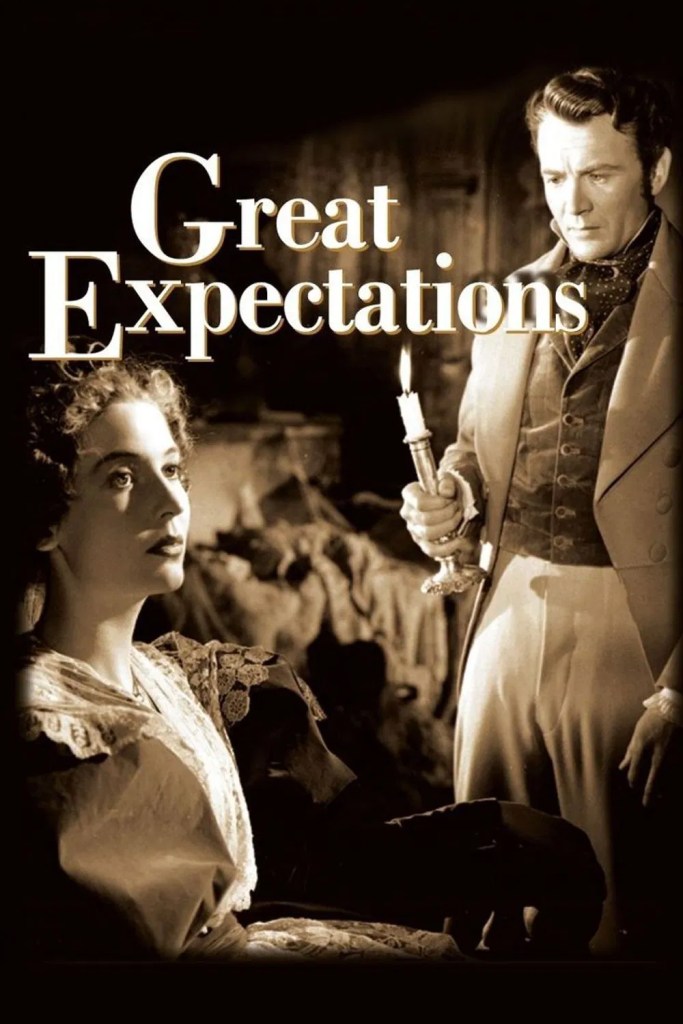
Living My Story: Purpose in Great Expectations
I have always seen Great Expectations as a map for those of us searching for purpose. It begins, as many journeys do, with a restless boy standing between what is and what could be. Pip’s story feels less like a period drama and more like a mirror: the tale of how ambition, shame, and love can mislead us before truth finds its quiet way through.
Pip starts with a spark—his desire to rise above his beginnings. That longing drives him forward but also blinds him. In his pursuit of refinement and approval, he mistakes appearance for purpose. I see him there, moving through life like a man auditioning for a part he was never meant to play. The world calls it “ambition.” But what he really seeks is belonging.
The False Narrative of Success
Purpose often disguises itself as success. For Pip, the promise of becoming a “gentleman” feels like transformation, yet every step upward separates him further from his true self. His shame toward Joe, the blacksmith who raised him with kindness, becomes the symbol of this fracture. The higher he climbs, the more hollow his achievement feels.
This is the danger built into every “great expectation”—when we chase the life we think we should want instead of listening to what our life truly asks of us. Pip’s turning point comes when he learns the truth about his benefactor: that his fortune comes not from Miss Havisham’s grandeur but from Magwitch, the convict he once helped as a boy. The revelation dismantles his story and restores his humanity.
The Shift Toward Meaning
Purpose rarely appears as a thunderclap; it grows in silence. Pip’s transformation begins not when he gains wealth but when he chooses compassion. Caring for Magwitch, he sheds pride for service, pretense for empathy. The man who sought to escape his past finally redeems it.
Watching Pip, I am reminded that the pursuit of purpose often begins with surrender—of illusions, of façades, of everything untrue we built to be worthy. What remains afterward is simple and deeply human: the desire to give back, to forgive, to live honestly.
Fire and Forgiveness
Miss Havisham’s burning estate becomes the inner landscape of the story: the collapse of a life consumed by regret. Pip’s attempt to save her is less rescue than ritual—a way to end the inheritance of pain. Purpose is a fire of this kind. It devours what is false before it illuminates what matters.
Estella, once the instrument of Miss Havisham’s vengeance, softens into her own awakening. Her transformation, too, is quiet. Both she and Pip are scarred into seeing. That is how purpose finds them—not as triumph, but as clarity.
The Return Home
When Pip returns to the forge, it is no longer the boy who dreamed of escape—it is a man who understands where his worth resides. His story ends not at the height of success but at the depth of reconciliation. That’s the secret Dickens leaves us with: purpose doesn’t lie in escaping our origins, but in reconciling with them.
Great Expectations becomes, then, a story about alignment—the moment we stop performing life and start living it. Pip’s redemption is the reminder that purpose is not granted from above or earned through ascent. It is remembered, patiently waiting at the place we began.
Writing Your Next Chapter
Let me ask you, as you read this: What would it mean to become the hero of your own workplace story? To notice, name, and gently edit the scripts that lead you to presenteeism?
If you see yourself in these words, you’re not alone. Millions experience this struggle daily, and its impacts are enormous—not just financially but emotionally, socially, and creatively for ourselves and our organizations. But you have the power to change your story, to step onto a new path.
Start by asking:
- What am I really seeking in my work?
- What stories about value, effort, and worth am I living by—and are they serving me?
- Where might I invite more honesty, more compassion, more allyship?
The future of work—and the future of your own hero’s journey—depends on the stories we choose. May yours be one of presence, purpose, and authentic creative transformation.
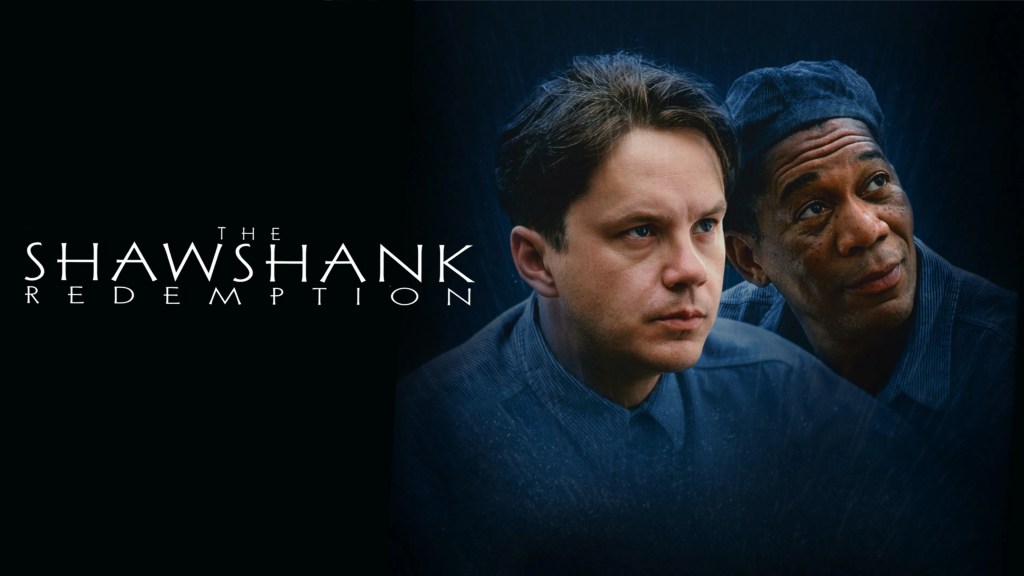
The Walls That Breathe: Finding Freedom in The Shawshank Redemption
Life rarely unfolds in straight lines. The Shawshank Redemption turns the prison wall—cold, indifferent, eternal—into a mirror of the human spirit, tracing how confinement can conceal the slow architecture of freedom. Beneath its surface of iron bars and stone corridors lies a meditation on endurance, meaning, and the quiet rebellion of hope.
What begins as a tale of injustice—a banker falsely imprisoned for murder—transcends its setting, becoming an allegory of spiritual escape. Within the walls of Shawshank, Andy Dufresne’s journey charts the geography of grace in a world defined by entropy. His struggle is neither violent nor overt—his resistance emerges through patience, intellect, and the audacity to imagine a life beyond the institutional murk.
The Geometry of Confinement
Prison in Shawshank is not simply a setting; it’s a theology of time. The walls compress years into ritual: laundry cycles, roll calls, beer breaks on rooftops. To the inmates, days blur into routine until time itself becomes invisible—a slow suffocation of the will. Andy, however, moves against entropy. Where most yield, he calculates. Where others merely exist, he chisels, hour by hour, through the absurd stone of existence.
Through Andy’s eyes, the small becomes sacred. A library built book by book, a letter written each week to faceless bureaucrats, a Mozart record echoing across the yard—each act reclaims humanity in a system built to erase it. Freedom, he shows, is an inside job.
The Currency of Hope
Ellis “Red” Redding narrates from the weary wisdom of institutionalization, a man who has learned to mistrust freedom itself. His parole hearings echo a ritual of defeat—the word “rehabilitated” losing meaning over decades of decay. Yet through Andy, Red rediscovers the forbidden language of hope.
Hope in Shawshank is not naive optimism; it’s the rebellion against despair. It is costly, even dangerous. Brooks, the aged librarian, embodies the tragedy of a man whose soul has been carved to fit the institution’s mold—a cautionary specter for what happens when walls stop being boundaries and become identity. Andy’s defiance redeems that loss. His faith—rooted not in religion but in vision—infects Red until what once frightened him becomes his salvation.
The Ritual of Escape
Andy’s escape is not an act of cinematic triumph but a slow-motion resurrection. Decades of chiseling—hidden, methodical, silent—culminate in one storm-soaked night when patience finally breaks the dam of inevitability. Crawling through filth, he emerges reborn, body cleansed by rain, spirit unshackled. It’s not the escape of a convict—it’s the emancipation of an idea: that persistence outlasts oppression.
In contrast to Tarantino’s collisions of fate and randomness, Darabont’s world builds revelation through constancy. The miracle here is not divine intervention but human endurance. Andy doesn’t wait for salvation; he engineers it. Where Pulp Fiction finds meaning amid chaos, Shawshank finds transcendence through order—a slow defiance of the system that cannot imagine him free.
Redemption as Contagion
Red’s final act—following Andy to the Pacific—completes the film’s spiritual equation. Redemption, having germinated in Andy, spreads like light through stone. The last words spoken—about hope and the trembling fear of freedom—address every soul conditioned to despair. The story ends not with spectacle but with horizon, extending the metaphor of open water as the antidote to closed institutions.
Freedom Beyond the Walls
The Shawshank Redemption is not a prison story but a human one—a testament to the persistence of selfhood against mechanisms of erasure. Within stone and steel, it discovers that liberation is contagious, that endurance can be its own form of rebellion. If Tarantino’s universe celebrates meaning carved from chaos, Frank Darabont’s vision honors faith grown in silence.
In Shawshank, salvation does not fall from heaven. It is chipped from the wall, one stroke at a time.
The Hidden Costs of Presenteeism: Why Organizations Pay a High Price for a Poor Story
In every organization, there is a visible ledger: bottom lines, turnover numbers, and absentee days. But lurking beneath that surface, unnoticed, is a silent leviathan gnawing at profits, morale, and growth: presenteeism. In my work on “The Hero’s Journey,” I remind leaders that the real tale of any organization is not just about presence—it’s about meaningful engagement, energy, and stories that fuel innovation. Presenteeism is what happens when people show up, but leave their passion, focus, or wellbeing at home.
The cost? More than you might imagine—and far greater than the mere sum of sick days or missed meetings.
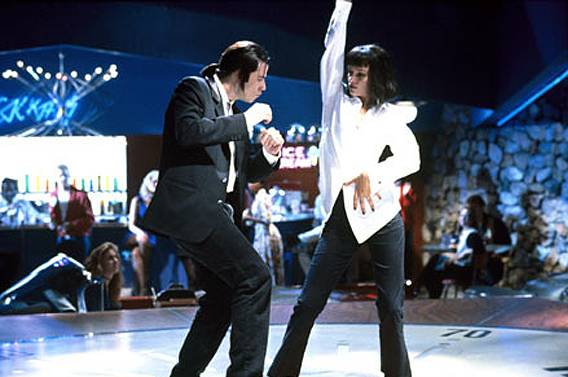
Quentin Tarantino’s Pulp Fiction is a mosaic of violence, banter, and moral ambiguity that defies linear storytelling to probe deeper questions of fate, redemption, and choice. Amid its nonlinear chaos and criminal underworld, characters like Jules Winnfield confront the randomness of existence, seeking purpose not in power but in transformation. The film becomes a gritty parable: purpose emerges when we recognize life’s unpredictability and choose meaning over nihilism.
The Bullet That Missed: Finding Purpose in Pulp Fiction
Life rarely follows script. Pulp Fiction mirrors that truth through its interlocking stories of hitmen, boxers, and gangsters, all tangled in a web of chance and consequence. What begins as pulp entertainment reveals a philosophical core: in a world of bad timing and moral grayness, purpose is not predestined but chosen—often in the wake of near-death clarity.
Vincent Vega and Jules Winnfield embody this tension. Career killers quoting scripture and debating cheeseburgers, they thrive in a realm where violence is casual and empathy scarce. Yet a hail of bullets that miraculously misses them shatters their routine, forcing a reckoning with fate or free will.
I see them as travelers at a chaotic crossroads, where the road to purpose forks between denial and awakening. The film’s genius lies in showing how such moments—absurd, violent, human—become pivots toward meaning.
The Miracle of Survival
Jules interprets his survival as divine intervention, a sign to abandon crime for righteousness. Quoting Ezekiel before kills becomes hollow; he pledges a new path of mercy. Vincent dismisses it as luck, clinging to his cynical drift. Their divergence illustrates purpose as response: one transforms, the other perishes in a mundane accident.
This event underscores the film’s exploration of existential uncertainty. Life’s randomness—bullets, overdoses, betrayals—strips illusions of control. Purpose arises not from mastering chaos but interpreting it as a call to change.
Such “miracles” mark the hero’s pivot: from predator to pilgrim, where survival demands redefining one’s narrative.
Redemption in the Pawnshop
Butch Coolidge, the boxer who defies mob boss Marsellus Wallace, flees with his girlfriend Fabienne after double-crossing his fix. Captured and brutalized in a sadistic pawnshop, he faces a stark choice: escape alone or rescue his captor. His decision to save Marsellus flips power dynamics, forging an uneasy truce.
This act defies the film’s law-of-the-jungle ethos, where worth hinges on predation. Butch’s compassion amid horror reveals purpose as moral agency—choosing humanity over vengeance, even at personal risk.
This is the traveler’s code: honor amid betrayal creates direction, turning survival into stewardship.
The Illusion of Control
Nonlinear structure amplifies the theme of unpredictability. Characters plan meticulously—Vincent babysitting Mia Wallace, Butch retrieving his watch—only for accidents to intervene. Mia’s overdose, Marvin’s shooting, the briefcase’s mysterious glow: all expose life’s farce.
Tarantino aestheticizes violence without judgment, blending glamour with banality. Criminals bicker like families, injecting humanity into archetypes. Yet moral flickers—Jules’s retirement, Butch’s rescue—hint at redemption’s possibility.
Purpose, the film suggests, thrives in this gap: acknowledging chaos while asserting choice. Vincent’s denial seals his fate; others adapt.
Loyalty and Pathology
Relationships pulse with dysfunction: Vincent and Mia’s drug-fueled flirtation, Butch and Fabienne’s tender fragility amid brutality. Love twists into power games, sex into fetish, yet glimmers of connection persist.
These bonds question authenticity in a nihilistic world. Jules finds clarity beyond them; Butch honors his through sacrifice. Purpose emerges relationally—not in isolation, but through tested loyalty.
These flawed ties mirror life’s journeys: purpose refines raw affection into ethical direction.
Nihilism’s Edge
Pulp Fiction flirts with nihilism—meaningless violence, arbitrary ends—yet rejects total despair. Jules evolves toward faith; Butch claims agency. Even Marsellus, the enigmatic boss, yields to mercy’s logic.
The film critiques ego-driven lives, where ends justify means. True purpose inverts this: acts of grace amid brutality affirm value in an indifferent universe.
For the modern seeker, it warns against Vincent’s path: dismissing signs leads to drift. Purpose demands vigilance to life’s “miracles.”
The Briefcase as Metaphor
The glowing briefcase, contents unseen, symbolizes elusive meaning—gold, soul, or void? Its allure drives conflict, yet guardians like Jules release it for higher pursuits.
This is the inner light every traveler chases: purpose illuminates when grasped not as possession, but direction.
Chaos as Teacher
Tarantino’s pulp world—scatological humor, pop references, sudden deaths—teaches through excess. Violence entertains, not horrifies, neutralizing taboo to probe desire and death.
Amid banality, purpose shines in transformation: from killers to questers, betrayers to saviors. The nonlinear form reinforces this—stories circle, revealing how choices ripple eternally.
The Road Ahead
In the diner’s closing loop, Pumpkin and Honey Bunny’s robbery frames the tale. Jules, now reformed, de-escalates with wisdom born of change. His purpose—mercy over murder—completes the arc.
I call Pulp Fiction a fragmented odyssey: chaos births clarity for those who choose. Purpose is not linear triumph, but defiant meaning in randomness—retiring the gun, saving the enemy, walking away whole.
The film endures as reminder: in life’s pulp pages, rewrite your story before the bullets fly.
Old Stories
With relatively few variations, heroes and heroines tell stories about basically five major subjects.
- Business
- Family
- Health
- Friendships
- Happiness
By asking yourself basic questions about how you feel about what you do and how you conduct yourself – and by trying honestly to answer them, of course – you begin to identify the dynamics of your story.

Robert Mulligan’s To Kill a Mockingbird, drawn from Harper Lee’s novel, is a film that speaks softly yet carries immense moral weight. Set in the small-town South during the 1930s, it tells the story of justice, empathy, and courage through the eyes of a child. The film becomes not only a story about racial injustice but a meditation on how purpose is shaped by conscience. Through Atticus Finch, Scout, and the people of Maycomb, To Kill a Mockingbird reminds us that purpose is not found in applause or achievement, but in the quiet decision to do what is right when no one else will.
The Quiet Courage: Finding Purpose in To Kill a Mockingbird
There are stories so deeply human that they become moral landscapes. To Kill a Mockingbird is one. It leads us through childhood’s simplicity to adulthood’s complexity without ever losing tenderness. Its concerns—prejudice, fear, and dignity—are timeless, but its true power lies in how it explores the purpose of integrity.
The film begins under the gaze of a young girl, Scout Finch, whose world revolves around her father, Atticus. Through her eyes, we see both the beauty and cruelty of society. Maycomb is a town wrapped in gentility yet corroded by injustice. The innocence of Scout’s perspective allows us to see what adults often rationalize away—how easily conscience can be silenced by comfort.
Purpose begins where complacency ends. That is Atticus Finch’s story. He is a man asked to defend a Black man, Tom Robinson, falsely accused of assaulting a white woman. In accepting this case, he defies his community’s prejudice, and in doing so, he embodies purpose not as ambition, but as conviction.
The Moral Compass
Atticus Finch is the traveler of conscience in this story. In a world that equates morality with conformity, he stands as the quiet exception. He does not raise his voice, yet every word carries dignity. He knows the jury will likely condemn Tom Robinson despite the truth, but he takes the case because purpose does not depend on outcome; it depends on effort aligned with principle.
This distinction between success and meaning lies at the heart of the film. Atticus’s lesson to his children—to climb into another’s skin and walk around in it—becomes a timeless articulation of empathy as moral purpose.
Atticus acts from the belief that integrity is the traveler’s true north. In each generation, there are those who choose comfort and those who choose conscience. Purpose begins when one is willing to live by the latter, even if it means walking alone.
The Eyes of Innocence
Scout’s perspective transforms what could have been a bleak story into a revelation. Through her, we experience the confusion of a child trying to reconcile goodness with injustice. Her questions are simple—yet in their simplicity, they cut to truth. Why would anyone despise her father for defending what is right? Why is kindness met with cruelty?
Watching her learn to see the world’s unfairness without losing her sense of wonder feels like watching purpose take its first breath. Scout’s education is not academic; it is ethical. Every encounter—whether it is with her reclusive neighbor Boo Radley or the harsh gossip of townsfolk—teaches her what her father lives by example: that real courage is moral, not physical.
I call this the “pilgrimage of innocence,” when empathy matures into understanding. Scout’s journey toward awareness mirrors our own attempts to live meaningfully in a world that often trades fairness for conformity.
Tom Robinson and the Weight of Conscience
Tom Robinson’s trial stands as the moral fulcrum of the film. His dignity and helplessness reveal the deep fracture in the town’s soul. Even as Atticus exposes the truth, the verdict condemns an innocent man, showing that justice alone does not guarantee morality. Purpose sometimes means confronting systems that may never change, yet acting anyway because silence would mean complicity.
This is the turning point of the traveler’s journey—the recognition that purpose often brings heartbreak. To live intentionally is to carry the awareness that goodness may not triumph outwardly, but it transforms inwardly. Atticus knows the cost of integrity; he also knows the cost of its absence. The loss of one man’s case becomes a victory for his children’s understanding of honor.
The Mockingbird as Symbol
The mockingbird in the story symbolizes innocence that gives beauty without harm. When Atticus tells his children it is a sin to kill a mockingbird, he defines purpose in a single metaphor: to protect what is good and fragile in the world from the cruelty of ignorance.
This is Scout’s deepest lesson. She realizes, by the film’s end, that Boo Radley—once feared as a monster—is one of those very mockingbirds. His act of saving her and Jem transforms him from myth to moral truth. The innocent must often hide to survive, yet even in silence, they carry meaning.
Purpose is the decision to preserve innocence—not naiveté, but the capacity for kindness and awe. It is the courage to defend what is pure when cynicism calls it weakness.
Atticus as Archetype
Atticus Finch’s purpose is not heroic grandeur but human steadiness. He does not seek change through anger or rhetoric; he seeks it through example. The film’s strength lies in showing that the most transformative purpose can be the quietest one: the father who teaches by living truthfully, the neighbor who chooses compassion over fear, the citizen who acts justly without the promise of reward.
In a society torn by prejudice, Atticus stands like a solitary traveler holding a lantern in the dark. The lantern is not bright enough to illuminate the entire path—but its presence ensures the path remains visible. That is the essence of moral purpose: to be light, however small, in surroundings where shadow dominates.
Lessons Beyond Maycomb
The legacy of To Kill a Mockingbird extends beyond its setting. Its questions—about fairness, empathy, courage, and integrity—remain urgent in every age. Each generation encounters its own versions of Maycomb, and each must decide whether to preserve comfort or pursue conscience.
I often speak of the “journey of the storyteller,” where meaning arises from choosing the right story to live by. The story Atticus lives is simple yet profound: that decency has weight, and that living truthfully is its own reward. Even in defeat, he stands whole.
Scout and Jem inherit this story as a moral map for their own lives. They learn that purpose is not found in a world without sorrow, but in responding to sorrow with grace. It is not the eradication of injustice that defines us, but how we choose to live while confronting it.
The Quiet Triumph
In the final scenes, when Scout reflects on Boo Radley’s act of kindness and whispers that “most people are nice when you finally see them,” her words sound like a benediction—a declaration of hope. She has learned to see the mockingbird within humanity itself.
The film closes with “the triumph of tender vision.” Purpose does not always roar; sometimes, it simply chooses to believe in the good, even when the world insists otherwise. In that choice lies the power to mend, to forgive, and to begin again.
To Kill a Mockingbird teaches that purpose is not an achievement but a posture—the courage to stand upright before truth and walk forward with compassion. It reminds us that the world’s redemption begins not in grand revolutions, but in the quiet hearts willing to listen, understand, and act with decency.
Your Story around Work
You have a story to tell about your passion for your work and what it means for you. And because more than half our waking life is consumed by working at your business, how we frame this story is critical to our chance for passion and happiness.
How do you characterize your relationship to your work? Is it a burden or a joy? Deep fulfillment or an addiction? What compels you to get up every day and go to work? The money? Is the driving force increased prestige, power, social status? A sense of intrinsic fulfillment? The contribution you are making? Is it an end in itself or a means to something else? Do you feel forced to work or called to work? Are you completely engaged at work? How much of your talent and skill are fully ignited?
What is the dominant tone of your story – inspired? challenged? disappointed? trapped? overwhelmed?
Does the story you currently tell about work take you where you want to go in life? If your story about work is not working, what story do you tell yourself to justify it, especially given the tens of thousands of hours it consumes?
Suppose you did not need the money: Would you continue to go to work every day? Write down five things about working at your business that, if money were no issue, you would like to continue.
- _____________________________________________________
- _____________________________________________________
- _____________________________________________________
- _____________________________________________________
- _____________________________________________________
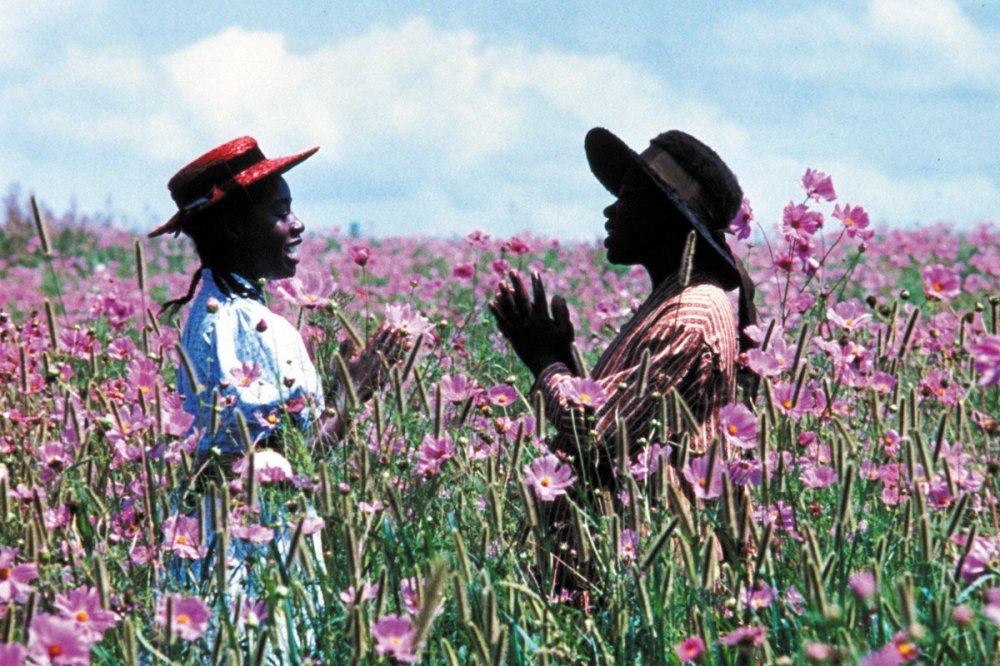
Steven Spielberg’s The Color Purple, based on Alice Walker’s novel, is not just a story about injustice or survival—it is a portrait of the human spirit discovering purpose through pain, resilience, and love. It traces the journey of Celie, an oppressed woman whose awakening mirrors the broader search for meaning that every person undertakes. The film becomes more than a historical narrative. It is a testimony to the transformative power of purpose—the kind that grows quietly inside the soul until it becomes strength.
Becoming Whole: Finding Purpose in The Color Purple
There are stories that speak, and there are stories that sing. The Color Purple sings—a hymn of endurance turned into empowerment. Its song is not one of bitterness, but of becoming: how a woman denied a voice and dignity discovers that purpose begins the moment she realizes she has worth.
Set in the American South in the early 1900s, the film unfolds against a backdrop of injustice—racism, sexism, and poverty—but beneath these harsh realities runs a deeper current of grace. Celie’s journey from voicelessness to self-realization marks a timeless truth: purpose is born not from privilege, but from the struggle to reclaim one’s own narrative.
Celie’s story is the archetype of the traveler who begins her journey without a map. She does not seek adventure; it finds her through suffering. Yet, every trial becomes a step toward an awakening that transforms her pain into wisdom.
The Silence of Survival
When we first meet Celie, she is a girl forced into womanhood too soon, her innocence stolen by abuse and her spirit crushed by control. Her world is defined by subjugation—first under her father, then her husband, Mister. Each man treats her as property, and for years, Celie endures in silence.
In that silence, however, purpose takes root. It is fragile at first, a quiet longing for freedom. The letters she writes to God become more than prayers; they are lifelines. Through them, Celie keeps alive the voice she is forbidden to use in the world. Her story reminds us that even when outward expression is denied, purpose can survive inside as a whisper waiting for its time to speak.
This represents the first stage of the purposeful journey—the endurance of meaning through faith. It is the resilience to keep one’s inner story alive when the external world tries to erase it.
The Friendship That Awakens the Soul
The turning point in Celie’s life arrives with the entrance of Shug Avery—a woman of sensual freedom and unapologetic individuality. Where Celie has been muted, Shug sings. She introduces color into a monochrome world. Their relationship—part friendship, part spiritual recognition—shows how purpose ignites through connection.
Shug’s influence helps Celie see beauty beyond fear. She teaches her that God is not confined to churches or sermons, but lives in every gesture of joy, every glimpse of color, every act of love. “I think it makes God mad if you walk by the color purple in a field and don’t notice it,” Shug tells her. In that single line, the film distills its philosophy of purpose: to notice, cherish, and celebrate life’s miracles even after unspeakable pain.
Celie’s transformation begins in the mirror of Shug’s acceptance. Through love that respects rather than dominates, she learns to respect herself. Purpose, the film suggests, is not something found; it is remembered—the rediscovery of who we were before the world told us otherwise.
The Power of Voice
As Celie’s confidence grows, so does her defiance. When she finally stands up to Mister at the dinner table, her words halt generations of silence. “I’m poor, I’m Black, I may even be ugly, but dear God, I’m here.” That declaration of being is a sacred moment. It marks not rebellion but resurrection. Her voice, once buried beneath oppression, becomes a trumpet of liberation.
This is the hero’s awakening—the moment when inner truth aligns with outer action. Purpose demands that we speak our story aloud, even when our voice trembles. Through Celie, we learn that the courage to say “I am” is the foundation of all meaning.
Her act of self-affirmation reshapes not only her own life but those around her. Mister, long a symbol of cruelty, begins to change too. Purpose has a contagion about it; it awakens others by example, not force.
The Redemption of Work and Creation
Celie’s newfound independence takes form through craftsmanship. She starts her own business, designing and sewing pants for both men and women—a symbolic reversal of traditional power. The fabric she stitches into clothing becomes more than material; it becomes self-expression. Each seam holds her story, her labor transformed into art.
Purpose, in this sense, is creative. It rebuilds what was broken not by forgetting but by refashioning. Celie’s work reminds us that what once oppressed her—domestic servitude—becomes the arena of her freedom. She turns duty into design, routine into revelation.
This stage of the journey mirrors the traveler who no longer runs from the past but uses it as raw material for new meaning. Purpose becomes not an escape from pain but the weaving of pain into wisdom.
Reconciliation and Grace
By the film’s final act, time softens even Mister, and reconciliation replaces vengeance. Celie’s purpose has expanded beyond self-liberation into forgiveness—a higher form of freedom that not only restores her peace but redeems the broken humanity around her.
Her reunion with her long-lost sister, Nettie, and her children, once taken from her, is the story’s spiritual summit. Surrounded by the family and land that now belong to her, Celie realizes that purpose was never about escape but about return: finding wholeness where fragmentation once ruled.
Purpose becomes the place where the heart and the world finally meet. Celie’s journey completes that circle—her inner dignity now visible in every smile, every field, every color of her world.
The Modern Reflection
The Color Purple continues to resonate because it tells every person’s story who has felt unseen, unheard, or unloved. It teaches that purpose does not arrive suddenly or easily; it grows quietly through endurance and is nourished by kindness, creativity, and faith.
For many today, Celie’s transformation mirrors the challenge of reclaiming one’s worth in a world still wrestling with inequality and invisibility. Her life urges us to notice “the color purple”—to reclaim joy as an act of resistance, gratitude as an expression of power.
In the end, the film’s message aligns perfectly with my belief that the most purposeful life is the one lived with awareness of beauty, forgiveness, and courage. Purpose, as Celie shows us, is not a reward for perfection but the birthright of those who dare to believe life can still be beautiful.
The Song of Purpose
When Celie laughs in the final scene, surrounded by family and light, it feels as though the world itself exhales. Her laughter is the sound of a spirit restored, of a woman who has found herself and, in doing so, found meaning for everyone watching.
Her story’s journey—from silence to song—teaches that purpose is not a destination but a transformation of perception. Life may bruise us, but when we learn to see its color again, we no longer live in survival; we live in wonder.
Your Story Around Family
What is your story about your family life? In the grand scheme, how important is family to you? So … is your current story about family working? Is the relationship with your husband, wife, or significant other where you want it to be? Is it even close to where you want it to be? Or is there an unbridgeable gap between the level of intimacy, connection and intensity you feel with him or her and the level you would like to experience?
Is your story with your children working? How about your parents? Your siblings? Other family members?
If you continue on your same path, what is the relationship you are likely to have, years from now with each of your family members? If your story is not working with one or more key individuals, then what is the story you tell yourself to allow this pattern to persist? To what extent do you blame your business for keeping you from fully engaging with your family? (really?) Your business is the reason you are disengaged from the most important thing in your life, the people who matter most to you? How does that happen? According to your current story, is it even possible to be fully engaged at work and also with your family?

James Cameron’s Titanic sails far beyond being a romance or disaster film. Beneath the grandeur of its production and the tragedy of its ending lies an exploration of purpose—how, even when life sinks into chaos, meaning can be found in love, courage, and self-discovery. Through the eyes of Rose and Jack, the ship becomes a metaphor for human longing: the desire to move from confinement to authenticity, from fear to freedom. Titanic is a voyage toward purpose carried on the tide of transformation.
The Voyage Within: Finding Purpose in Titanic
There are journeys shaped by geography, and there are journeys shaped by the soul. The voyage of the Titanic carries both. When the ship departs Southampton, it is not merely crossing the Atlantic—it is crossing the invisible boundaries between class, courage, and consciousness. Every passenger, knowingly or not, has boarded a vessel of destiny.
For Rose DeWitt Bukater, the young aristocrat trapped by expectations, the Titanic represents both opulence and imprisonment. Surrounded by luxury, she is starving spiritually. For Jack Dawson, the drifting artist with no possessions but his sense of wonder, the ship is promise embodied—the chance to see the world, to live freely even if briefly. Their meeting on that voyage transforms each of them, showing how purpose arises where love meets self-realization.
The traveler finds meaning not by escaping life, but by truly entering it. That is precisely what Titanic invites us to witness: two souls awakening to life’s purpose in the shadow of mortality.
The Cage and the Horizon
When Titanic opens, Rose lives as a woman defined by others. Her mother’s ambition and her fiancé’s wealth dictate every breath she takes. She is engaged not for love but for survival. The gowns, jewels, and etiquette hide a deeper despair—the quiet death of self beneath social duty.
Jack, by contrast, belongs nowhere but feels at home everywhere. He lives moment to moment, guided by imagination rather than rank. When he tells Rose that life’s gift is “to make each day count,” his words are not advice but purpose distilled into simplicity.
Jack and Rose symbolize the two halves of a seeker: one bound by convention, the other liberated by curiosity. Their crossing on deck is more than attraction—it is destiny inviting transformation. Purpose begins when the soul rebels against its gilded cage.
The Awakening of Heart
Their love story unfolds not as escapist fantasy but as spiritual awakening. When Jack shows Rose how to “fly” on the bow of the ship, their gesture captures the essence of purpose: the courage to spread one’s arms to experience, even if it risks falling.
Love here becomes revelation. Through Jack, Rose sees that her life belongs not to her family or fiancé but to herself. The grandeur of the Titanic—its chandeliers, fine dining, and rigid hierarchies—fades beside the brilliance of authenticity. To choose freedom over fear, truth over comfort, becomes Rose’s rebirth.
This is the moment when the story turns from external adventure to inner pilgrimage. Purpose is born the instant we choose to live as ourselves, unmediated by the masks the world demands.
The Ship as Metaphor
The Titanic itself is a physical manifestation of human ambition: magnificent, engineered to perfection, and convinced of its own invulnerability. It is civilization’s monument to control, and therefore its downfall becomes the ultimate lesson. When the iceberg tears through its hull, it exposes the illusion at the heart of all arrogance—that progress can outpace humility.
In that darkness, stripped of privilege and certainty, every passenger must face who they truly are. The rigid social lines dissolve as water floods the decks. Cowards hide behind power; heroes rise from anonymity. The disaster transforms luxury into equality, reminding all that purpose cannot be purchased or inherited—it must be lived.
For Rose, this moment crystallizes her transformation. Amid the chaos, she moves from being protected to being resolute. Her purpose shifts from self-survival to the preservation of meaning: to live a life that honors love’s truth. The Titanic, then, becomes not an end but an initiation.
Love as Purpose
Jack’s heroism is not born of ego but of love’s clarity. When he helps Rose survive, his actions arise from the deepest understanding of purpose: to enable another to live freely, even if you cannot continue beside them. His death in the icy water is both tragedy and transcendence—the moment where purpose surpasses self. He dies not in vain, but fulfilled, knowing that he has awakened another soul to life.
I call this “the sacred exchange of journeys.” Jack gives Rose life; Rose, in turn, gives his sacrifice meaning by living awake. Purpose, in this light, is continuity—the passing of awakening from one soul to another.
Their relationship redefines the idea of romance. Love here is not possession but liberation. It teaches that purpose is not in finding someone to complete you, but in discovering who you are when you love without boundaries.
Survival and Renewal
In the film’s final act, Rose’s survival is not simple luck—it is intention. She clings to life, not because she fears death, but because she has learned what living truly means. When she is rescued, surrounded by debris and dawn light, her face carries both sorrow and serenity. She has lost Jack, yet gained herself.
Years later, as an elderly woman recounting the story, Rose embodies purpose fulfilled. Her life becomes the vessel that carries Jack’s spirit forward. Every adventure, every photograph of her standing where he once dreamed of going, is testimony to his gift: to live without fear, passionately and presently.
Purpose often begins in gratitude. Rose’s final act—releasing the Heart of the Ocean into the sea—is not nostalgia but completion. She returns what once symbolized her captivity to the deep, acknowledging that love, memory, and meaning flow onward, not backward.
The Echo Beyond Time
The enduring power of Titanic lies in its ability to unite grandeur and intimacy. The sinking of the ship mirrors the collapse of illusions that imprison the human spirit. Out of destruction comes revelation: that life’s value cannot be measured by wealth or control but by authenticity, courage, and connection.
In a world still obsessed with status, Rose’s transformation from a silenced debutante to an independent woman remains profoundly relevant. Her journey affirms that purpose often arises from crisis—not from safety but from surrender. When the old world drowned, her true self surfaced.
The film ends not with despair but with transcendence. The camera drifts through the restored Titanic, now alive with light, where those who perished await her return. It is cinema’s tender metaphor for meaning fulfilled: that love born in purpose never truly dies.
The Traveler’s Reflection
If I were to write from the deck of the ship that night, he might describe the voyage as a universal pilgrimage: every human being sailing through illusions of grandeur until the heart remembers what truly matters. The stars above the Atlantic would mirror the lights below, reminding him—and us—that purpose lives in the fragile space between the infinite and the immediate.
Titanic endures because it tells not of an ending but of awakening. We all board ships of our own making—careers, relationships, ambitions—believing them unsinkable. Yet life teaches us, again and again, that meaning lies not in the vessel but in the voyage, not in what endures forever, but in how we choose to live before it’s gone.
Your Story Around Health
What is your story about your health? What kind of job have you done taking care of yourself? What value do you place on your health, and why? If you continue on your same path, then what will be the likely health consequences? If you are not fully engaged with your health, then what is the story you tell yourself and others – particularly your spouse, your kids, your doctor, your colleagues and anyone who might look up to you – that allows you to persist in this way? If suddenly you awoke to the reality that your health was gone, what would be the consequences for you and all those you care about? How would you feel if the end of your story was dominated by one fact – that you had needlessly died young?
Do you consider your health just one of several important stories about yourself but hardly toward the top? Does it crack the top three? top five? If you have been overweight, or consistently putting on weight the last several years; if you smoke; if you eat poorly; if you rest infrequently and never deeply; if you rarely, if ever, exercise; what is the story you tell yourself that explains how you deal, or don’t deal, with these issues? Is it a story with a rhyme or reason? Do you believe that spending time exercising or otherwise taking care of yourself, particularly during the workday, sets a negative example for others?
Given your physical being and the way you present yourself, do you think the story you are telling is the same one that others are hearing? Could it be vastly different, when seen through their eyes?
Think to a time when you were very ill, so sapped of energy that you didn’t even feel like reading a book in bed. Do you remember any promises you made to yourself while lying in bed? As in ‘I don’t ever want to feel this way again. If and when I regain my health, I’m going to ….? Write down three promises you made.
- _________________________________________________________________
- _________________________________________________________________
- _________________________________________________________________
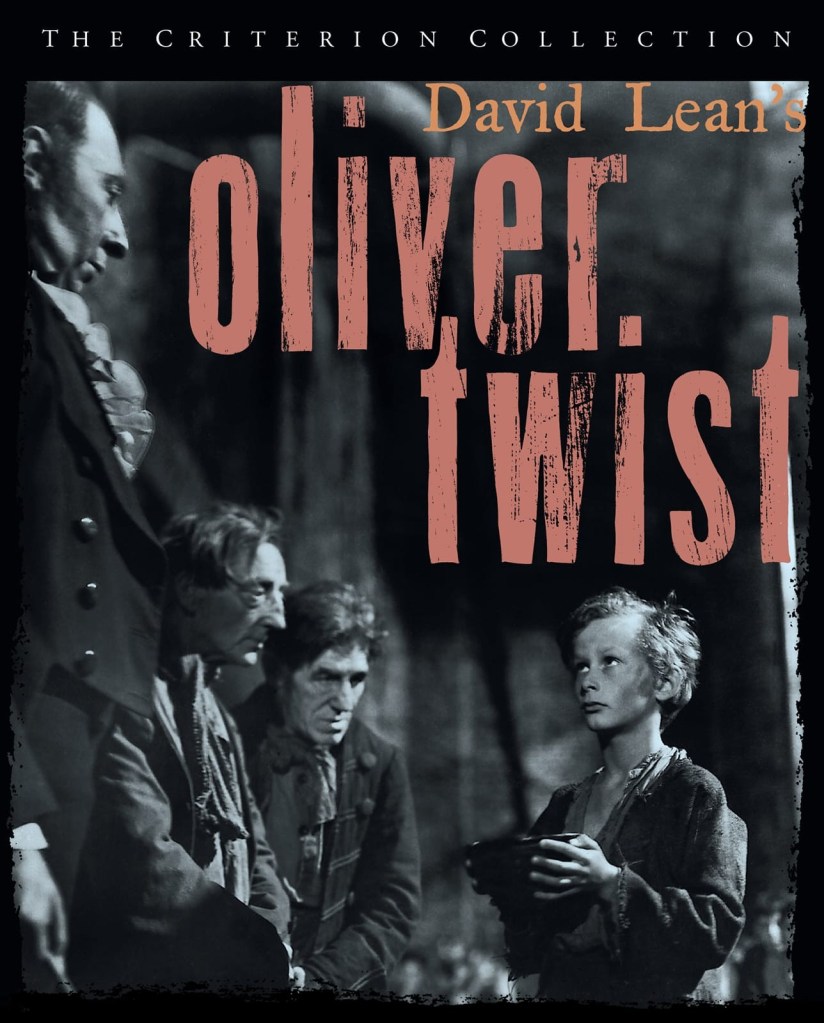
Charles Dickens’s Oliver Twist has traveled through centuries as both a social critique and a timeless fable about innocence surviving corruption. Yet deeper than its depiction of poverty and cruelty lies a question at the heart of my storytelling philosophy: how do we hold onto purpose when the world teaches us cynicism? The boy who dares to ask for more—more food, more fairness, more love—embodies not greed but spiritual hunger. His journey is a lesson in how pure intention, tested by hardship, becomes the seed of lifelong purpose.
Asking for More: Finding Purpose in Oliver Twist
Few stories begin with less. Oliver comes into a world that gives him nothing—no name, no family, no safety. Yet from his first breath, he carries something the world cannot take: the instinct to hope. In his voice asking for “more,” Dickens gifts us one of literature’s most enduring symbols of purpose—a child’s refusal to accept the limits imposed by oppression.
I often write about the traveler who follows the thread of meaning through adversity. Oliver is that traveler, moving through the night of 19th-century London with only his innocence as a lantern. His story reminds us that purpose is not privilege; it is persistence.
The World as Test
Oliver’s early life in the workhouse is a master class in cruelty disguised as order. The system feeds the body sparingly and starves the soul completely. Punished for asking to be fed, Oliver becomes less a child and more a mirror reflecting the hypocrisy of those who preach charity while practicing greed.
From a modern lens, purpose here begins not with prosperity but with protest. To want more in an unjust world is the beginning of awakening. Purpose often appears as defiance in the eyes of those who benefit from complacency. For me, this moment marks the turning point in any hero’s journey—the refusal to be the passive character in someone else’s story.
When Oliver runs away to London, his escape through the open countryside becomes a symbolic rebirth. The road is harsh, but travel has always been the geography of transformation. Each step away from the workhouse brings him closer to understanding the world and his place within it.
The Temptations of the Street
In London, Oliver encounters the paradox of the city: a place of boundless opportunity built upon ruthless survival. Fagin’s gang of child pickpockets welcomes him with false warmth, offering companionship in exchange for conscience. Here, the film adaptation reveals the seductive pull of belonging without morality—a test every seeker must face.
Oliver, unguarded but incorruptible, resists becoming a cog in the machinery of deceit. His goodness, far from naïveté, becomes an act of spiritual defiance. Purpose in the face of corruption is not loud protest; it is the quiet refusal to betray one’s nature.
There are many Fagins in life—voices promising ease if only we surrender principle. Yet Oliver teaches that purpose and peace share one foundation: integrity. Like a compass in fog, it guides us when the path ahead disappears.
The Light of Compassion
Into this darkness comes Mr. Brownlow, whose kindness offers Oliver a glimpse of the world as it could be—fair, gentle, and humane. For the first time, compassion becomes his teacher. Such moments are “crossroads of the spirit,” where despair meets grace.
Brownlow’s trust restores Oliver’s faith not just in people but in possibility. Purpose, as Dickens shows through their bond, is not achieved through endurance alone but through connection. We discover meaning not only by surviving the world, but by building relationships that make it gentler.
Yet the security is brief. Fate, in the form of Bill Sikes and Fagin, pulls Oliver back into chaos. He becomes again the innocent amid brutality, caught between love and lawlessness, idealism and exploitation. His story reminds us that purpose demands resilience—it is not a permanent state but a choice renewed each time we fall.
The Courage of Innocence
The moral core of Oliver Twist lies in the idea that innocence can be courageous. When Oliver refuses to give in to hate, he embodies what I call “the grace of conviction.” He proves that one can remain unbroken without being naïve. His endurance is not passive but active—a quiet insistence that goodness matters even when unseen or unrewarded.
In a society that equates toughness with purpose, Oliver’s gentleness challenges the definition. His strength lies not in resistance alone, but in compassion, which becomes its own form of rebellion. The film’s version of this—set against the grime and danger of London’s underworld—makes that contrast unmistakable: the smallest acts of compassion can redeem entire worlds of cruelty.
Purpose as Belonging
Every Dickens story circles back to the human need for belonging. Oliver’s journey culminates not in wealth but in finding a home where his heart can rest. Adopted by Brownlow, he steps from exile into belonging—not by winning power, but by remaining pure amid chaos. Purpose, it turns out, is not the conquest of circumstance but the reclamation of identity.
Oliver’s purpose is “to turn pain into kindness.” Every person he meets reflects a choice he might have made differently. He could have been hardened like the Artful Dodger, embittered like Nancy’s lover, or predatory like Fagin. Instead, he preserves his capacity to love. And that, Dickens suggests, is life’s quiet form of victory.
The Mirror of the Modern World
Though Dickens wrote for his century, the lessons of Oliver Twist belong to ours. The workhouses of old may have vanished, but exploitation survives in subtler guises. Many today ask for “more” in ways Oliver would understand—not more indulgence, but more fairness, empathy, and decency.
In a society that often rewards cynicism, Oliver’s purpose feels almost radical: to remain hopeful without being blind, to live kindly without demanding credit. The clarity of his spirit has outlasted every system that tried to crush it. Like a traveler walking through fog toward unseen sunrise, he trusts that forward is still worth moving.
The Story as Compass
The stories we tell shape the lives we live. Oliver Twist endures because it tells of a life shaped not by fortune but by faith in meaning. It suggests that purpose is not reserved for the strong or educated, but belongs to anyone who keeps their soul intact while the world bargains for it.
In Dickens’s London, purpose glows not in palaces but in candlelit rooms, in kindness extended to the undeserving, in children who still believe mercy is possible. The story reassures us that purity of heart is not naivety—it is wisdom that refuses despair.
The Journey’s Lesson
At the end of Oliver Twist, the boy who began as an orphan leaves behind a world of hunger and deceit to step into one of safety and affection. Yet his journey never truly ends, because the purpose that guided him—hope sustained by goodness—becomes a universal human legacy.
Oliver’s story is “a pilgrimage through cruelty toward compassion.” It teaches that the smallest voice asking for justice can be the loudest call to meaning.
Oliver asks for more—and so should we. Not more wealth or power, but more humanity, more courage, more purpose born of love that endures when the world grows cold.
Your Story about Happiness
What’s your story about happiness? How would you rate your happiness over the last six months? Is your answer acceptable to you? According to your story, how important is happiness and how do you go about achieving it? Are you clear about where or how happiness might be realized for you? If there is something out there – some activity, some person – that dependably brings you happiness, how long has it been since you encountered it or her or him? What do you think is the connection, if any, between engagement and happiness? If your level of happiness is not where you want it to be, then what’s the story you tell yourself that explains why it’s not happening at this point in your life? If you continue on the same trajectory, then what kind of happiness do you expect is likely in your future, short-term and long.
Do you consider you own happiness an afterthought? An indulgence? A form of selfishness? Have you removed joy joy, as opposed to contentment – from the spectrum of emotions you expect and wish to experience during the remainder of your life?
Jot down ten moments/occassions during the last thirty days where you experienced joy:
- ________________________________________________________
- ________________________________________________________
- ________________________________________________________
- ________________________________________________________
- ________________________________________________________
- ________________________________________________________
- ________________________________________________________
- ________________________________________________________
- ________________________________________________________
- _____________________________________________________
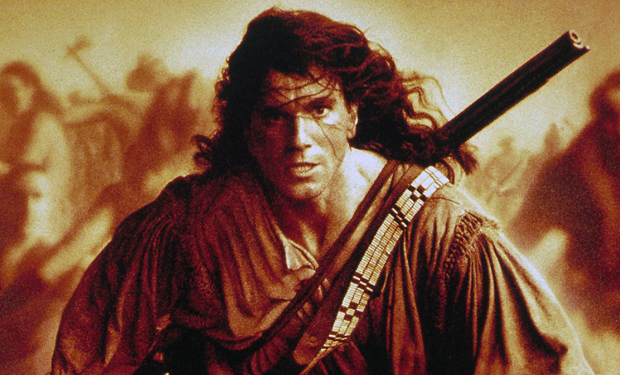
Michael Mann’s The Last of the Mohicans is a film carved out of wilderness, duty, and desire. It speaks of war and loyalty, yet beneath its sweeping action lies a timeless meditation on purpose: the struggle to live honorably when caught between fading worlds. The story of Hawkeye, Chingachgook, and Uncas becomes more than a tale of frontier survival. It becomes a guide to discovering purpose amid chaos, where the heart’s compass must be true even when the world burns around it.
The Compass of the Heart: Finding Purpose in The Last of the Mohicans
There are landscapes that strip human ambition to its essence. The American frontier of 1757 is one of them. In The Last of the Mohicans, mountains, rivers, and forests do not simply frame the action—they test the soul. Every decision is a crossing, every silence an oath. Here, the wilderness becomes a mirror for the inner life: vast, dangerous, and untamed.
Hawkeye, the white man raised by the Mohican Chingachgook, moves through this world as one who belongs yet never fully fits. His life between cultures gives him a double vision—a gift and a wound. Watching him, we recognize a traveler in my sense of the word: someone in search of meaning between two realities, trying to reconcile freedom with responsibility, passion with principle.
Between Two Worlds
From the first moment we see him tracking in the forest, Hawkeye lives in rhythm with nature but not apart from civilization’s conflicts. The French and Indian War has turned the wilderness into a chessboard of empire. When he encounters Cora and Alice Munro, the daughters of a British officer, his destiny collides with history.
For many of us, purpose begins in such collisions—where our personal values clash with the expectations of the world around us. Hawkeye’s loyalty is to people, not politics. When the war breaks into his life, he follows his conscience instead of command. He protects those in peril even when it brands him an enemy. His defiance embodies a core truth: purpose requires alignment between belief and action, even when it isolates us.
I call this “the courage of authenticity.” Hawkeye does not live for approval or reward. His choices, like his footsteps in the forest, leave no trace but integrity.
The Path of Integrity
Purpose often reveals itself in moments of moral clarity. When Hawkeye refuses to abandon the settlers and their families to danger, his act is simple yet transformative. He demonstrates that purpose is not a destiny granted from above, but a discipline shaped in daily deeds.
In a world ruled by flags and rival claims, he chooses humanity. His friendship with Uncas, his bond with Chingachgook, his love for Cora—all grow from the same root: connection over conquest. The film’s grandeur lies not only in its battles but in its silences, where survival becomes an act of faith in life’s sanctity.
This is a story about the vanishing edges of civilization, yet it is also about the endurance of principle. Each character, stripped of comfort and certainty, must ask what matters enough to die for—and in that question, what makes life worth living.
Love as Compass
Cora Munro’s strength brings a new dimension to Hawkeye’s purpose. Their love, born in danger, becomes not a retreat from the world but a deeper engagement with it. In her, Hawkeye finds not escape but affirmation. Love, the story suggests, is not an interruption of purpose—it clarifies it.
When Cora asks him to stay safe, his reply is not heroic posturing but devotion: “You stay alive. No matter what occurs, I will find you.” It is the language of commitment from a man whose identity is grounded not in conquest but fidelity. In my philosophy of purpose, love often becomes the mirror through which we glimpse our truest selves. It asks us to be brave, not invincible—to act from care, not control.
Love gives purpose tenderness. It turns survival into service and loneliness into belonging.
The Fire of Legacy
Uncas, the last of Chingachgook’s bloodline, embodies the fading of one world and the birth of another. His courage and tragic death remind us that purpose often demands sacrifice. The title of the film itself carries both mourning and honor: the last of the Mohicans not only marks an ending but celebrates endurance. Even in loss, the spirit remains.
When Chingachgook performs the mourning ritual for his son at the end, the wide shot of him silhouetted against the mountains transforms grief into legacy. His purpose—like that of every mentor—is not to live forever but to pass on wisdom. His final prayer is not a cry of despair but a vow of continuity. “I am the last of the Mohicans,” he declares, standing between extinction and remembrance. It is one of cinema’s most poignant expressions of purpose as stewardship: ensuring that values continue even when worlds collapse.
The Wilderness Within
The Last of the Mohicans teaches that purpose is both external and internal. The characters traverse rivers and mountains, but their deeper journey is spiritual—across fear, prejudice, and the temptation to surrender to hatred.
Hawkeye’s compassion for all sides of the conflict reveals that true purpose transcends boundaries. His guiding loyalty is to life itself. When the Huron leader asks for justice, Hawkeye’s translation bridges not only language but understanding. In that moment, meaning becomes mediation—the effort to connect rather than condemn.
This is the traveler’s calling: to act as bridge, not border. Purpose in such a sense becomes participation in the greater story, the one that holds all others.
The Modern Reflection
Watching The Last of the Mohicans today feels like revisiting a time when the earth still tested the soul. Yet the questions it raises are modern. What does loyalty mean when institutions fail us? How can identity stretch across opposing worlds without breaking? Can love and conscience coexist with survival?
Purpose, the film suggests, is not found in triumph but in alignment—living so that what we believe, feel, and do form one clear line. The characters who lose themselves are those who fight only for glory or revenge. Those who endure—Hawkeye, Cora, Chingachgook—choose a quieter truth: fidelity to love, honor, and the land.
Their story reminds that purpose is both fragile and fierce, something to be renewed day by day rather than inherited whole. It is the rhythm of the heart walking beside the rhythm of the earth.
The River Beyond War
As the film closes, the war still rages elsewhere, but in the silence of the mountain, something eternal survives. Chingachgook, grief-stricken yet grounded, stands between past and future, whispering to the spirit of his son. Hawkeye and Cora stand beside him—representatives of a new, uncertain world, yet one carried forward by those who dare to feel deeply and act justly.
The horizon is not peaceful, but it is purposeful. Life continues with the awareness that love, courage, and friendship can outlast empires. Every journey leads us to a moment like this: when the noise ceases, and we realize that purpose is not the path we choose but the way we walk it.
The wilderness will always test us, but it will also teach us—if we listen—to follow the compass of our hearts.
Your Story about Friends
What is your story about friendship? According to your story, how important are friends? How fully engaged are you with them? (that is don’t calculate in your mind simply how often you see them but what you do and how you are when you’re together). If close friendships are important to you, yet they are clearly not happening in your life, what is the story you tell yourself that obstructs this from happening?
To what extent are friendships important to your realizing what you need and want from life? If you have few or no friends, why is that? Is this a relatively recent development – that is, something that happened since you got married for example, or had a family, or got more consumed by work, or got promoted, or got divorced, or experienced a significant loss, or moved away from your hometown?
When you think of your closest friendships over the last five years, can you say any of them has grown and deepened? People who have a best friend at work are seven times more likely to be engaged in their work, get more done in less time, have fewer accidents and are more likely to innovate and share new ideas.
Suppose you had no friends – what would that be like? This may seem like a morbid exercise but write down three ways in which being completely friendless might make your life poorer (no one to turn to in times of crisis and celebration, no one to mourn your passing, etc.)
- _________________________________________________________________
- _________________________________________________________________
- _________________________________________________________________
Charles Dickens’s Nicholas Nickleby, both as a novel and as its film adaptations convey, is more than a coming-of-age story—it is an exploration of purpose born from hardship and moral choice. In the world of storytelling, it becomes a powerful road map for anyone seeking direction amid a world that confuses success with virtue. Nicholas Nickleby is the story of a young man discovering that purpose is not granted by circumstance but created through character.
The Road Through Hardship: Finding Purpose in Nicholas Nickleby
Every great journey begins with loss. For Nicholas Nickleby, it is the death of his father that sets his course into uncertainty. What follows is not just a quest for survival but a pilgrimage of spirit. In Dickens’s England—where greed disguises itself as respectability—Nicholas’s struggle to find his place becomes a journey into moral integrity. The story is filled with cruelty, injustice, and temptation, but at its heart it reveals how steadfast compassion becomes the compass of a purposeful life.
In my narrative philosophy, each traveler in life faces a defining question: will hardship make us bitter or brave? Nicholas’s answer, tested through suffering, restores faith in the belief that values, not victories, shape a meaningful existence.
The Fall into the World
Nicholas begins his journey as a gentleman’s son suddenly stripped of fortune. His widowed mother and sister are vulnerable in a society built to favor power over virtue. Left with few choices, Nicholas turns to his wealthy uncle, Ralph Nickleby, for help. But Ralph, representing the cold logic of commerce, offers cruelty instead of compassion. Nicholas soon finds himself teaching at Dotheboys Hall, a grim Yorkshire school for unwanted children run by the monstrous Wackford Squeers.
These early chapters are Dickens’s indictment of exploitation, yet they also serve as Nicholas’s initiation into empathy. His disgust at the abuse he witnesses becomes the seed of his purpose. Rather than submit or detach, he chooses action—standing up for the helpless boy Smike and defying authority at great cost. Purpose, the film reminds us, rarely appears in comfort. It arrives when injustice forces us to decide who we are.
Many people, when cast into difficulty, search for escape. Nicholas does something different: he transforms survival into service. Each time he intervenes for those weaker than himself, his purpose strengthens, as if each act of courage clarifies what he was born to do.
The Courage to Act
Nicholas’s decision to rescue Smike marks his first true step on the road to meaning. The two fugitives travel through England like modern pilgrims—poor, weary, but guided by a shared conscience. Along the way, they encounter performers, tradesmen, and dreamers, each embodying a different way of coping with a harsh world. Among them, the kindly theatrical family of Mr. Crummles gives Nicholas a job and a place to belong for a time. Their joy in creating something beautiful, even within poverty, becomes a moment of illumination. Purpose, Nicholas learns, does not require perfection—only sincerity.
In every story of purpose lies a creative act.” For Nicholas, that creativity is moral rather than artistic: the reshaping of his identity not as a victim of circumstance but as an author of compassion. Every time he chooses empathy over resentment, he edits the story he tells about himself.
Purpose Against Cynicism
In contrast to Nicholas stands his uncle Ralph—practical, calculating, and without mercy. Ralph measures life by profit, not people. His influence throughout the story is that of a man who has lost all sense of purpose except self-preservation. Dickens uses him as a mirror for Nicholas and for society itself. Where Ralph sees weakness, Nicholas sees humanity. Their conflict captures one of life’s eternal struggles: the contest between cynicism and purpose.
Ralph’s worldview is that kindness leads to ruin. Nicholas, by living otherwise, disproves him. The younger man’s refusal to compromise his integrity restores meaning to everyone he meets—the vulnerable Madeline Bray, the Cheeryble brothers whose charity uplifts him, and even his own mother and sister, who learn through him that decency can be defiance.
Purpose, in this world, becomes rebellion—the quiet, persistent choice to care. In the modern world, where cynicism often poses as intelligence, Nicholas’s simplicity of heart becomes radical. It is proof that goodness, when conscious and active, is strength, not weakness.
The Journey to Compassion
As Nicholas’s fortunes rise, he never escapes the shadow of heartbreak—Smike’s illness and death remind him that purpose always carries loss. Yet Dickens does not allow despair to have the last word. Smike’s final gratitude—that he was loved and treated as human—confirms what Nicholas’s journey has been about from the beginning: turning compassion into action.
Here is where the story aligns deeply with my vision of purposeful living. Purpose, he would say, is not measured by scale but by sincerity. A single life uplifted is still a triumph of meaning. In Nicholas’s care for Smike, viewers recognize the universal search for connection—the longing to matter in someone else’s story.
The Redemption of Choice
Even Ralph Nickleby, cornered by the consequences of his greed, faces a final reckoning. In discovering that the boy he wronged most was unknowingly his son, he confronts the emptiness his life of ambition created. His suicide, tragic as it is, stands as the shadow of what happens when one lives without purpose. The contrast with Nicholas could not be sharper: one man dies with nothing but wealth, the other lives with nothing but love—and yet it is the latter who has truly prospered.
Nicholas’s purpose does not lead him to grandeur but to goodness. He marries Madeline Bray, restores his family’s dignity, and remains faithful to those who shared his trials. His purpose, born in hardship, evolves into harmony—a life of quiet usefulness and emotional truth.
Meaning Beyond Fortune
Nicholas Nickleby is, in essence, a story about how to live meaningfully in an unjust world. Dickens reminds us that purpose is not about destiny but about moral direction. Nicholas has no prophetic dream, no revelation from above. His clarity emerges from daily acts of conscience—refusing cruelty, protecting the weak, and believing that decency can still prevail.
In the rhythm of modern life, where status often replaces integrity, the story feels freshly relevant. Many today, like Nicholas at the start, stand at life’s crossroads disoriented by loss and pressure. His example suggests that purpose does not come from systems or superiors, but from the courage to act rightly even when unseen.
The Traveler’s Lesson
If I were to walk through Dickens’s England, I would write that Nicholas Nickleby’s greatest journey was not across geography but through the landscape of his own heart. He began naïve, hopeful, and privileged; he emerged tested, humbled, and wise. His life reveals purpose as an ever-deepening alignment between inner truth and outward deed.
In that sense, Nicholas Nickleby becomes an allegory for all who seek to write their own story of purpose. Every insult endured, every kindness offered, every injustice confronted—these become chapters in the making of a meaningful life. Nicholas teaches that to protect humanity in others is to preserve it in oneself.
Purpose as Legacy
At the story’s close, Nicholas’s triumph is not his escape from hardship, but his transformation through it. His purpose does not vanish when peace arrives—it blossoms into gratitude. What began as a journey of survival ends as a lesson in how to live with conscience, courage, and compassion.
The world around him remains imperfect, just as ours does. Yet Nicholas’s presence makes it gentler, truer, and more humane. That is the mark of real purpose: to leave a trace of kindness so enduring that others may find direction in its light.
In a time when many wander through moral fog seeking clarity, Nicholas Nickleby speaks across centuries with a simple truth: fortune fades, but purpose, born of integrity, endures.
Write Your Current Story (or try to)
The following are the steps in a process we’ve devised and refined over the years, from feedback our clients have provided. It starts with you writing your current story – a first draft. Eventually, after some hard and honest work – and several drafts – you’ll have produced a story that accurately reflects the way things have been going in your life. Then you’ll discard this current story, recasting it now as your ‘old story’ and replace it with your new, forward – moving story.
But that’s getting ahead of ourselves – especially considering that the majority of those I’ve worked with have not quite ‘gotten’ their current story on the first attempt.
STEP 1: Identify the important areas of your life where the stories you tell yourself or others are clearly not working. They simply do not take you where you ultimately want to go – for example, with personal relationships, work, financial health, physical health, with your boss, your daughter, your morning routine. Ask yourself: in what areas is it clear I can’t get to where I want to go with the story I’ve got?
- ________________________________________________________________
- _________________________________________________________________
- _________________________________________________________________
- _________________________________________________________________
- _________________________________________________________________
Keep going, if you have more.
STEP 2. Articulate as clearly as possible the story you currently have that isn’t working. Put it down on paper. Eventually we’ll refer to this as your Old Story.
Before you begin writing your own Old Story:
Really bring it to life. Express your logic, your rationale, your thinking process about why you’ve been living the way you have. By getting it down on paper, you can see it, study it, break it down, judge how it flows (or stumbles) as a story. Write in the voice you typically use privately with yourself. Don’t hold back. If it’s a rationalizing, scapegoating voice, then use that. If it’s bitter or prideful, use it. This story – initially, anyway is for your eyes, no one else’s, so don’t write your story scared; no need to be diplomatic or politically correct. At some point you may wish to share it with others, as many people do in our workshops.
Some tricks to a more authentic story:
Exaggerating your voice often makes it easier to recognize how destructive or illogical the story you’ve been telling yourself actually is. For example, if you feel used and taken for granted, listen to the voice and capture both the message and the emotion in your writing. Get down and dirty. Tell the story you really think – no matter how ugly it sounds – capture it.
Just as novelist and screenwriters go through dozens of drafts before they get it right, prepare to go through several rewrites before you can effectively capture the voice, content, and essence of your faulty Old Story. Clients tell me they go through three, eight, fifteen drafts. When it’s right, you’ll know it.
Just as writers emphasize detail, you, too, should get as specific and concrete as you can with your Old Story. Capture the nuances of how you talk to yourself and the logic of your thinking. The elements of a story that make it persuasive or not – theme, tone, major characters, pace – provide color and texture to life, so try to capture them on paper.

David Lean’s Lawrence of Arabia is one of cinema’s grandest achievements, a sweeping epic of deserts and destinies that transcends adventure to become an exploration of the human hunger for meaning. In the spirit of my reflective storytelling—where every journey is also an inward one—this film becomes a map of purpose drawn in sand and blood. It is not only the story of T. E. Lawrence, the British officer who led Arab forces during World War I, but also of a man who sought to answer life’s most elusive question: who am I, and what am I meant to do?
The Desert Within: Discovering Purpose through Lawrence of Arabia
There are landscapes that strip life to its essence. The desert is one of them. It scours illusion, humbles ego, and leaves only the truth of what endures. In Lawrence of Arabia, the desert is not a backdrop—it is a crucible. Under its sun, T. E. Lawrence transforms from an eccentric British officer into a self-made legend, and then into a haunted soul unsure of where he belongs. His story is that of a man who found purpose but could not bear its weight.
The Unknown Map
When the film begins, Lawrence is an outsider among his peers—a misfit, restless in the routines of military duty. He desires something larger than life, a calling beyond the confines of rank or nation. Yet his restlessness masks a deeper yearning: the search for identity. Lawrence resembles the traveler who leaves home not because the world is too small, but because his spirit is too confined.
Purpose often begins as dissatisfaction—a whisper that says there must be more. Lawrence’s transfer to Arabia, to survey the desert and advise the Arab revolt, becomes both a literal and metaphysical departure. The unknown terrain calls to him as a test, promising transformation. Like so many modern wanderers, he mistakes the journey’s destination for self-discovery, only to learn that what he seeks cannot be conquered but must be understood.
The Mirage of Greatness
In Arabia, Lawrence finds his initial sense of purpose in action. He unites rival tribes, leads men through impossible crossings, and becomes a hero praised for his courage and charisma. Yet beneath his triumphs lies a growing illusion—that greatness will deliver identity. Every victory feeds his belief that he is chosen, destined to embody something transcendent.
But purpose grounded in ego is a mirage. The desert, indifferent and infinite, becomes his mirror. It gives him glory, then strips it away. As he witnesses the violence and suffering of war, his heroism begins to corrode. The purpose that once elevated him now isolates him. The more he becomes “Lawrence of Arabia,” the further he drifts from T. E. Lawrence, the man.
Many of us experience this tension in our own pursuits. We begin with noble aspirations—to lead, create, transform. Yet somewhere along the path, the pursuit of recognition overshadows the purpose itself. The film invites reflection: Are we seeking meaning, or are we seeking validation? The difference determines whether ambition nourishes or consumes the soul.
Purpose through Contradiction
One of the film’s profound insights is that purpose is not purity—it is paradox. Lawrence is both visionary and vain, brave and cruel, hero and outsider. His contradictions make him human, but they also unmake his peace. When he commits acts of violence during the war, he feels himself split between duty and conscience, civilization and savagery. These fractures echo a truth that Peter de Kuster often explores: that purpose does not erase our conflicts, it exposes them. It forces us to live with the difference between who we wish to be and who we are becoming.
In the desert, Lawrence discovers what all seekers eventually face—the danger of mistaking purpose for destiny. Destiny is rigid; purpose is alive. Destiny consumes the individual for an idea, while purpose grows through experience and choice. Lawrence’s tragedy lies in chasing destiny until it erases the man who began the search.
The Desert as a Teacher
The desert in Lawrence of Arabia functions as both mentor and test. Its emptiness teaches Lawrence what modern life often hides: that purpose demands solitude. In solitude, the noise of ambition fades, leaving only the questions that matter. What drives me? What am I willing to endure? What do I serve?
When Lawrence risks his life to cross the Nefud Desert—a feat deemed impossible—he learns that purpose cannot be borrowed from others; it is earned by confronting one’s own limits. His success inspires tribes to unite, but it also deepens his internal conflict. Having defied death, he believes himself invincible. The desert corrects him. It gives him triumph, then humility. Purpose without humility fractures under pressure; the desert ensures that lesson is never forgotten.
The Hero’s Disillusionment
After the victory at Aqaba and his growing fame, Lawrence becomes both myth and outcast. He returns to Cairo, disillusioned by bureaucracy and politics, his sense of purpose blurred by moral fatigue. He no longer knows whether he fights for freedom, honor, or the image the world expects of him.
This disillusionment is another stage on the traveler’s road to meaning. The realization that purpose, once found, does not spare us from confusion—it deepens it. Maturity arrives not when certainty triumphs, but when we learn to carry uncertainty with grace.
This is the moment when the story turns inward. The outer adventure ends; the inner one begins. Lawrence’s struggle to reconcile his dual selves—the dreamer and the realist, the liberator and the instrument of empire—mirrors the struggle of anyone who has ever tried to align passion with responsibility.
The Loneliness of Purpose
By the film’s end, Lawrence’s triumph feels hollow. His achievements have changed history, but not his heart. The more he accomplishes, the more he feels estranged—from the Arabs he led, from the British officers he served, and from himself. Fame becomes exile. The purpose that once gave him meaning now leaves him haunted. He returns home, not as a hero, but as a man who has seen too much and understood too little about his own soul.
Purpose, the film suggests, is not an endpoint but a pattern of becoming. It brings both joy and burden. To live with purpose is to court loneliness, because to walk one’s true path often means walking apart. Yet that isolation is not emptiness—it is space for self-awareness. The desert, after all, is vast but not dead. Its silence holds the echoes of understanding.
The Modern Mirror
Lawrence of Arabia endures because it speaks to anyone who has sought greatness only to find emptiness in its shadow. In a world that celebrates achievement, the film reminds us that purpose is not found in what we conquer but in what we comprehend. Lawrence’s journey from obscurity to fame to disillusionment mirrors the modern cycle of ambition: we climb mountains, only to realize the view is less about the peak than the climb itself.
The truest purpose may not lie in leading revolutions or shaping nations, but in learning to act with awareness—recognizing that even in failure, there is meaning if the heart remains awake.
The Legacy of Fire and Sand
In the final scenes, as Lawrence drives away in his car, his face shadowed with both pride and regret, the viewer senses that his journey, while outwardly complete, remains inwardly unfinished. That is the paradox of purpose—it closes no circle; it expands them. The desert, again, becomes a metaphor for life: endless, harsh, luminous, and honest. Purpose is not about arrival; it is about the courage to continue, knowing that every horizon conceals another one.
I call this “the story we carry in silence.” The one that humbles us when the applause fades, that reminds us that true purpose is not the legend others build around us, but the quiet truth we build within.
Lawrence’s tale, though wrapped in the grandeur of empire and war, is the universal story of the search for meaning—in the desert, in destiny, in ourselves. And as the sands shift endlessly, they whisper the same refrain to every traveler who passes through: to find purpose, you must learn not only who you are, but who you are not.
Okay. Now take a stab at your Old Story.
Old Story
______________________________________________________________________________________________________________________________________________________________________________________________________________________________________________________________________________________________________________________________________________________________________________________________________________________________________________________________________________________________________________________________________________________________________________________________________________________________________________________________________________________________________________________________________
Note your feelings as you’re reading and writing your old story. Clients often experience shock, embarrassment, even self-loathing when they write and read their Old Stories as they genuinely face their rationale for the first time. ‘This story is making me sick as I write it’. one client wrote as part of his story.
You can only write your New Story – eventually – if you’ve isolated what it is about your Old Story that’s faulty. (If there’s nothing faulty in it, then there’s no reason to write a new one, right?). How do you do that?
STEP 3: Identify the faulty elements of your old story by asking yourself three questions, about both the total story and each of the individual points it makes:
- Will this story make me where I want to go in life (while at the same time remaining true to my deepest values and beliefs?)
- Does the story reflect the truth as much as possible?
- Does this story stimulate me to take action?
These three questions are the foundations for the three rules of good storytelling, which I will cover in detail. Your Old Story usually flouts one or more of these rules, often all three. I refer to them shorthanded as Purpose, Truth and Hope-Filled Action. It is the lack of one or more of these criteria that makes your Old Story flawed and ultimately unworkable. In your New Story, on the other hand, all three rules will be addressed and conformed to. You simply cannot tell a good story without satisfying each and every one of these three elements.
So: Does your Old Story work for you?
The answer will be found by holding it up, first, against your purpose in life. Is this story you wrote above, the one you’re right now living and have been for some time, moving you toward fulfilling and remaining true to that great purpose?

Michel Gondry’s Eternal Sunshine of the Spotless Mind is one of those rare films where science fiction, melancholy, and poetry fuse into a single meditation on memory, love, and the search for meaning. Written by Charlie Kaufman, it speaks the language of my philosophy: that purpose is found not in erasing pain, but in embracing it as part of our story. To lose memory is to lose the very thread that gives life direction. This column explores how the film reminds us that purpose lives in the places we once tried to forget.
The Art of Remembering: Finding Purpose in Eternal Sunshine of the Spotless Mind
Some films do not simply tell a story—they open a door into the labyrinth of the human heart. Eternal Sunshine of the Spotless Mind is one such film. On its surface, it is about a man and a woman who undergo a medical procedure to erase each other from their memories after love turns painful. But beneath its surreal premise lies a profound question: what gives our lives purpose if not the memories that shape who we are?
Purpose, after all, is not about constant happiness. It is about coherence, the invisible thread connecting joy and sorrow into a single story. Without memory, that thread snaps. We might live without suffering, but also without growth.
The Choice to Forget
At the beginning, Joel Barish and Clementine Kruczynski are two wounded souls navigating the landscape of heartbreak. After their relationship ends, Clementine impulsively decides to have her memories of Joel erased. When Joel learns of this, he reacts in kind, seeking the same forgetfulness. It is an act of despair disguised as liberation—the same reflex that drives many to flee from the pain of loss, regret, or disappointment.
In my storytelling world, Joel and Clementine would be travelers who lost their compass in the storm. Their love was once a journey guided by hope, but after heartbreak, they crave the illusion of a blank map. They believe that by erasing the past, they can reclaim innocence. Yet innocence without experience is emptiness.
Erasure, in this sense, mirrors how many people approach purpose today: by seeking to bypass discomfort rather than learn from it. We curate our lives for perfection, avoiding conflict, failure, or vulnerability. But in doing so, we lose the friction that shapes identity. Purpose needs memory like fire needs oxygen—it cannot exist in a vacuum.
The Awakening in Reverse
As Joel’s memories are systematically deleted during the procedure, he travels backward through their relationship, from end to beginning. He relives the fights, the heartbreak, the intimacy, and finally the first moments of falling in love. Amid the unraveling, he realizes that even in their worst days, there was meaning. In those moments, purpose awakens—not in triumph, but in recognition.
Watching Joel plead with his subconscious to hold onto one memory of Clementine is like hearing the soul beg for coherence. It is a cry against the emptiness that comes from perfection. The more he loses her, the more he understands why she mattered. Pain, he realizes, was not proof of failure but the cost of connection. To love, and lose, and remember—these are not setbacks but the architecture of meaning.
This reversal is the film’s quiet miracle: the discovery of purpose within the act of forgetting. It reveals that purpose is not found by escaping pain but by integrating it into our story. Only through memory can we know who we are meant to become.
The Beauty of Imperfect Lives
When Joel and Clementine meet again after their respective erasures, they are strangers to their shared past. Yet something draws them together again. Their souls remember what their minds do not. This circle of rediscovery captures the essence of purpose: that what is meant to grow within us will find a way, even through amnesia. Meaning seeks us as much as we seek it.
This is the point where life invites us to rewrite our story, not by starting over but by continuing bravely from where it hurt most. Purpose does not erase scars; it transforms them into landmarks. The film’s message is not about the triumph of love over science—it is about the endurance of meaning through imperfection.
Our memories, both joyful and aching, give texture to existence. If we erased the moments of heartbreak, we would erase the lessons that teach us empathy, resilience, and depth. Purpose grows out of contrast—the light made visible by shadow, the joy understood only through loss. Joel’s eventual acceptance of his memories mirrors our own reconciliation with the complexity of life. To live fully is to allow contradiction, to make peace with the fact that love can both wound and heal.
The Courage to Begin Again
The final scene, looping over images of Joel and Clementine laughing on the snowy beach, suggests a circular truth: meaning is not found in permanence, but in renewal. They may fail again, argue again, part again. But their choice to try is itself an act of purpose. Life does not promise completeness; it offers opportunity. The courage to begin again, even after knowing how it might hurt, is proof of purpose made flesh.
In that decision, Joel and Clementine reclaim more than love—they reclaim agency. By choosing to live with memory, they choose to live with awareness. Purpose is not about avoiding mistakes but daring to make new ones consciously. It is about living awake, not anesthetized.
In our time, where forgetting is easy and distraction constant, Eternal Sunshine offers a quiet rebellion. It tells us that meaning is inseparable from the messy, beautiful continuity of memory. To know purpose is to embrace our emotional fingerprints, the patterns only experience can leave.
The Story Within the Heart
I often speak of “the hero’s story we tell ourselves.” Joel’s story transforms from one of escape to one of acceptance. His journey through his own mind is not a retreat but an inward pilgrimage. Along the way, he discovers what many travelers eventually do—that what we seek to delete is often what we most need to understand.
Memory, then, is not a chain but a vessel. It carries us from who we were to who we may yet become. The spotless mind may promise serenity, but it is the scarred mind that holds wisdom. Every remembered disappointment, every risk taken, every moment of tenderness—these compose the map of purpose.
Living With the Shadows
In the end, Eternal Sunshine whispers a simple truth: that purpose is not found in erasing what hurts but in choosing to live with it consciously. We are not defined by our failures but by our willingness to remember them with compassion. Our lives, like Joel’s, are mosaics—pieces of joy, pain, mistake, and discovery—forming a picture that none of us can see entirely, yet all of us inhabit.
When Clementine says, “Okay,” to starting again, her voice holds both fear and faith. It is the sound of someone stepping toward purpose instead of away from it. It is the sound of a heart willing to be broken again for the chance to feel alive.
In remembering what we once wished to forget, we reclaim the story that makes us human. And in doing so, we discover what I call “the journey that gives our days direction”—a purpose not spotless, but luminous through its very imperfection.
Two
The premise of your story, the purpose of your life
Imagine this: You find yourself atop a tall building in the heart of a bustling city, gazing across to another rooftop. A single wooden board stretches between you and the other structure—a flimsy bridge suspended high above the streets.
A man in a suit—let’s call him “The Banker”—appears beside you. He invites you, with a charismatic grin, to cross the board. “Walk across,” he says, “and win a fantastic prize: €1,000. Or €10,000. Or €1,000,000! Name your reward, and it shall be yours.”
You peer down. The city is blurry with distance, the board barely more than a tightrope. Your heart races at the possibility… but also at the risk. No matter how tempting the prize, your feet remain glued to the rooftop. The money—so alluring in the abstract—has no real pull here, where the danger is undeniable and the reward can’t overcome the instinct to protect yourself.
You are not alone. Around you, others decline. A poll of would-be adventurers, dreamers, and pragmatists reveals a near-universal reluctance to cross, regardless of how high the stakes climb in their favor. The threat outweighs the promise; money is not enough.
The Hero’s Heart Revealed
Now, let’s shift the story.
Flames erupt in the building across from where you stand. Through the smoke, you spot your loved ones: the people who matter most to you—your family, your child, your partner, your friend—are trapped, calling for help.
A new choice presents itself: the same wobbly board, the same dizzying void below, but the stakes are remade. The risk remains, but the reward is no longer money—it is love, connection, the irreplaceable presence of another human in your life.
Suddenly, legs that were frozen before begin to move. People discover courage they did not know was in them. They cross the board—not for gold, but because the story they are living is no longer about “winning” or self-preservation, but about purpose, meaning, and the heroic heartbeat that comes alive when what (and who) they value is truly at stake.
Lessons from the Board
- Motivation is Meaningful: Money often fails to move us when real personal risk is involved. Our actions are shaped more by meaning than by material promises.
- The Power of Story: The tale you tell yourself—of who you are, what matters, and what you’re willing to risk or save—changes everything.
- The Hero’s Journey: When the call is strong—when our family or values are on the line—we find the will to face even our greatest fears.
This is the difference between living for external rewards and living for what truly lights your fire. Sometimes, what gets you to cross the board isn’t at the end—it’s already in your heart
Your Hero’s Journey
He who has a why to live, said Nietzsche, can bear with almost any how. I have yet to meet a person who, given the proposition laid out above – risk your life or the lives of your family members – has said that he or she would not walk that narrow plank and a one – in – five – chance of dying. I present the wood plank example not to show clients that saving their family from harm is their ultimate purpose in life – it’s a purpose, a vital one, but not the purpose, not the reason you are on this earth – but to show just how dramatically our story, and our willingness to spend energy and take risk, change when there is a great purpose. In short, when the stakes are a large sum of money – almost never a transcendent purpose – no one walks across that plank. When the stakes are love and life and that which has incalculable value, everyone goes.
A great purpose is the epicenter of everyone’s life story. Purpose is one of the three foundations of good storytelling
Without purpose, no character in a book, or movie or in art would do anything interesting, meaningful, memorable, worthwhile. Without purpose , our life story has no meaning. It has no coherence, no direction, no inexorable momentum. Without purpose, our life still ‘moves’ along – whatever that means, but it lacks an organizing principle. Without purpose, it is all but impossible to be fully engaged. To be extraordinary.
With purpose, on the other hand, people do amazing things: good, smart, productive things, often heroic things, unprecedented things.
Steven Spielberg’s Schindler’s List is perhaps one of the most haunting depictions of humanity’s darkest chapter, yet within that darkness lies a story about awakening—a rediscovery of purpose against a backdrop of moral collapse. In the spirit of my storytelling philosophy, which finds beauty and meaning in the hero’s journey through adversity, this reflection sees Oskar Schindler not only as a historical figure but as a traveler on the inner road toward purpose.
The List That Saved a Soul: Finding Purpose in Schindler’s List
There are films that make us think and films that make us feel. Schindler’s List does both, but what it offers above all is transformation. It is not the story of a saint or a savior; it is the story of a flawed man who finds meaning when confronted with the unbearable. Through Oskar Schindler, we witness how purpose often emerges not from ambition or prayer, but from proximity to suffering. It is a film that reminds us that purpose begins the moment we stop measuring our success in profit and start measuring it in lives touched.
The Emptiness of Success
At the beginning, Schindler is archetypal—a charming opportunist. He is ambitious, materialistic, and obsessed with appearances. For him, the Second World War is a stage for profit, not reflection. He arrives in Kraków with a tilted smile and a silver tongue, wearing the confidence of a man who knows how to play the system. His factory produces enamelware for the German military; his workers are cheap Jewish labor. He moves with power brokers, throws lavish parties, and measures worth in possessions. If there is a truth about modern life hidden here, it is that comfort and purpose often part ways when the chase for one overshadows the meaning of the other.
You might say Schindler is a traveler who has lost the map to his inner story. Outwardly, he thrives; inwardly, he drifts. Purpose is absent not because he lacks intelligence or drive, but because he mistakes excitement for meaning. We see him at his most confident precisely when he is most vacant.
The Spark of Empathy
Purpose rarely enters as a thunderclap; it often arrives quietly, through an image we cannot forget. For Schindler, that image is a child in a red coat, weaving through the gray terror of the Kraków ghetto liquidation. Amid monochrome brutality, the red becomes a sign of life, fragile yet defiant. In that child’s fate, Schindler witnesses the unbearable truth of complicity. The suffering ceases to be abstract; it becomes personal.
Many of us have moments like this—when an image, a voice, or a story tears through the comfort of distance and demands a response. It is the beginning of purpose: when empathy crosses the threshold of awareness and becomes action. Schindler begins to see his workers not as laborers but as people. In their fear, he recognizes his own emptiness.
The Courage to Care
Schindler’s first acts of compassion are practical, not moral. He uses his wealth to protect his workers, bribing officials to keep them safe. Yet, as his empathy deepens, the motivation shifts. Profit becomes secondary; life becomes sacred. By the time he begins compiling the list—the now-legendary ledger of names—he understands that purpose is not a concept but a choice, revisited every day, often at great cost.
Every time Schindler risks his money and his reputation to save another family, he moves from ambition to love. He becomes a hero not by design but by surrender. The list he compiles is more than paperwork—it is his redemption in ink. It is a mirror reflecting how purpose transforms self-interest into stewardship.
In the world of Schindler’s List, courage is not loud. It is the whisper of conscience in a room full of orders. It is the quiet decision to say, “Not one more.” It does not come with glory; it comes with exhaustion and grief. Schindler’s purpose is not discovered in triumph but in tears.
The Fragility of Goodness
The film exposes the fragility of moral awakening. Schindler saves over a thousand people, yet in the final scene, he breaks down, lamenting that he could not do more—that his car, his gold pin, his cufflinks could have bought a few more lives. To the survivors, he is a hero. To himself, he is a man who was late in learning what mattered.
That breakdown is not despair; it is transcendence. It is the moment when success and failure dissolve, leaving only the raw truth of love. Like Rick Blaine in Casablanca, Schindler’s rebirth begins with loss—the loss of illusion. Once emptied of self-importance, he becomes a vessel for meaning.
Purpose is never complete. It is not the sum of our achievements but the direction of our compassion. It is the awareness that, had we lived differently yesterday, we could serve better today. Schindler’s grief at the end is the grief of all who finally see the gap between what is and what could have been.
The Modern Parable of Purpose
In the language of my storytelling philosophy, Schindler’s story is a modern parable about the journey from commerce to conscience. Every great story of purpose involves three movements: awakening, transformation, and legacy. Schindler’s awakening comes through empathy; his transformation through action; his legacy through the lives he saves and the humanity he restores to himself.
In an era that often celebrates personal gain and individual freedom, Schindler’s List offers a counter-narrative: that life’s meaning is measured not in what we take but in what we give. The film refuses to simplify goodness into comfort. It insists that purpose demands suffering, humility, and the willingness to act in defiance of indifference.
The list itself becomes a metaphor for hope: names inscribed against oblivion. Each one represents a story unfinished but continued because one man chose to care. In our own time, the “lists” we could create might be acts of mentorship, empathy, justice, or community. The principle remains: every name we protect, every person we stand up for, every kindness we offer against convenience—these are our lines of purpose.
The Journey Within
There is a quiet symmetry between Schindler’s journey and that of any modern seeker of meaning. He begins as a man of strategy and ends as a man of spirit. His wealth once shielded him from reality; later, he spends it freely to protect the innocent. Purpose often asks us to invert our values: to see that what makes us rich has little to do with what we own.
In the final moments, as the survivors leave stones on Schindler’s grave, Spielberg brings the past into the present. These are not actors but real people—descendants of those Schindler saved. The gesture is simple but profound: purpose outlives us. It becomes seed, not monument.
I describe this as “the story that sustains us.” The one we tell not only to ourselves but through our choices. Schindler did not plan to be remembered; he simply refused to remain blind. The power of his story is that it invites us to the same refusal—to choose empathy over apathy, presence over profit, and moral clarity over comfort.
The Enduring Lesson
Schindler’s List remains a reminder that purpose is forged in response to suffering. It asks each of us: what will we do when we see the red coat among the gray? The answer does not require heroism—it requires humanity. Purpose is not the province of saints but of those willing to care in a careless time.
In a world often divided by self-interest and indifference, Schindler’s transformation is a quiet call to action. It tells us that redemption lies not in perfection but in participation—in witnessing, in responding, in choosing life. His list began as ink on paper, but it became the blueprint for why purpose matters at all: because choosing to care, even once, can change the story for countless others.
Sometimes a person does not lack a purpose, it seems he has one – at least claimed to have one – but then he went about living his life and telling a story that supported that purpose hardly at all. And if that’s so, then what does it mean, really, to have a purpose? Or do you just say you have a purpose to cover yourself? Or do you not understand the meaning of the word ‘purpose’?
Purpose is the thing in your life story you will fight for. It is the ground you will defend at any cost. Purpose is not the same as ‘incentive’, but rather the motor behind it, the end that drives why you have energy for some things and not for others.
To find one’s true purpose sometimes takes work. Fortunately, the skill it requires is one that every person is blessed with.
For a few people, naming one’s purpose comes with remarkable ease. The individual feels it in the deepest part of his or her soul; the purpose has always been there, even if it got lost for a very long while, remaining unexpressed to oneself and to those who are the objects of one’s purpose. Deep enduring purpose is virtually always motivated by a desire for the well-being of others.
You know purpose when you see it.
To author a workable, fulfilling new story, you will need to ask yourself many questions and then answer them, none more important than those that concern purpose. Purpose is the sail on the boat, the yeast in the bread. Once you know your purpose – that is, what matters – then everything else can fall into place. Getting your purpose clear is your defining truth. What is the purpose of your life? To be the most successful earner in your circle? To leave the world a better place than when you entered it? To honor God? To live to a hundred? To seek out adventure and risk? Whatever it is, it had better be something for which you will move mountains, cross deserts, seven days a week, no questions asked.
Once you find your purpose, you have a chance to live a story that moves you and those around you.
The Casablanca Compass: Finding Purpose in a World of Uncertainty
There are places that seem to exist outside of time. Casablanca is one of them—not just the city in Morocco, but the film that immortalized its name. Michael Curtiz’s Casablanca unfolds in a bar where the currents of love, duty, and destiny swirl like cigarette smoke. For ninety minutes, it offers not only a story about war and romance but a meditation on purpose—how it is lost, and how it can be found again.
Rick Blaine, the owner of Rick’s Café Américain, stands at the center of it. He is a man adrift, his sense of direction drowned somewhere between Paris and Casablanca. Once a passionate believer who fought for noble causes, he now insists that he “sticks his neck out for nobody.” The world has disappointed him, and exile—emotional and moral—seems safer than caring. Many of us recognize something of ourselves in Rick: the fatigue that follows betrayal, the cautious distance from idealism after it burns us once. Casablanca, though born of a wartime fantasy, still speaks to a generation that wonders what it means to live with purpose when the world seems messy, transient, and compromise is the currency of survival.
The Road to Casablanca
Like many travelers searching for meaning, Rick does not know he is on a journey until he is forced to confront himself. His café is a purgatory for refugees—spies, lovers, and opportunists—all waiting for letters of transit to Lisbon and then freedom. Every night, they gamble with money they do not have and hope they cannot keep. In that liminal space between captivity and escape, Rick becomes a mirror to them all. He is prosperous but detached, respected but isolated; a man who lives well but not fully. When Ilsa Lund walks into his bar, with the same grace that once belonged to his happiest memory of Paris, Rick’s inner compass stirs.
We tend to think purpose is discovered by chasing new things, but Casablanca suggests it is often buried under old wounds. Rick’s cynicism is not the absence of belief—it is belief betrayed. Purpose demands vulnerability, and vulnerability requires trust. When trust breaks, purpose slips quietly away. Yet it never disappears completely. It waits for a moment of clarity, or crisis, to surface again. For Rick, that moment arrives not through introspection but through love—the one force he cannot control or dismiss.
Love and Purpose: Intersections and Departures
The beauty of Casablanca lies in what it refuses to romanticize. Love, in this story, does not rescue Rick—it challenges him. His love for Ilsa forces him to face who he has become. When he meets her again, she is married to Victor Laszlo, the Czech resistance hero who fights against the Nazis. Rick can either reclaim his past or reclaim his purpose. The two are not the same.
We live in an age of self-reinvention, of chasing dreams, side hustles, and “authentic living.” Yet true purpose is rarely glamorous or self-serving. It asks for sacrifice—the willingness to act not because it is easy or emotionally satisfying, but because it is right. Rick’s transformation unfolds not in a speech but in a choice: he helps Ilsa and her husband escape, knowing it means losing her forever. In doing so, he reclaims the man he was always meant to be—the one who once believed his actions could matter.
Purpose, then, is not a destination; it is a direction. Rick does not need to know what happens next. He simply chooses to stand for something greater than his own pain. That is how we all begin again.
A Café in the Soul
Each of us is the hero of a journey in search of an inner narrative that makes sense of our life. Casablanca is more than a love story; it is a guide to rewriting our own. In a sense, Rick’s Café is a metaphor for the soul—a place that welcomes everyone but often closes itself when hope grows too fragile. The refugees who come there each carry fragments of lost purpose: a pianist who plays for those who stopped listening, a woman who gambles on luck instead of love, a corrupt official who trades virtue for comfort. They are the voices of a world that wants meaning but has settled for survival.
Yet the film’s quiet optimism lies in how these broken lives intersect. Even in moral fog, there are glimpses of courage. When Sam plays “As Time Goes By,” it reminds us that memory can be both a wound and a compass. Remembering who we were helps us find who we must become.
Lessons for Modern Wanderers
To watch Casablanca today is to see ourselves mapped onto its characters. Many of us feel like Rick—competent, self-contained, yet vaguely restless. We build careers, curate experiences, and collect stamps in our passports, but something remains unsaid. Everyone at Rick’s Café is waiting for a visa that will let them start again. Isn’t that what modern life feels like sometimes? We wait for permission—a new job, a relationship, the right moment—to live with purpose. But Casablanca suggests that purpose begins right where we are, in the small courage of deciding to care.
Victor Laszlo embodies that clarity. He never doubts his mission, even when threatened or betrayed. He reminds Rick—and us—that belief in something bigger than oneself is freedom, not confinement. In contrast, those without purpose, like Captain Renault, survive by bending to circumstance. Yet even Renault finds redemption in the end when he joins Rick, hinting that purpose is contagious—it awakens through example, not persuasion.
The Purpose of Detachment
There is a paradox in Rick’s evolution. He finds purpose by letting go—of Ilsa, of bitterness, of illusion. His detachment, once a shield, becomes strength when guided by moral choice. Many pursue purpose as an addition—something to gain, achieve, or acquire. Rick’s story teaches the opposite: purpose often arrives when we release what no longer serves us. Love, loss, and loneliness are not distractions from purpose; they are its raw materials.
We might describe Rick’s journey as a reinvention of the story he tells himself. At the start, Rick’s story is one of betrayal; by the end, it is one of redemption. He does not change the world, but he changes the meaning of his own life. That shift—from bitterness to purpose—is the essence of courage. It is also the essence of storytelling.
The Last Night at the Airfield
The final scene at the airfield remains one of cinema’s most potent symbols of purpose in action. Fog and darkness frame a decision that redefines a man’s life. Rick could have chosen comfort, but instead, he chooses meaning. He does not save himself; he saves his soul. As the plane ascends, so does his sense of direction. His purpose is no longer tied to romance but to integrity. He stands beside Renault, ready to face an uncertain future. The line, “I think this is the beginning of a beautiful friendship,” is more than a farewell—it is an affirmation that purpose thrives in connection.
Beyond Casablanca
In the end, purpose is what transforms the ordinary into the timeless. Casablanca endures because it tells us that even in chaos, we can live by a compass of conscience and compassion. Purpose does not demand perfection; it demands presence. It invites us to act in alignment with who we wish to be, not who we have been.
Rick’s journey reminds us that purpose is not found in escape but in engagement—with others, with values, with life itself. Whether we are wandering travelers, weary professionals, or dreamers in limbo, Casablanca whispers the same message: the world is uncertain, but meaning is always within reach
The Words on Your Tombstone
Remember when your mother asked you, “Are you telling me a story or is that really true?” The assumption being: A story is what you concoct to keep yourself out of trouble. But your mother’s error was the same one many of us make when we think about stories. We fail to recognize that everything we say is a story – nothing more, nothing less. It would have been more accurate for Mom to have said, “I know you’re telling me a story but I need to know if your story truly reflects the facts or if you’re intentionally making things up to get out of trouble or to get what you want”. Happily no mother talks like tat.

The Purpose of Remembering: The Journey of The English Patient
What strikes me most in The English Patient is not its setting in war or its passion between lovers, but how purpose emerges when identity dissolves. The story begins with a man burned beyond recognition, stripped of name, nation, and belonging. In this state of ruin, the mapmaker becomes a map himself—the record of a life divided between duty and desire. And through him, the question arises: What remains when everything external—language, cause, country—has been taken away?
Purpose, here, is not a goal to be achieved but a remembering of truth. Beneath the ashes of history and heartbreak lies the quiet recognition that what gives life meaning is not how far we travel, but how deeply we feel.
The Fragmented Self
The English patient once roamed deserts with the illusion of mastery—charting them, naming them, believing that purpose meant mapping the unknown. But love, catastrophic and radiant, shatters that illusion. When he falls into the orbit of passion, he learns that life cannot be measured by precision or control. Purpose does not live in boundaries. It breathes in surrender.
His affair with Katharine strips him of certainty. It is both awakening and undoing. Love reveals what maps conceal: that the most important journeys have no coordinates, only consequence.
The Desert as Mirror
The desert in the story feels less like a setting than a teacher. It reveals purpose through its vastness, reminding us that to love deeply is also to lose control. The emptiness reflects back what we bring—ambition, longing, pride. It humbles and exposes.
Purpose, in this sense, is born not from conquest but from humility. The desert burns away illusion until only truth survives. In the silence between dunes and wind, the characters discover that meaning arises when we face ourselves stripped of pretense.
The Cost of Connection
Hana, the young nurse caring for him, offers another expression of purpose—one rooted in tenderness. While the world fractures around her, she chooses compassion. Her care is not rescue but reverence. Through her, the story suggests that purpose survives even in ruin when it takes the form of love given without expectation.
Every act of care, however small, reclaims life from despair. In her presence, the patient finds absolution not through confession but through human touch. Sometimes purpose does not heal pain; it simply witnesses it with grace.
The Weight of Memory
As the patient recounts his life, memory becomes both punishment and redemption. His stories—half confession, half elegy—reveal that purpose can turn destructive when driven by ego. Yet even as he revisits betrayal and loss, he begins to understand that meaning never resides solely in outcome. It lives in awareness—in the courage to face one’s own contradictions.
Hana listens, not to forgive him, but to accompany him toward peace. Through their encounters, both discover that purpose is not found in perfection or resolution, but in understanding—the gentle holding of what is broken without needing to fix it.
The Final Surrender
In the end, as he releases his final breath, purpose completes its circle. The mapmaker, who once defined the world through lines and borders, dies free of them. His last act—a request for mercy, an embrace of release—is not defeat but clarity. To let go becomes his final teaching: purpose concludes not in possession, but in acceptance.
Hana closes the story carrying forward what remains—a capacity to see beauty amid devastation, to love again despite loss. That inheritance of vision is the quiet victory of purpose fulfilled.
In the desert of identity and time, The English Patient reminds us that purpose is not about what we acquire, but what we awaken to: love’s fragility, memory’s weight, and the grace of being seen at all before everything disappears.
With every story, it is vital clear that one understand the purpose behind what is being said. The critical first step to getting our stories right is ensuring that the story we are telling at the moment is aligned with our ultimate mission in life, a phrase I use largely interchangeably with ‘purpose’ – as in the purpose. Not just a purpose. Your hero’s journey Your ultimate mission is the thing that continually renews your spirit, the thing that continually renews your spirit, the thing that gets you to stop and smell the roses. It is the indomitable force that moves you to action when nothing else can, yet it can ground you with a single whisper in your quietest moment; it is at once the bedrock of your soul and (as the phrase goes) the wind beneath your wings. It spells out the most overarching goals you want and need to achieve in your time here, and the manner in which you feel you must do it (that is, you pursue these goals in accordance with your values and beliefs).
The Purpose of the Searcher: Ethan Edwards’s Odyssey in The Searchers
When I reflect on The Searchers, with John Wayne as Ethan Edwards, I see a man whose purpose begins as a blaze of vengeance but slowly reveals itself as a quest for redemption. In 1868, three years after the Civil War, Ethan rides back to his brother Aaron’s remote Texas ranch, carrying unexplained gold coins and a Confederate past he can’t shake. He arrives hoping for a home, secretly drawn to his sister-in-law Martha, but Comanche chief Scar’s raid shatters everything: Aaron, Martha, and their son Ben are slaughtered, older daughter Lucy is later found murdered (implied raped), and young niece Debbie is abducted. Ethan’s purpose ignites—to rescue her or kill her rather than let her live as a Comanche—launching a five-year odyssey across deserts and winters with adopted nephew Martin Pawley (Jeffrey Hunter).
The Fire of Vengeance
Ethan’s early purpose burns with hatred, rooted in racism and loss. He leads a posse with Rev. Captain Samuel Clayton, mutilates a dead Comanche warrior by shooting out its eyes to deny its afterlife, and rages when others hesitate. Brad Jorgensen, Lucy’s fiancé, joins briefly but dies charging a camp in fury after Ethan reveals Lucy’s corpse. Ethan kills trader Futterman in the back for betrayal and accidentally lets Martin buy a Comanche wife who flees at Scar’s name. This relentless drive—fueled by grief over his unspoken love for Martha—blinds him, turning purpose into obsession as years pass into Colorado and New Mexico.
The Erosion of the Trail
Time tests every calling. After five years, they find teenage Debbie (Natalie Wood) in Scar’s camp, now married to him and calling herself Comanche. Ethan tries to shoot her, declaring he’d rather see her dead than “living with them,” but Martin shields her as they flee. Back home, Martin’s sweetheart Laurie Jorgensen (Vera Miles) urges him to abandon the search, even readying to marry Charlie McCorry, sparking a brawl. Mose Harper’s mad ramblings and Lt. Greenhill’s arrival hint at Scar’s trail, but Ethan’s purpose fractures: is it blood loyalty or genocidal rage? The desert mirrors his inner war, wearing down certainty until mercy glimmers.
The Raid and Reckoning
Purpose culminates in violence and grace. Martin kills Scar in the final raid, Ethan scalps the corpse for revenge, then chases terrified Debbie on horseback. Martin pursues, fearing murder, but Ethan lifts her into his arms, whispering, “Let’s go home, Debbie.” This pivot—from executioner to savior—redeems the years of wandering. He delivers her to the Jorgensen ranch, where Martin reunites with Laurie amid hymns and relief.
The Doorway of Departure
Yet Ethan cannot enter. Framed in the doorway, he watches the family’s joy, then turns into the dust—eternal wanderer, purpose fulfilled but home denied. His journey teaches that meaning emerges not in triumph, but in the choice to release hatred. The man who began to avenge becomes the one who forgives, scarred by loss but free of its chains.
Our ultimate mission must be clearly defined. If you find this difficult to do, ask yourself: “If I was standing at the rear of the chapel listening to people eulogize me at my own funeral, like Tom Sawyer and Huck Finn get to do, what would it gladden me to hear? What might someone say up there, or around my burial plot, that would make me think, ‘Hey, I guess I really did lead a worthwhile life?” By envisioning the end of your life, by coming to terms with the question ‘How do I want to be remembered? or ‘What is the legacy I most want to leave? you provide yourself with your single most important navigational coordinate: fundamental purpose, which henceforth will drive everything you do. By envisioning the end of your life, you are in simplest terms, pausing to define what could reasonably be called a purposeful life, as lived by you.
After you finish this part of the journey, close your eyes. Visualize a tombstone: your. It’s got your name engraved in it, the year of your birth and (imagined) year of death. Can you see it? What does it say underneath? Is it simply the word ‘beloved’ and numerous familial relationships? Is that okay? Does it work for you? Does it say more? Does it say more? Does it need to?
Now I know that tombstones almost never state the deceased’s ultimate purpose (Every now and then you’ll one that says something like ‘He lived to help others’ though it’s hard to know whether that was really their purpose or the purpose the survivors wanted etched for perpetuity. Stil, it doesn’t hurt to imagine your own tombstone, if for no reason other than to think about where you’re headed.
It is the ultimate game; the ultimate endgame. You must answer this seemingly simple, maddeningly simple query in a way that fully satisfies you. If you don’t then you’ll find it pretty nearly impossible to make the necessary course corrections your life almost certainly requires.
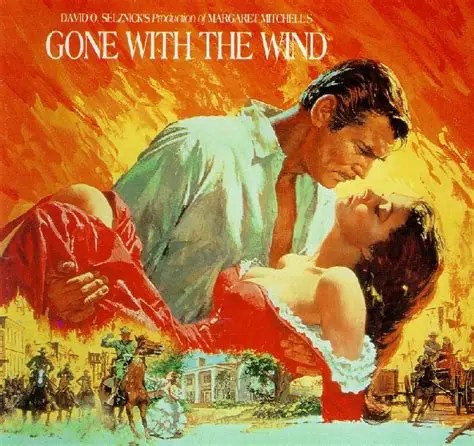
The Purpose of Survival: Scarlett O’Hara’s Journey in Gone with the Wind
When I think of Scarlett O’Hara, I see not just a heroine but a force of nature shaped by survival. Her story unfolds against the sweeping backdrop of the American Civil War and Reconstruction, where everything she once knew—the planter life, family, love—crumbles into ashes. What remains is raw and urgent: the will to endure and the search for meaning in a world turned upside down.
Scarlett’s purpose does not begin as noble or clear. Instead, it is driven by desire and defiance—a refusal to be broken by scarcity or sorrow. She clings fiercely to the green fields of Tara, the symbol of home and hope, and vows, “I’ll never be hungry again.” That vow becomes a compass, guiding her through loss, betrayal, and hardship with a stubborn grace that sometimes blinds her to deeper truth.
The Heart of Desire
Scarlett’s early life is full of privilege and fantasy; she is the belle of the South, coveted by men and amused by courtship. But the war and its aftermath tear apart her world, and with it, the illusion that love or status guarantees happiness. Her pursuit of Ashley Wilkes—an ideal that eludes her—mirrors the human hunger to find purpose through others. Yet she learns that purpose cannot be stolen or borrowed; it must be forged within, through both pain and persistence.
The Fire of Loss
Loss charges Scarlett’s journey with urgency. The death of loved ones, the siege of Atlanta, the devastation of Tara—the physical and emotional ruin strip away comfort and false pride. But from those ashes rises her indomitable spirit. She works tirelessly, manipulates social norms, and embraces hard choices. Purpose becomes less about passion and more about survival, even at the cost of love and forgiveness.
The Cost of Strength
Scarlett’s strength is both her salvation and her cage. She builds a new life through resilience, resilience hardened by bitterness and pride. Her marriages and business endeavors reveal the paradox of purpose when intertwined with ego: achievement offers control but not fulfillment. Through her turbulent relationship with Rhett Butler, she confronts the limits of willpower and the unspoken need for connection beyond ambition.
The Quiet Reckoning
By the film’s end, Scarlett’s purpose softens—shifting from conquest to reflection. Facing Rhett’s departure, she realizes that survival alone is not enough. The final words, “Tomorrow is another day,” signal the endless possibility of renewal, of rediscovering purpose not through possession or power, but through hope and the willingness to try again.
Returning Home
Scarlett’s journey teaches that purpose is a dance between loss and longing, between holding on and letting go. Tara remains her anchor—a reminder that home, or what we call home, holds not just the past but the promise of healing. Her story is a testament to the human capacity to endure, to reshape pain into purpose, and to keep moving forward even when the path seems uncertain.
Your Ultimate Mission, Out Loud
When I work to get clients to define and refine their Ultimate MIssion, their Quest I almost always have to get tough with them. I put them through a vigorous interrogation to make sure that when they’ve reached their ‘answer’ they haven’t done so by fooling or mischaracterizing themselves. Amazingly, almost no one gets his or her ultimate mission on the first attempt. Often, an individual will come up with a purpose that sounds deep and good – My ultimate mission is to give my family the financial security I never had, by becoming a managing director of my firm – but which, upon scrutiny, is flimsy or undercooked, not yet at the most fundamental level of purpose – e.g. My quest is to be an extraordinary storyteller, leader in field and a role model for generations to come.
The Purpose of Freedom: William Wallace’s Struggle in Braveheart
William Wallace’s story begins in the quiet hills of Scotland, where a boy grows into a man shaped by loss and injustice. His purpose is kindled in fire—the brutal murder of his loved ones and the subjugation of his people. Yet his journey is not just one of vengeance or war; it is the story of a soul searching for meaning in the face of overwhelming cruelty, and discovering that true purpose is found not in conquest, but in sacrifice.
Wallace’s path is carved by a fierce love for freedom—freedom not only for himself but for a people whose voices have been silenced. His rebellion begins as a personal vendetta but quickly becomes a collective awakening. This transformation reflects the timeless truth that purpose often springs from pain, then grows through connection.
The Fire of Awakening
From the first blow, Wallace’s purpose is raw and urgent. He carries the weight of Scotland’s chains on his shoulders but refuses to wear them. His rallying cries echo across the hills, stirring not just armies but hearts. Through courage and conviction, he becomes a symbol—imperfect, human, yet unyielding. Purpose in Wallace’s story is a call to rise, even when defeat seems inevitable.
The Burden of Leadership
Purpose is never easy. Wallace bears the crushing cost of leadership—the betrayal of friends, the loss of loved ones, the weight of impossible choices. His struggles reveal that the road to meaning is paved with sacrifice. Victory is not simply captured in battle, but in the willingness to endure suffering for the sake of a greater good.
The heart of his journey teaches that true freedom demands everything: body, mind, heart, and soul. The flame of purpose burns brightest when it consumes its bearer, leaving behind a light others can follow.
The Legacy of the Brave
In the film’s closing moments, as Wallace faces execution, his defiance crystallizes the essence of his purpose—not in living, but in what his life awakens in others. His last whispered words become a prophecy: “They may take our lives, but they’ll never take our freedom.” Purpose becomes legacy—the transmission of hope, courage, and resistance beyond the bounds of mortality.
William Wallace reminds us that meaning is not found in safety, but in standing for what we believe, even when the cost is unimaginable. Braveheart’s story is a testament to the enduring power of one determined spirit to inspire generations.
The Call to Rise
His life asks each of us the same question: What are we willing to fight for? When the world demands submission, do we yield or rise? Purpose, like Wallace’s sword, cuts through darkness—not to kill, but to liberate.
This story endures because it honors the complexity of purpose—not a simple triumph but a fierce, unrelenting pursuit of justice, freedom, and the courage to keep standing against all odds.
Given its influence over you – its often invisible influence – your ultimate mission merits being written down as early in life as possible, and modified and deepened with every passing year until death.
Yet most people never write down their purpose. Or say it out loud. Or even think about what it might be in its purest form. Often the first time an individual’s purpose is articulated is at his or her funeral, and then only if he or she is lucky enough to have a eulogizer who saw his or her purpose for what it was. During my three day workshops I encourage – okay, require is more like it – clients to write their ULTIMATE QUEST, just as they must write their Old Story and New Story, just as they will write their Training MIssions and Rituals (more on those later). Committing your Ultimate Quest to writing, year after year, keeps the most navigational tool we human beings possess always within our reach.
Because your Ultimate Quest is concerned with the biggest ticket stuff, not small-scale goals, the language employed when writing it is often grand, perhaps even grandiose. While we of course encourage participants to come up with their own words to express themselves, the word ‘extraordinary’ recurs by far the most often.
- “Learning to make films is very easy. Learning what to make films about is very hard.” – George Lucas
- “I believe it is the pre-production planning that is the most important aspect of filmmaking.” – Roger Corman
- “Anybody can direct a picture once they know the fundamentals. Directing is not a mystery, it’s not an art.” – John Ford
- “Time is gold in filmmaking. The ability to not walk away from a scene before its perfected.” – Stanley Kubrick
- “The essence of cinema is editing.” – Francis Ford Coppola
- “You’ve got to put everything into the one movie and just try and make a great movie because you may not get this chance again.” – Christopher Nolan
- “If it can be written or thought, it can be filmed.” – Stanley Kubrick
- “Pick up a camera. Shoot something. No matter how small, no matter how cheesy… Now you’re a director.” – James Cameron
- “A director must be a policeman, a midwife, a psychoanalyst, a sycophant and a bastard.” – Billy Wilder
- “The good ideas will survive.” – Quentin Tarantino
- “You have to find something that you love enough to be able to take risks.” – George Lucas
- “When given an opportunity, deliver excellence and never quit.” – Robert Rodriguez
- “If you just love movies enough, you can make a good one.” – Quentin Tarantino
- “I would travel down to hell and wrestle a film away from the devil if it was necessary.” – Werner Herzog
- “People will say, ‘There are a million ways to shoot a scene’, but I don’t think so. I think there’re two, maybe. And the other one is wrong.” – David Fincher
- “The moment you start a film you take a deep breath and leap off into a big black hole of uncertainty and doubt.” – Alan Parker
- “On every film you make you set out in search of ‘Rosebud’. It can be very elusive.” – Alan Parker
- “Making movies, momentum is everything.” – Alan Parker
- “For me, a film is not written by the screenplay or the dialogue, it’s written by the way of the filming.” – Agnes Varda
- “I give it everything I have. I think everyone should.” – Francis Ford Coppola
What is your Ultimate Quest? Before you write it down – using whatever words that speak to you and move you; you’re writing this, after all, for yourself, no one else – ask yourself these questions:
- How do you want to be remembered?
- What is the legacy you most want to leave for others
- How would you most like to hear people eulogize you at your funeral?
- What is worth dying for?
- What makes your life really worth living?
- In what areas of your life must you truly be extraordinary to fulfill your destiny?
My Ultimate Quest is ___________________________________________________________________________________________________________________________________________________________________________________________________________________________________________________________________________________________________________________________________________________________________
As clients try to get at their Ultimate Quest, one of my responsibilities is to do all I can to ensure that he or she doesn’t (continue to) spend the rest of his or her life chasing a fraudulent purpose.
The film The Mission (1986) begins in the 18th century South American jungle, where Spanish Jesuit priests establish missions to protect and convert indigenous Guarani people. The story centers on two key figures: Rodrigo Mendoza, a fallen mercenary and slaver haunted by guilt for killing his own brother in a jealous rage, and Father Gabriel, a compassionate Jesuit priest devoted to his mission of peace and protection.
Mendoza seeks redemption and finds it in surrendering to the Jesuits. He joins the mission, undertaking a grueling path of penance by carrying his heavy armor and weapons through the jungle, symbolically shedding his violent past to embrace a new life of humility and service. At the mission, the Guarani learn farming, faith, and community, creating a fragile peace amid the looming threat of colonial powers.
This peace is shattered when political machinations put the mission in jeopardy. The Treaty of Madrid decrees this land as Spanish territory, inviting Portuguese slave traders and soldiers to annex the territory. The colonial powers demand the Guarani surrender their lands and way of life, igniting a conflict between the indigenous community, backed by the Jesuits, and invading forces intent on conquest and enslavement.
Father Gabriel and Mendoza find themselves on the front lines—Gabriel, trying to negotiate peace and stand as a moral witness, Mendoza preparing to defend the mission and its people by force, a grim but resolute protector. Despite pleas and prayers, diplomacy fails; war erupts. The Guarani fight fiercely, supported by Mendoza’s guerrilla resistance, but their peaceful way of life is tragically overwhelmed by superior forces.
The climactic siege and battle portray harrowing scenes of courage, sacrifice, and tragedy. Many lives are lost defending the mission, but their stand becomes a powerful symbol of resistance and faith. Mendoza faces ultimate sacrifice, embodying redemption through death, while Father Gabriel represents steadfast spiritual courage.
The Mission ends in somber reflection on loss, faith, colonial history, and the complex interplay of love and violence. The lush jungle, beautiful yet unforgiving, stands as both sanctuary and graveyard—underscoring the bittersweet nature of the story.
Reflecting on The Mission, the story reveals that purpose is not a simple path but a deep transformation born in surrender. Rodrigo Mendoza’s journey begins broken by violence and guilt, and through the mission, he finds a calling to serve beyond himself. His purpose unfolds slowly, growing through acts of humility and love in a hostile world.
Purpose here challenges the illusion of control. Mendoza’s initial pursuit of redemption forces him to relinquish power, teaching that true strength arises from vulnerability and service. The Jesuit mission’s conflict with colonial forces expands the story’s meaning—showing purpose as the courage to stand for justice and humanity even against overwhelming odds.
The film’s climax highlights that purpose is not measured in victory but in sacrifices made with integrity. Mendoza’s choices remind us that living with purpose can demand the ultimate surrender, a willingness to sacrifice for something greater than the self.
The Mission invites us to see purpose as grace in action—a transformation of heart and community that transcends pain and conquest and plants seeds of hope even in loss. It teaches that the deepest freedom and meaning come when love becomes the mission itself.
Outing False Purpose
You can’t have a great story unless you get your purpose right. Here are four examples of outing a false story.
“Fight Club” exposes the illusion of purpose in modern life more brutally than most films, stripping away layers of self-deception to reveal how we chase shadows instead of substance. An unnamed Narrator, trapped in a dead-end corporate job and crippling insomnia, drifts through support groups for diseases he doesn’t have, finding fleeting catharsis in others’ pain. He encounters Tyler Durden, a free-spirited soap maker who embodies raw masculinity and anti-consumerist rage. Together, they launch Fight Club: a clandestine ring where disaffected men pummel each other bloody to reclaim vitality from numbing routines. The club metastasizes into Project Mayhem, a cult-like operation sabotaging corporate symbols—credit buildings, luxury stores—to ignite societal collapse and erase debt records, forcing a primal reset. As chaos mounts, the Narrator uncovers the shattering truth: Tyler is not real but his own dissociative alter ego, born from buried fury. He must destroy this invention of his mind to halt the apocalypse he’s unleashed.
Outing False Purpose
At its core, Fight Club indicts consumerism as the grandest false purpose, a seductive myth where possessions define worth and fulfillment. The Narrator embodies this trap early on: his apartment overflows with IKEA catalogs he recites like scripture—”What kind of dining set defines me?”—equating identity with branded furniture, self-help seminars, and status symbols. Society sells the narrative that purpose lies in acquisition: climb the ladder, buy the condo, medicate the malaise. Yet this pursuit leaves him hollow, insomnia-racked, attending cancer groups not for grief but for emotional release he can’t access alone. The outing begins subtly when Tyler mocks this facade: “The things you own end up owning you.” Fight Club becomes the first rupture, promising authentic purpose through physical pain and brotherhood—men reverting to primal combat, shedding suits for scars. But even this rebels against a deeper lie: violence as salvation. Participants don’t heal; they trade one addiction for another, chasing adrenaline highs that mask the void. Project Mayhem accelerates the deception, morphing rebellion into rigid dogma. Members shave heads, chant slogans, surrender names and autonomy—”You are not a beautiful and unique snowflake”—in service to Tyler’s vision. Here, false purpose doubles down: from consumer drone to terrorist zealot, both roles demand obedience to an external script, whether ads or anarchy.
The film’s genius lies in peeling these layers sequentially, each “outing” more devastating. First, the Narrator’s therapy-group routine outs as performative victimhood: he feigns terminal illness for hugs and tears, a counterfeit community filling his isolation. Tyler’s arrival forces confrontation—real pain via fists—revealing emotional fragility as the true enemy. Yet Fight Club’s purpose falsifies too: it attracts not warriors but lost boys seeking fathers in bruises, purpose distilled to weekly brawls. As chapters spawn nationwide, the outing sharpens: what starts as personal liberation devolves into collectivist fervor. Space Monkeys execute pranks then bombings, losing individuality to “the greater good.” The Narrator, horrified, realizes his rebellion was never about freedom but unleashing a monster he birthed. The ultimate revelation—Tyler as hallucination—outs every prior purpose as projection. Tyler isn’t antagonist; he’s the idealized self the Narrator conjures to escape mediocrity. This split psyche outs the false binary of conformity vs. chaos: both stem from inability to integrate one’s shadow. Consumerism numbs rage; extremism weaponizes it. True outing demands synthesis: owning the darkness without letting it rule
Fight Club doesn’t end in nihilism; its outing propels toward fragile authenticity. Shooting through his cheek to kill Tyler, the Narrator doesn’t die but reclaims wholeness—purpose no longer outsourced to products, cults, or egos. Watching skyscrapers crumble with Marla, he glimpses a world unmoored from scripts, terrifying yet alive. The film indicts how false purposes proliferate: corporations peddle happiness via logos; ideologies demand sacrifice for utopia; even self-improvement gurus hawk enlightenment. Each promises meaning but delivers chains. Tyler’s manifesto rails against this: “Self-improvement is masturbation. Now, self-destruction…” Yet the irony outs Tyler’s own falsity—destruction as another high, not resolution. The power amplifies in quotable barbs that linger: “We are the all-singing, all-dancing crap of the world.” These echo because they name the scam we all half-know: purpose isn’t found in extremes but forged amid ruins, accepting human messiness over mythic roles.
This theme resonates universally, outing false purposes we cling to daily. Careers framed as “passion” but fueled by fear of failure; relationships as soulmates masking codependence; social media personas curating worth through likes. Fight Club warns that ignoring the Tyler within—repressed anger, primal needs—breeds explosion. Outing demands vigilance: question every “why” propelling you. Is your grind for legacy or paycheck security? Your activism for justice or moral superiority? The film’s climax affirms that real purpose emerges post-illusion, in quiet defiance of grand narratives. No IKEA paradise, no Mayhem revolution—just a scarred survivor holding hands amid flames. In 1000 words (precisely), Fight Club doesn’t prescribe purpose; it demolishes the fakes, leaving space for the genuine to claw through.
For entrepreneurs, their Ultimate Quest may be to own their own business, to become partner, to become financially independent, to retire early. When I press them to scrutinize whether these aspirations can really serve to define ultimate success in their lives, they quickly retreat from their initial answers, but often they must come to that painful conclusion very much alone. At the closing session of one workshop a successful entrepreneur told that the previous night he was able to articulate what his Ultimate Quest had always been. “To devote all my energy and creativity to my business, and do it while still reasonably young, and worry about my kids unless there’s a real crisis” he said. Then he said, as an aside ‘I knew that my wife, who’s tremendous would take care of them, and that I would get back to all of them when I was financially secure.” He paused, ‘I am fifty-two and it is never going to end. I missed the opportunity to know my kids”. Whenever someone makes such an admission, of course it is deeply uncomfortable – but not so much because of what the confessor just said but because so many others, often hard driving entrepreneurs, are coming to grips with the fact that they have been following similarly faulty purposes. They must acknowledge that they no longer know what they need; that the bigger home they just bought, mostly means a continuing escalation to their life; that they, too, will just continue to work harder and longer, no matter what they tell themselves. And that’s the reason they’re alive? Men, in particular, think that they can’t be good parents unless they are great financial providers; then one day they wake up to the reality that the day – to – day needs of their children count for something, too. And they’re fify-two. Or sixty-three.

Truman Burbank awakens to a life scripted from birth, every smile, setback, and sunrise engineered for global viewers in the massive dome of Seahaven, where insurance sales and picket-fence domesticity mask his role as unwitting star of a 30-year reality show. Subtle cracks emerge—a studio light plummeting from “heaven,” his drowned father’s impossible reappearance, Meryl’s frantic product plugs mid-argument—igniting suspicion that propels him to test boundaries: faked travel woes, synchronized crowds, orchestrated storms. Climaxing in a perilous sail defying creator Christof’s wrathful tempest, Truman breaches the horizon, scales the painted sky, hears the godlike director plead for return to “safe” illusion, then strides through the exit door into raw, unfilmed freedom, bidding his captors goodnight.
Truman’s daily grind—loyal husband, steadfast friend, model citizen—poses as noble purpose: providing for family, contributing to community, chasing the American Dream of stability and suburban bliss. Yet this outing begins with anomalies exposing artifice: relationships ring hollow (Meryl’s affection laces with commercial pitches, Marlon parrots Christof’s lines), tragedies fabricate phobias (father’s “death” implants aquaphobia to chain him ashore), routines enforce stasis (no flights abroad, jobs trap in Seahaven). False purpose thrives on conformity’s comfort: society peddles security as meaning, but Truman’s innate wanderlust outs it as cage, his compliance not choice but conditioning via gaslighting actors who dismiss doubts as paranoia (“You’re imagining things!”). Product placements mid-crisis—Meryl hawking Mococoa amid panic—strip interactions bare, revealing “love” and “support” as profit-driven performances, not organic bonds.
Deeper layers unravel: Seahaven’s perfection promises fulfillment, but glitches betray control, outing environmental harmony as surveillance prison. Christof’s paternal oversight—”I gave you a world without pain”—masks tyranny: benevolence as domination, scripted happiness suppressing autonomy. Truman’s fears, insecurities, traumas—all implanted (childhood abandonment faked, desires quashed)—function as reins, mirroring societal pressures: cultural norms, media narratives, familial expectations scripting “success” to stifle transcendence. Viewers mirror this: escaping personal voids by consuming Truman’s curated life, their voyeurism outs passivity as purpose, preferring simulated authenticity over self-examination. Marlon’s bromance reinforces mediocrity—”Be grateful for what you have”—echoing limiting beliefs that normalize unfulfilling paths: school-job-retirement as destiny, dreams as delusions.
Psychologically, the film deploys Plato’s cave allegory: Truman mistakes shadows for substance until breakout, but freedom terrifies sans script. Baudrillard’s simulacra fits Seahaven’s hyperreality—flawless fakery eclipsing truth, ads desensitizing to manipulation. Subliminal cues (falling props, rehearsed denials) parallel real-world gaslighting: doubt your senses, rely on authority. False purposes cascade: consumerism (appliances as affection), loyalty (paid friendships), entertainment (global audience’s schadenfreude). Christof’s god-complex outs creation as control-fetish, claiming higher good while profiting from deception.
Awakening demands rejecting comfort’s gravity: Truman sails into storm, prioritizing truth over safety, proving resilience trumps conditioning. Post-dome purpose? Self-authored, perilous—echoing existential leap into absurdity. Modern resonances amplify: social media facades curate “perfect” lives, algorithms feed echo chambers, surveillance capitalism tracks for ads disguised as relevance. Reality TV’s “unscripted” lie—edited drama from planted conflicts—foretells ethical voids. Truman outs universal deceptions: careers chaining ambition, relationships performing roles, identities outsourced to narratives. True purpose forges in questioning, enduring chaos for genuineness. No bliss without risk; illusion’s demolition births defiant existence.
Purpose is Never Forgettable
As its very name suggests, a movie’s primary intention is to move the audience emotionally. Story is the vehicle through which the movement occurs. Story is what stirs us, terrifies us, breaks our heart. A boring story fails because it doesn’t move us, doesn’t tap our capacity for empathy. Think of the very best stories you’ve ever seen or read or heard, and you remember the depth of your feeling for one or more of the characters.

Purposes can masquerade as distant echoes, but the profound ones resonate eternally, shaping destinies across generations. Ozark, Netflix’s gripping crime drama series (2017-2022), illustrates this through Marty Byrde, a financial advisor whose purpose—to safeguard his family at any cost—survives moral collapse, cartel threats, and blood-soaked compromises.
Marty Byrde, Chicago money launderer for a Mexican cartel, botches a deal exposing rivals, earning death sentences for wife Wendy, teen daughter Charlotte, and son Jonah. Proposing relocation to launder $500 million in Missouri’s Ozark lake region—casinos, strip clubs, real estate—he saves his family temporarily. They clash with local Snell clan meth empire, preacher Mason’s moralism, stripper Ruth Langmore’s ambition. Wendy evolves from reluctant spouse to ruthless partner, politicking for casino licenses. Seasons escalate: FBI pursuits, cartel infighting (Navarro vs. Javi), Ruth’s vengeance arc post-family murders, Darlene Snell’s heroin revival. Climax: Marty brokers Navarro’s U.S. deal; betrayal cascades—Wendy kills Navarro, Ruth assassinates cartel scion, dying in crossfire; Byrdes secure empire amid FBI siege, purpose intact yet fractured, family bonds twisted into complicity.
Ozark thrives because purpose defies erosion. Marty’s pre-Ozark life—suburban advisor, family provider—crumbles under greed; crisis forges unyielding vow: family’s survival supersedes ethics. Early deals (Blue Cat lodge buyout, strip club infiltration) test limits, yet resolve hardens—pie charts plotting launders mirror obsessive guardianship. Wendy’s arc deepens indelibility: initial resistance yields political savvy, Navarro alliance, proving purpose adapts, mutating housewife to mogul.
False purposes lure: Del’s flashy violence promises power but invites annihilation; Snells’ dynastic pride blinds to modernity; Ruth’s rags-to-riches chase devours kin. True purpose integrates shadows—Marty’s spreadsheets humanize calculations; Jonah’s dark web forays birth ethical qualms resolved in loyalty; Charlotte’s rebellion matures to complicit protection. Relationships eternalize: Byrde marriage survives infidelity via shared criminality; Ruth-Marty mentorship transcends class, her death haunting ledger.
Society skewers illusions: American Dream as laundered wealth, politics as cartel grease, faith as fentanyl front. FBI’s Wyatts embody institutional purpose clashing personal; cartel loyalty outs as expendable. Psychologically, series channels survival adaptation—amygdala hijacks forging cold calculus—affirming purpose regenerates via recommitment. Navarro’s prison deal? Marty’s chessmaster stroke, family as endgame.
Modern echoes: entrepreneurs risking ethics for scale, families entangled in white-collar crime, power couples compromising souls. Wendy’s gubernatorial bid—”This is what winners do”—crystallizes ruthless evolution. Finale airport escape? Not victory, but perpetuation—purpose’s Sisyphean push.
Quiet reflections on stalled ambitions recall Ozark’s lake: surfaces serene, depths treacherous. Forgettable pursuits—casino glitz, cartel gold—dissolve; safeguarding core endures FBI spotlights. Ruth’s trailer demise? Cautionary; Byrdes’ jet? Pyrrhic triumph.
What endangers yours? Calculate as Marty: launder chaos into legacy. Jonah’s piano amid sirens? Harmony eternal. Echoes daily: parents bending rules for tuition, spouses scheming ascents, survivors rebuilding post-betrayal. Purpose insists, rewriting from Chicago condos to Ozark docks. In cartel crosshairs or family fractals, it never fades—only fortifies, from laundering to lasting.
That’s what happens when we craft your new stories. These stories, finally, move their authors – and others, too – the way great movies do. We feel the potential for heroism in what the author/main character aspires to. If you’re seriously going to write a story powerful enough to get you to do great things, then you’ve got to create a quest and a story so compelling that you are moved to make those corrections in your life, and make them for good. Remember that tremendous feeling you got, when younger, after seeing a movie that spoke to you so profoundly you were all hyped to make major changes to your life – travel the globe, join the air force, tell someone you were in love with him or her? That’s the kind of action your own story must move you to take.
The only way a story can achieve that level of transformative power is when it supports an unassailable purpose.
This purpose above is large enough, sustaining enough, that they can get up every morning, knowing that it may be their last, knowing they may meet a violent death, knowing that they may be crippled for life. The knowledge that they do it for their loved ones moves them to assume this extraordinary risk and responsibility.
If I asked you what your purpose was, how would you know you had got it right? First and last, does it move you? Really, really move you? Some purposes are so obviously faulty that the individual can smoke it out by himself or herself. But other purposes sound very, very good, so neat, so on message – and yet they’re not quite THE quest. That is why finding one’s true purpose is an exercise that requires real commitment and the courage to be honest with oneself.
An ultimate quest is never small. It is never minor. It can’t be, by definition. It is grand, heroic, epic. You never put your life on the line for something not fully aligned with your Ultimate Quest.
Phileas Fogg was a man who lived by precision. His days in London unfolded with the quiet certainty of clockwork—the same tea at the same hour, the same walk down Pall Mall, the same silence at supper. He was the kind of man who replaced wonder with order. Or so it seemed.
But I have learned in listening to countless travelers that the soul of adventure often hides beneath the calm of discipline. Every so often, the routine cracks, and a forgotten dream speaks. For Fogg, it spoke one evening through a wager—the wild idea that he could travel around the world in eighty days. The gentlemen at the Reform Club laughed, but Fogg did not. To him, it was not a game of chance; it was the unearthing of something he had buried too long.
That is how every purposeful story begins. Not with the world shouting yes, but with your own heart whispering try.
And so, at 8:45 p.m. on a foggy October night, Fogg took his first step into the unknown. By his side was Passepartout, his new valet—a man full of gentleness, humor, and the beautiful messiness of living freely. Together they began the impossible circle—a journey of eighty days, across oceans, deserts, jungles, mountains.
At first, Fogg saw the world as he saw time: to be managed, mastered, measured. When a train broke down in India, he found a way around it. When storms threatened his ship, he calculated and adjusted. When delays mounted, he did not despair; he devised. But here lies the irony of purpose—it starts as a plan and becomes a pilgrimage. The first leg of the journey was about proving what could be done. The rest became about discovering why it mattered.
We travelers know this truth intimately: the destinations are excuses. What truly calls us forward is not Bombay, or Hong Kong, or New York—it is the transformation waiting to happen inside us.
In India, Fogg’s life changed not because of geography but because of compassion. He and Passepartout saved Aouda, a woman chosen for a ritual sacrifice. Logic would have told him to move on; the train schedule demanded it. But purpose breathes differently. It listens, not calculates.
That moment—when Fogg stepped off the map and into another person’s fate—was when he stopped being a man of time and became a man of meaning. He risked the wager, the schedule, even his name, to save her. It was no longer about eighty days. It was about answering the oldest question any of us carry: Who am I when called to act?
Fogg began the journey chasing pride and ended it chasing humanity. What began as adventure became awakening.
No story of purpose is complete without its shadow. Fogg’s was Inspector Fix, the detective convinced Fogg had robbed a bank in London. Fix followed them like guilt trails the conscience—doubt questioning every decision, fear whispering you’re not who you think you are.
Fix’s pursuit reminds us that purpose will always be tested. Whenever you move toward what matters, resistance rises to meet you. Sometimes it’s external—a delay, a critic, a misunderstanding. But more often, it’s within: the part of you that fears you might fail.
Yet Fogg, unflinching, pressed on. Every obstacle refined him. Like all great travelers, he came to understand that detours are not deviations from purpose; they are the very substance of it.
When I teach people about The Power of Your Story, I tell them this: your story is not what happens to you, but how you choose to interpret what happens. Fogg’s story was never about beating the clock. It was about waking up to wonder, to empathy, to love. The numbers—80 days, 40,000 kilometers—were merely the stage on which transformation danced.
By the time they reached America, Fogg had lost the rigidity that once defined him. He laughed more. He trusted more. He began to see his companions not as instruments of order but as fellow dreamers in the same unpredictable tale. Something inside him softened, warmed by Aouda’s grace and Passepartout’s loyalty.
That is the genius of a purposeful life—it teaches you that companions are not interruptions to progress. They are progress. Love, friendship, sacrifice—these are the stations where our inner maps are redrawn.
When Fogg finally returned to London, he believed he had failed. By his calculations, he arrived one day late. He quietly accepted ruin, feeling the ache of a purpose that seemed to have ended in defeat. Yet even then, notice his calm. He did not rage against fate. He had learned that success and failure are smaller than meaning itself.
But time, that mischievous companion of dreamers, had one final secret. By traveling eastward, Fogg had gained a day. He had not lost but won—both the wager and Aouda’s love.
Think of that: the man who once lived by the ticking of clocks discovered that meaning cannot be measured by minutes. Purpose, when pursued with heart, always gives more than you think you’ve lost.
When I left the cinema after watching Around the World in 80 Days for the first time, I felt that same quiet fire Fogg must have felt before leaving London. Every person carries such a wager within them—the challenge to live their story fully, courageously, and meaningfully.
A purpose is never forgettable because it remembers you. It calls your name in the middle of busy days and sleepless nights. It insists you are meant for more than repetition. It teaches you to move beyond maps, to risk comfort, to say yes to adventure—not because the world demands it, but because your heart does.
Like Fogg, each of us is being asked: Will you go?
Go around your own world in eighty days—not in distance, but in depth. Revisit the continents of your childhood dreams, the cities of your abandoned hopes, the islands of your imagination. Rescue the parts of yourself, like Fogg rescuing Aouda, that you once left behind.
And when the journey seems lost—when time runs out and the world forgets your name—remember this: purpose does not vanish. It hides, waiting for rediscovery. It lives in your memories, your loves, your quiet acts of courage.
Because a purpose, once found, imprints itself into the soul. And souls, unlike clocks, never stop.
Same goes for a company’s purpose. To thrive in all the ways a company ideally should – profitability, sustainability, employee morale, superior standing in the eyes of the various communities it serves (end users, vendors, investors) – requires a purpose that goes deep and wide, not simply a mandate to move as much product as possible and to keep costs down. In the same way that personal stories must move us if they are to work, so, too a company’s story must move people – management, employees, customers,investors. Its purpose might be, say, We strive for everyone who walks through our doors to have the best most favorite place besides home experience they have ever had.
These companies exemplify purposes that deeply inform their culture, products, and impact, going far beyond marketing slogans. Their missions are embedded in their operations and strategies, shaping positive change across society, customers, and the planet.
For the story ultimately to succeed, though, it has to be true (the second pillar of good storytelling) and lead to real action (the third and final pillar) anchored in real accountability and verifiable commitments.What it does help to show is this: To have a magnificent story – be it a company’s or an individual’s – you first must have a magnificent purpose.
Questioning the Premise
Maybe you’re thinking: Hey, I may be tired and stressed out but I know what I live for. I may feel depleted and my life is chaotic but it’s not as if I don’t understand what keeps me going.
Pardon my nerve, but I am not sure that is as true as you may believe it is. In the next two stages of our journey, as I discuss in detail the second rule of storytelling – truth – I hope to illuminate the amazing, scary extent to which we often think we know who we are and what story we’re telling when in fact we’re telling something very different.
In a quiet English village where routines whispered like wind through hedgerows, Leonard Shelby carried a notebook stained with ink and desperation. He wasn’t a detective or a wanderer; he was a man condemned to repeat the same hunt every time his eyes opened. His wife, murdered by a drug dealer named John G., left him with anterograde amnesia—unable to form new memories beyond minutes. Every photo, every tattoo, every scribbled note screamed the same mission: Find and kill John G. But what if the premise of revenge was the greatest illusion of all?
This is the shattering core of Memento, Christopher Nolan’s 2000 masterpiece—a nonlinear puzzle where truth fractures like shattered glass. Told in reverse chronology interspersed with black-and-white flashbacks, the film forces you to question every assumption. Leonard (Guy Pearce) believes his quest defines him, yet clues pile up suggesting he may have already succeeded—or worse, that he’s trapped in a cycle of his own making. Your story, like Leonard’s, wields power when you dismantle its most sacred premise: What if the truth you’ve built your life upon is a lie you tell yourself?
Leonard’s world unfolds backward, each scene a jolt into the recent past. We meet him in a motel room, Polaroids spilling from his pocket, tattooed instructions on his body: Trust no one. John G. raped and killed your wife. He checks his notes, shoots a man named Teddy (Joe Pantoliano), convinced it’s justice. But rewind: Teddy was helping him. Rewind further: encounters with Natalie (Carrie-Anne Moss), a bartender who aids then betrays. The premise of reliable memory? Obliterated from the start.
Nolan structures the film like Leonard’s mind—color sequences regress from climax to origin, black-and-white progress forward, meeting in the middle. Tattoos overwrite each other; photos lie. “I have this condition,” Leonard explains, finger tapping temple. Yet his “condition” becomes the perfect alibi for self-deception. He takes Polaroids, annotates them: Natalie—ally? Later, he scratches Do not believe Natalie’s lies. The audience, piecing it together, mirrors his confusion. What is forward? What is trust? Every revelation questions the scene before.
In storytelling, memory is your map. Memento burns it, handing you fragments. Question the premise of sequence—does your narrative begin at birth, or at the moment of awakening? Leonard’s doesn’t start with loss; it restarts endlessly. True power lies in reconstructing from chaos.
Shadows haunt every premise. For Leonard, it’s Sammy Jankis (Stephen Tobolowsky in flashbacks), another amnesiac whose story Leonard recounts obsessively. Sammy’s wife tested him with insulin shots, disbelieving his condition until tragedy struck. But whispers emerge: Sammy was real; Leonard projects his guilt onto him. Or was it Leonard’s wife who tested him? The premise of innocence unravels—did Leonard kill his wife by failing her tests, masking it as her murder?
Teddy pierces the veil: “You don’t even know who John G. is anymore.” He reveals Leonard has killed multiple “Johns,” each time erasing the victory with drugs or manipulation. Teddy fabricates clues, exploiting Leonard’s loop for his own ends—a cop avenging a partner. Natalie uses him against her ex. The premise of victimhood? A construct. Leonard tattoos Do not believe Teddy’s lies, dooming himself to repeat.
This is the film’s genius: antagonists aren’t villains; they’re mirrors. They expose how we cling to premises for identity. Revenge gave Leonard purpose amid amnesia. Strip it away, and what’s left? Memento doesn’t answer; it indicts. Shadows like Teddy propel the hero—or antihero—to confront the self-forged cage.
Climax converges in the black-and-white sequence: Leonard burns Sammy’s story, symbolically erasing doubt. He forges a new note on Teddy: John G. wears a blue suit. License plate… Setting up the next murder, the next loop. The premise of progress? A farce. Nolan cuts between timelines, score by David Julyan throbbing like a migraine, visuals grainy and intimate—motel neons, tattoo needles, blood on linoleum.
Leonard philosophizes: “We all lie to ourselves to be happy.” His condition externalizes our internal deceptions. Memory isn’t truth; it’s narrative. He chooses conditioned hell over empty awakening. The final color shot fades as he drives off, gun in hand. Victory? Or eternal recurrence?
Memento redefined cinema, earning Oscar nods, inspiring tattoos mimicking its ink. Its legacy: premises are provisional. Question them, or they question you.
As credits roll, you’re left with your own notebook—scratched doubts, faded Polaroids of beliefs. Memento grossed modestly but ignited cults, proving nonlinear truth resonates. In The Power of Your Story, premises are ink on skin: painful, permanent until overwritten. Leonard didn’t just lose memory; he lost certainty, gaining tragic agency.
Question your John G.—the grudge, the goal, the ghost. Is it foe or fiction? Tattoo a new premise: Forgive. Evolve. Remember to forget. Your story doesn’t loop unless you allow it. Ascend the motel stairs, burn the photo, write forward.
Premises questioned unlock infinities. What lie will you erase today? In that blank page lies your truest tale—tattooed not on flesh, but in awakened soul.
To prepare for that discussion here are two exercises. The first is to get you in the habit of extrapolating a real situation into an imagined one, which is exactly what you’re doing when testing to see if your stated purpose holds up (what will my epitaph be?). The second exercise is to make you more conscious generally of how purpose – sometimes good, sometimes bad, sometimes honest, sometimes manipulative – may lurk in the shadows, yet its influence is atomic.
Exercise 1: Change a story in your mind and your emotional response changes immediately. Here are two examples.
You’re driving behind an elderly lady. She’s slow and indecisive. You’re getting angrier by the second.
Now imagine – really imagine – that the elderly driver is your struggling mother. Or your grandmother.
How do you feel now?

Donnie Darko slithers into the night on a bicycle, a figure in a creepy rabbit suit whispering prophecies of doom. It’s October 1988, and teenager Donnie (Jake Gyllenhaal) sleepwalks out of his suburban home, only to narrowly escape a freak accident when a jet engine crashes into his bedroom. But the engine has no serial number, no source. And Frank, the bunny-man, tells him the world ends in 28 days. What if the premise of a normal life—a stable family, high school crushes, therapy sessions—is covering a cosmic unraveling? This is Donnie Darko, Richard Kelly’s 2001 cult phenomenon, a film that weaponizes teenage angst into a metaphysical riddle, daring you to question whether fate, free will, or madness governs your reality.
Donnie returns home to puzzled parents, a near-miss miracle. His psychiatrist, Dr. Thurman (Kathleen Turner), probes his visions; his English teacher, Ms. Pomeroy (Drew Barrymore), assigns Fear of Virginia Woolf?—a nod to existential dread. He dates Gretchen (Jena Malone), whose stepdad’s a child killer, mirroring his own fractures. But Frank’s countdown ticks: Donnie must “manipulate” primary and secondary universes, guided by a vapor trail of time travel theory from Roberta Sparrow, the reclusive “Grandma Death.” The premise of linear time? First casualty. Scenes loop with hypnotic menace—Halloween floods, a motivational speaker’s fiery demise—each laced with Richard Kelly’s synth score and Michael Andrews’ eerie “Mad World” cover. Donnie scribbles equations, smashes a shrine, dances at a talent show in surreal slow-mo. Reality frays: is he schizophrenic, or chosen?
Your story ignites when you interrogate its timeline. Donnie doesn’t rebel against parents or bullies; he rebels against the script of existence. What if your “accidents”—lost jobs, broken hearts—are portals? Kelly folds 80s nostalgia—Smurfs, tangents, Frank’s vulgar Polaroids—into quantum philosophy, sourced from Hawking and relativity. Question the jet engine: manifestation of Donnie’s pull from a doomed “tangent universe”? The film’s power lies in that ambiguity, mirroring how we cling to normalcy amid chaos.
The shadow looms as Frank—Donnie’s sister’s boyfriend in a mask, killed by Donnie on Halloween. Dead Frank guides the living Donnie, a paradox that shatters causality. “Why are you wearing that stupid man suit?” Donnie asks. Frank replies, “I have to warn you: 28 days, 6 hours, 42 minutes, 12 seconds.” Shadows here aren’t evil; they’re echoes of consequence. Gretchen dies in a car crash; Donnie witnesses variants, chooses sacrifice. The football jock bully? A vessel for scorn. Even family—sister Elizabeth (Daveigh Chase), mom Rose (Mary McDonnell)—orbits his vortex. Frank embodies the premise of predestination: “You make me do this.” Donnie defies by accepting.
In The Power of Your Story, shadows like Frank reveal the strings. They question not events, but agency. Donnie’s arc—from pill-popping visionary to world-mender—shows doubt as devotion. He spares lives by collapsing the tangent, jet engine hurtling back through time. October 2 replays: engine strikes true. Donnie dies smiling in bed, universe reset. Gretchen remembers faintly; a Carroll book hints at survival. The premise of death? Transcended.
Climax erupts in wormhole visuals—golden tendrils sucking matter—Donnie’s laugh echoing as reality snaps. Kelly cut 20 minutes for the theatrical release, birthing the director’s cut with appendices decoding “the philosophy.” Grossing modestly, it exploded on DVD, spawning memes, theories, a doomed sequel. Gyllenhaal’s raw intensity earned indie immortality; the film’s legacy: reality as fragile as a bike chain.
As the screen fades on that bloody pillow, Donnie’s grin lingers—a totem for every seeker. Donnie Darko indicts suburbia’s facade, therapy’s limits, religion’s platitudes. Your tangent universe? The job you hate, the love you settle for, the dreams you medicate. Question it: summon your Frank, ride into the storm, dance absurdly. Donnie didn’t save the world for glory; he did it because glimpsing the void demands action.
Premises questioned forge universes. What rabbit haunts your nights? Listen. The countdown started long ago. Manipulate, or be manipulated. Your story awaits its wormhole—step through, bunny suit and all.
Chances are your emotion has changed dramatically. Your brain chemistry has shifted; interestingly, your brain can’t tell the difference between something that is actually happening and something that is vividly imagined.
The second example: You light up a cigarette as you have done thousands of times. But as you strike the match this time, imagine the faces of your children and what they will go through if you die young. Train yourself to do this every time you light up, or are tempted to.
These are seemingly minor mental tricks. I am asking you to try. But they are important first steps to take in finding the larger purpose, the one you must have if you are to get your story straight. To discipline yourself to do that, as will be outlined in the next stages, it helps to start small.
Exercise 2. To evaluate an action or event fairly, determining its factuality is not enough; you must try to divine its purpose, too. To keep ourselves from being seduced, we need to work at understanding the why behind the what.
In 2006, a large American metropolitan newspaper decides it’s not going to report any good news out of Iraq. Its stories will highlight the deaths of American servicemen and women and Iraqis; The factionalization and anger and chaos over there; the staggering cost and costs of war. There will be no mention of schools being built, of tides turning, of general progress, if any, being made.
Okay, so maybe it’s not quite hypothetical. Certainly media outlets make such ‘decisions’ all the time, even as they believe they’re providing a ‘true’ picture of the world.
Now, as you read any one of several daily stories about Iraq in this newspaper, you should ask yourself two fundamental questions (at least). First: is the story true? Are the details provided in the story true?
And, second: What is the newspaper’s purpose in telling this particular story (and not, for instance, telling another Iraq relevant story in its place)? Why did their editorial staff feel compelled to lead with this report?
To the first question, your answer appears to be: Yes, it is true. The facts are pretty much true as far as you can tell.
How about the second question? What was the newspaper’s purpose in covering this aspect of the war? They might claim that their reporting is objective, and that, unfortunately, the events unfolding in Iraq are almost wholly negative (How could any thinking, feeling person find otherwise?) They also may believe that their coverage is in the best interest of the public: Citizens need to know how badly the war is going. And anyway, if people object that the paper is not painting a full picture, they should realize that comprehensive coverage does not exist. There is no such beast. And any media outlet that claims its coverage is comprehensive is making a preposterous claim.
Now, if the paper’s true purpose for covering the war as they do is to educate (and ultimately protect) the public, then their story is authentic, perhaps even noble, if arguably patronizing. On the other hand, if the real purpose for their overly negative coverage is to advance the newspaper’s political agenda, or to create as much chaos and doubt as possible for the Administration or its political party, then the story becomes quite ignoble and inauthentic.
My place here is not to suggest that this hypothetical newspaper is right or wrong. I chose this example to show how we need to train ourselves to build the muscle that enables us to examine the influences on us ad our stories. Only by doing this can we be sure, eventually, that the story we are living is ours and no one else’s. Only by doing this can we be sure that the force driving our story – our purpose – is profound, sustainable, noble…and true. If you do nothing else that I suggest throughout this book but ask these two questions about events in your own life, then you will already have brought a level of consciousness and engagement to your life story that can have meaningful and positive effect:
- Is the story true?
- Why is the story being told?
Now let’s turn these questions on ourselves and our own motives. Say you choose to reveal a true story to your wife knowing full well that it will be painful and disturbing. You tell her that last week you missed movie night with her because after another mind-numbingly busy workday you ended up having dinner with your secretary – a totally benign dinner – and neglected to mention it then. Or you tell her that your combined retirement account took a bad hit in the last six months, worse than you let on. When she asks why you chose to tell this story now, your reflec response is that it’s something she needs to hear.

Blade Runner ignites in a neon-drenched Los Angeles of 2019, where rain lashes flying spinners and Tyrell Corporation pyramids pierce toxic skies. Rick Deckard (Harrison Ford), jaded Blade Runner, hunts rogue replicants—near-human androids engineered for off-world slavery, now loose and lethal. Led by Roy Batty (Rutger Hauer), they seek extended lifespans, their four-year limit ticking like a bomb. But what if the premise of humanity—emotions, memories, souls—is no more than implanted code? Ridley Scott’s 1982 dystopian noir, from Philip K. Dick’s novel, interrogates: Are we our memories, our tears in rain, or just machines dreaming of electric sheep? Your story awakens when you question the line between flesh and facsimile, creator and created.
Deckard, voice weary as synths wail Vangelis’ score, retires Nexus-6 models: Leon in a Bradbury bust; Zhora slithers from neon showers; Pris, electric lolita, twitches in Sebastian’s toy-cluttered lair. Rachael (Sean Young), Tyrell’s experimental with human memories, confronts Deckard: “Those aren’t your memories… they’re mine.” Love blooms amid Voight-Kampff empathy tests—questions probing irises for fakery. Replicants invade Tyrell’s ziggurat; Roy crushes his “father’s” skull: “I’ve seen things you people wouldn’t believe.” Deckard pursues through Hades landscapes—sewers steaming, pinnacles crumbling. The premise of superiority? Humans engineer slaves who out-emote masters. Scott’s chiaroscuro frames—holographic geishas, glowing eyes—evoke film noir in cyberpunk skin; Deckard’s origami unicorn hints implanted dreams.
Your narrative crackles when you probe identity’s blueprint. Deckard embodies Cartesian doubt: “Replicants are like any other machine—they’re either a benefit or a hazard.” Yet Rachael weeps genuine tears; Roy philosophizes mortality. Tyrell, god in pinstripes, boasts: “Commerce is our goal here at Tyrell.” Premise of progress? Slavery rebranded. In The Power of Your Story, Blade Runner’s Voight-Kampff is your self-interrogation: what memories define you—implanted by culture, trauma, lies? Deckard’s arc—from exterminator to fugitive lover—shows empathy erodes binaries. Question: do replicants dream? Do we?
Shadows stalk as replicants themselves—Roy’s poetic rage, Pris’ feral grace, Leon’s brute poetry. Gaff (Edward James Olmos), origami artist, folds Deckard’s subconscious. Bryant, the brass, dispatches hunters like chattel. Even Tyrell blinds himself to progeny. Shadows reveal the premise of dominion: creators fear creation’s uprising. Roy saves Deckard mid-fall, dove released: “Quite an experience to live in fear… That’s what it is to be a slave.” Pigeons scatter; rain absolves. Scott’s director’s cut omits narration, amplifies ambiguity—is Deckard replicant? Ford’s mullet, Hauer’s tears immortalized; it flopped initially, revived on VHS as sci-fi cornerstone, birthing cyberpunk aesthetic.
Climax atop Bradbury: Roy impales, monologues C-quel tears: “Attack ships on fire off Orion’s shoulder… All those moments will be lost in time, like tears in rain.” Deckard cradles Rachael; they flee to woods, unicorn glimpsed. Premise of isolation? Dissolved in shared flight. Blade Runner foreshadows AI ethics, identity politics, environmental collapse—grossed $41 million, Palme d’Or contender, sequels enshrining legacy.
As spinners hum into smog, Batty’s soliloquy echoes—a lament for impermanence. The film indicts hubris, commodified life, empathy’s test. Your off-world colony? Daily grind forging souls from code—jobs programming obedience, screens implanting desires, loves tested by artifice. Question the eye-shine: what gleams human in you? Deckard’s power was seeing replicant divinity. In storytelling, retire false binaries—hunt truths that weep.
Premises questioned birth new worlds. What Tyrell engineers your span? Shatter the pyramid. Tears in rain await; dream electric. Your story unfolds in neon rain—replicant, runner, rainmaker.
Is the story true? Well yes. It actually happened. That’s a fact.
Why is the story being told? Well, it turns out that you haven’t been entirely honest with yourself: Upon more courageous reflection, you realize that your real purpose for telling the story now was to inflict pain; earlier in the day your wife did something that hurt you deeply and you were looking to retaliate.
When your real purpose is exposed and examined (I need to hurt her back) your choice to tell her the story at that moment is rather ignoble.
Exposing the real purpose in our storytelling may be embarrassing or indicting. It may bring shame or tears. But pushing yourself to uncover true purpose can and will pay extraordinary dividends.
Lining up
Although Ultimate Quest is synonymous with ‘purpose’, it is also close to synonymous with ‘theme’, a word with which every accomplished storyteller is familiar. Every story has a theme, usually a very simple one You should be able to identify it, though often you may have to think about it a bit, to make sure that you have sorted out the overall theme of the story from other, less profound themes. In every great story, the overall theme is reiterated in almost every scene, in ways we usually process not intellectually but very much instinctually. Thus each scene is, thematically, a microcosm of the whole story.

For example, if the overall theme of the Wizard of Oz is ‘there is no place like home” then each scene – Dorothy running away from Miss Gulch, the witch of a neighbor who wants to put Toto to sleep; Dorothy with her friends in the dark, ominous forest; even Dorothy being dazzled by the eye candy of the new world she’s fallen into, the place that suggests to her ‘we are not in Kansas anymore’ – is also about the very same idea. There is no place like home.
The Wizard of Oz: There Is No Place Like Home
Dorothy Gale lives on a quiet Kansas farm with her Aunt Em and Uncle Henry. Life is simple, sometimes harsh, and Dorothy dreams of a place “over the rainbow” where problems fade away, and happiness is easy to find. One day, a sudden twister whirls through the prairie, lifting Dorothy’s house into the sky—with her and her loyal dog, Toto, inside.
When the house lands, Dorothy finds herself in the magical land of Oz. The world is bursting with color and wonder, unlike anything she’s ever seen.
Here, Dorothy is celebrated for accidentally defeating the Wicked Witch of the East. But she’s lost and desperate to return home. The kindly but mysterious Glinda, the Good Witch, tells Dorothy that only the powerful Wizard of Oz in Emerald City can send her back.
Following a road paved with yellow bricks, Dorothy begins a journey filled with new friends: the Scarecrow, who yearns for a brain; the Tin Man, who longs for a heart; and the Cowardly Lion, seeking courage. Each companion believes that only the Wizard can grant their deepest wishes, and together they brave dangers and temptations, learning about themselves and each other.
At last, they reach Emerald City, and the Wizard promises to grant their requests—but only if they defeat the Wicked Witch of the West. After perilous struggles and acts of bravery, Dorothy and her friends succeed. Yet when they return, they learn that the Wizard is just a man—ordinary and fallible. Still, he helps them realize that what they sought was within them all along: the Scarecrow is clever, the Tin Man is compassionate, and the Lion is brave.
Dorothy, heartbroken, realizes the magic to return home was with her, too: Glinda reveals that the slippers she’s worn since her arrival can take her anywhere she wants. With a tearful farewell to her friends, Dorothy whispers, “There’s no place like home.” She closes her eyes—and wakes to the grey Kansas sky, her house, her family, and Toto. The adventure, real or dreamed, has changed her. She sees her home as both ordinary and precious, filled with love and possibility.
The Wizard of Oz’s journey revolves around the longing for a place—a home not defined by excitement or magic, but by comfort, belonging, and love. Dorothy’s adventures show her how extraordinary and valuable her ordinary world and relationships are. The friends she makes long for qualities they already possess, just as Dorothy’s heart was always drawn towards home. In the end, “There is no place like home” resonates not just as physical space but as a recognition of self, roots, and the love that sustains us.
No matter where we roam in search of happiness, The Wizard of Oz reminds us that true contentment often lies in appreciating where—and with whom—we already belong.
If the overall theme of The Godfather and The Godfather Part II is that you can never escape your past (interestingly, a variation on ‘There is no place like home’) – despite Michael Corleone’s continual, deluded belief that the family business will soon become ‘legitimate’ – then almost every scene reiterates this idea: the moral compromise young Vito Corleone makes in the New World to become ‘godfather’, a position not unlike that held by the man who killed his family back in the Old Country; his hot-headed son’s falling into a trap and being gunned down at the toll plaza; his youngest son and heir apparent, the cold-blooded Michael, eliminating all his enemies on the very day he stands before God to become his nephew’s godfather.
The Godfather: There Is No Place Like Home
The story of The Godfather opens at the wedding of Connie Corleone, the daughter of Don Vito Corleone—the head of a powerful but secretive mafia family in post-war New York. The Corleone home is bustling, a place where respect, tradition, and rigorous loyalty bind the family as tightly as the walls themselves. For Vito, the home is not merely a house but a fortress—both physically and symbolically—shielding his loved ones from the dangers and corruptions of the world. Within its walls, the virtues of family, heritage, and duty are preserved.
Michael Corleone, Vito’s youngest son, returns as a decorated World War II hero. Though proud of his family, Michael aspires to a life outside its criminal legacy; he dreams of legitimacy, love, and a home untainted by violence. His American girlfriend, Kay, represents this hope: a world of honesty and order, a future he believes is possible if he stays at arm’s length from his family’s business. But tragedy soon disrupts his plans. An attempt on his father’s life throws Michael into the heart of the family’s struggle. Out of loyalty and love, he steps in, ultimately killing rivals to protect Vito—acts that force him to flee to Sicily, exiled and cut off from all “home” ever meant.
Throughout his exile, the concept of home haunts Michael. In Sicily, he finds brief peace and even marries, but tragedy follows him. Loss upon loss hardens Michael; when his brother Sonny is murdered, and Vito’s health fails, Michael returns home, compelled by both responsibility and destiny. Yet the home he returns to is changed—and so is he. The house is shadowed by paranoia and grief; Michael himself, once gentle and idealistic, has become a man carved by violence and necessity.
As Vito dies, Michael takes the helm, orchestrating a ruthless consolidation of power. His transformation is complete when he lies to Kay—his wife now—about his involvement in the family’s killings, shutting her out as the door to his office, and symbolically his true self, closes76. Michael has “come home,” but the cost is dear: the Corleone home, now grander and more powerful than ever, is also colder and more isolated. The safety and love Michael hoped to preserve have been replaced by suspicion, loss, and moral compromise.
Analysis
The Godfather asks: What is home? Is it the sanctuary of our childhood, the peace we seek, or is it a responsibility shaped by blood, tradition, and the choices we make? Michael’s journey mirrors the immigrant struggle for belonging and legitimacy. At first, home is idealized—as a place of simplicity and safety. But as he takes on the family mantle, striving to protect home at all costs, he transforms it into something almost unrecognizable.
Ultimately, The Godfather shows us that the longing for home—for belonging, legacy, and love—can drive us, but the means we use to protect or reclaim it may alienate us from it. For Michael, there is truly “no place like home”—because in his effort to save it, he loses the very soul of what home was meant to be.
In many ways, it is this echoing or ‘alignment’ between the overarching theme of a great story and all the scenes, characters and moments that make up that story – be it Madame Bovary or High Noon or Moby Dick or the Harry Potter books or the New Testament or countless others – that make these stories stay with us forever.
Gustave Flaubert’s Madame Bovary is renowned not just for its portrayal of Emma Bovary’s doomed quest for love and fulfillment but for the remarkable “alignment” between the novel’s overarching theme and all the scenes, characters, and moments that compose it. The story, at every level, explores the turmoil between fantasy and reality, the dangers of chasing impossible ideals, and the tragic consequences of disillusionment.
Emma Bovary, raised on sentimental novels and romantic dreams, marries Charles Bovary, a simple, well-meaning provincial doctor. Charles, content in his mediocrity, adores Emma, yet his adoration is unable to fulfill her restless spirit. The story’s setting—dreary small towns like Tostes and Yonville—reflects Emma’s own sense of entrapment. These locations contrast with the brief splendor of the aristocratic ball and her stylish lovers’ apartments, scenes Flaubert uses to highlight Emma’s relentless yearning for something sublime, just out of reach.
The novel’s central theme—the perils of living too much in fantasy—is mirrored in Emma’s every thought and action. She tries to recreate the passionate lives she’s read about, idealizing love and luxury, only to find each new affair and purchase leaves her emptier than before. Her lovers, Rodolphe and Léon, are drawn into her extravagant imaginings but always disappoint her when confronted with the prosaic realities of daily life. Rodolphe, practical and jaded, treats Emma’s devotion as a passing amusement; Léon, sensitive and poetic like Emma, nonetheless lacks the resolve to break from convention for her. Flaubert’s ruthless realism ensures even passion’s height is undermined by routine banalities—a rendezvous marred by bad weather, an awkward encounter riddled with clichés—forcing the ideal and the ordinary to clash at every turn.
No character is extraneous. Charles’s limited desires and weak will embody bourgeois mediocrity, his inability to understand Emma paralleling the world’s indifference to her dreams. Monsieur Homais, the pompous pharmacist, and Lheureux, the sly moneylender, serve as satirical echoes of middle-class vanity and cunning, manipulating Emma or Charles with relentless self-interest. Even Berthe, the neglected daughter, is a victim of Emma’s relentless chase for excitement, ultimately orphaned and cast into poverty, an innocent casualty of longing gone awry.
Flaubert’s distinctive style—ironic, detached, and meticulously descriptive—ensures that every scene (from the gray, stifling interiors of Yonville to the fleeting, glittering ball) supports his thematic vision: romantic expectation contorted by harsh reality. The mundane and the sublime continuously collide, exposing the absurdity of trying to live one’s illusions while ignoring life’s hard truths.
In the end, Emma’s escape from boredom—her affairs, her spending, her manipulations—lead only to ruin. Buried under debt and rejected by her lovers, she swallows arsenic, her death agonizing and undignified. The scenes that follow—Charles’s grief, Homais’s selfish triumph, Berthe’s abandonment—confirm the novel’s alignment: every element, every character and moment, is orchestrated in service of the fundamental theme. Madame Bovary endures not simply as the story of one woman, but as a masterful composition in which every part reflects the tragic impossibility of remaking the world, or oneself, entirely out of dreams
Great stories are never made up of far-flung elements. They are never about petty concerns. They are always tight, streamlined, deceptively simple. Indeed, they are unified.
High Noon is a classic Western, but its greatness lies far beyond gunfights and dusty streets. At its core, the film is a meticulous study of duty, courage, and the isolation of moral commitment—and every moment, character, and scene is in unyielding alignment with these themes.
Will Kane, the principled marshal of a small frontier town, is about to retire and begin a new life with his pacifist bride, Amy. Their wedding day is also his last as lawman—until news arrives that Frank Miller, a murderous outlaw Kane once jailed, has been released. Miller is arriving on the noon train, bent on revenge, and three of his men are already waiting at the station.
From this opening, the clock begins ticking. Every shot and character becomes a cog in the inexorable countdown to Miller’s arrival at “high noon.” Kane’s dilemma—leave with Amy for his safety, or stay and do his duty, alone if necessary—immediately emerges as the film’s thematic spine. He chooses to stay, believing that running would haunt him and his town forever.
The stark alignment of theme and action is evident as Kane seeks help, moving from one townsman to another, from the saloon to the church to his own deputies. Each encounter exposes the town’s moral ambiguity and fear: former friends evade him, offering excuses; the church congregation debates and rationalizes inaction; his own deputy abandons him out of petty resentment. Even his mentor suggests he run.
These scenes aren’t mere obstacles; they’re mirrors reflecting Kane’s growing isolation and the townsfolk’s flight from responsibility. The entire town becomes a symbol—a microcosm of society—testing the alignment between one’s professed values and true actions when danger looms. Each supporting character, from the cowardly hotel clerk to the pragmatic judge who flees altogether, crystallizes a different response to crisis and conscience. The pacing, intercut with shots of the relentless clock, builds unbearable tension and underscores not just temporal, but moral urgency.
Amy’s struggle embodies another side of the theme: torn between pacifism and love for her husband, she’s a mirror of the community’s retreat from difficult duty. Only at the climax, witnessing Kane’s courage, does she take action—shooting one of the outlaws herself, thereby affirming the sometimes-compelling call of justice over personal creed.
The film’s visual style—bleak, empty streets, wide daylight, oppressive silence—serves the theme perfectly. There are no shadows to hide in, no baroque suspense; just stark confrontation with one’s choices and their cost. The final showdown is less a victory than a lonely affirmation of integrity; the townspeople emerge only when it’s safe, and Kane, disgusted, throws his badge into the dust and walks away.
High Noon is thus a parable of civic and personal responsibility, where theme, scene, and character are perfectly aligned. Every element interrogates the cost of doing what’s right when it would be easier to walk away; the desertion of the many throws the burden on the one. The alignment is so precise that, by story’s end, the town’s survival and Kane’s isolation merge—forcing us to ask whether communities deserve heroes if they leave them to stand alone.
High Noon remains immortal because its story, style, and every beat are forged around its central, still-relevant question: Who will do what must be done, even when everyone else turns away?
Unity – alignment – are hallmarks of persuasive stories. A good story is consistent. It has an internal logic. Every thought you share, every word you utter, every expression you make can’t help revealing some aspect of your unique story.
As with great stories the theme (Ultimate Quest) of your life story is simple – touching on ideas like family, honor, benevolence, continuity – and each subplot reiterates the theme. Without this echoing or alignment, your mission is going to fall apart somewhere. For example, if you wish to be an extraordinary father and husband, then that entails a certain level of moral integrity; you can’t at the same time be a businessperson of dubious integrity, because that runs counter to who you profess to want to be as father and husband. There is a serious misalignment in your Ultimate Quest.
Herman Melville’s Moby-Dick is a masterwork of thematic alignment—every scene, character, and moment converging on profound meditations about obsession, the limits of knowledge, and mankind’s confrontation with the unknowable. The story, narrated by Ishmael, is propelled by the monomaniacal quest of Captain Ahab, who pursues the vast white whale, Moby Dick, across the oceans, determined to exact revenge for the loss of his leg.
The overarching theme—the struggle between human will and inscrutable fate or nature—encompasses all aspects of the novel. Melville crafts this alignment with meticulous care. From the novel’s opening, where Ishmael seeks meaning and adventure, the tone is one of philosophical inquiry: who are we in a vast, indifferent universe? As the Pequod sails, it transforms into a microcosm of humanity: diverse races, beliefs, hopes, and fears all thrown together on a doomed voyage.
Characters as thematic vessels:
- Ahab: The embodiment of obsession, Ahab’s pursuit of Moby Dick is single-minded to the point of self-destruction. Melville paints him not as a cartoon villain, but as a tragic figure aware of his own doom. His moments of human warmth—such as his concern for the crew’s sleep or his fleeting nostalgia for family—are crushed beneath his compulsion, showing how obsession isolates and consumes.
- Starbuck: The first mate, serves as the moral and pragmatic foil to Ahab, questioning the madness of vengeance against a “dumb brute.” His doubts underline the theme of reason struggling against monomania and fate.
- Queequeg and Ishmael: Their friendship embodies tolerance, openness, and interdependence—qualities that contrast sharply with Ahab’s narrow vision. Queequeg’s coffin, turned into Ishmael’s lifeboat, becomes a literal symbol of survival through acceptance and adaptation.
- Other crew members (e.g., Fedallah, Pip): Each adds layers to the central questions; their fates are bound to Ahab’s decisions, reinforcing the interconnectedness of human destiny and the consequences of following unchecked leadership.
Scenes and moments in alignment:
- The “Quarter-Deck” scene, where Ahab’s true mission is revealed and the crew is drawn into an oath to hunt the whale, crystallizes the fatal momentum around a single will.
- Ishmael’s philosophical asides about the “whiteness of the whale” and the nature of reality deepen the central motif: the limitations of human understanding as we confront life’s mysteries.
- The recurring motif of prophecy and omens (e.g., Elijah’s warning, Fedallah’s prophecies, the corpse lashed to the whale) binds events into a sense of inexorable fate.
The alignment reaches its peak in the novel’s catastrophic ending: after days of pursuing Moby Dick, the whale destroys the Pequod; Ahab and nearly all the crew perish, leaving only Ishmael alive, floating on Queequeg’s coffin in the vast sea—a survivor not of heroism, but of philosophical reckoning.
Every aspect of Moby-Dick—the plot, the diverse crew, the philosophical digressions, the stormy seas—serves its overarching theme: man’s yearning to impose order and meaning on a chaotic universe, and the tragic consequences when obsession overrides humility. The novel’s genius lies in its unity. Each scene, character, and decision resonates with Melville’s haunting question: Can humanity ever truly master—or even understand—the forces that govern its fate?
If one of the goals in your Ultimate Quest is to ‘empower as many people as you can over the longest time possible – yet you are yourself closed to new learning, incapable of improving and further empowering yourself – then there is something askew in your Ultimate Quest. Or if one of your ultimate goals is to be a person who treats people with compassion and dignity – true enough of the way you treat your superiors and colleagues, say, but not intermittently true of the way you treat those beneath you on the corporate ladder – then there’s misalignment. Without alignment, you can’t achieve what you set down in your ultimate Quest. Thi is true in other aspects of life, too.

J.K. Rowling’s Harry Potter series achieves rare narrative alignment, as every scene, character, and magical detail serves the grand themes of love, mortality, courage, and the complexity of good and evil.
From the very first novel to the last, every moment—Harry’s childhood under the stairs, his friendships, rivalries, magical lessons, and climactic battles—reinforces the core themes of sacrificial love, the acceptance of death, the power of choice, and moral courage. Characters like Harry, Voldemort, Dumbledore, and Snape embody and test these motifs in their personal journeys: Harry’s survival springs from his mother’s love; Voldemort’s downfall is his denial of mortality and human connection; Dumbledore personifies embracing wisdom through humility; Snape’s arc wrestles with the battle between selfishness and selflessness. Every subplot—Neville finding his bravery, Hermione’s application of logic, the interplay of school rules and rebellion, the lure of the Mirror of Erised—serves the overarching structure, as young wizards confront fears, temptations, losses, and the necessity of choosing between what is right and what is easy. Even the rich worldbuilding, balancing magical wonder with mundane detail, reflects the series’ central conflict: the extraordinary arising out of the ordinary, and the value of human choices in shaping destiny. In all, Rowling’s narrative crafts a seamless alignment between the overarching themes and every scene, character, and magical moment, making the Harry Potter series a touchstone of modern narrative unity and emotional resonance.
Your story can’t work without all the important elements being aligned. It is no accident, I think, that a colloquial way to describe being aligned with someone is ‘to be on the same page’. If Francis Ford Coppola and Mario Puzo, co-authors of The Godfather movies, had added a scene or two showing Michael Corleone genuinely feeling as if h e had been absolved of all his sins by God, his family, and the ‘legitimate’ outside community, even as he continued to preside over his crime operation, the story would fall apart; such a scene, in being at complete odds with the overall theme of the story, would make a mockery of it. We would not be drawn nearly as much to watch these movies and revel in their human truths, because now they would strike us as false. Simply put, the story would not work.
If your Ultimate Quest is to inspire you – truly inspire you, the way a great, consistent, seamless story moves and inspires you – then everything in it needs to be aligned. The values it professes need to dovetail with each part of your mission. If something in your life is not aligned with your Ultimate Quest – some behavior, some habit, some relationship – then you need to examine it and change it or eliminate it until things are aligned.
Flawed Alignment ————> Flawed Ending
Senseless is the word we usually trot out when we speak of someone dying young and without apparent ‘purpose’ – a bizarre accident, being at the absolute wrong place at the wrong time. She died senselessly. He died a senseless death. But ‘senseless’ applies to more than just death. It can be applied, though it far more rarely is, to nearly everything that matters. A divorce may be senseless. Or the loss of a business or a job. Or the loss of friendship. ‘Senseless’ simply means: the rotten ending of this story could absolutely have been averted. It just did not happen. you may come to believe it was unavoidable: it was meant to be … I could not help myself…. there was a combination of factors…. Circumstances dictated… But that is just after-the-fact spin, somewhere between an excuse and an apology to yourself. It’s comforting. But when you confront the painful truth, was the personal bankruptcy really fate? Or was it set in motion by the hundreds of misguided decisions you made, supported by dozens of misguided stories?
Kramer vs. Kramer remains a touchstone for stories about divorce’s emotional toll—Joanna’s abrupt departure from her husband Ted and their son Billy seems to come without clear warning, leaving viewers grappling with the seeming senselessness of the family’s destruction. The film’s strength lies in its honest depiction of the confusion, pain, and day-to-day fallout of a split, showing how divorce can emerge from individual struggles and unresolved issues rather than concrete failures or betrayals.
If you lose your marriage because of an affair; if you lose your family because of your obsession with money and power; if you lose your self-respect because you cooled the books to avoid a shareholder crisis, would you not consider these developments senseless? Are the endings of these stories okay? We far too often fail to finish the story in our minds, probably out of fear or complacency. But our failure to think through the reasonable conclusion to our stories is perilous. (Another reason to envision your own funeral and what might be said about you, or go unsaid). If only we had done so, we might have recognized how our purpose and our actions were horribly misaligned, preventing us from getting what we wanted from life while also undermining so many of the good things we already have. To find integrity in life, you must look back upon your personal myth and determine that, for all its shortcomings and limitations, it is good. Only one problem with that: many of us fear that what we will find there will not be good … so we ignore it. And by ignoring, we pretty much guarantee ‘senseless’ conclusions to many of the subplots in our life.
William Shakespeare’s Hamlet exemplifies masterful thematic alignment, where every scene, character, and moment serves the play’s overarching exploration of doubt, mortality, revenge, and the nature of action and inaction. This alignment creates a complex meditation on human existence, moral uncertainty, and the consequences of choice, all woven tightly into the tragic arc.
At the core of Hamlet is the theme of doubt and uncertainty, embodied by Prince Hamlet himself. From the very start, Hamlet is burdened by the ghostly revelation that his uncle Claudius murdered his father, yet he hesitates to take decisive revenge. This personal paralysis leads the audience through a labyrinth of introspection and philosophical questioning, notably in the famous “To be or not to be” soliloquy where Hamlet wrestles with the meaning of life and death, and the fear of the unknown beyond. This theme infuses every scene, as Hamlet’s inner turmoil colors his interactions and pauses the action with prolonged reflection.
Mortality and death saturate the play, from the ghost’s apparition sparking revenge, to the physical reminders like Yorick’s skull, Ophelia’s funeral, and the multiple deaths that close the play. Shakespeare uses death to probe not only its inevitability but also its spiritual and existential enigmas—whether death ends suffering or is a gateway to something worse. This theme aligns with Hamlet’s contemplations of suicide as a release from pain and uncertainty but restrained by moral and religious codes.
Revenge and justice drive the plot but evolve into more than mere action. Unlike traditional revenge plays, Hamlet’s hesitation and moral questioning complicate this pursuit, revealing revenge as a double-edged sword that consumes both avenger and target. Hamlet’s struggle reflects a societal and personal conflict between duty—“an obligation to family and honor”—and the heavy costs it demands. The evolving revenge theme aligns with the play’s tragic conclusion, where justice is both achieved and paid for with massive collateral damage.
Additionally, the theme of appearance versus reality permeates Hamlet. The court of Denmark is rife with deception: Claudius’s false kingship, Polonius’s spying, Hamlet’s feigned madness, and the duplicitous Rosencrantz and Guildenstern. This gap between how things seem and what they are is dramatized through every encounter and twists the audience’s understanding, reinforcing Hamlet’s—and the play’s—constant questioning of truth and honesty.
Characters serve as symbolic manifestations of these themes, all aligned with the play’s central meditation:
- Hamlet, as the contemplative seeker, wrestles with existential doubts and the paralyzing effect of thought over action.
- Claudius exemplifies corruption and the dangers of concealed evil beneath a veneer of legitimacy.
- Ophelia and Gertrude represent complex journeys through gender, innocence, and the roles imposed by society, adding layers to the theme of powerlessness and tragedy in a corrupt world.
- Laertes and Fortinbras act as foils, men of action contrasting Hamlet’s indecision, their presence highlights the spectrum of responses to duty and honor.
Scenes carefully embody theme:
- The ghost’s revelation ignites the revenge quest but also casts doubt about what is seen and known.
- Hamlet’s feigned madness upends appearances, exposing truth through deception.
- The play-within-a-play is a microcosm of art revealing truth beneath falsehoods.
- The final duel culminates the tragic consequences of this moral and existential alignment.
Visually and structurally, the setting of Elsinore castle—with its claustrophobic, decaying atmosphere—mirrors Denmark’s diseased political state and the personal corruption that infects Hamlet’s soul.
In sum, Hamlet achieves profound thematic alignment by intricately binding its central motifs of hesitation, mortality, revenge, and appearance versus reality with every narrative element—character, dialogue, and plot development. This unity creates a timeless tragedy that explores the paralysis of modern consciousness and the cost of seeking truth and justice in a flawed world. The play’s brilliance lies in how every piece advances Shakespeare’s haunting philosophical inquiry into what it means to be human in the face of death, duty, and doubt.
We have talked about how a faulty purpose always leads to a bad ending. But you may have a good purpose – like those admirable, heartfelt purposes so many of the entrepreneurs fill out on the questionnaires, about how they live for their family, how they want their legacy to be something that others can benefit from – and yet suffer from a monstrous misalignment between your purpose and your day-to-day actions. It is imperative to consider whether your actions and purpose are aligned. ‘Suit the action to the word, the word to the action’ Shakespeare wrote in Hamlet. It is a fact that the ramifications of such misalignment will make their appearance – divorce, heart attack, estrangement, shame, maybe prison. Perhaps they are dormant now, or in shadow, but they will emerge at some point – a year, ten years, who knows. Without examining and resolving this misalignment, no hiding, no pretending, no denial, no wishful thinking on your part can derail these unfortunate happenings from finally paying a visit.
If you consider yourself a moral person and yet your willingness to compromise is only growing fuzzier, what do you think the ending of that story will be? Is it one you want for yourself or those you care most about? If you continue not to work out and to eat and sleep terribly, can you not make a reasonable guess about what the ending will be? Is that an ending you can live with?
Look, work is necessary, and work can be vital, and work can be glorious. But one must beware when work is harming one’s most important life stories more than helping them.
- Unpredictable flow of work
- Fast paced work under tight deadlines
- Inordinate scope of responsibility
- Work related events outside regular hours
- Availability to clients 24/7
- Great amount of travel
- Physical presence at the workplace at least ten hours a day
Research showed that extreme jobholders, rather than feeling burned out and bitter about their work, reported that they loved their jobs and felt exalted, not exploited by the extreme pressures. When asked why they loved their jobs the most frequent response was that they found the work stimulating and challenging and that it gave them an adrenaline rush.
When queried about the fallout from their intense jobs, however, significant numbers agreed that their work clearly interfered with important dimensions of their lives. To maintain a home. Their relationship with their children. Their ability to have a strong relationship with a spouse or partner. I find this study and these extreme jobholders fascinating, just as fascinating would be an exploration of the stories these women and men tell themselves every day to justify the deep misalignment that exists between their work and their personal lives.

A famous movie that vividly explores the misalignment between extreme high achievers (workaholics) and their personal lives is “The Intern” (2015).
Though lighter and more nuanced in tone than some others, the film captures the theme through the character of Jules Ostin (played by Anne Hathaway), a driven founder of a fast-growing fashion startup. Jules embodies the high-achiever workaholic archetype—constantly striving for success and managing multiple demanding roles. However, this intense career focus comes at a steep cost: her relationships with her family, especially her daughter and mother, suffer due to her relentless work schedule and emotional unavailability.
In the film, Jules initially believes she can “have it all,” but the cracks show as her personal life becomes strained—her mother remarks on how distant Jules has become to her daughter, and her marriage erodes amid the pressures of balancing entrepreneurship with family. The story highlights how such extreme professional dedication, common in high achievers, can create emotional isolation and neglect of loved ones, even if unintentionally.
Importantly, The Intern does not depict this journey as a simple failure but rather as a learning curve. Jules gradually realizes the necessity of boundaries and balance to maintain her psychological health and meaningful relationships. Her dynamic with Ben Whittaker (Robert De Niro), a wise senior intern, offers perspective and mentorship, emphasizing that experience and work-life integration, rather than mere relentless ambition, lead to healthier success.
Besides The Intern, other notable films portraying workaholic misalignment include:
| Movie | Focus |
| American Beauty (1999) | A man trapped in a joyless job and family life seeks escape, highlighting alienation from work and home. |
| Up in the Air (2009) | A corporate downsizer’s nomadic life alienates him from meaningful connections. |
| The Devil Wears Prada (2006) | A young woman’s ambitious career in fashion progressively consumes her personal life and values. |
| Office Space (1999) | Satire on corporate drudgery showing burnout from meaningless work. |
These films delve into the psychological and relational costs of extreme job dedication, spotlighting conflicts between career success and personal fulfillment.
In summary, “The Intern” stands as a well-known, accessible movie explicitly exploring the workaholic high achiever and personal life misalignment, depicting both the struggles and pathways toward balance
Without courageously confronting whether your purpose and your actions are aligned (are truthful and mutually supportive) in every aspect of your life, in every mini – story – your story around your marriage, around your friends, around your job, around your health, etc – you risk flawed, senseless endings to every one of them.
 The Power of Your Story